Which Access Door Materials Work Best for Sealed North Carolina Crawl Spaces?
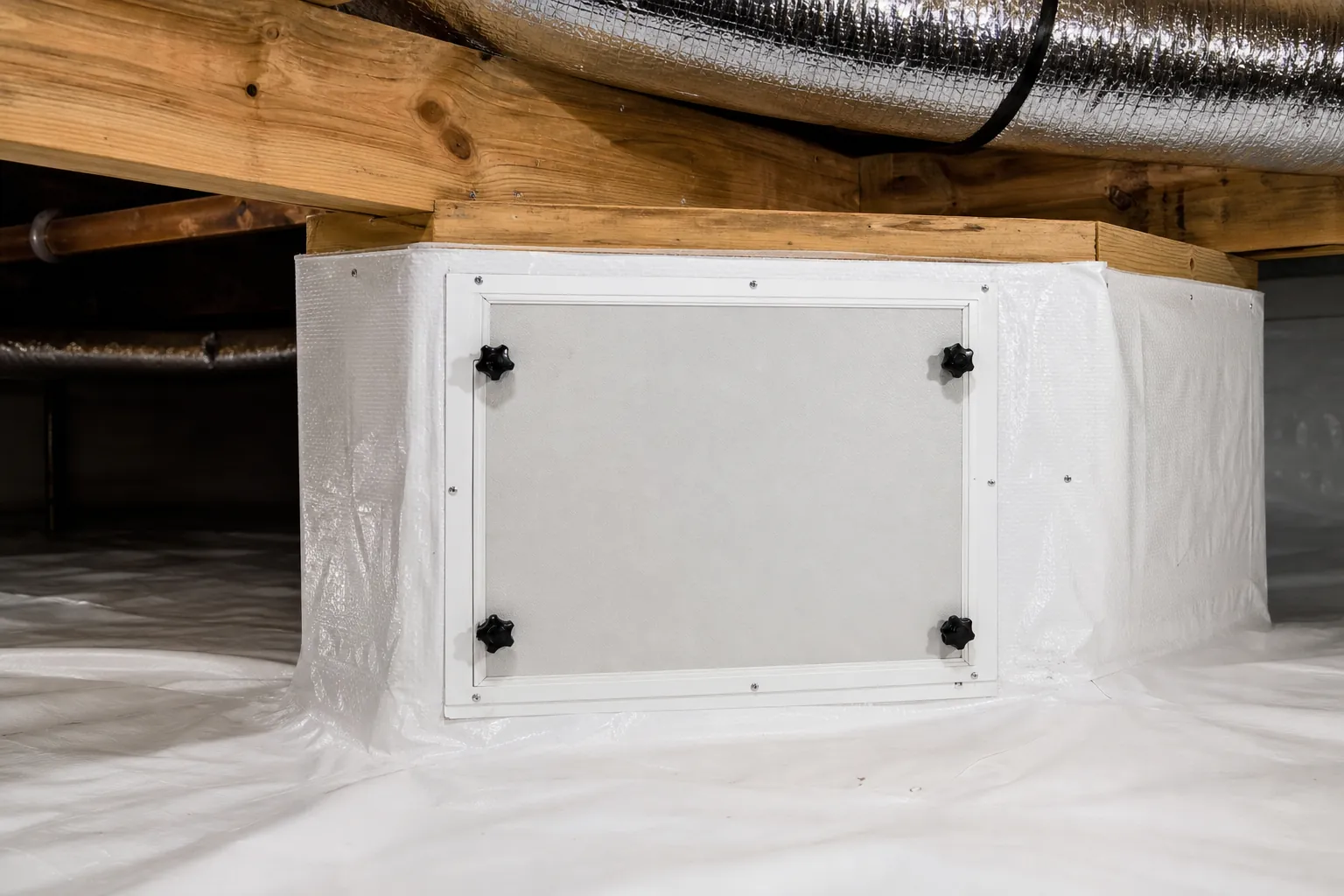
A crawl space access door is a small part of the home, but its material and fit matter when the crawl space is intended to remain sealed. In North Carolina, the door may be exposed to rain, humid air, soil moisture, pests, and repeated temperature changes. The practical goal is not simply to cover an opening. It is to choose a stable, moisture-resistant door that closes firmly, supports a continuous seal, and can be opened when access is needed.
Start With the Conditions Around the Opening
Before comparing materials, inspect where the access is located. An exterior opening may receive wind-driven rain, splashback from the ground, direct sun, and runoff from nearby surfaces. An interior access may avoid rain but still face humid crawl space air and wear from repeated use. These conditions determine which material properties deserve the most attention.
Check whether the opening is square, whether its edges are solid, and whether the surrounding wall can support hinges and latches. Look for damaged framing, loose masonry, gaps, or a threshold that allows water to collect. A durable panel cannot compensate for an uneven opening or weak attachment points. Measure the opening at the top, middle, and bottom, then compare those dimensions. Also measure diagonally to identify an out-of-square opening.
Record how much clearance is available for hinges, trim, weatherstripping, and the swing of the door. These concrete observations make it easier to compare material choices and avoid selecting a panel that cannot seal consistently.
Compare Moisture Resistance and Dimensional Stability
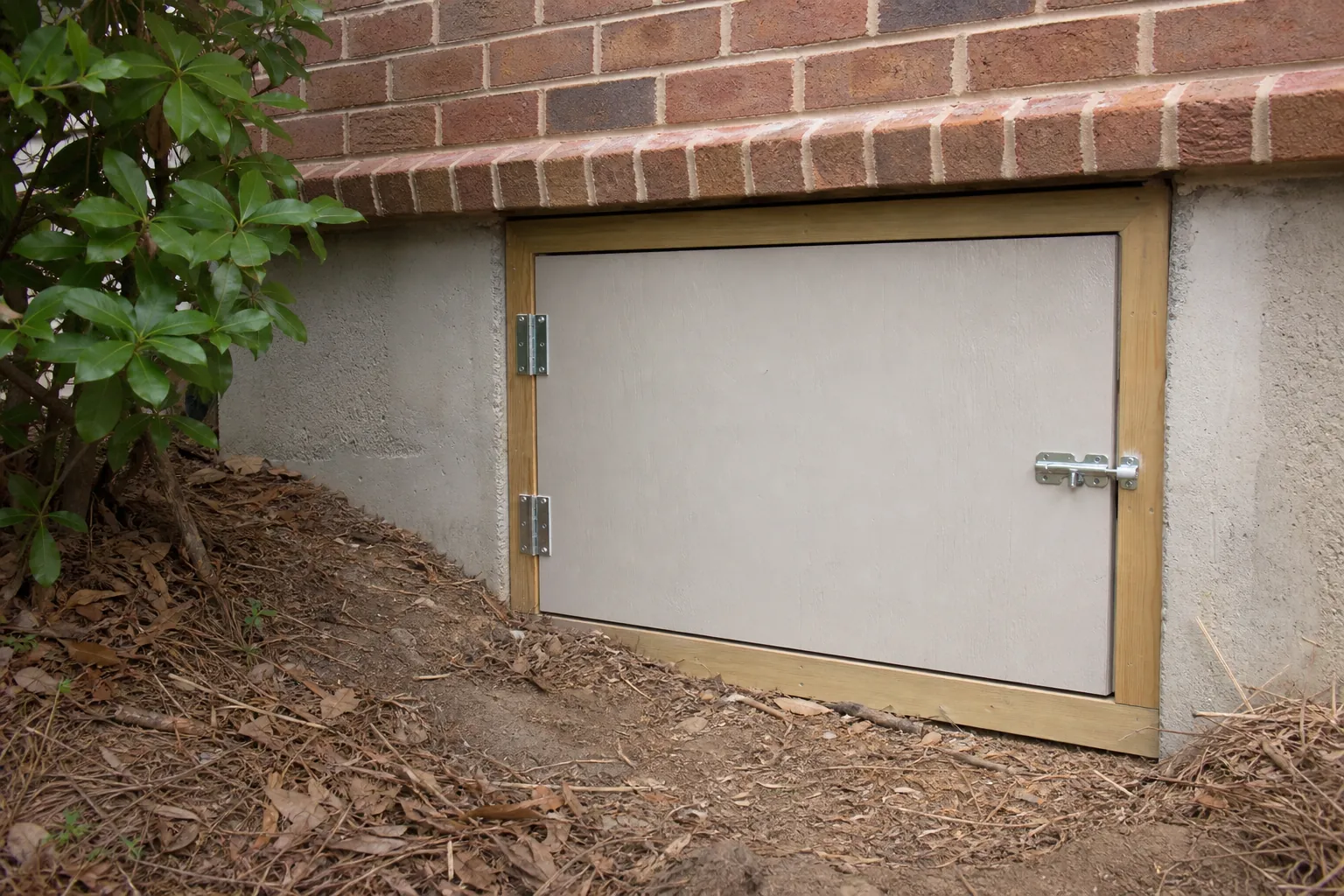
Moisture resistance should be a primary consideration for a sealed North Carolina crawl space. Materials that absorb water can swell, soften, delaminate, rot, or lose their shape. Once a panel bows or its edges deteriorate, weatherstripping may no longer contact the frame evenly. Small gaps can then allow outdoor air, water, insects, and debris to enter.
Wood can be cut and adjusted easily, but untreated or poorly protected wood is vulnerable in damp locations. If wood is considered, evaluate the entire assembly, including cut edges, fastener holes, coating condition, and the likelihood of routine maintenance. A painted face alone does not protect exposed edges or the back of the panel.
Exterior-rated composite or plastic panels are often considered because they do not rot like conventional wood. Metal can provide rigidity, but the specific metal, finish, cut edges, and fasteners must resist corrosion. Whatever the category, ask how the material behaves after repeated wetting, drying, heating, and cooling rather than judging it only by its appearance when new.
Evaluate Common Door Materials as Complete Systems
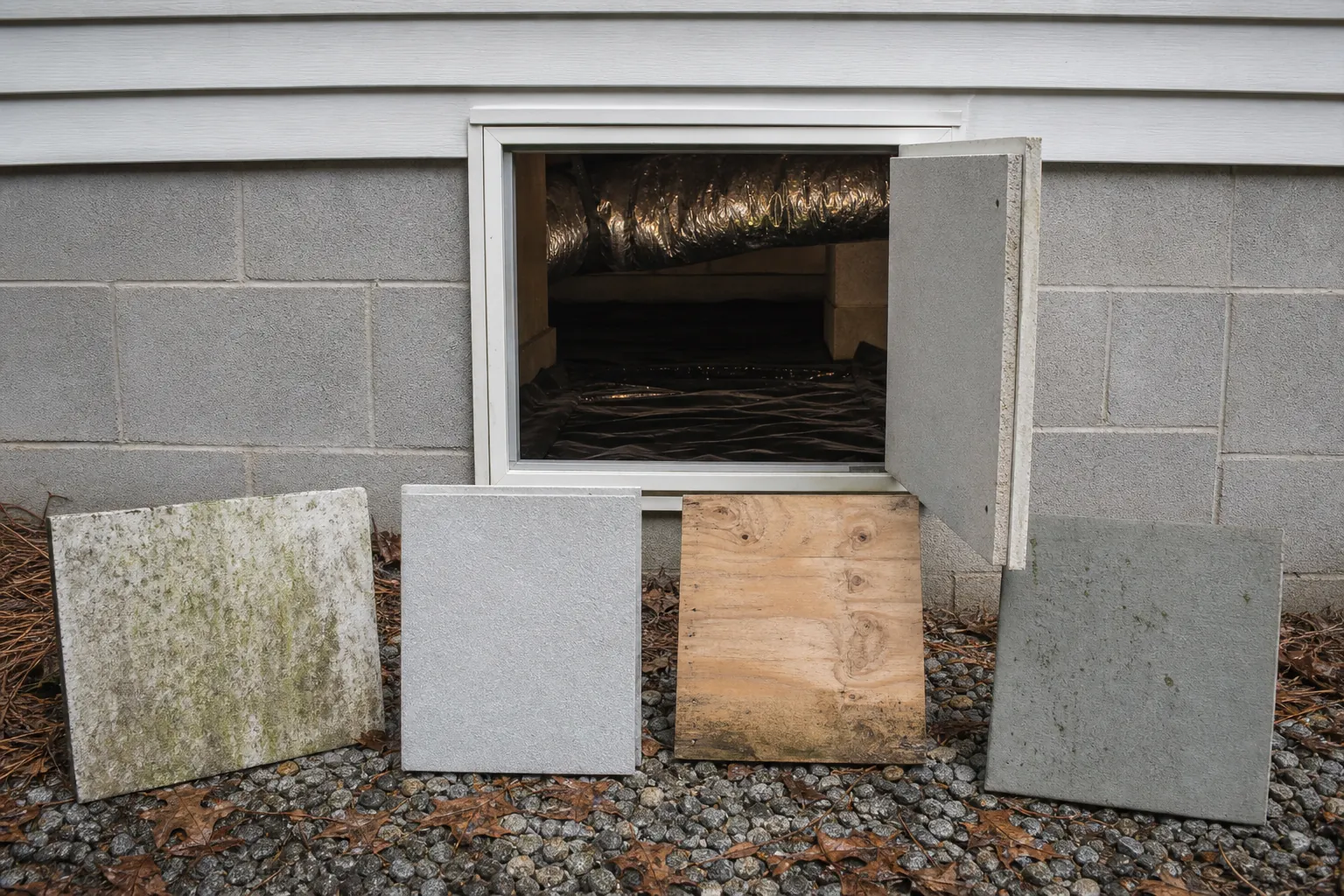
The panel material is only one part of an effective access door. The frame, hinges, latch, fasteners, seal, and threshold must work together. A rigid panel attached to a weak frame can shift. A moisture-resistant panel with an inadequate latch can sit loosely against its gasket. Corrosion-resistant hardware is important because rust can weaken fasteners, restrict hinge movement, and make the door difficult to secure.
- Wood: Easy to fabricate, but requires careful protection from moisture and attention to edges and fastener penetrations.
- Plastic or exterior-rated composite: Resists rot, but thickness, stiffness, ultraviolet exposure, and secure hardware attachment should be checked.
- Metal: Can be strong and stable, but corrosion resistance, coating quality, sharp edges, and thermal movement require consideration.
- Masonry-style removable cover: May suit some openings, but weight, safe handling, edge sealing, and convenient future access are practical concerns.
Compare actual product specifications and installation requirements. Avoid relying on a broad material label because products within the same category can perform differently.
Prioritize Fit, Sealing, and Service Access
A well-chosen material will underperform if the door does not fit the opening. The closed panel should meet the frame evenly, without rocking, twisting, or requiring excessive force. A continuous gasket or compatible weatherstripping should compress enough to close gaps while still allowing the latch to operate. Corners and the bottom edge deserve particular attention because irregular surfaces often leave hidden openings.
The latch should pull the panel toward the seal instead of merely preventing it from swinging open. Hinges must remain aligned and be anchored into sound material. If the door is removable, it should be manageable for the person who will need access. The opening also needs to remain large enough for inspection and maintenance tasks.
Door leakage can contribute to humid outdoor air entering the crawl space. If moisture appears on cool mechanical surfaces, read this guide to crawl space condensation on ductwork in North Carolina. The door may be one factor, but drainage, ground moisture, air pathways, and other conditions should also be reviewed rather than assuming one component explains every moisture sign.
Use a Practical Selection and Inspection Process
Begin by photographing the opening from inside and outside. Measure it carefully, identify the wall and frame materials, and note where rain or runoff could reach the door. Next, compare panel options for water absorption, rigidity, edge durability, hardware compatibility, and maintenance needs. Confirm that the selected hinges, latch, fasteners, and gasket are suitable for the panel and the attachment surface.
After installation, close the door and inspect the perimeter. Look for daylight, uneven gasket compression, movement at the latch, and gaps near hinges. Check that the door opens without damaging the seal and closes without scraping. Following heavy rain, examine the threshold and nearby surfaces for water entry or pooling. Recheck the assembly periodically for loose fasteners, cracked seals, corrosion, warping, or damage.
The best crawl space access door material in NC is therefore the one that fits the site conditions and remains stable as part of a properly detailed assembly. Material durability matters, but consistent sealing, dependable hardware, drainage around the opening, and usable access are equally important to the decision.
Discuss Your Crawl Space Access Door
If you are comparing access door materials or evaluating an existing crawl space opening, call Carolina Encapsulation Company at 704-207-9348. A calm conversation can help you organize the conditions and questions that matter before making a decision.
Call 704-207-9348 to talk through next steps.