Why crawl space bulkhead sealing matters in North Carolina
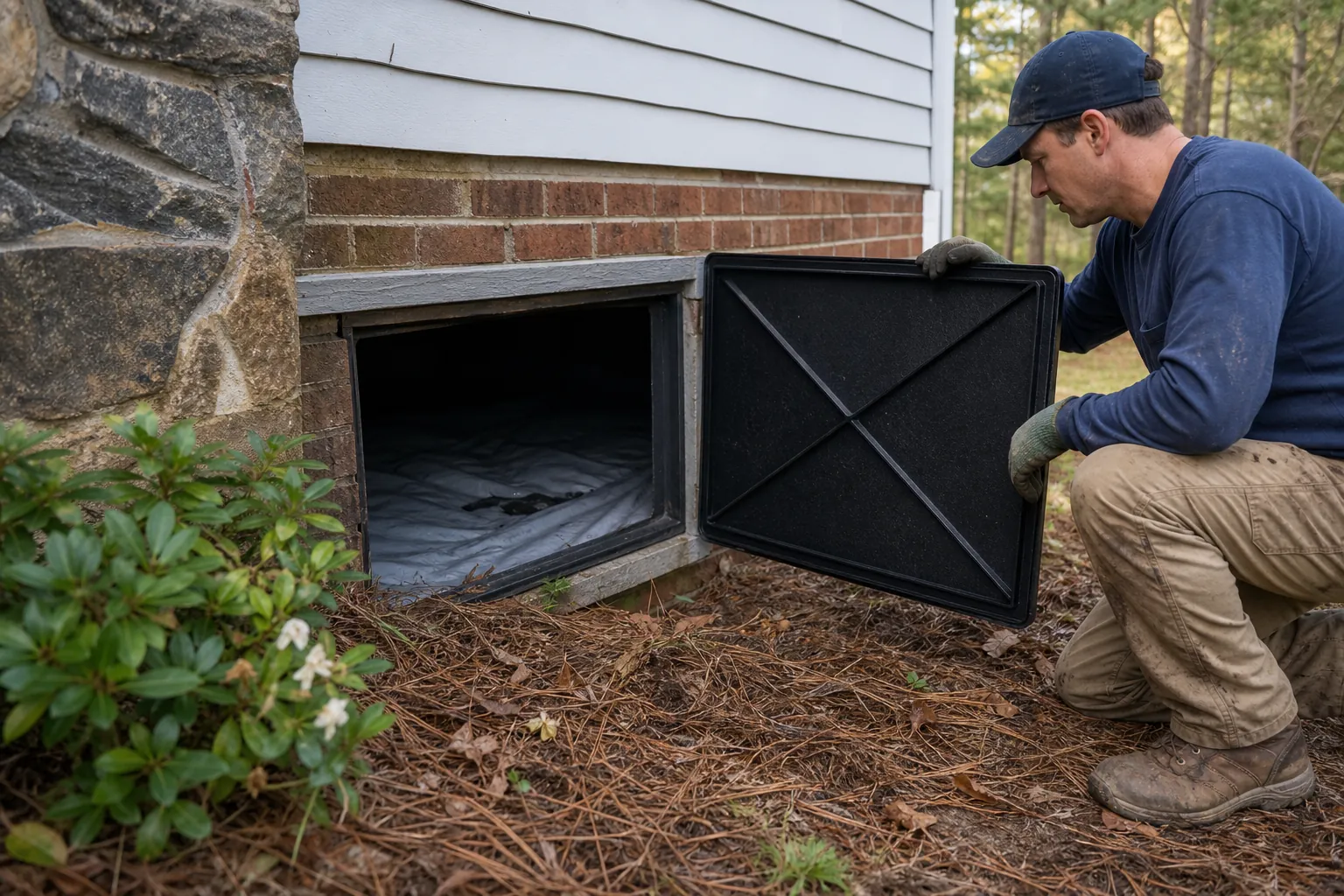
A crawl space bulkhead is more than an access point. Because it connects the crawl space to outdoor conditions, even modest gaps around the door, frame, or adjoining masonry can allow humid air, rainwater, insects, and debris to enter. Over time, that exposure may contribute to damp insulation, musty odors, wood moisture, and uncomfortable indoor conditions.
Professional crawl space bulkhead sealing in North Carolina addresses these vulnerable areas as part of a broader moisture-control plan. Carolina Encapsulation Company evaluates the access opening, surrounding foundation, drainage conditions, and the rest of the crawl space before recommending a practical solution.
What Is A Crawl Space Bulkhead?
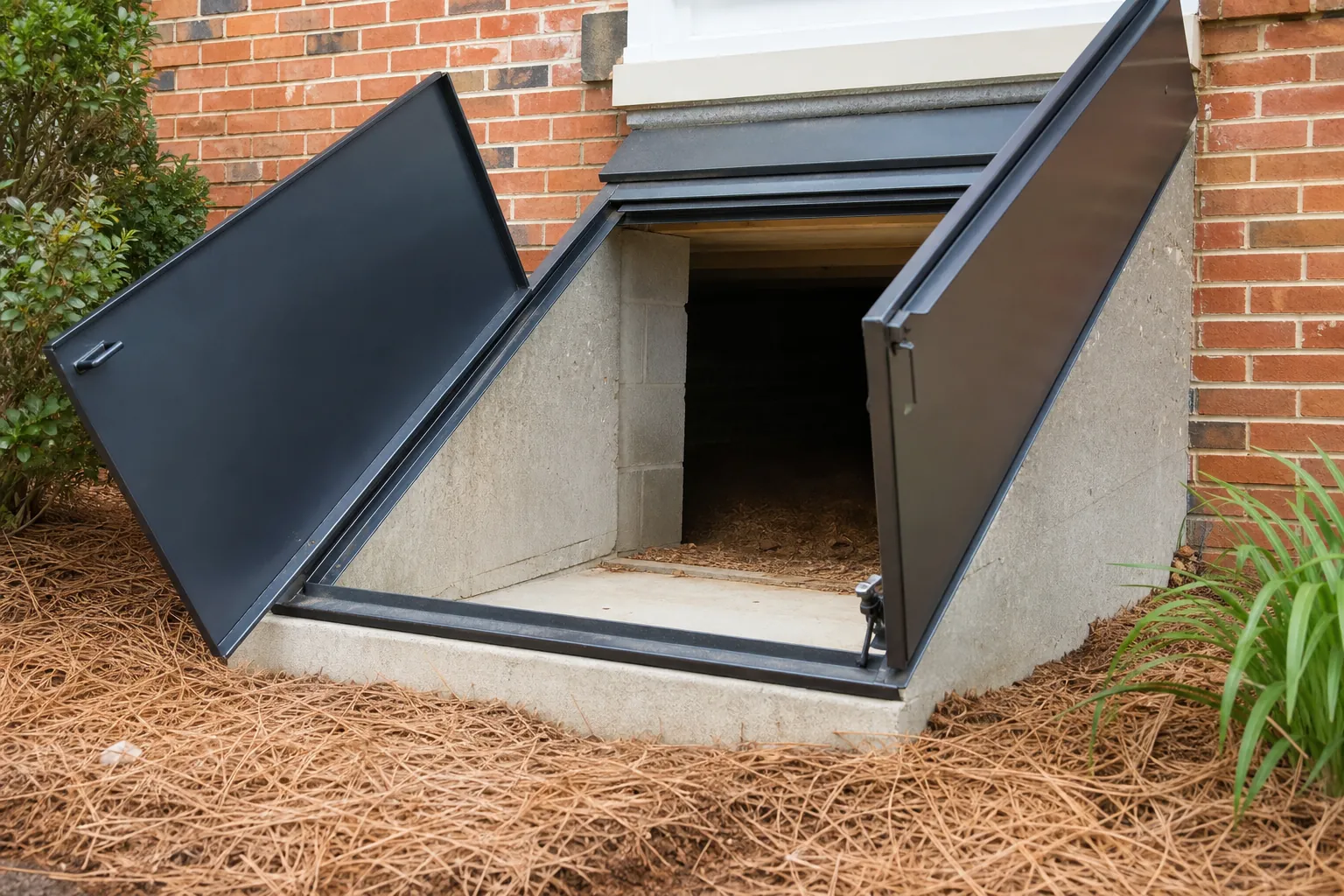
A bulkhead is an exterior entry structure that provides access to a basement or crawl space. Depending on the home, it may include angled metal doors, a framed hatch, masonry sidewalls, steps, or a below-grade landing. Some North Carolina homes have custom-built entrances that combine wood, concrete block, metal, and other materials.
Every transition between these materials can become a weak point. Door panels may warp, seals can deteriorate, and frames may pull away from masonry. Cracks can also form where the bulkhead joins the foundation. If the entrance sits below grade, surface water may collect near the opening or flow down the steps.
Closing these gaps requires more than applying a random bead of caulk. The sealing materials must suit the surfaces, expected movement, moisture exposure, and size of each opening. The entrance must also remain functional and accessible for inspections or repairs.
Why Bulkhead Leaks Are Common In North Carolina
North Carolina's warm, humid summers can create a large difference between outdoor air and conditions inside a crawl space. When humid air enters through a leaky bulkhead and meets cooler surfaces, relative humidity rises. Condensation may form on ducts, pipes, framing, or other materials.
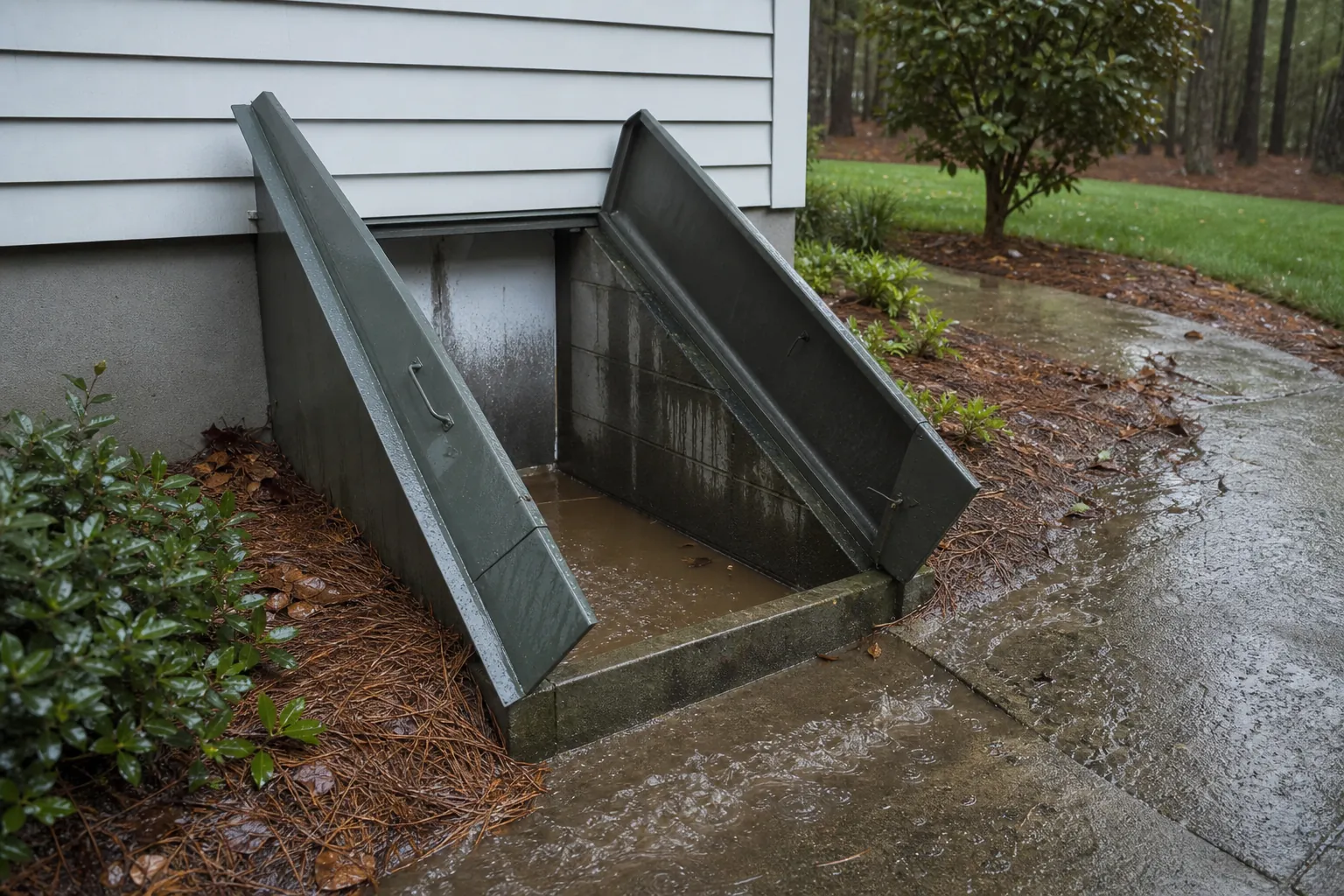
Heavy rain and changing soil conditions add another concern. Poor grading, clogged gutters, short downspouts, or a low bulkhead landing can direct water toward the access point. Sealing air gaps helps, but a door seal cannot correct standing water or persistent runoff by itself.
Homes also settle and building materials expand or contract. These normal movements can reopen joints that were patched without proper surface preparation or flexible materials. A lasting approach begins by identifying why the gap or leak developed.
Signs That The Bulkhead Needs Attention
Problems near a crawl space entrance are not always obvious from inside the home. Checking the bulkhead after rainfall and during humid weather may reveal changing conditions. Warning signs can include:
- Daylight visible around the closed door or hatch
- Rust, corrosion, peeling paint, or swollen wood near the frame
- Water stains on masonry, steps, or nearby floor surfaces
- Loose caulk, cracked mortar, or gaps between different materials
- Musty odors that are strongest near the access opening
- Insects, spiders, leaves, or dirt collecting inside the entrance
- Wet insulation, condensation, or elevated wood moisture nearby
- A door that no longer closes squarely or compresses its seal evenly
These signs do not all point to the same repair. For example, a poorly fitted door may need weatherstripping or frame adjustment, while a masonry crack may require a compatible sealant. Active water entry may call for drainage improvements before the opening is sealed.
How Professional Bulkhead Sealing Works
The process starts with an inspection of both sides of the bulkhead. A contractor should examine the door assembly, threshold, perimeter joints, adjacent foundation, grading, and visible water patterns. Inside the crawl space, the inspection may include humidity, wood moisture, insulation, foundation vents, ground vapor control, and signs of pests or microbial growth.
Surfaces are then prepared so new materials can bond correctly. Loose caulk, dirt, flaking coatings, and deteriorated debris may need to be removed. Drying may also be necessary. Applying sealant over wet or dirty surfaces often leads to premature failure.
The repair method depends on the opening. Flexible exterior-grade sealants can accommodate limited movement at selected joints. Weatherstripping may improve contact around an operable hatch. Larger voids may require backing materials or repairs to the frame before sealing. Damaged masonry, severe corrosion, or rotted wood may need correction rather than concealment.
After work is complete, the door should open, close, and latch properly. The sealed area should also be checked during future maintenance because exterior access points remain exposed to sunlight, rain, temperature changes, and routine use.
Bulkhead Sealing And Crawl Space Encapsulation
Bulkhead sealing is especially important when a crawl space is encapsulated. Encapsulation aims to separate the crawl space from ground moisture and humid outdoor air using a durable vapor barrier and carefully sealed boundaries. An unsealed exterior access can undermine that controlled environment.
A complete encapsulation plan may address the ground, foundation walls, piers, vents, utility penetrations, access door, and bulkhead connections. Depending on site conditions, humidity management or drainage improvements may also be recommended. The goal is not to make the structure literally airtight. It is to reduce uncontrolled moisture and air entry while preserving necessary access and accounting for combustion or building-code requirements.
If a bulkhead is sealed without addressing exposed soil, open vents, plumbing leaks, or drainage problems, moisture may persist. Likewise, installing a ground liner while leaving large gaps around the access door can limit the system's performance. Treating the crawl space as one connected environment generally produces a more reliable result.
What Homeowners Can Do Before An Inspection
Homeowners can safely observe several conditions without crawling into a damp or confined area. Look at the bulkhead during dry weather and after a storm. Note whether water pools nearby, the gutters overflow, or downspouts discharge toward the entrance. Test whether the door closes evenly without forcing it.
Avoid permanently blocking the entrance or using interior-only products on exterior joints. Spray foam alone is not appropriate for every exposed gap, and surface patches can hide deteriorated wood or masonry. Never enter a crawl space with standing water, exposed wiring, suspected sewage, strong odors, or unsafe structural conditions.
Plan A Durable Moisture-Control Solution
Effective crawl space bulkhead sealing in North Carolina should match the home's construction and moisture conditions. A careful inspection can distinguish a simple perimeter gap from a larger drainage, door, or encapsulation issue. That distinction helps avoid repeated patches and directs attention to the actual source of moisture.
Carolina Encapsulation Company provides crawl space evaluations and tailored recommendations for North Carolina homes. If you have noticed gaps, water staining, humid air, or odors near your bulkhead, call 704-207-9348 to discuss an inspection and the appropriate next steps.
Call 704-207-9348 to talk through next steps.