How to seal crawl space chimney foundation gaps
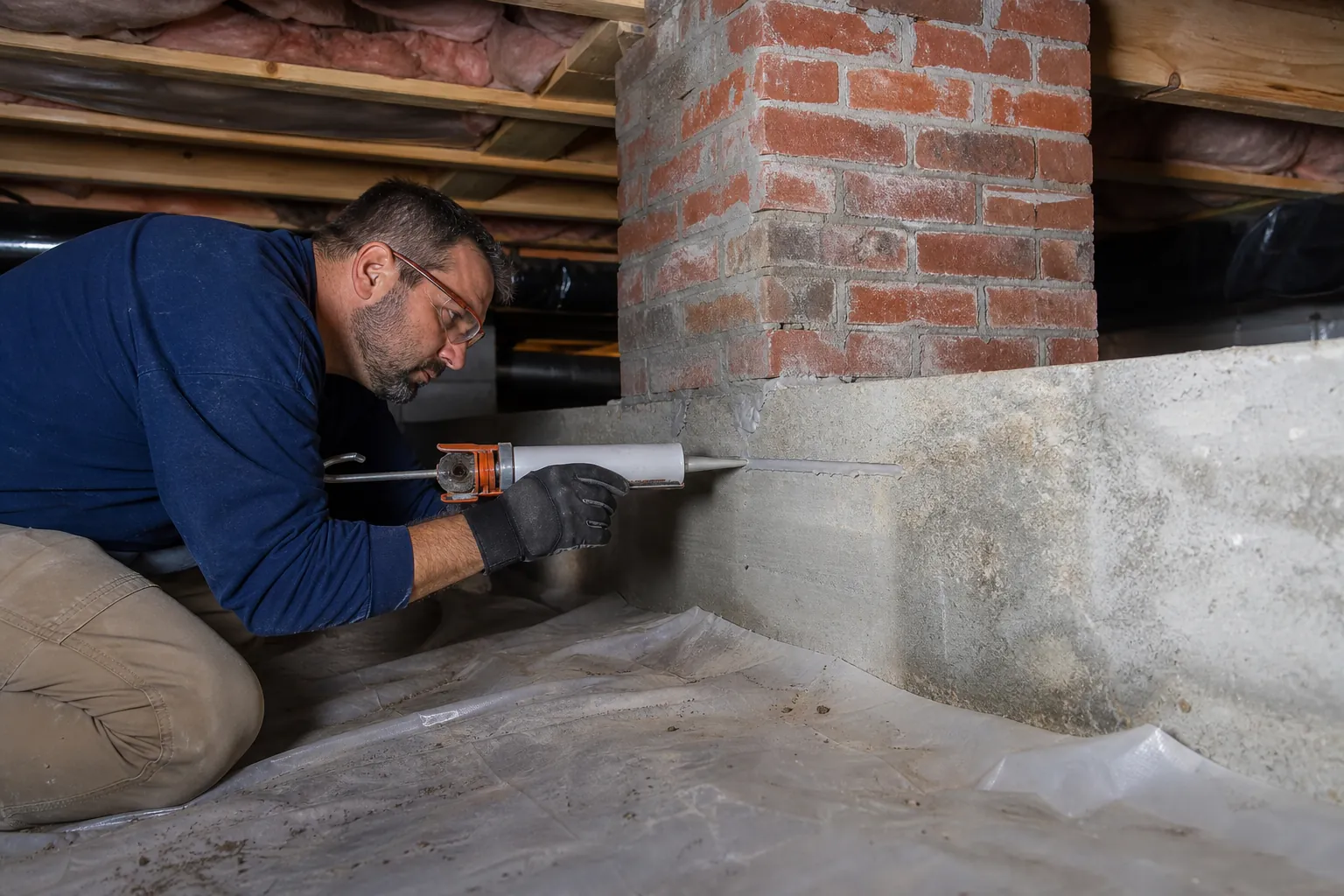
Where a chimney passes through or meets a crawl space foundation, small construction gaps can become significant moisture and air pathways. In North Carolina, humid summers, heavy rain, and changing soil conditions can make these openings especially troublesome. Effective crawl space chimney foundation sealing closes vulnerable joints while respecting the materials, drainage needs, and movement of the structure.
Carolina Encapsulation Company evaluates these areas as part of the whole crawl space. A visible gap may be only one piece of the problem. Moisture can also enter through foundation vents, exposed soil, porous masonry, plumbing penetrations, or poor exterior drainage. The best solution identifies each source before sealing begins.
Why Chimney Foundation Gaps Need Attention
Chimneys are commonly built with brick, block, mortar, concrete, and metal components. These materials expand, contract, and absorb moisture differently. Where the chimney structure meets the foundation wall or floor system, cracks and irregular joints can develop over time.
Openings around this area can admit warm, humid outdoor air. When that air reaches cooler crawl space surfaces, condensation may form on ducts, pipes, framing, or masonry. Rainwater can also travel through deteriorated mortar joints or collect near the foundation if grading and gutters do not direct it away.
Unsealed gaps may contribute to musty odors, elevated crawl space humidity, damp insulation, wood decay, pest access, and uncomfortable floors. Because crawl space air can move upward through a home, conditions below the living area may also affect indoor comfort and air quality.
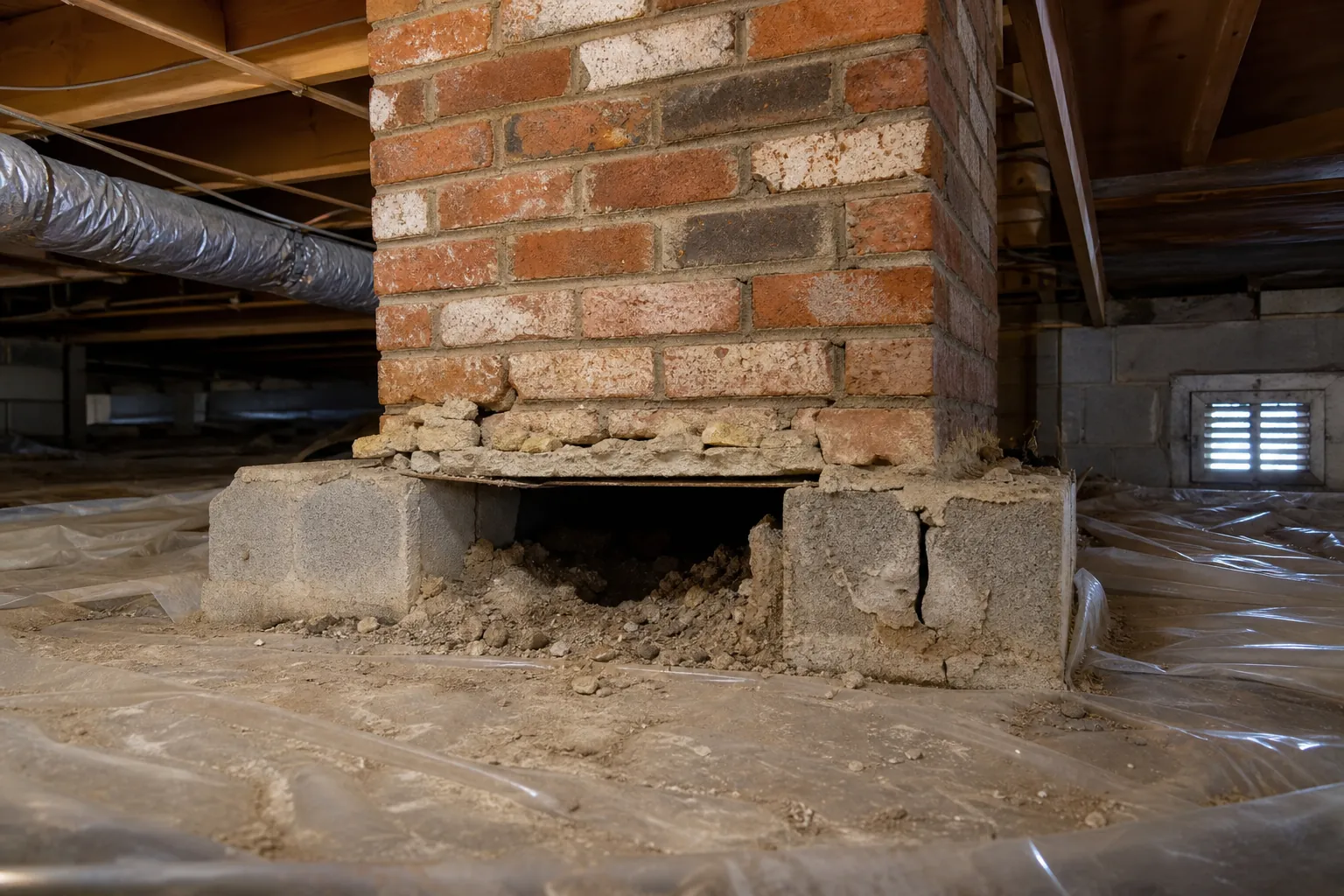
Signs The Chimney Area May Be Leaking
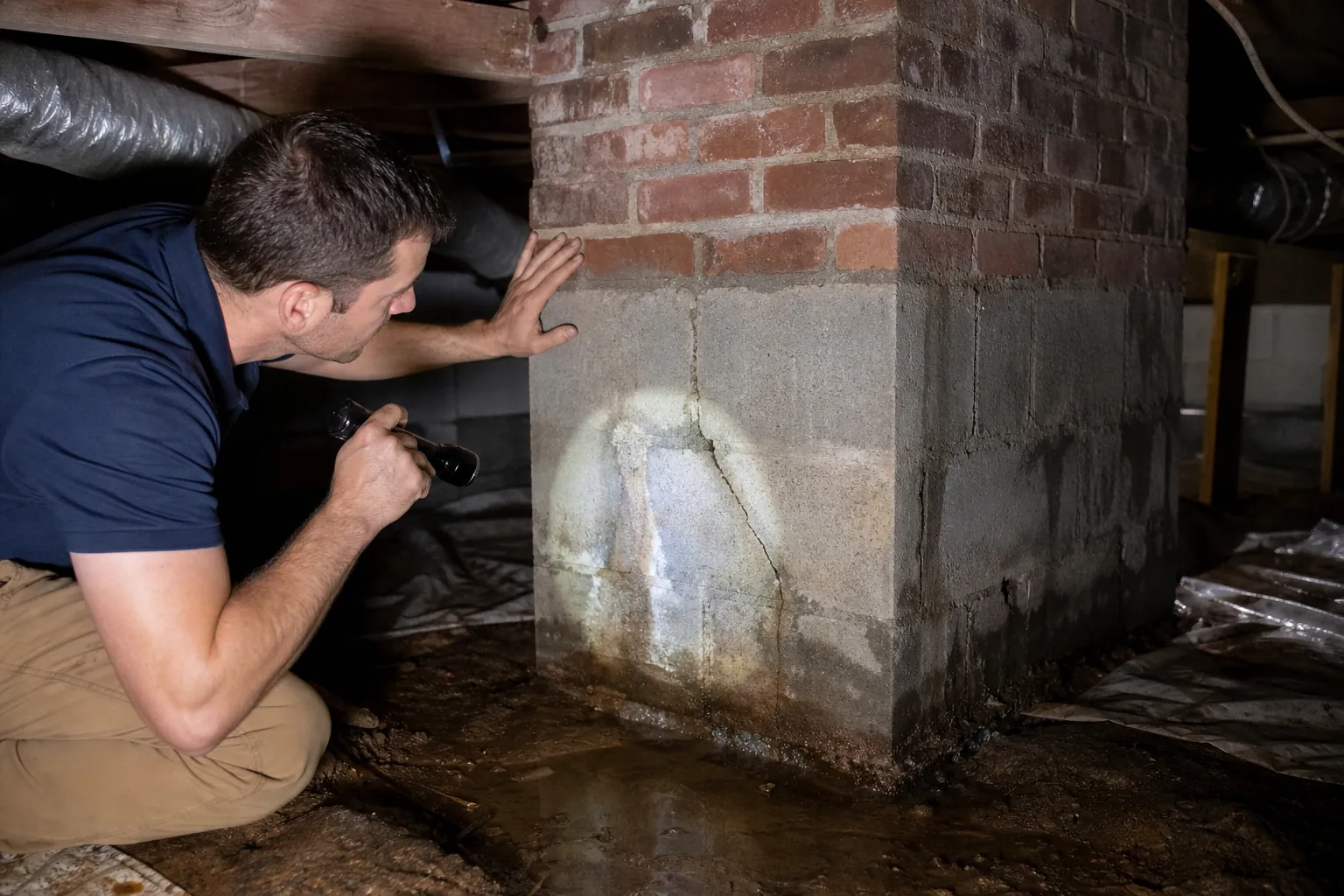
Not every stain or crack points to the same cause. A careful inspection helps distinguish air leakage, groundwater, plumbing issues, roof or flashing leaks, and moisture moving through masonry. Homeowners should avoid covering a wet area until the source is understood.
Common warning signs near a crawl space chimney include:
- Visible daylight or outdoor air entering around masonry joints
- Dark staining, mineral deposits, or dampness on brick or block
- Musty odors that become stronger after rain or during summer
- Soft, discolored, or deteriorating wood near the chimney framing
- Loose mortar, widening cracks, or separation between materials
- Rust on nearby metal supports, ducts, fasteners, or equipment
- Standing water or wet soil along the interior foundation perimeter
- Damaged insulation or signs of insects and rodents near openings
Cracks that are widening, stepped, or associated with movement deserve additional evaluation. Sealing products are not substitutes for structural repairs. Active chimney use also introduces fire-clearance requirements, so combustible foam or inappropriate materials should never be placed where heat or code restrictions make them unsafe.
How Professional Sealing Is Planned
Good sealing starts with assessment rather than a one-product approach. The technician examines the chimney-to-foundation connection, nearby framing, the crawl space floor, exterior grade, downspout discharge, vents, and signs of bulk water. Moisture readings can help show whether materials are actively damp.
The area must be cleaned so repair materials can bond. Loose mortar, dust, old sealant, and debris may need to be removed. Depending on the joint and surrounding materials, the repair may involve compatible masonry products, hydraulic cement in suitable locations, backer rod with an appropriate flexible sealant, metal flashing, or another durable detail. Material choice matters because a rigid patch may fail in a joint that moves.
Exterior defects should be addressed when they are driving the leak. This may include correcting grading, extending downspouts, repairing mortar, or having a qualified chimney professional inspect flashing and upper masonry. Interior sealing alone cannot reliably stop water that is continually collecting against the structure.
How Sealing Fits With Crawl Space Encapsulation
Crawl space chimney foundation sealing is most effective when it supports a broader moisture-control plan. Encapsulation typically separates the building from exposed earth and humid outdoor air. A reinforced vapor barrier is installed across the floor and carefully detailed at walls, piers, penetrations, and other transitions.
Wall attachment and chimney detailing require care. The liner should be secured and sealed without blocking important inspection areas, drainage paths, or access points. Foundation vents and other air leaks may also be closed as part of a properly designed system. If humidity remains high, a crawl space dehumidifier can maintain more stable conditions.
Encapsulation does not fix active bulk-water entry by itself. Homes with seepage or standing water may need drainage improvements before or alongside the vapor barrier. Likewise, damaged wood, unsafe wiring, plumbing leaks, and structural concerns should be addressed by the appropriate professionals.
Benefits Of A Complete Moisture-Control Approach
Closing chimney foundation gaps can reduce uncontrolled airflow and make humidity management more predictable. When combined with ground and wall vapor protection, it may also help protect insulation, framing, ducts, and stored equipment from persistently damp conditions.
A complete approach can provide several practical benefits:
- Fewer pathways for humid air, pests, and outdoor odors
- Reduced condensation risk on cool mechanical surfaces
- Cleaner access for future crawl space inspections and maintenance
- Better support for dehumidification and conditioned-air strategies
- Improved protection for wood framing and other moisture-sensitive materials
- A more consistent environment beneath the home throughout the year
Results depend on the condition of the home and the causes of moisture. A sealed joint will not compensate for a failed gutter system, an active plumbing leak, or significant foundation movement. That is why inspection and prioritization are important.
Maintaining The Sealed Area
After repairs and encapsulation, homeowners should inspect the crawl space periodically and after unusually heavy storms. Look for new staining, detached sealant, liner damage, unusual odors, or changes in humidity. Keep gutters clear, verify that downspouts discharge away from the foundation, and avoid piling mulch or soil against masonry.
If the home uses a dehumidifier, follow its filter and drainage maintenance schedule. Chimneys should also receive appropriate inspection and maintenance above the crawl space, since water entering higher on the structure may eventually appear near the foundation.
Schedule A North Carolina Crawl Space Evaluation
Chimney foundation gaps can be easy to overlook, but sealing them correctly may be an important part of controlling crawl space moisture. Carolina Encapsulation Company can assess the connection, identify related moisture pathways, and recommend a practical plan for your North Carolina home.
For a calm, straightforward evaluation of your crawl space and chimney foundation area, call Carolina Encapsulation Company at 704-207-9348.
Call 704-207-9348 to talk through next steps.