How Can You Tell Crawl Space Condensation From Groundwater?
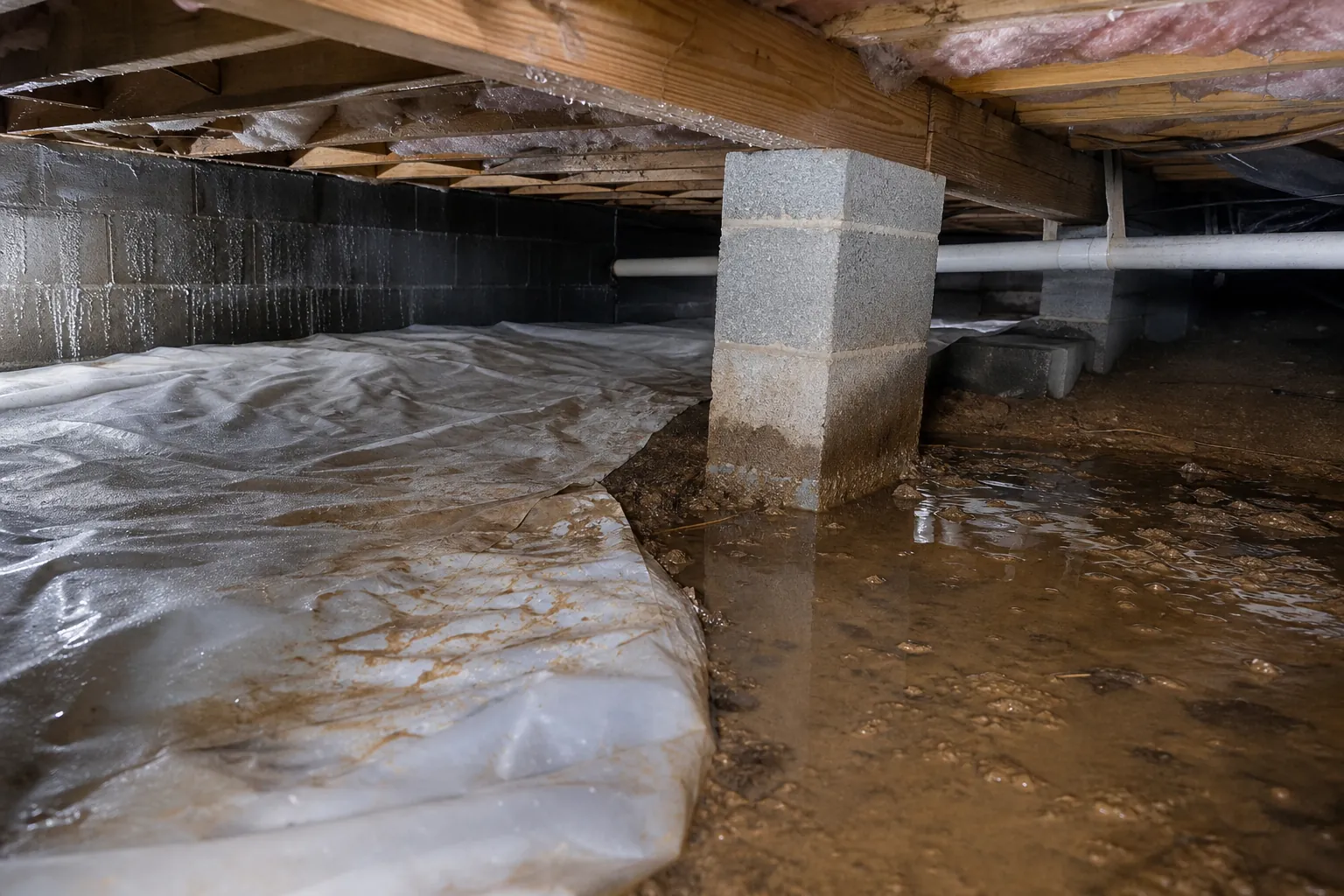
Water in a North Carolina crawl space can come from more than one source. Condensation forms when humid air contacts a cooler surface, while groundwater enters from the soil or moves through foundation areas. Because both can leave insulation, wood, masonry, ducts, or ground surfaces damp, a single observation is rarely enough. Use the steps below to document where the moisture first appears, when it changes, and what conditions occur outside.
Start With Where the Moisture First Appears
The first wet location often provides the clearest clue. Condensation usually develops on surfaces that are cooler than the surrounding air. Metal ductwork, pipes, and other cool materials may collect droplets. Moisture can then drip downward, making the soil or liner beneath the surface look like the original source. Follow the wet area upward before deciding that water rose from the ground.
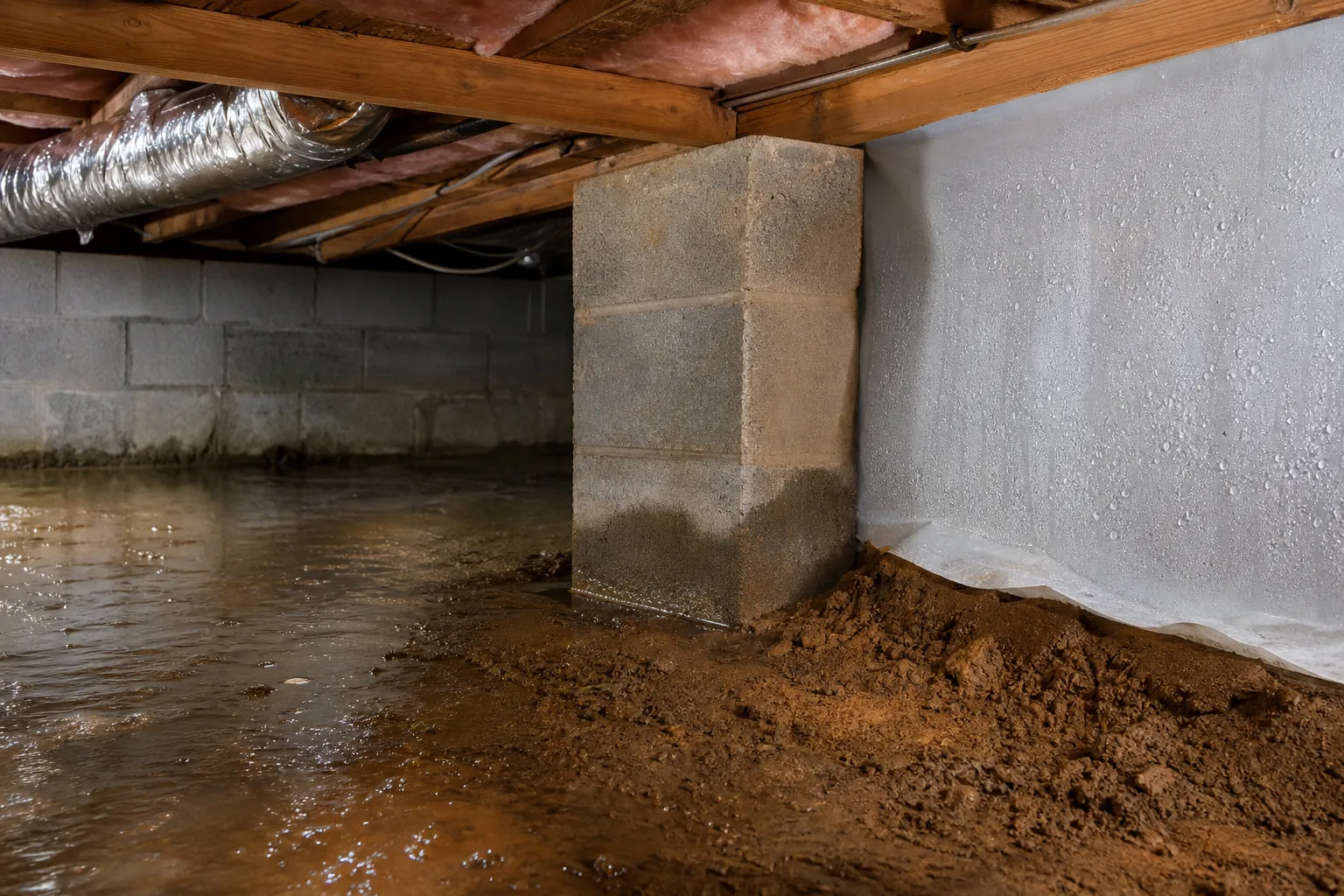
Groundwater is more likely to appear at the lowest parts of the crawl space, along the soil surface, near foundation edges, or through openings where water can move inward. It may spread across the ground rather than beginning on a suspended surface. However, the visible puddle may be some distance from the entry point if the floor slopes.
Use a flashlight and inspect from high to low. Look at joists, ducts, pipes, foundation walls, piers, and the ground. Do not rely only on the largest puddle. Identifying the highest or earliest wet point is more useful than identifying where water finally collects.
Compare Moisture With Weather and Indoor Conditions
Timing helps distinguish the sources. If wet areas become noticeable during warm, humid periods without a recent rain event, condensation may deserve closer attention. Humid air can reach cool crawl space surfaces and form visible droplets. This is especially important when moisture is concentrated on ductwork. For a closer look at that pattern, read crawl space condensation on ductwork in North Carolina.
If water appears after rainfall, remains near foundation edges, or repeatedly collects in low areas, water moving through or across the soil may be involved. The delay matters. Some water appears during rain, while other moisture may become visible later as saturated soil releases water.
Keep a simple record instead of relying on memory. Note rainfall, outdoor humidity, air-conditioning use, the location of wet materials, and whether droplets are present above the ground. Repeat observations under different conditions. A pattern seen over several checks is more reliable than one inspection performed after the crawl space has already begun drying.
Use Surface Clues Without Treating Them as Proof
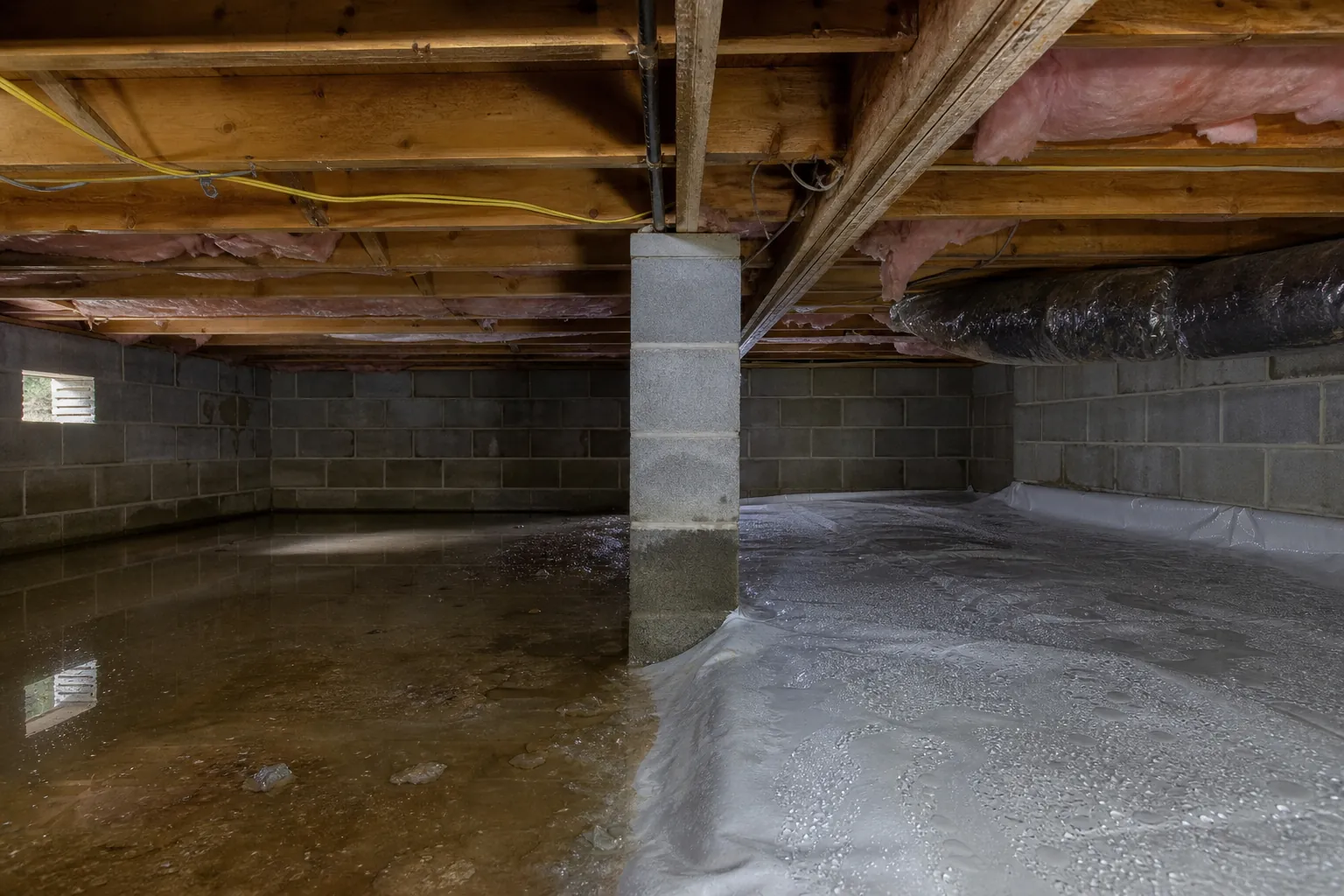
Droplets covering the underside of a cool pipe or metal duct are consistent with condensation. A defined line of dampness along a foundation wall, water emerging from a joint, or a wet path across soil may point toward water entering from outside or below. These clues are useful, but none should be treated as proof on its own.
Also consider how gravity changes the evidence. Condensation can drip onto insulation, framing, masonry, or soil. Groundwater can spread beneath stored materials or follow a low channel. By the time you inspect, the initial pattern may be blurred.
- Photograph the entire crawl space before taking close-up pictures.
- Mark the edges of puddles or damp soil so changes are visible later.
- Check directly above every wet spot for pipes, ducts, and damp framing.
- Look outside for low ground, standing water, and roof runoff near the foundation.
- Recheck after rain and again during a humid period without rain.
Avoid moving materials until you have documented their original position. Preserving the pattern makes comparisons more useful.
Inspect Outside Before Choosing a Response
A crawl space inspection should include the surrounding exterior. Water near the foundation may result from the way rain reaches and moves across the property. Walk around the house during safe conditions and look for soil sloping toward the foundation, depressions that hold water, discharge near the house, and areas where roof runoff concentrates. Note whether the crawl space moisture is on the same side as an exterior water pattern.
Then compare exterior observations with what is happening inside. Moisture concentrated near one foundation section after rain supports a different working explanation than droplets distributed across cool surfaces during muggy weather. More than one source can also be present. For example, a crawl space may show rain-related water at the perimeter and condensation on ductwork at the same time.
Do not choose a response merely because one symptom looks familiar. A measure aimed at humid-air condensation does not identify an exterior water pathway, and an exterior observation does not explain droplets forming on cool overhead surfaces. Separate each pattern, document it, and determine which source contributes to each wet area.
Make a Decision Based on Repeatable Evidence
Before deciding what to do, assemble a short moisture history. Include dated photographs, weather conditions, the first visible wet locations, and changes between inspections. Draw a basic crawl space map and label foundation sides, low points, ducts, pipes, puddles, and damp materials. This gives you a clearer basis for discussing the problem and comparing recommendations.
Be cautious when the evidence comes from only one visit. A dry day can hide rain-related entry, while an inspection after a storm may not reveal whether condensation occurs during hot, humid weather. Repeatable evidence helps separate a temporary event from an ongoing pattern.
Limit entry if the crawl space is difficult to access, has standing water near electrical components, or contains other visible hazards. You do not need to disturb insulation or crawl through water to collect useful information. Exterior photographs and observations from the access opening can still help.
The practical question is not simply whether the crawl space is wet. It is where moisture begins, what conditions precede it, and whether multiple sources are contributing. Those answers support a more focused decision.
Discuss What You Are Seeing
If you want to discuss the moisture pattern in your crawl space, call Carolina Encapsulation Company at 704-207-9348. Share when the water appears, where you first see it, and whether it follows rain or humid weather.
Call 704-207-9348 to talk through next steps.