How Does North Carolina Red Clay Affect Crawl Space Drains?
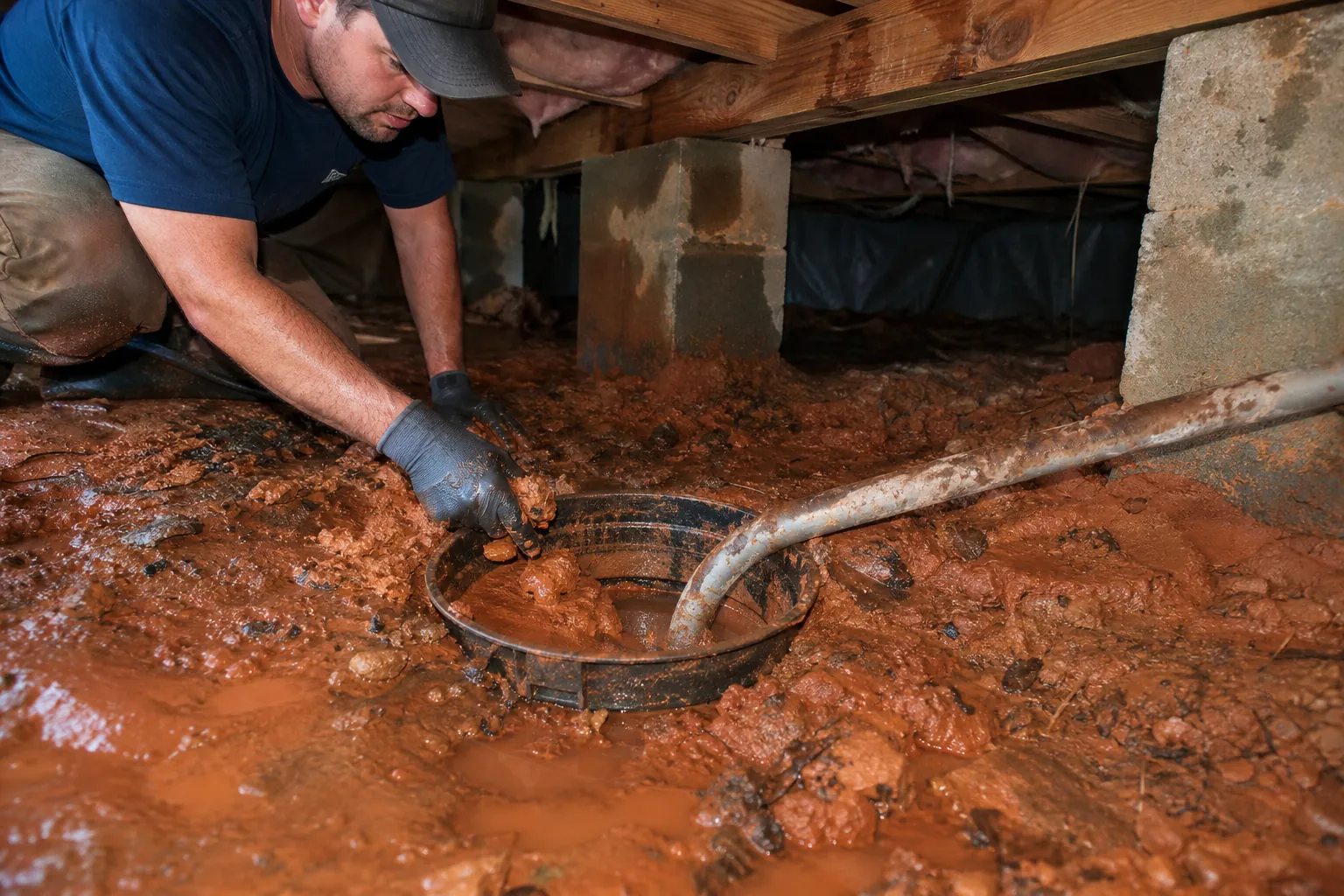
Red clay around a North Carolina home can become a practical concern when sediment appears in a crawl space drain. Fine soil particles can move with water, settle in low areas, and collect near drain openings or within accessible drainage components. If you are deciding what to do, focus first on where the water and sediment originate, whether drainage remains functional, and whether moisture is affecting other parts of the crawl space.
Why Red Clay Sediment Reaches Crawl Space Drains
Red clay does not enter a drain without a pathway. Water may carry exposed soil from an area around the foundation, through an opening, or across the crawl space floor. Once the water slows, heavier material settles while finer particles can travel farther. That process may leave a reddish film, small deposits, or compacted sediment near the drain.
Begin by looking for patterns rather than treating the visible clay as the entire problem. Note whether the sediment appears after rainfall, whether it is concentrated along one wall, and whether a clear trail leads toward the drain. Also check whether soil has accumulated directly over a drain opening. These observations help distinguish a one-time deposit from repeated soil movement.
A drain can look dirty and still pass water, or appear open while sediment has accumulated farther along the route. Avoid assuming that surface appearance confirms the condition of the full drainage path.
Signs That Sediment May Be Affecting Drainage
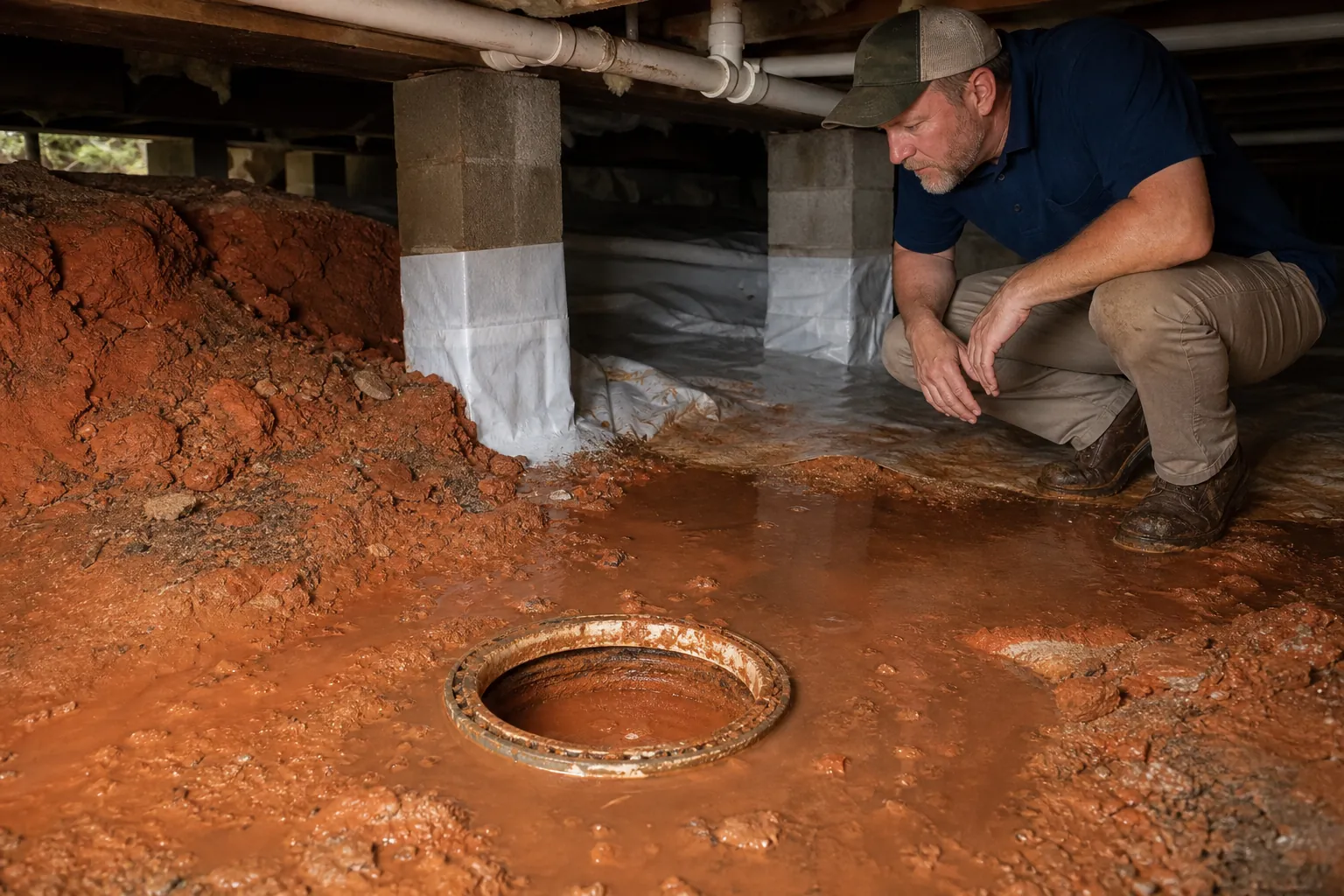
The most useful evidence is how water behaves. Standing water near a drain, slow recession after wet weather, or fresh sediment collecting in the same place can indicate that the drainage route needs closer evaluation. Damp soil alone does not establish that a drain is blocked, because moisture can enter or remain for several reasons.
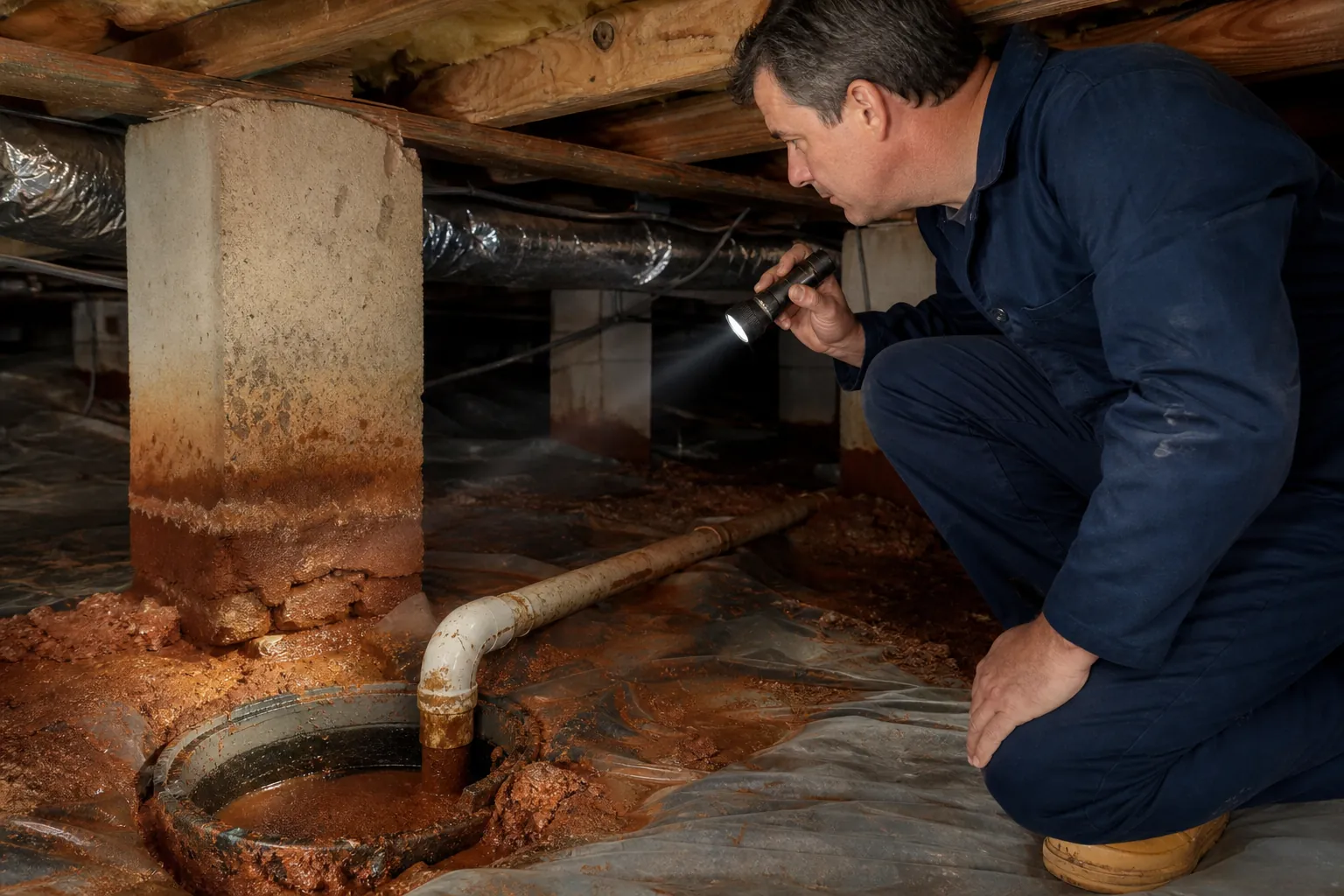
Use a flashlight and document what you can see without disturbing pipes, wiring, insulation, or other materials. Photographs taken after different weather conditions can reveal whether the affected area is changing. Look for these practical indicators:
- Red or orange sediment concentrated around a drain opening
- A defined water path carrying soil toward the drain
- Water remaining where it previously appeared to drain
- Repeated deposits after rain instead of a single old stain
- Moisture extending beyond the drain area to wood, ducts, or insulation
No single sign proves the cause. Together, however, these details provide a clearer basis for deciding whether further assessment is warranted.
What to Check Before Choosing a Response
Start outside when conditions are safe. Observe where roof runoff and surface water travel, and note visible areas of bare or eroding soil near the foundation. Inside the crawl space, identify the apparent entry point, the route water follows, and the location of the drain. The goal is to understand the sequence from water entry to sediment deposition.
Do not rely on color alone. Red residue may identify soil movement, but it does not explain why water entered or whether the drain is the primary concern. Compare the drain area with nearby supports, framing, ducts, and insulation. If duct surfaces are wet, the issue may involve more than runoff or drain sediment. Our related article on crawl space condensation on ductwork in North Carolina explains another moisture pattern worth considering.
Write down when the condition occurs, how long water remains, and whether the sediment returns after removal. Clear records can make a later conversation more focused and useful.
Why Removing Visible Clay May Not Be Enough
Clearing loose material from an accessible drain entrance may improve visibility, but it does not automatically resolve the source of the sediment. If water continues carrying red clay into the crawl space, deposits can return. Likewise, sediment at the opening may be only part of the accumulation. The important question is whether the drainage route and surrounding water conditions work together as intended.
Avoid forcing tools into a drain or flushing unknown drainage components without understanding where they lead. Aggressive action can move sediment rather than remove it, and it may make the original condition harder to evaluate. Also avoid extensive crawling in standing water or near electrical components.
Instead, preserve evidence of the water path, note any visible obstructions, and determine whether the issue is isolated or recurring. A response should address the observed condition and its likely source, not simply make the drain opening look clean. This approach reduces guesswork when comparing possible next steps.
How to Make a More Informed Decision
Organize the facts before making a decision. Separate what you have directly observed from what you suspect. For example, “red sediment returned after two rain events” is more useful than assuming the drain has failed. Similarly, record the approximate area of standing water and whether it receded between observations.
When discussing the crawl space, ask how the source of water will be identified, how the drainage path will be evaluated, and how recurring sediment will be considered. A useful conversation should connect recommendations to visible conditions rather than relying on a generic response. Ask what areas need access and whether any preparation is necessary before an evaluation.
Timing also matters. If water is actively entering, sediment repeatedly returns, or moisture is reaching building materials, waiting may allow the pattern to continue. If the deposit is dry and appears old, documentation and monitoring may help clarify whether it remains active. Either way, base the decision on current evidence, recurrence, and the broader moisture conditions.
Discuss What You Are Seeing
If red clay sediment is collecting near a crawl space drain and you want to discuss the condition, call Carolina Encapsulation Company at 704-207-9348. Share when the sediment appears, where water collects, and whether the pattern changes after rain.
Call 704-207-9348 to talk through next steps.