Where Should a Crawl Space Drainage System Discharge Water?
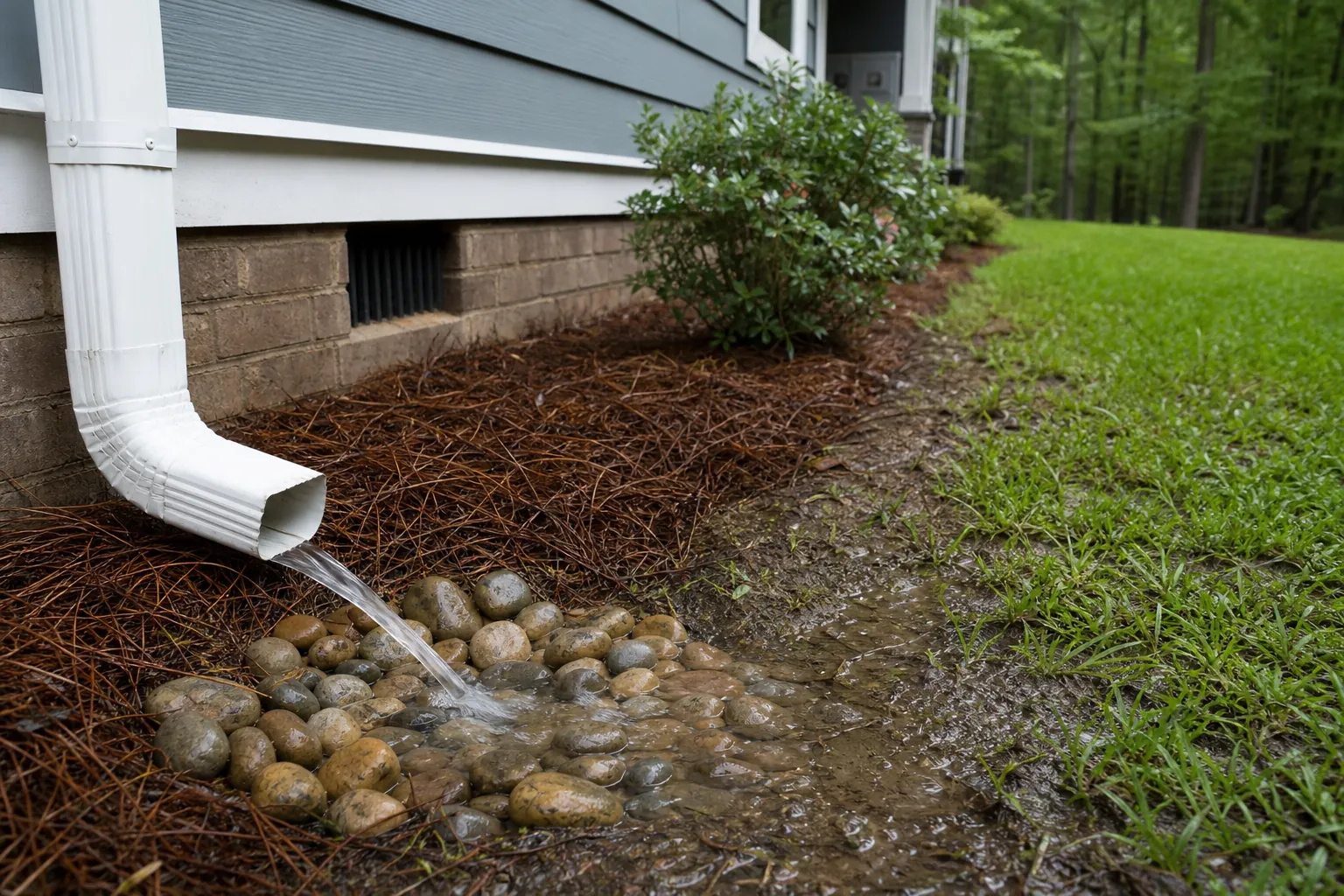
A crawl space drainage system is only as practical as its discharge location. Moving water out of the crawl space does not solve the underlying concern if the outlet allows that water to return toward the foundation, erode soil, affect neighboring property, or create a hard-to-detect blockage. In North Carolina, the right location depends on the site's slope, soil, runoff patterns, outlet condition, and applicable local requirements. Before choosing a route, focus on where the water will travel after it leaves the pipe.
Start With the Direction Water Naturally Travels
Begin by observing the property during or shortly after rainfall. Identify high and low areas, roof runoff paths, downspout outlets, compacted soil, and locations where water stands. A drainage outlet should work with the site's existing slope rather than depend on water moving uphill or crossing a low area that already stays wet.
Look beyond the pipe's endpoint. Water should continue moving away from the foundation after discharge. An outlet placed just outside the crawl space can still create a problem when the surrounding grade directs runoff back toward the house. Follow the expected flow path to determine whether it reaches a stable area without circling back.
Also consider seasonal conditions. Vegetation, leaves, sediment, and heavy rainfall can change how water moves across a yard. A location that appears dry on a clear day may behave differently during sustained rain. Site observation provides better guidance than selecting the shortest available pipe route.
Keep Discharge Away From the Foundation
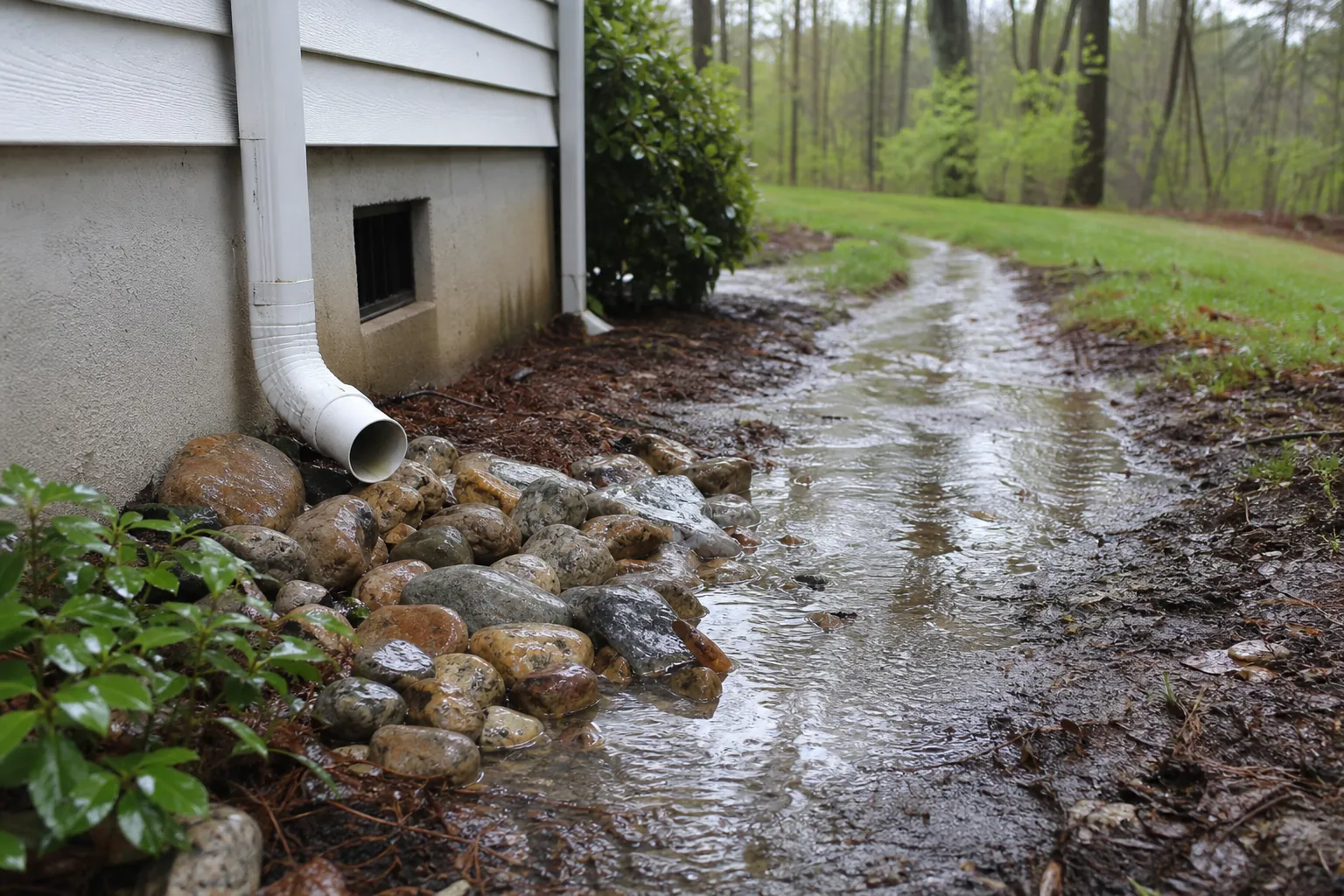
The outlet should not release collected water where it can soak the soil next to the foundation. Saturated soil near the house can keep the crawl space surroundings damp and reduce the value of moving water outdoors in the first place. The practical question is not simply how far the outlet extends. It is whether the final location and grade carry water away.
Check whether the proposed path crosses areas that pitch back toward the structure. Watch for depressions beside porches, additions, exterior steps, utility areas, or landscaping borders. These features can trap water or redirect it toward the crawl space. Mulch and loose soil can also shift after repeated discharge.
If the crawl space also has visible moisture on ductwork, drainage may be only one part of the conditions that need attention. Review this guide to crawl space condensation on ductwork in North Carolina for additional factors to observe while assessing the space.
Choose an Outlet That Remains Visible and Serviceable
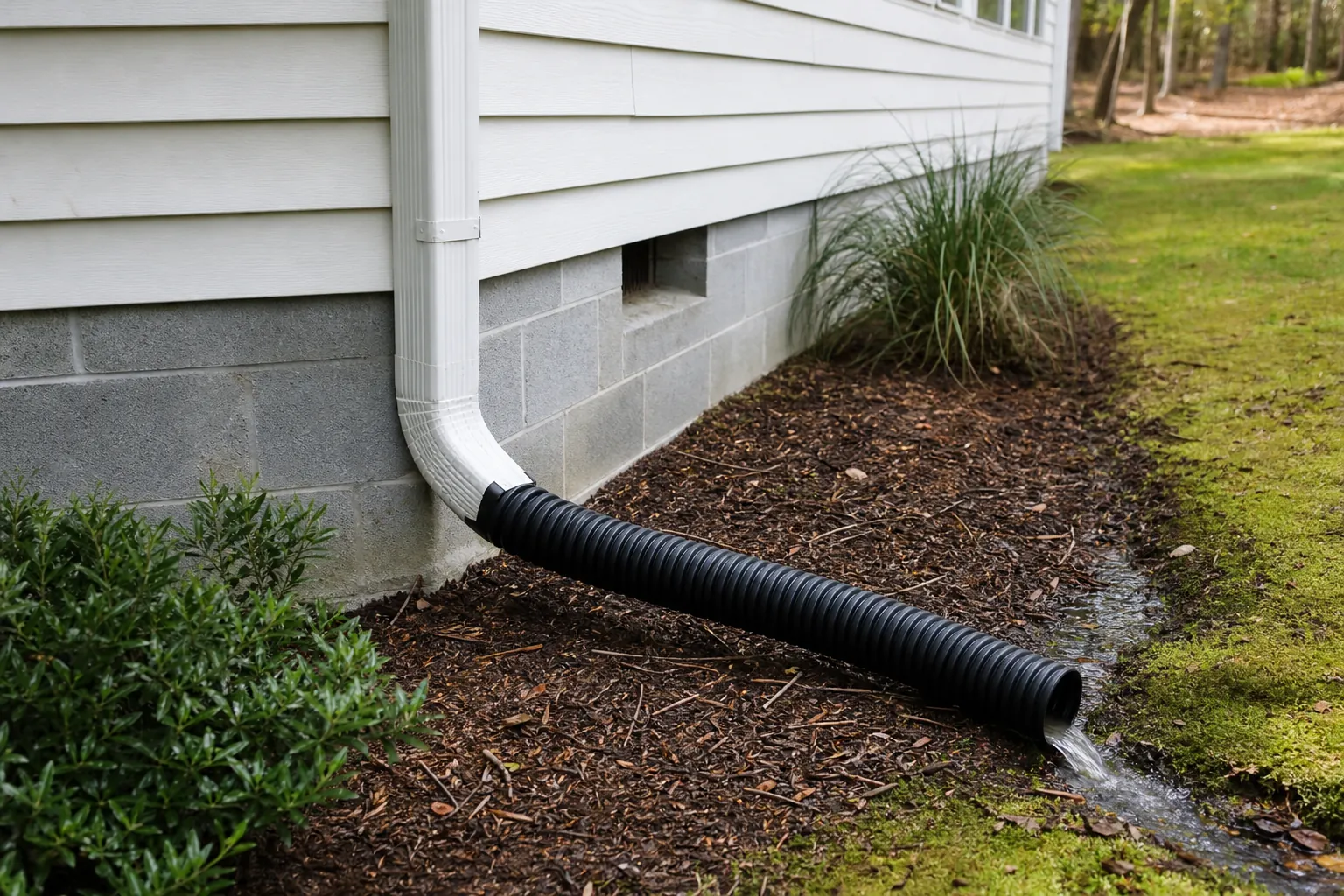
A discharge point should be accessible enough to inspect. Visibility helps a homeowner confirm that water is leaving during wet weather and notice sediment, plant growth, animal activity, crushed piping, or debris at the opening. A hidden outlet may look tidy, but it can make a drainage failure harder to identify.
Use a simple decision checklist before approving a location:
- Confirm that the ground slopes away from the foundation.
- Trace where discharged water will travel during heavy rain.
- Check for erosion, standing water, and soft soil along that route.
- Keep the outlet available for inspection and clearing.
- Avoid routes that create tripping, mowing, or landscaping conflicts.
- Consider neighboring lots, sidewalks, roads, and other property boundaries.
Inspectability matters after installation as well. Mark or photograph the location so it can be found when vegetation is dense. Check it periodically and after storms. If flow appears reduced or water is collecting near the house, investigate before assuming the system is operating as intended.
Avoid Shifting Water Problems Elsewhere
A drainage route should not transfer a crawl space water concern to another part of the property. Directing water toward a walkway may produce persistent wetness or sediment. Releasing it onto a steep, bare slope may cause erosion. Sending it toward a neighboring parcel can create an avoidable conflict, while directing it toward a street or drainage feature may be subject to local rules.
Before selecting an outlet, identify property lines and nearby structures. Consider sheds, retaining walls, fences, patios, driveways, wells, septic areas, utility equipment, and landscaped beds. These features may affect both the path and the ability to maintain the pipe. Do not assume a ditch, drain, or other visible feature is available for private discharge.
Local requirements can differ, so verify applicable rules before connecting to any public, shared, or regulated drainage location. When a straightforward surface outlet is unsuitable, the site may need a different plan. The goal is controlled drainage that respects the foundation, the rest of the property, and surrounding land.
Evaluate the Entire Route Before Making a Decision
A sound decision considers the complete route from the crawl space collection point to the final discharge area. Review pipe slope, turns, exposed sections, likely blockage points, and how the route interacts with landscaping. A convenient endpoint does not compensate for a route that can be crushed, disconnected, or filled with sediment.
Ask what will happen if the outlet is temporarily blocked. Look for places where water could back up or escape near the foundation. If the system uses equipment to move water, consider how you will recognize an interruption. The discharge point should support routine observation rather than make performance difficult to verify.
Document the proposed route before work begins. Take photos, note property features, and observe at least one meaningful rain event when possible. Compare more than one outlet location based on flow direction, accessibility, erosion risk, and off-site effects. This decision process helps separate a merely short route from one that fits the property.
Discuss Your Crawl Space Conditions
If you are deciding where crawl space drainage water should discharge on your North Carolina property, call Carolina Encapsulation Company at 704-207-9348. A calm conversation can help you organize the site conditions and questions that should be reviewed before choosing a location.
Call 704-207-9348 to talk through next steps.