Crawl space drainage solutions for Henderson homes
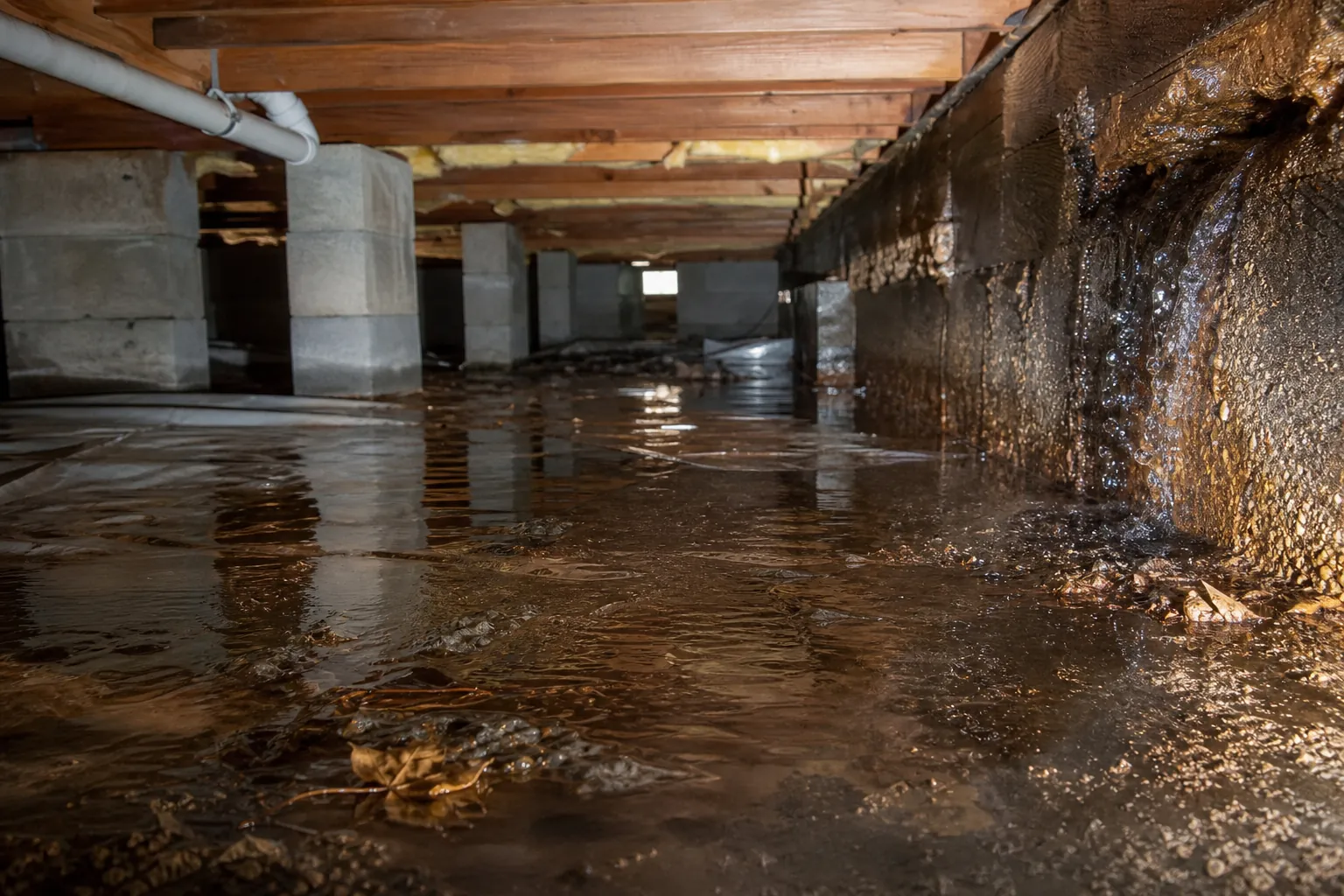
Standing water beneath a home is more than an inconvenience. It can raise humidity, create musty odors, damage insulation, and make a crawl space attractive to insects and other pests. In Henderson, North Carolina, seasonal rain, humid summers, and drainage conditions around the foundation can all contribute to moisture below the house.
Carolina Encapsulation Company provides crawl space drainage in Henderson, NC, with solutions tailored to the property. The goal is not simply to remove visible water once. A well-planned system manages how water enters, where it travels, and how it is discharged so the crawl space can remain drier over time.
Why water collects in Henderson crawl spaces
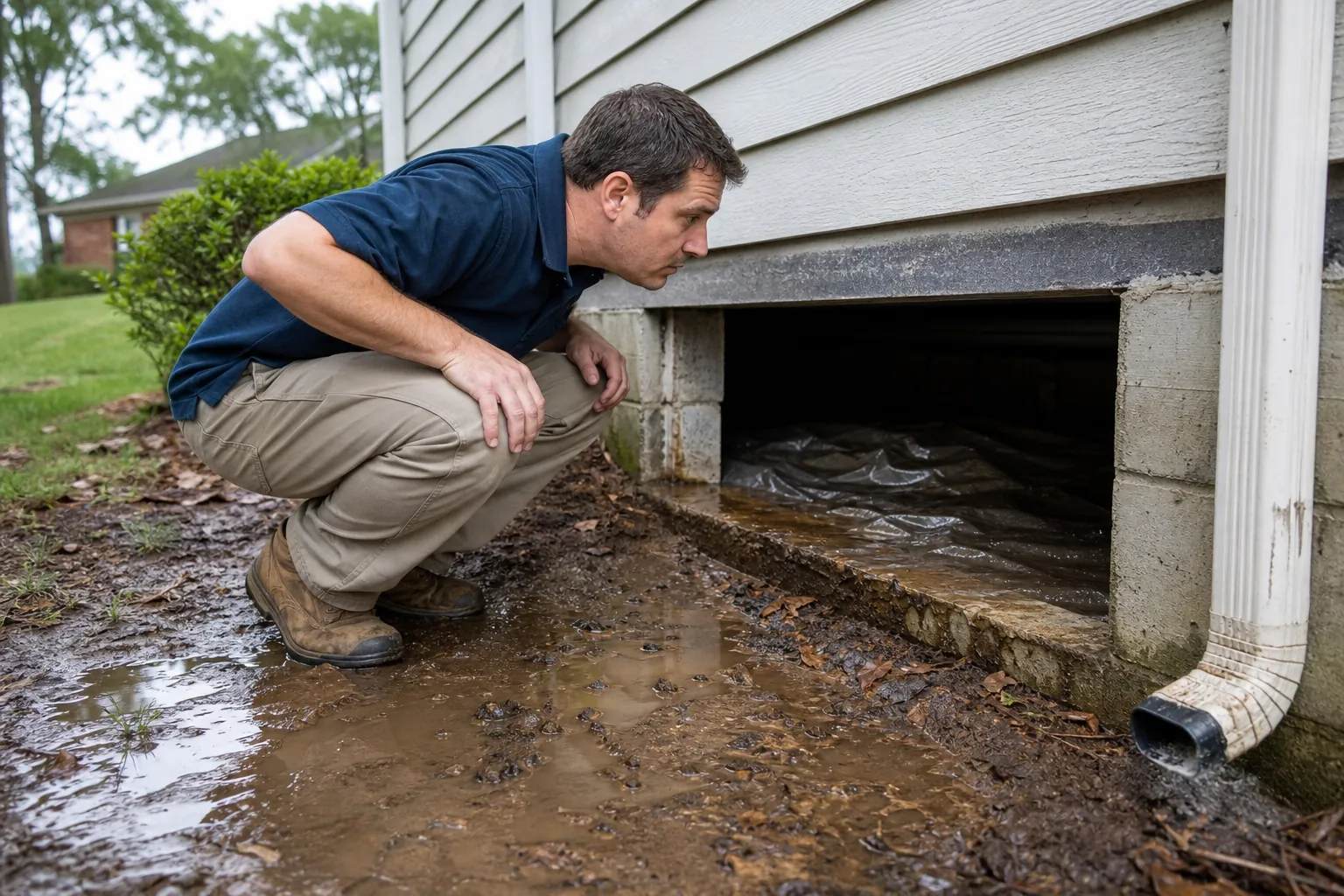
Crawl space water can come from several sources. Rainwater may flow toward the foundation when the soil has settled or the yard slopes toward the house. Short downspouts and clogged gutters can release large amounts of roof runoff near foundation walls. Water may also seep through porous masonry or rise through exposed soil.
Plumbing leaks and condensation can add to the problem, but they require different remedies. A leaking pipe should be repaired rather than treated as a groundwater issue. Condensation is often connected to humid outdoor air, cool surfaces, and inadequate moisture control. Identifying the source helps prevent unnecessary work and supports better results.
North Carolina's weather can make moisture problems seem inconsistent. A crawl space may look dry during an inspection after several clear days, then collect water during a prolonged storm. Evidence such as soil staining, mineral deposits, damp piers, sagging insulation, or corrosion can reveal recurring conditions even when no puddles are present.
Signs that drainage should be evaluated
Some symptoms appear below the home, while others affect the living area. A persistent earthy odor indoors may indicate humid air moving up from the crawl space. Floors can feel uncomfortable, and HVAC equipment located below the home may operate in a damp environment. Although drainage is not the answer to every crawl space concern, water intrusion deserves prompt attention.
Consider scheduling an evaluation if you notice:
- Puddles or muddy areas after rainfall
- Water marks on foundation walls or piers
- White mineral residue on masonry surfaces
- Wet, fallen, or stained fiberglass insulation
- Musty odors near floor vents or inside closets
- Rust on metal supports, fasteners, or HVAC components
- Condensation on ducts, pipes, or vapor barriers
- Visible fungal growth on wooden framing
- Insect activity associated with damp wood and soil
These signs do not establish the full cause by themselves. For example, fungal growth can be related to elevated humidity without standing water. A professional assessment should examine drainage patterns, foundation conditions, plumbing, ventilation, and existing moisture-control materials before recommending a scope of work.
How an interior drainage system works
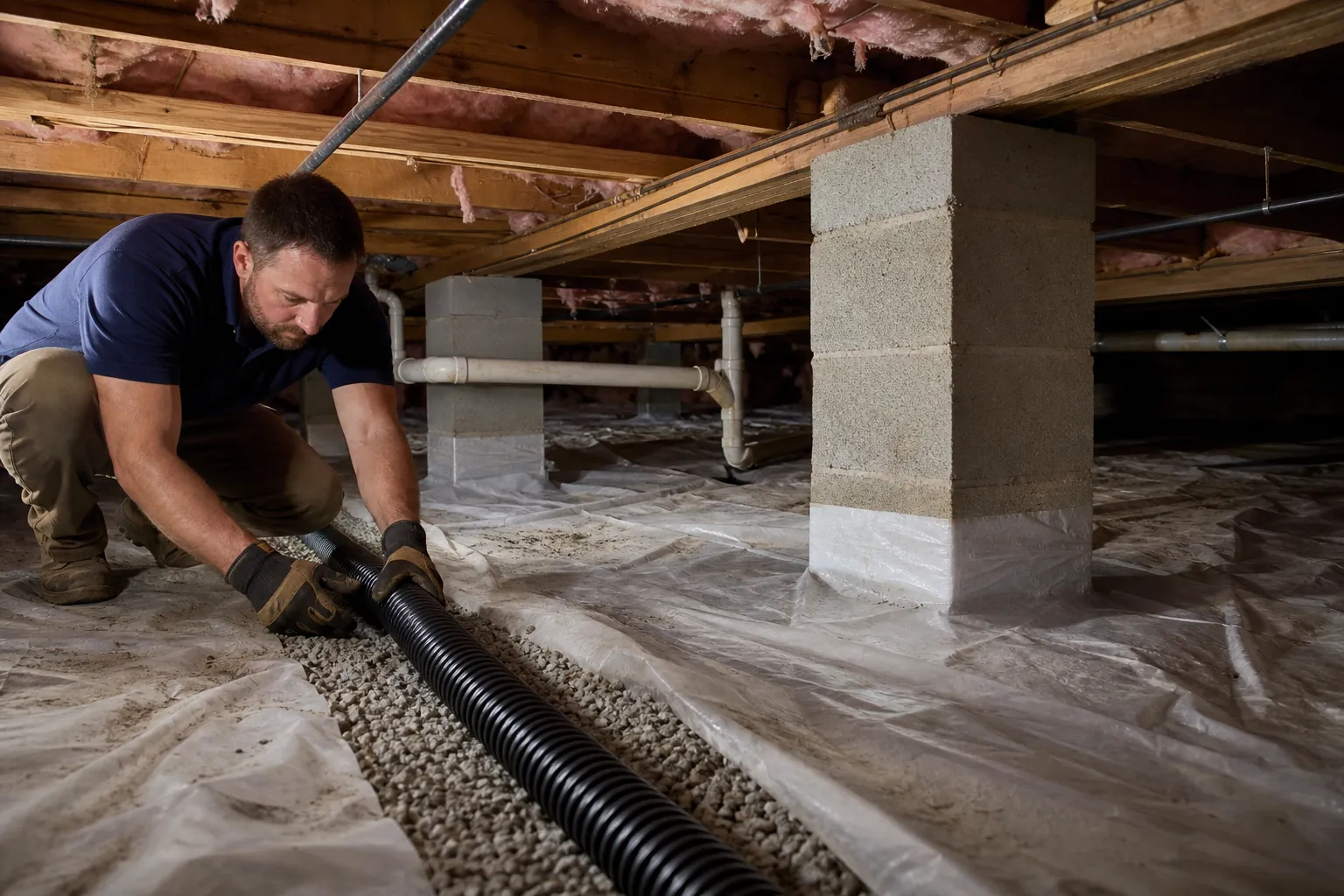
An interior crawl space drainage system is commonly installed near the foundation perimeter or in other low areas where water gathers. A channel or perforated drain line collects incoming water and directs it toward a sump basin. The system is typically surrounded by drainage stone and configured to reduce sediment entry while allowing water to move efficiently.
The sump pump then removes collected water through a discharge line. Discharge placement matters. Water should be carried far enough from the foundation to reduce the chance that it will cycle back beneath the home. The outlet must also account for yard grade, erosion risk, neighboring properties, and practical maintenance access.
Every crawl space has different constraints. Foundation walls, support piers, additions, utility lines, and tight clearances may affect the drainage route. A thoughtful design follows the actual water path rather than forcing the same layout into every home. In some cases, exterior corrections such as extending downspouts or improving surface grading should complement the interior system.
Why drainage and encapsulation work together
Drainage addresses liquid water, while encapsulation helps control ground moisture and humid air. These functions support one another but are not interchangeable. Covering wet soil without providing a path for recurring water can leave moisture trapped beneath the liner. Installing a drain while leaving exposed earth can still allow water vapor to raise crawl space humidity.
A comprehensive plan may include perimeter drainage, a sump pump, a sealed ground liner, sealed foundation vents, insulated walls, and a crawl space dehumidifier. Not every home needs every component. Recommendations should reflect measured humidity, water-entry patterns, foundation construction, and the condition of existing materials.
When encapsulation follows drainage work, the liner can be fitted around piers and attached at walls to create a cleaner, more controlled area. A dehumidifier may then help maintain appropriate relative humidity. This layered approach can improve conditions for wooden framing and mechanical equipment while reducing musty air movement into the home.
What to expect during a professional assessment
A useful inspection begins outside. The technician should examine roof runoff, downspout outlets, soil slope, low spots, and visible foundation openings. Inside the crawl space, the assessment should document standing water, drainage paths, staining, insulation condition, liner coverage, wood moisture, and practical locations for a sump basin and discharge line.
Homeowners should receive an explanation of the findings and the purpose of each recommended component. Ask where water will be collected, where it will be discharged, how the pump can be accessed, and what maintenance is expected. If backup protection is available for outages or pump failure, discuss whether it fits the property's risk and the homeowner's priorities.
Drainage installation can involve removing debris, creating channels, placing pipe and stone, setting the basin, installing the pump, and routing discharge piping. If encapsulation is included, that work generally follows after active water has a reliable route out. The exact sequence may vary with site conditions.
Maintaining a drier crawl space
Even a properly installed system benefits from routine observation. Keep gutters clear, confirm downspouts remain connected, and watch for soil settlement near the foundation. Check that the discharge outlet is open and not buried by mulch, leaves, or landscaping. Sump pumps should be tested according to manufacturer guidance, especially before periods of heavy rain.
Changes around the home can alter drainage. New patios, planting beds, irrigation, or neighboring construction may redirect water. A sudden return of odors or humidity should be investigated rather than masked with fragrance or additional ventilation. Early attention can keep a small issue from becoming a larger repair.
Plan the right solution for your home
Reliable crawl space drainage starts with understanding the source of the water and the layout beneath the home. Carolina Encapsulation Company helps Henderson homeowners evaluate moisture conditions and choose practical drainage and encapsulation options without relying on a one-size-fits-all plan.
If you are seeing standing water, damp insulation, or musty conditions, call 704-207-9348 to discuss an assessment. A calm, informed review can clarify what is happening below your North Carolina home and which steps are appropriate.
Call 704-207-9348 to talk through next steps.