Practical crawl space drainage for Knightdale homes
Water beneath a home can create problems that extend far beyond a damp crawl space. In Knightdale, seasonal rain, humid summers, clay-rich soil, and drainage issues around the foundation can allow moisture to collect under floors. Over time, that environment may contribute to musty odors, damaged insulation, wood decay, pest activity, and poor indoor comfort.
Carolina Encapsulation Company provides professional solutions for crawl space drainage in Knightdale, NC. The goal is not simply to remove visible water. Effective drainage should address how water reaches the crawl space, where it collects, and how it can be directed away safely. A thoughtful system can also support future encapsulation and humidity control.
Why water collects beneath Knightdale homes
Crawl space water can come from several sources. Surface runoff may flow toward the foundation when soil grading is flat or slopes toward the house. Downspouts that discharge near foundation walls can add large amounts of water during a storm. Groundwater may also rise through soil or enter at the wall and footing connection.
Knightdale's warm, humid climate adds another concern. Even without standing water, damp soil can continuously release water vapor into an open crawl space. Foundation vents may bring in humid outdoor air rather than dry the area, particularly during summer. Condensation can then develop on ducts, pipes, insulation, and framing.
Because moisture has multiple possible causes, an inspection should come before a recommendation. Pumping out water without correcting its path often provides only temporary relief.
Signs your crawl space may need drainage
Some warning signs are obvious, while others first appear inside the living area. Homeowners should pay attention to recurring changes after heavy rain and avoid assuming that crawl space dampness is normal.
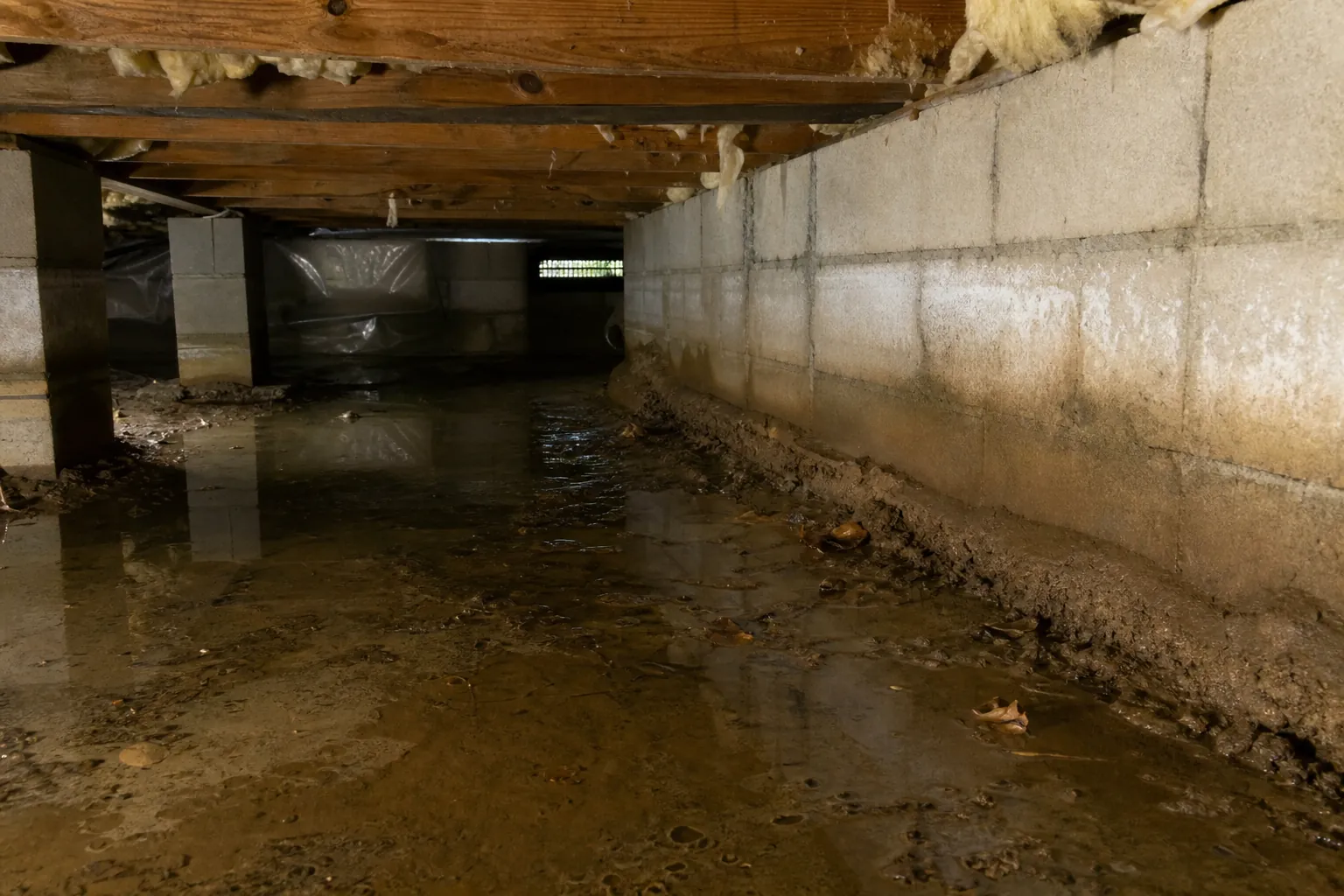
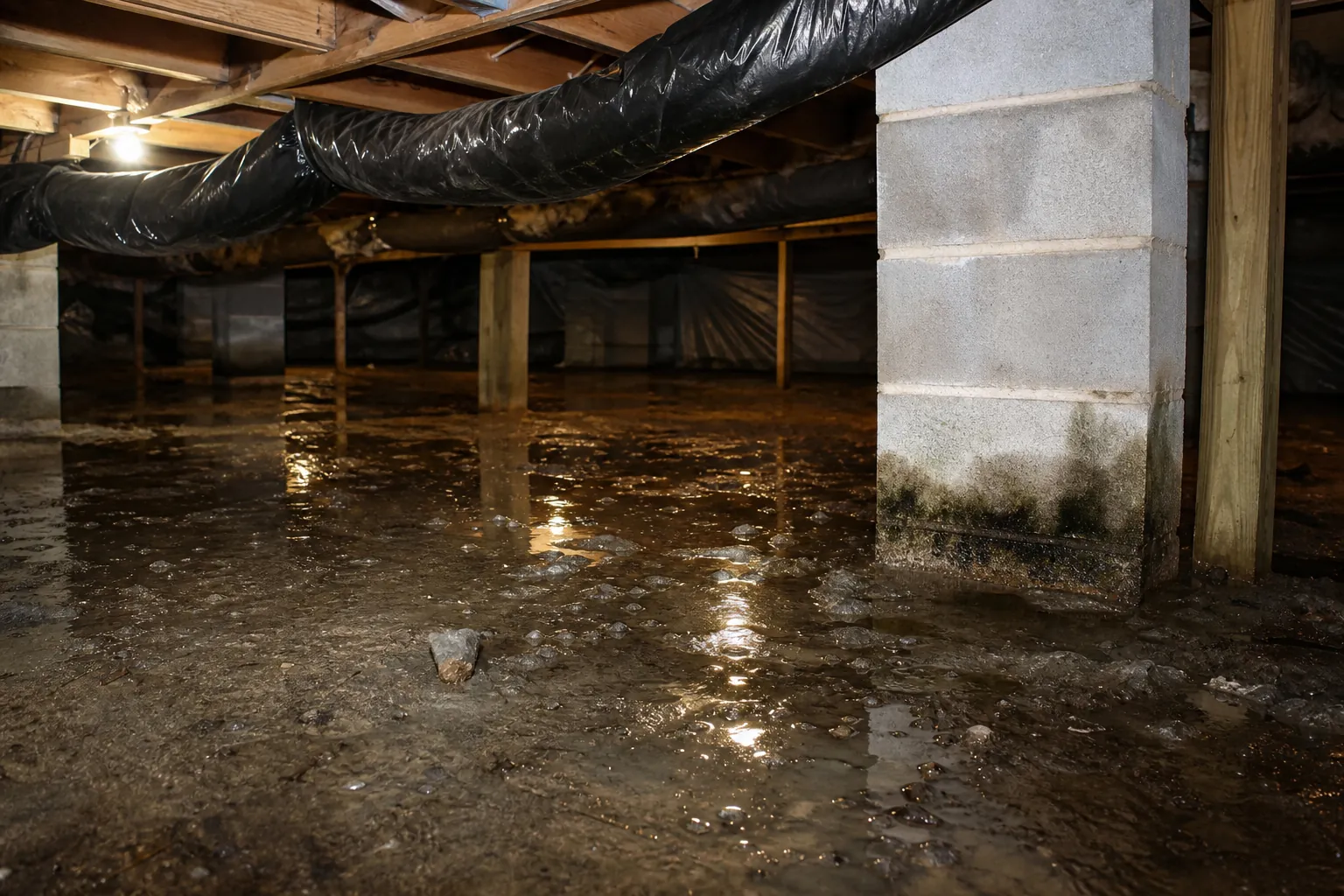
- Standing water or muddy soil: Puddles, channels, or consistently soft ground indicate that water is entering faster than it can leave.
- White residue on masonry: Efflorescence on block walls can show that moisture is moving through the foundation.
- Musty indoor odors: Air from the crawl space can migrate upward through gaps around wiring, plumbing, and duct penetrations.
- Sagging or wet insulation: Fiberglass insulation can hold moisture, lose effectiveness, and fall away from the subfloor.
- Rust and condensation: Corrosion on metal components or sweating ductwork points to prolonged moisture exposure.
- Wood staining or softness: Darkened joists, fungal growth, or soft framing should be evaluated promptly.
- Uneven or bouncy floors: Moisture-related wood damage may affect framing strength and floor stability.
- Increased pest activity: Damp conditions can attract insects and create a favorable environment for other pests.
Not every sign confirms the same problem. A drainage assessment helps distinguish bulk water intrusion from condensation, plumbing leaks, or elevated humidity.
How a crawl space drainage system works
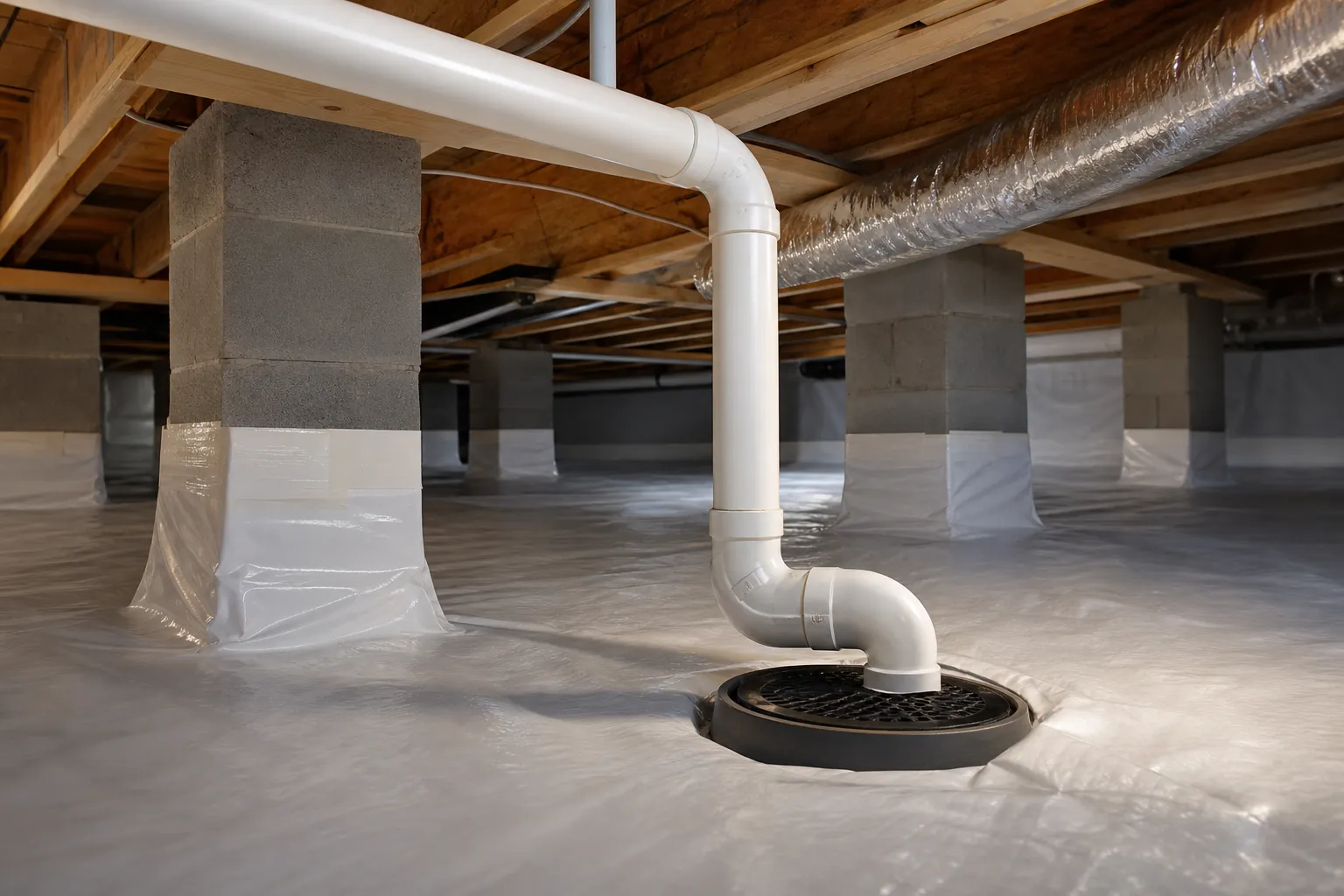
A typical interior drainage system is designed to collect water near the crawl space perimeter and guide it to a controlled discharge point. Depending on the home, work may include a perimeter trench, drainage pipe, washed stone, a sump basin, and a sump pump. The layout should reflect foundation elevations, entry points, soil conditions, and available discharge locations.
The sump basin receives collected water at a low point. A properly sized pump then moves water through a discharge line away from the foundation. Check valves, sealed lids, and dependable electrical connections can improve system performance. In areas with frequent outages or critical water concerns, a battery backup option may be worth considering.
Exterior details also matter. Extending downspouts, correcting localized grading, and keeping drainage outlets clear may reduce the volume entering the crawl space. No two properties have exactly the same water pattern, so system design should be based on observed conditions rather than a one-size-fits-all package.
Why drainage and encapsulation often work together
Drainage manages liquid water, while encapsulation helps limit ground vapor and humid outside air. When a home has both water intrusion and high humidity, using only one approach may leave part of the problem unresolved.
After active water is controlled, a durable vapor barrier can be installed across the crawl space floor and carefully sealed at seams, piers, and foundation walls. Vents and common air leaks may also be sealed. A crawl space dehumidifier can then maintain a more stable humidity level when needed.
The correct order is important. Installing a liner over an unresolved water problem can trap water beneath the material or allow water to collect above it. Drainage should be planned first when inspection findings show recurring bulk water. Encapsulation can then create a cleaner, more controlled environment.
What to expect from a professional evaluation
A useful evaluation should consider the entire moisture pathway, not just the wettest corner. The technician may examine foundation walls, crawl space elevations, soil conditions, insulation, wood framing, plumbing, ductwork, vents, downspouts, and exterior grading. Photos and moisture readings can help document findings.
Homeowners should receive a clear explanation of where water appears to enter, how the proposed system will collect it, and where the discharge line will terminate. It is also reasonable to ask about pump capacity, maintenance access, backup options, vapor barrier recommendations, and any preparation required before installation.
After installation, routine checks help keep the system ready. The sump basin should remain accessible, the pump should be tested periodically, and the exterior outlet should stay free of leaves, soil, and debris. Gutters and downspouts also need regular cleaning so roof runoff does not overwhelm the area around the foundation.
Plan a lasting solution for your crawl space
Recurring crawl space water rarely improves on its own. Addressing it early may help protect insulation, framing, indoor comfort, and future repair costs. More importantly, a properly planned system offers a practical way to manage water whenever North Carolina storms arrive.
Carolina Encapsulation Company can evaluate your Knightdale crawl space and explain suitable drainage, sump pump, vapor barrier, and encapsulation options. For a calm, straightforward conversation about your home's moisture concerns, call 704-207-9348 to schedule an inspection.
Call 704-207-9348 to talk through next steps.