Should a Roof Leak Be Repaired Before Crawl Space Encapsulation?
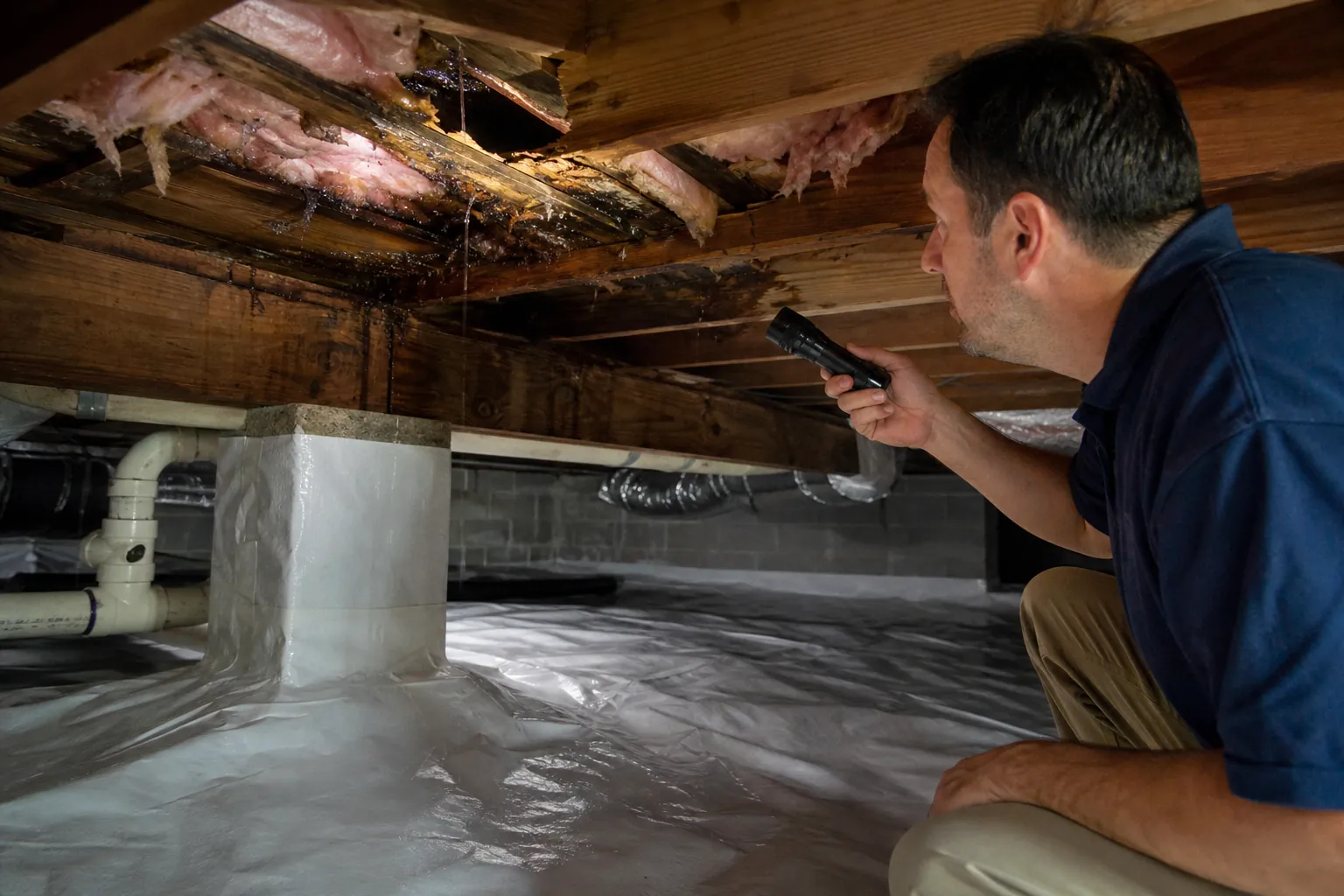
If your home has both a roof leak and a damp crawl space, repair the roof leak first. Encapsulation should not be used to compensate for water that is still entering the structure from above. The practical sequence is to stop the leak, assess where the water traveled, allow affected areas to dry, and then decide whether crawl space encapsulation fits the remaining moisture conditions. This order reduces uncertainty and helps you avoid covering up an unresolved source of water.
Why the Roof Leak Comes First
A crawl space moisture project should begin with identifying active water sources. A leaking roof can send water through ceilings, walls, insulation, framing, and utility openings before it reaches lower parts of the home. Water found near the crawl space does not automatically mean it entered through the crawl space.
Repairing the roof first establishes a clear starting point. Once rainwater is no longer entering from above, you can observe whether crawl space moisture persists for other reasons. Moving directly to encapsulation while the roof still leaks makes that distinction harder. New water may continue traveling downward, and visible dampness could be mistakenly attributed to ground moisture or humid air.
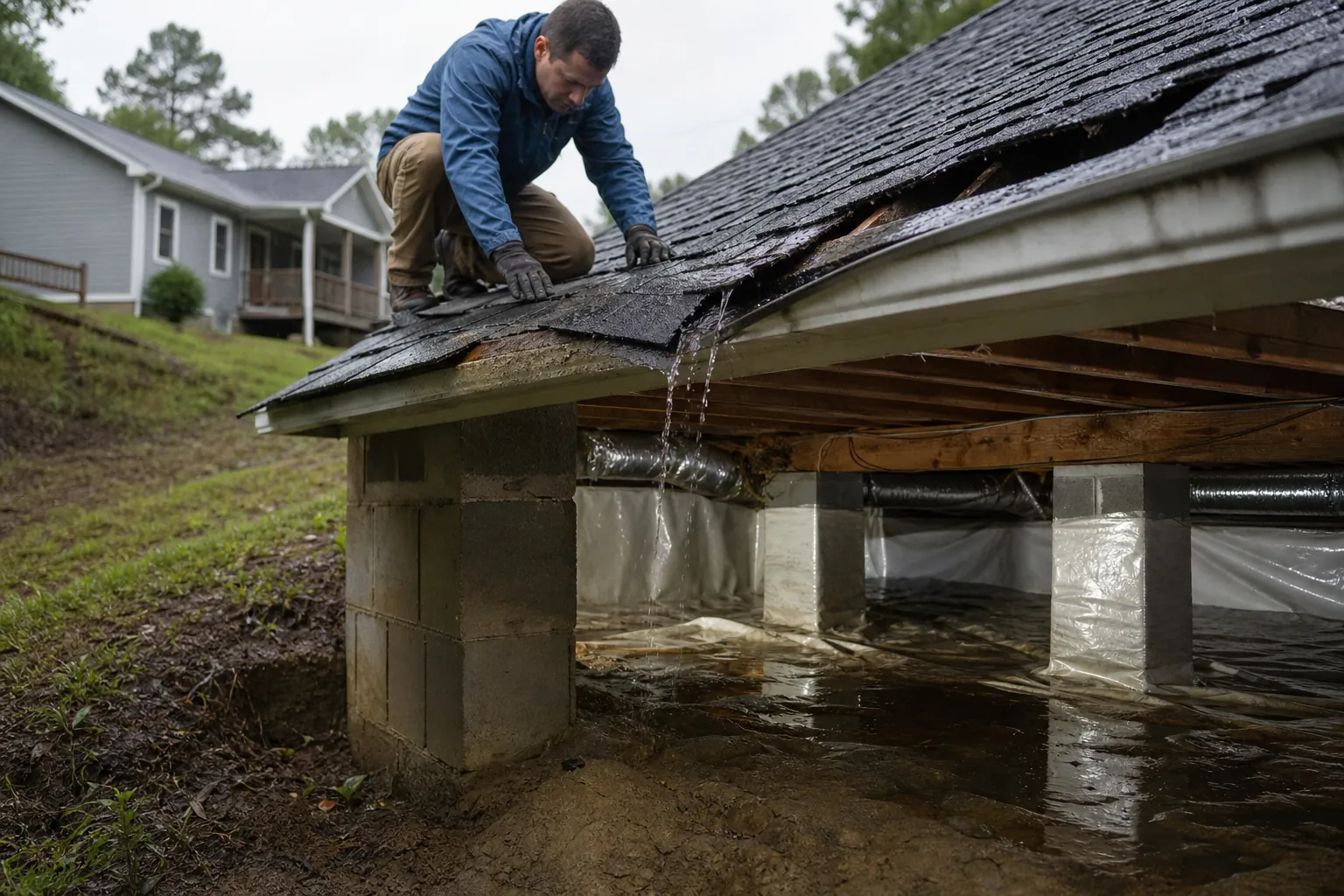
The sequence matters even if the roof leak appears small. The visible drip may not show the full path that water followed. Before crawl space work begins, confirm that the roof repair addressed the entry point and that materials along the water path have been checked.
Trace the Water Path Before Making a Decision
After the roof is repaired, inspect the route water may have taken. Start near the original leak and work downward. Look at accessible ceiling areas, wall surfaces, insulation, framing, and the section of the crawl space below the affected part of the home. Stains can indicate prior exposure, but active dampness deserves closer attention.
A useful review should separate old evidence from current moisture. Note whether stains change after rain, whether insulation remains damp, and whether wood surfaces feel or appear wet. Pay attention to plumbing and exterior drainage as well, because more than one water source can exist at the same time.
- Confirm that the roof entry point has been repaired.
- Check accessible materials below the leak for remaining dampness.
- Remove standing water if any is present.
- Document stains and recheck them after rainfall.
- Look for separate crawl space moisture sources.
- Wait for affected areas to dry before covering surfaces.
This process provides better information for the encapsulation decision and helps prevent one problem from being confused with another.
Allow Wet Materials to Dry Before Encapsulation
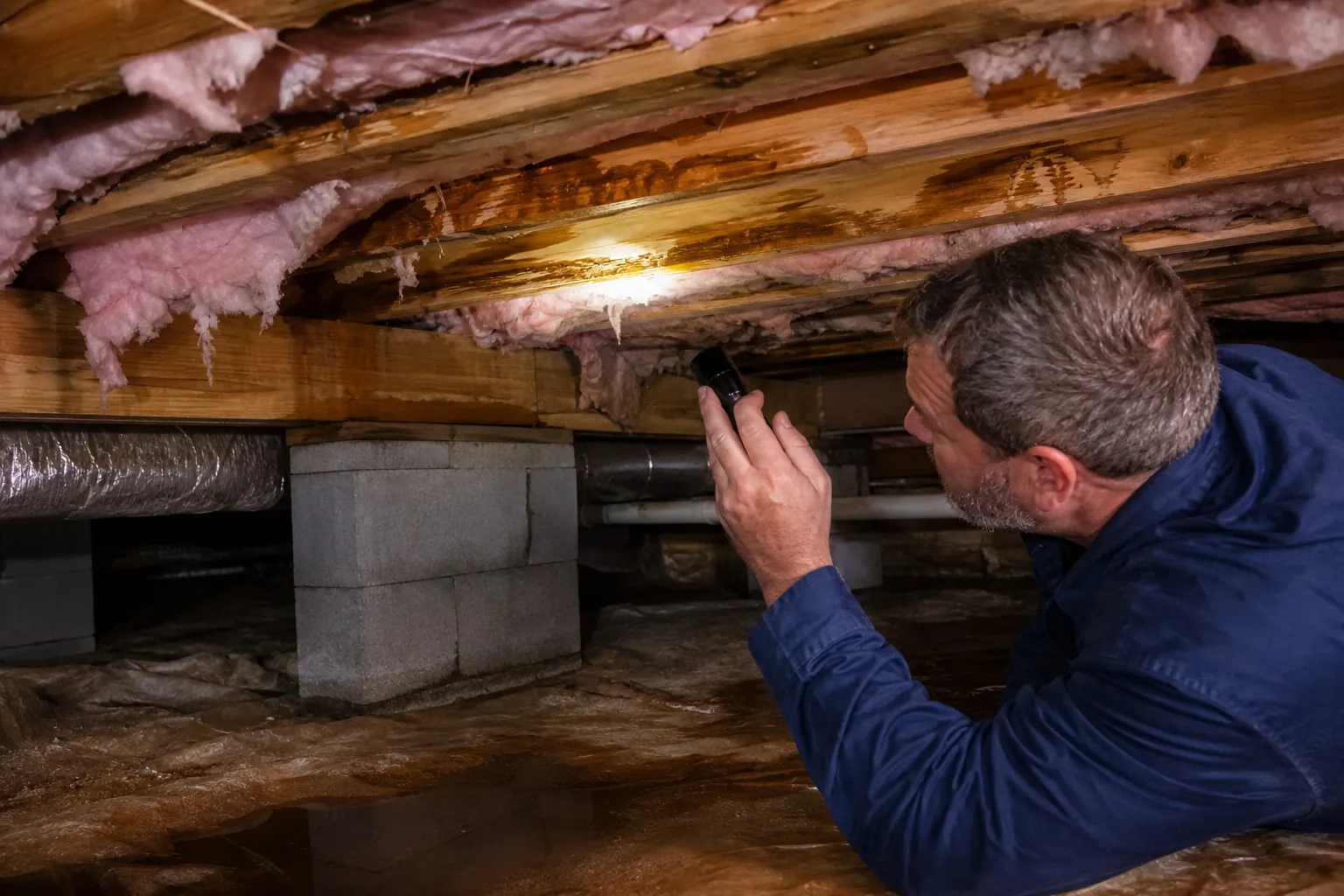
Encapsulation changes how the crawl space is separated from exposed soil and outside air, so it should begin with a clear understanding of existing moisture. Installing materials while the area is still wet can conceal conditions that need attention. The goal is not simply to make dampness less visible. The goal is to address water sources and begin with appropriately dry, observable surfaces.
Drying time varies with the amount of water, the materials involved, airflow, temperature, and humidity. A surface that looks dry may not tell you whether nearby insulation or concealed wood remains damp. Avoid choosing a deadline based only on the date of the roof repair. Instead, recheck the affected route and confirm that no new water appears after rain.
If water reached the crawl space, distinguish between a one-time event and a continuing condition. Persistent dampness after the roof repair may point to humid air, condensation, drainage, plumbing, or ground moisture. That finding does not reverse the need to fix the roof first. It identifies additional conditions that should inform the next step.
Evaluate Crawl Space Moisture Separately
Once the roof leak is stopped and affected areas are drying, evaluate the crawl space on its own. Look at the soil, foundation walls, vents, framing, insulation, pipes, and duct surfaces that are safely accessible. Note where moisture appears and whether it changes with rain or warm, humid weather.
Condensation deserves particular attention because it can be mistaken for a leak. Moisture on cooler duct surfaces may form when humid air contacts them. That pattern is different from water traveling down from a damaged roof, even though both may contribute to a damp crawl space. For a closer explanation, read crawl space condensation on ductwork in North Carolina.
The decision should be based on the conditions that remain after the roof issue is resolved. If the crawl space stays dry, the roof may have been the primary source. If moisture continues, record its location and timing. Clear observations make it easier to discuss whether encapsulation is appropriate without expecting it to solve an unrelated leak.
Plan the Work in the Right Order
A practical plan begins above the crawl space and moves downward. First, repair the roof leak. Second, inspect the accessible path of water through the home. Third, remove standing water and allow damp materials to dry. Fourth, recheck the affected areas after rainfall. Finally, evaluate any moisture that remains in the crawl space and decide how it should be addressed.
Before moving forward, ask what evidence shows that the roof leak is no longer active, whether any materials remain wet, and whether the crawl space has independent moisture sources. Also ask which areas will become harder to observe after work is completed. These questions keep the project focused on causes rather than appearances.
Do not treat encapsulation as a substitute for roof repair, drainage correction, or plumbing repair. Each source of water needs to be identified and addressed on its own. When the steps are handled in order, you have a more reliable basis for deciding what the crawl space needs and can avoid committing to work while an active leak remains unresolved.
Discuss Your Crawl Space Conditions
If your North Carolina home had a roof leak and you are considering crawl space encapsulation, Carolina Encapsulation Company can discuss the conditions you have observed. Call 704-207-9348 for a calm, practical conversation about your next step.
Call 704-207-9348 to talk through next steps.