Crawl space encapsulation for Asheville homes
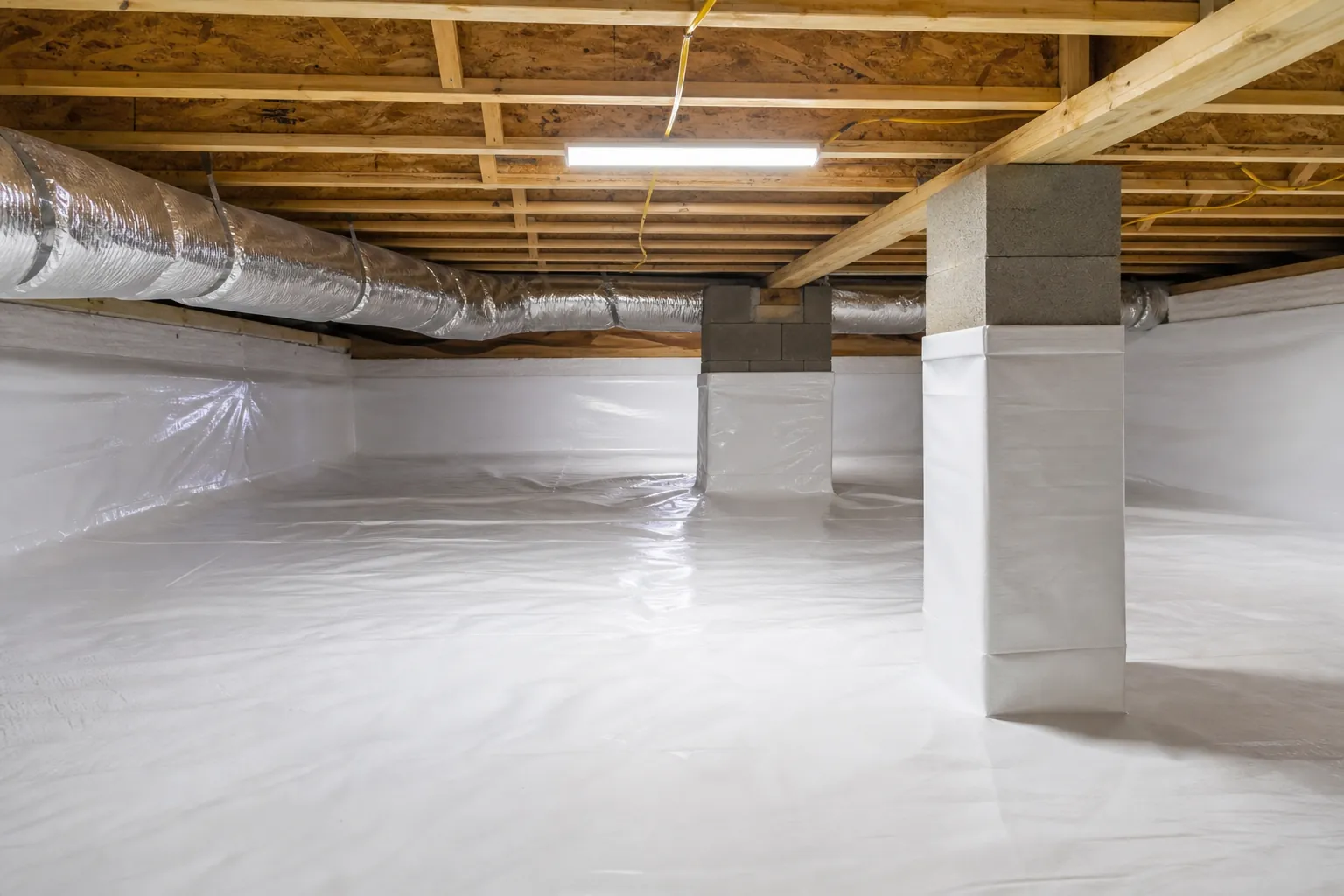
In Asheville, moisture beneath a home can become a year-round concern. Humid summers, frequent rainfall, shaded lots, and sloped terrain can all contribute to damp crawl spaces. When humid outdoor air and ground moisture enter this area, the conditions may affect insulation, wood framing, indoor comfort, and air quality.
Carolina Encapsulation Company provides crawl space encapsulation in Asheville, NC, with solutions tailored to the home rather than a one-size-fits-all package. A properly designed system helps separate the crawl space from exposed soil and humid outside air, creating a cleaner and more manageable environment below the floor.
Why Asheville Crawl Spaces Develop Moisture Problems
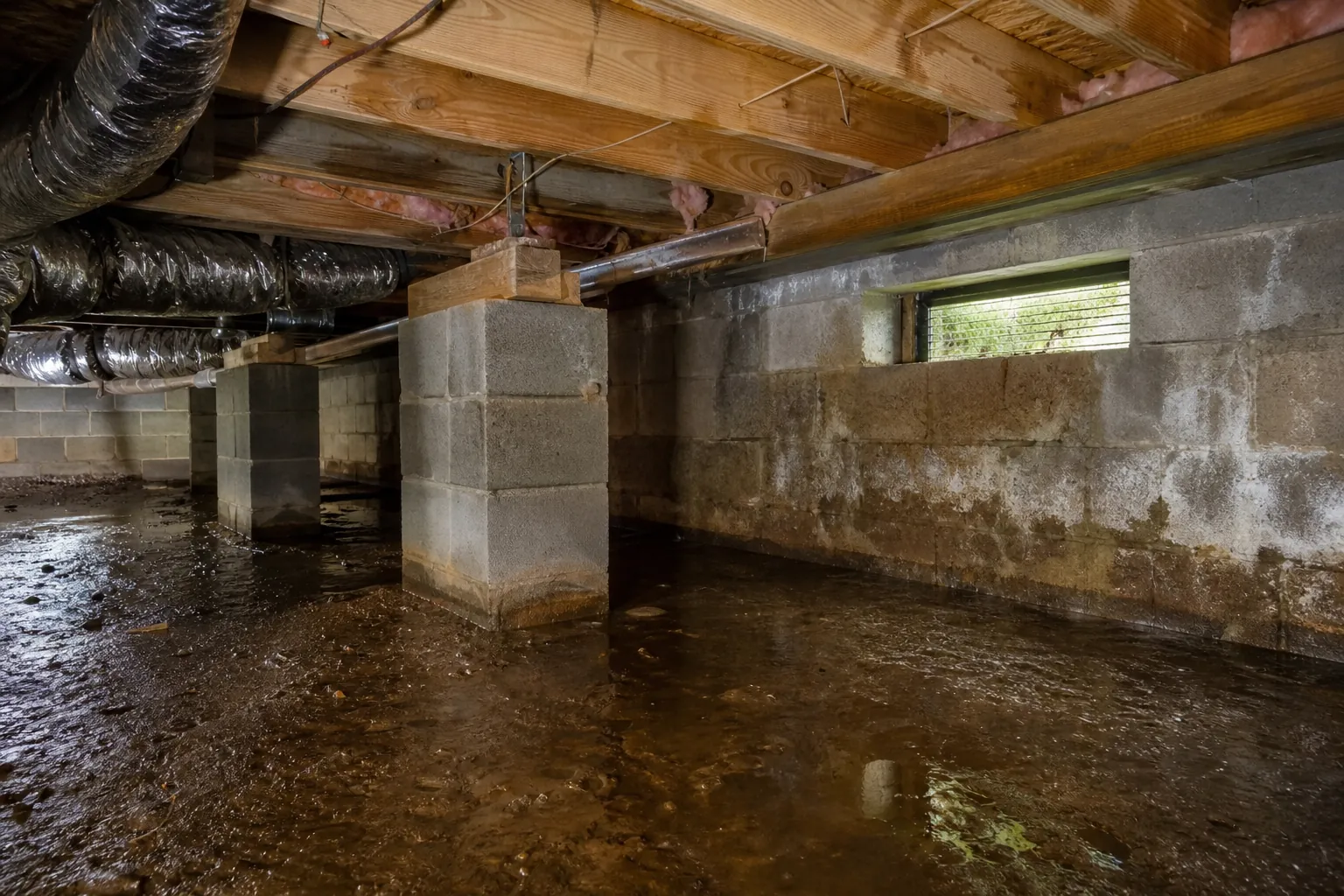
Many crawl spaces were built with wall vents intended to improve airflow. In humid weather, however, those vents may admit warm, moisture-laden air. When that air contacts cooler ductwork, plumbing, masonry, or framing, relative humidity can rise and condensation may develop.
Bare soil is another common moisture source. Even when the ground appears dry, water vapor can migrate upward into the crawl space. Thin, loose, or damaged plastic may leave large sections of soil exposed and may not seal around piers or foundation walls.
Exterior conditions matter too. Gutters that overflow, downspouts that release water near the foundation, poor grading, and hillside runoff can increase moisture pressure around a home. Encapsulation addresses vapor and humidity inside the crawl space, while drainage improvements may be recommended when bulk water is present.
What A Complete Encapsulation System Includes
Encapsulation is more than placing plastic on the ground. The goal is to create a durable moisture-control boundary and manage the conditions inside it. The appropriate scope depends on the foundation, existing water issues, crawl space height, mechanical equipment, and condition of the building materials.
A professional crawl space plan may include:
- Site assessment: The crawl space is evaluated for standing water, condensation, visible fungal growth, damaged insulation, pest activity, wood concerns, and drainage problems.
- Preparation: Debris and failed materials may be removed so the area can be accessed and the liner can be installed correctly.
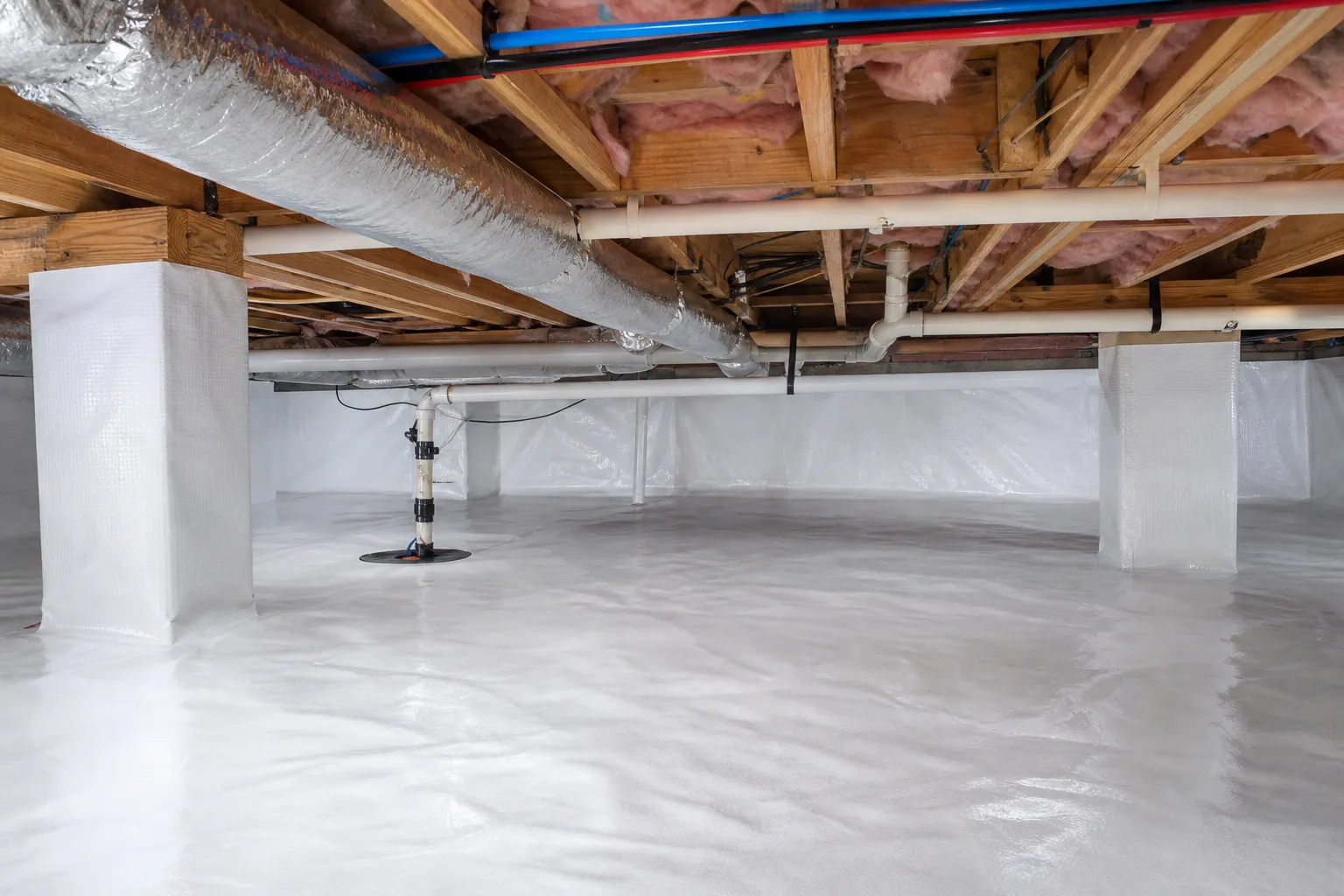
- Ground liner: A reinforced vapor barrier covers exposed soil and is fitted around piers, supports, and penetrations.
- Wall sealing: The liner is extended and secured where appropriate to reduce vapor entry at foundation walls and edges.
- Vent and gap sealing: Exterior vents and air leaks are addressed to limit the entry of humid outdoor air.
- Humidity management: A crawl space dehumidifier may be installed to maintain more stable moisture levels.
- Water control: When active seepage or runoff is identified, drainage or sump equipment may be needed before the space is sealed.
Not every home needs every component. A careful inspection helps distinguish between vapor intrusion, humid air, plumbing leaks, and groundwater so the recommended work addresses the actual source.
Benefits For The Home Above
A damp crawl space is not isolated from the living area. Air can move upward through openings around wiring, plumbing, ductwork, and framing. This movement, often associated with the stack effect, can carry musty odors and humid air into rooms above.
By reducing ground vapor and outside air infiltration, encapsulation can help control crawl space humidity and odors. It can also help protect floor framing from prolonged dampness. Wood does not need to be visibly wet for elevated moisture to create unfavorable conditions over time.
Encapsulation may also support more consistent indoor comfort. Humid air can make a home feel warmer, place additional demand on cooling equipment, and contribute to cold or clammy floors in certain seasons. Results vary based on the home, HVAC system, insulation, and existing moisture sources, but a controlled crawl space gives homeowners a stronger foundation for managing these issues.
Signs It Is Time To Schedule An Inspection
Crawl space problems are often easy to miss because the area is rarely visited. Changes inside the home can provide useful clues. An inspection is worth considering if you notice persistent musty smells, floors that feel unusually cool or damp, elevated indoor humidity, or HVAC equipment that seems to work harder during humid weather.
Visible conditions below the home may include condensation on ducts or pipes, sagging insulation, rust on metal components, water stains, standing water, efflorescence on masonry, or discoloration on wood. Pest activity can also increase in damp, sheltered spaces.
These signs do not all point to the same repair. For example, a plumbing leak requires a different response than groundwater seepage. The purpose of an inspection is to identify contributing conditions before recommending encapsulation or related moisture-control work.
How To Compare Crawl Space Proposals
Homeowners comparing estimates should look beyond square footage and price. Ask what liner is proposed, how seams and penetrations will be treated, and whether foundation walls, piers, doors, and vents are included. The proposal should also explain how humidity will be monitored or controlled after installation.
It is important to clarify how existing water will be handled. Sealing a crawl space without correcting active intrusion can trap a continuing problem beneath the liner. Likewise, installing a dehumidifier without controlling ground vapor may cause the unit to run excessively.
Ask whether damaged insulation or debris must be removed, how the liner will be protected near service areas, and what maintenance the system requires. Clear answers make it easier to compare scopes accurately and avoid gaps between initial expectations and the finished project.
Local Service From Carolina Encapsulation Company
Mountain weather, varied elevations, and diverse foundation designs make local experience valuable. Carolina Encapsulation Company evaluates the entire crawl space, including drainage patterns, vapor entry points, ventilation, insulation, and humidity. The goal is a practical system that fits the conditions beneath your Asheville-area home.
After installation, homeowners should continue directing roof runoff away from the foundation, maintaining gutters, checking plumbing, and servicing dehumidification equipment as recommended. Periodic crawl space checks can catch changes early and help preserve the system.
If you are concerned about odors, moisture, condensation, or exposed soil beneath your home, schedule a straightforward evaluation. Call Carolina Encapsulation Company at 704-207-9348 to discuss crawl space encapsulation for your Asheville, North Carolina property.
Call 704-207-9348 to talk through next steps.