Crawl space encapsulation for North Carolina mobile homes
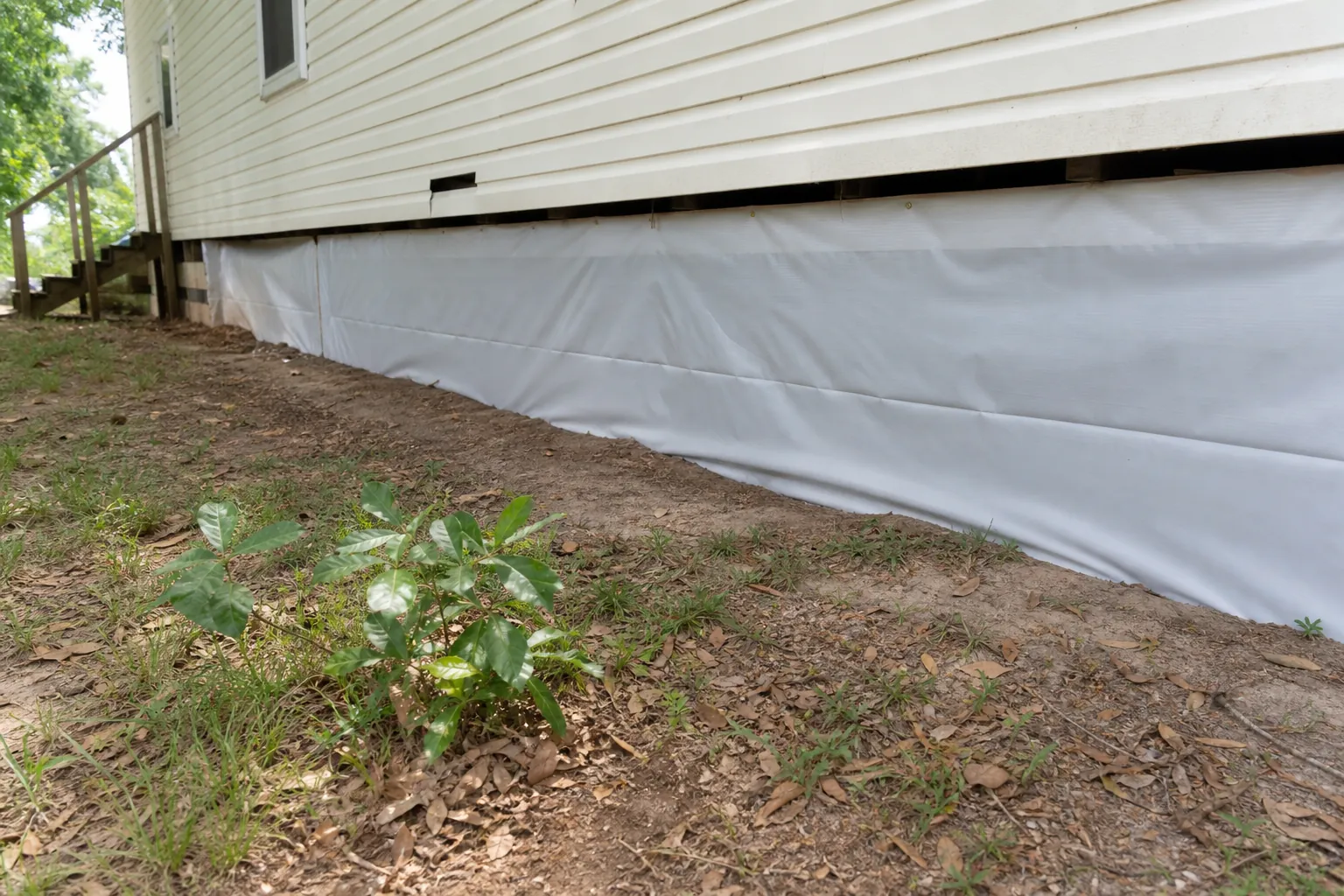
Moisture beneath a mobile or manufactured home can affect much more than the ground below it. Damp conditions may contribute to musty odors, damaged insulation, wood deterioration, pests, and uncomfortable indoor humidity. Because plumbing, ductwork, wiring, and structural components often share this limited space, moisture problems can spread quietly before they become obvious inside.
Professional crawl space encapsulation for a mobile home creates a cleaner, more controlled area beneath the structure. In North Carolina, where humidity, heavy rain, and clay soils can keep the ground wet, a properly designed moisture-control system can protect both the home and the comfort of the people living in it.
Why Mobile Home Crawl Spaces Need Special Attention
Mobile homes commonly sit on piers with perimeter skirting rather than on a conventional continuous foundation. Skirting improves appearance and helps shield the underside, but it is not automatically an air or moisture barrier. Outdoor humidity can enter through vents, gaps, access panels, and loose connections. Water vapor can also rise directly from uncovered soil.
The enclosed area may have limited clearance and numerous penetrations around support piers, tie-downs, utility lines, and plumbing. These details make careful installation important. Simply placing plastic on the ground without sealing seams and edges may leave major pathways for moisture.
North Carolina conditions add another challenge. Warm, humid air entering a cooler crawl space can raise relative humidity and create condensation on ducts, pipes, metal fasteners, and insulation. A complete encapsulation strategy addresses ground vapor, outside air, drainage, and humidity together.
What A Mobile Home Encapsulation System Includes
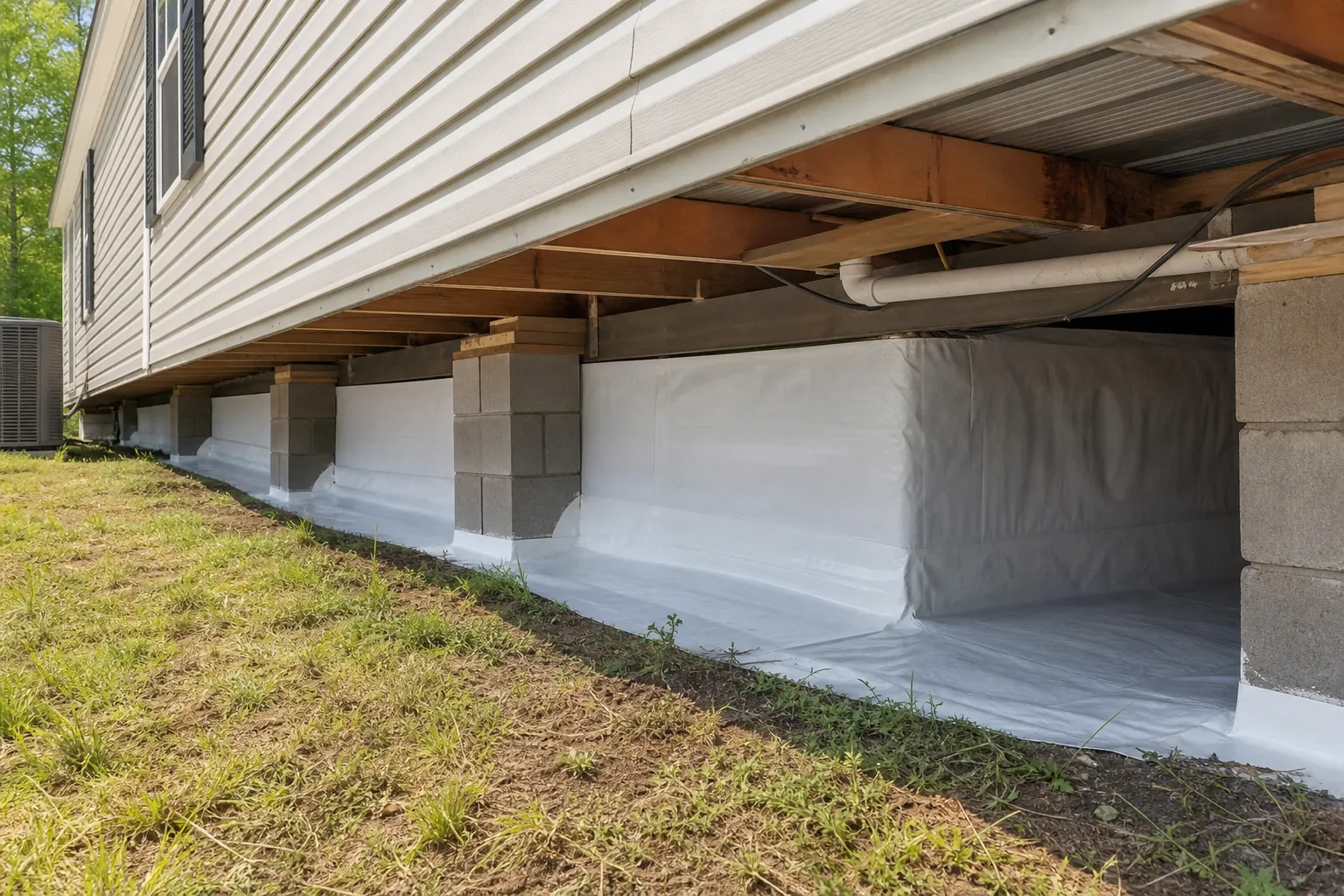
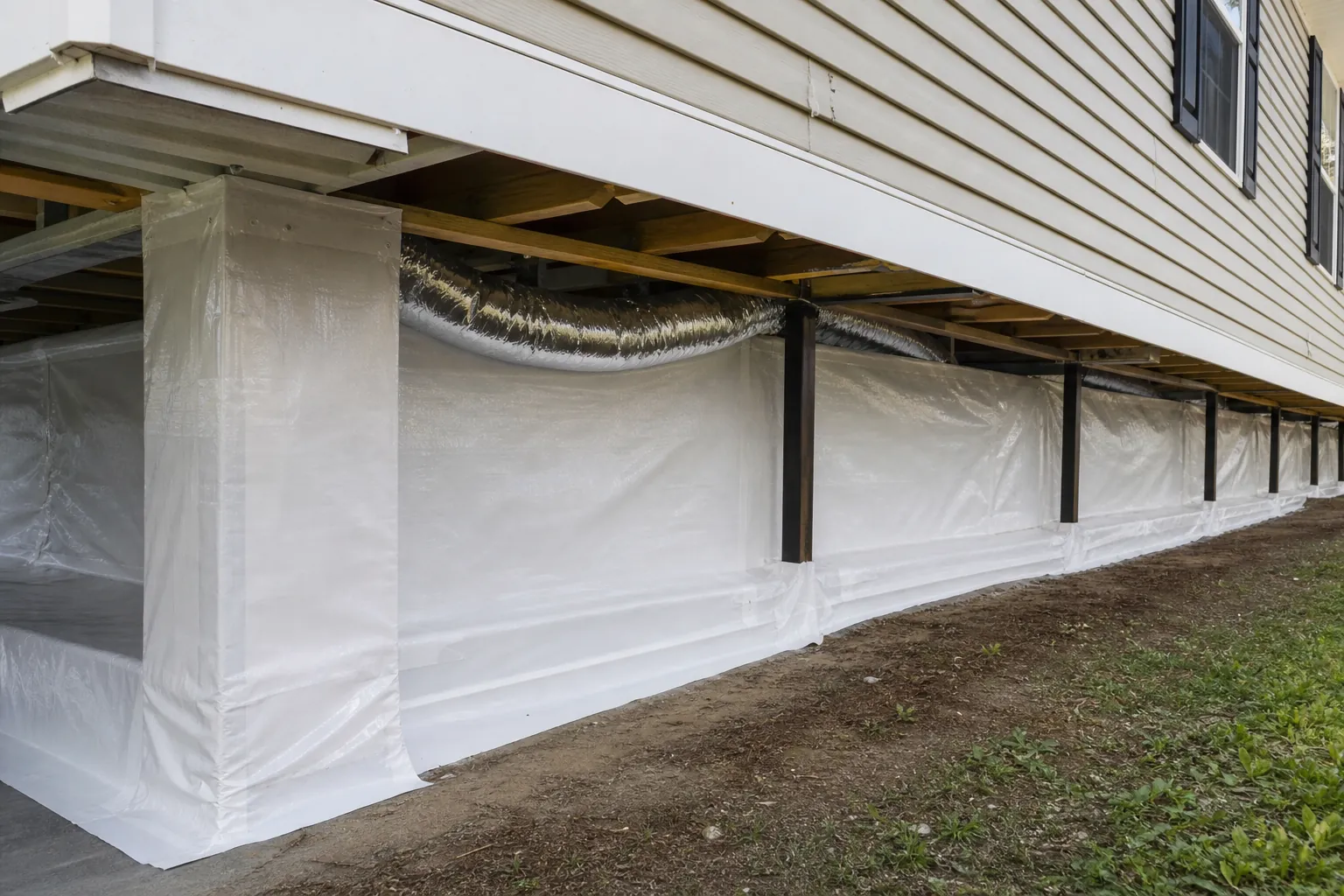
Each home should be evaluated individually. Site drainage, skirting materials, crawl space height, plumbing condition, existing insulation, and signs of standing water all influence the recommended scope. A typical system uses a durable vapor barrier across the soil, sealed seams, and detailed fitting around piers and penetrations.
Depending on the home, the liner may also extend up the inside of the perimeter enclosure. Attachment methods must suit the skirting or foundation material without causing avoidable damage. Vents and openings may be sealed as part of converting the area from a vented crawl space into a controlled environment.
A thorough project may include:
- Inspecting the soil, insulation, ducts, plumbing, support piers, and perimeter
- Identifying active leaks or exterior drainage problems before encapsulation
- Removing fallen or moisture-damaged insulation when appropriate
- Preparing the ground by clearing sharp debris that could puncture the liner
- Installing a reinforced vapor barrier across exposed soil
- Overlapping and sealing liner seams to limit vapor movement
- Detailing the barrier around piers, pipes, tie-downs, and other penetrations
- Sealing appropriate vents, gaps, and access points
- Adding drainage or a sump system where water intrusion requires it
- Using a crawl space dehumidifier when active humidity control is needed
Encapsulation does not replace plumbing repair, grading, gutter improvements, or structural work. Those issues should be corrected or incorporated into the overall plan so the new system is not asked to manage preventable water.
Signs Moisture Is Affecting The Space Below
Many warning signs appear inside the home before a homeowner looks beneath it. Floors may feel cool or humid, rooms may develop a persistent earthy smell, or heating and cooling may seem less consistent. These symptoms do not prove that encapsulation is needed, but they are good reasons to schedule an inspection.
Visible concerns below the home can include wet soil, condensation on ductwork, sagging insulation, rusted metal components, water stains, fungal growth, or damp wood. Pest activity may also increase because insects and other animals are attracted to moisture and damaged materials.
A musty odor should not be covered with fragrance or assumed to be normal. Air can move from the underside of a home into living areas through plumbing, wiring, duct, and floor penetrations. Reducing moisture at the source may help create cleaner conditions throughout the structure.
Benefits Beyond A Cleaner Ground Surface
A sealed liner provides an immediate visual improvement, but the greater value is moisture management. Limiting water vapor from the soil can reduce the humidity load beneath the home. When outside openings are properly addressed and humidity is controlled, insulation and mechanical components are less exposed to damp air.
Encapsulation may help reduce musty odors, discourage moisture-loving pests, and lower the risk of condensation-related damage. It can also make future plumbing, HVAC, or inspection work less unpleasant by providing a cleaner surface for service professionals.
Results depend on the source of the problem and the completeness of the system. A liner alone cannot stop bulk water flowing beneath a home after storms. Likewise, sealing a wet crawl space without drainage or dehumidification can trap existing moisture. The best approach matches each component to the site's actual conditions.
How North Carolina Homeowners Can Prepare
Before an evaluation, note when odors or dampness seem strongest. Rainy periods, summer humidity, or air conditioning use may reveal patterns. If safe, check whether downspouts discharge near the home and whether the surrounding grade directs water toward the skirting.
Provide clear access to the crawl space entrance and share any known history of plumbing leaks, flooding, pest treatment, or insulation replacement. Manufactured home records can also be helpful, especially if additions, porches, or replacement skirting have changed drainage or access.
Ask prospective contractors how they will handle piers, tie-downs, utilities, vents, and the access door. It is also reasonable to ask whether drainage and humidity control are included, optional, or unnecessary based on measured conditions. A clear proposal should explain materials, preparation, installation details, and recommended follow-up.
Schedule A Practical Moisture Evaluation
Carolina Encapsulation Company helps North Carolina homeowners understand what is happening beneath their mobile homes and which improvements fit the property. The goal is not to recommend unnecessary components, but to build a practical system around the home's moisture sources, construction, and site conditions.
If you have noticed damp insulation, standing water, condensation, or persistent odors, call Carolina Encapsulation Company at 704-207-9348. A focused crawl space evaluation can clarify whether encapsulation, drainage, dehumidification, or another repair should come first.
Call 704-207-9348 to talk through next steps.