Questions to ask when reviewing a crawl space encapsulation quote

A crawl space encapsulation quote should explain more than the total price. It should show what moisture problems were found, how the proposed system will address them, which materials will be installed, and what maintenance may be required later.
That level of detail matters in North Carolina, where humidity, seasonal rainfall, clay soils, and poor drainage can create very different conditions from one home to another. Before approving a proposal, use these crawl space encapsulation quote questions to compare contractors on scope and long-term value rather than cost alone.
What problems did the inspection identify?
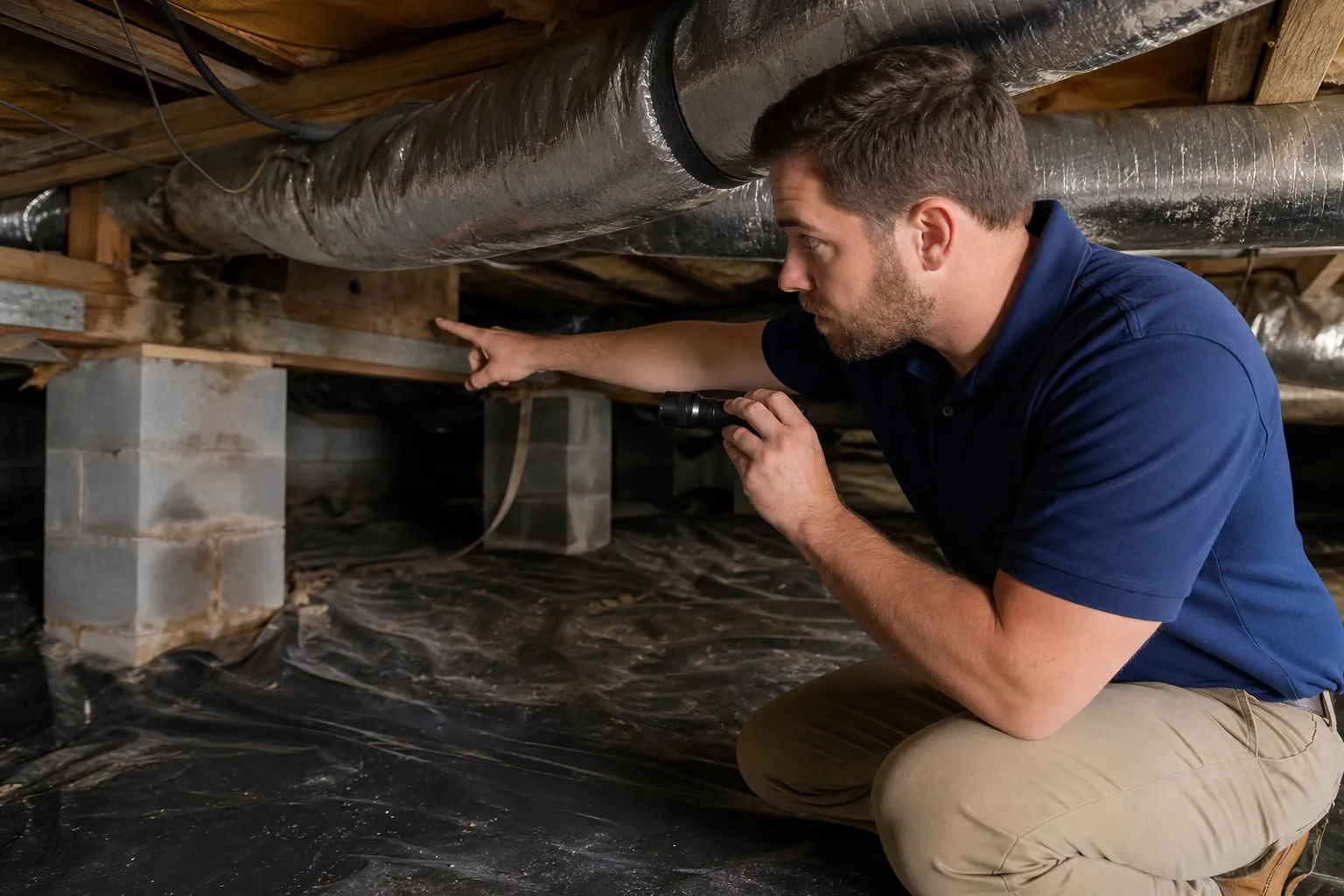
Ask the contractor to explain the current condition of the crawl space in plain language. A recommendation should be based on visible evidence and moisture readings, not a one-size-fits-all package.
The inspection may reveal damp soil, standing water, condensation on ductwork, damaged insulation, wood moisture, mold-like growth, open vents, plumbing leaks, or air leakage around penetrations. It should also consider exterior factors such as downspouts, grading, foundation drainage, and nearby slopes.
Request photos of areas that are difficult to access. If high wood moisture is reported, ask where readings were taken and what the numbers were. Encapsulation can help control ground moisture and humid outdoor air, but it does not repair an active plumbing leak or automatically correct water entering through a foundation wall.
What is included in the quoted scope?
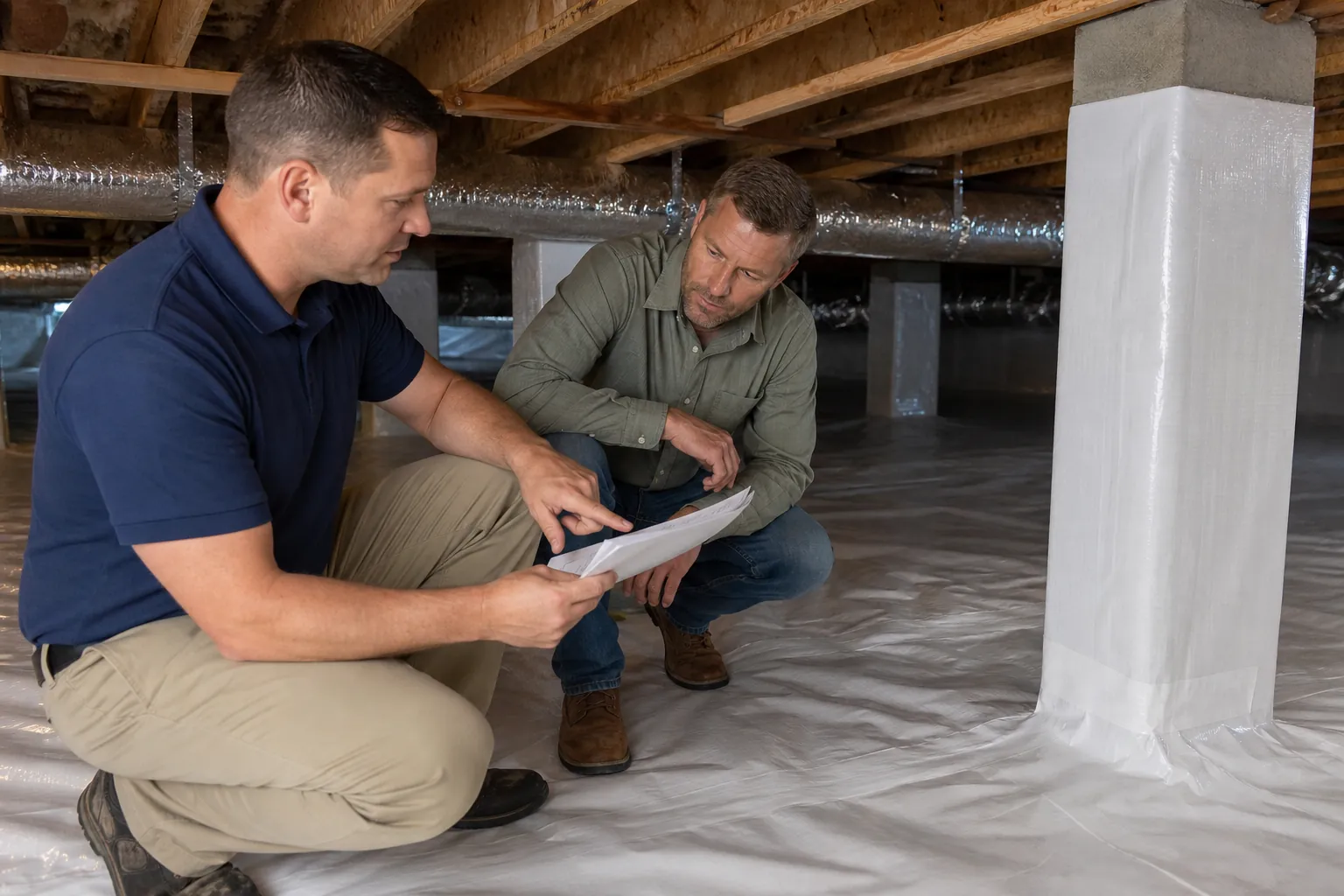
Two proposals can use the word “encapsulation” while describing very different systems. One may include only a floor liner and sealed vents. Another may cover the ground, walls, and piers, add drainage, remove wet insulation, seal air gaps, and install humidity control.
Ask for a line-by-line scope that identifies labor, materials, preparation, equipment, electrical work, disposal, and optional upgrades. Confirm whether the quoted price includes taxes and whether concealed damage could result in a change order.
A useful proposal should address questions such as:
- Will debris, fallen insulation, and the existing vapor barrier be removed?
- Are active leaks or standing-water sources handled before sealing?
- Will the liner cover the floor, foundation walls, and support piers?
- How will seams, columns, plumbing penetrations, and access doors be sealed?
- Are foundation vents permanently sealed and insulated?
- Is wall insulation or rim-joist air sealing included?
- Will a dehumidifier, drain line, condensate pump, or electrical outlet be needed?
- Does the scope include a sump pump or interior drainage system?
- Who removes jobsite waste and cleans the work area?
- What conditions are specifically excluded from the price?
Written details make estimates easier to compare and reduce misunderstandings after work begins.
Which liner and sealing materials will be used?
Ask for the manufacturer, product name, thickness, reinforcement, and intended application of the vapor barrier. Thickness alone does not describe overall durability. Reinforcement, puncture resistance, seam construction, and installation quality also affect performance.
Find out how the liner will be attached to masonry and how seams will be overlapped and sealed. Ask whether wall fasteners, compatible tape, and sealants are included. The contractor should also explain how the installation accommodates termite inspections. North Carolina homeowners may need a visible inspection gap near the top of foundation walls, depending on local requirements and pest-control guidance.
If insulation is proposed, ask where it will be placed and why. An encapsulated crawl space is treated differently from a traditionally vented crawl space, so the insulation plan should match the moisture-control and air-sealing strategy.
How will water and humidity be controlled?
A sealed liner helps isolate the home from damp soil, but bulk water must be managed separately. If the crawl space has standing water or signs of repeated intrusion, ask how water will be collected and discharged. The answer may involve exterior drainage improvements, an interior perimeter drain, a sump basin, or a combination of measures.
Ask where sump discharge will terminate and whether a check valve, sealed lid, alarm, or battery backup is recommended. Water should be directed to a suitable location rather than released beside the foundation.
Humidity control also deserves a specific answer. Ask whether the system relies on a dedicated crawl space dehumidifier, conditioned air, or another code-compliant method. If a dehumidifier is included, confirm its capacity, drainage route, filter requirements, operating range, energy use, and warranty. Also ask what indoor relative humidity the contractor expects the completed system to maintain.
Are repairs and remediation part of the estimate?
Encapsulation is not a substitute for structural repair, plumbing work, pest treatment, or appropriate microbial cleanup. If the inspection identifies damaged joists, subfloor deterioration, fungal growth, termite activity, or leaking pipes, determine who will address each issue and in what order.
Be cautious when broad claims are made without documentation. Ask whether testing is recommended, whether a licensed specialist is needed, and what cleanup methods will be used. If wood repairs are excluded, request a clear description of affected areas so you can obtain qualified repair estimates before committing to the full project.
The sequence matters. Active water entry and necessary repairs generally need attention before the space is sealed, while final drying and humidity control continue after installation.
What warranties and follow-up services apply?
A warranty should identify what is covered, for how long, and by whom. Ask whether material and workmanship warranties are separate. Review exclusions related to flooding, plumbing leaks, pests, foundation movement, power outages, or owner neglect.
Also ask whether the warranty transfers to a future owner and whether annual inspections or paid service plans are required to keep it valid. For pumps and dehumidifiers, confirm whether labor is included if equipment fails during the manufacturer’s warranty period.
Discuss post-installation support before signing. Will the company return to check humidity, inspect liner attachment, or adjust equipment? Who should you contact if you notice odors, condensation, or water after heavy rain? Clear follow-up procedures are a meaningful part of the quote.
How should you compare final proposals?
Compare each estimate using the same priorities: source control, water management, material quality, installation details, equipment, warranty terms, and contractor accountability. The lowest number may omit drainage or humidity control, while the highest number may contain upgrades your home does not need.
Verify licensing and insurance where applicable, ask for recent local references, and avoid pressure to sign immediately. A reputable contractor should be willing to explain the recommendation and give you time to review it.
Carolina Encapsulation Company helps North Carolina homeowners understand what their crawl spaces need and what each proposed step accomplishes. For a straightforward inspection and detailed quote, call 704-207-9348. The goal is a practical moisture-control plan that fits the home, not a rushed decision.
Call 704-207-9348 to talk through next steps.