How Can I Keep an Exterior Crawl Space Access Well From Flooding?
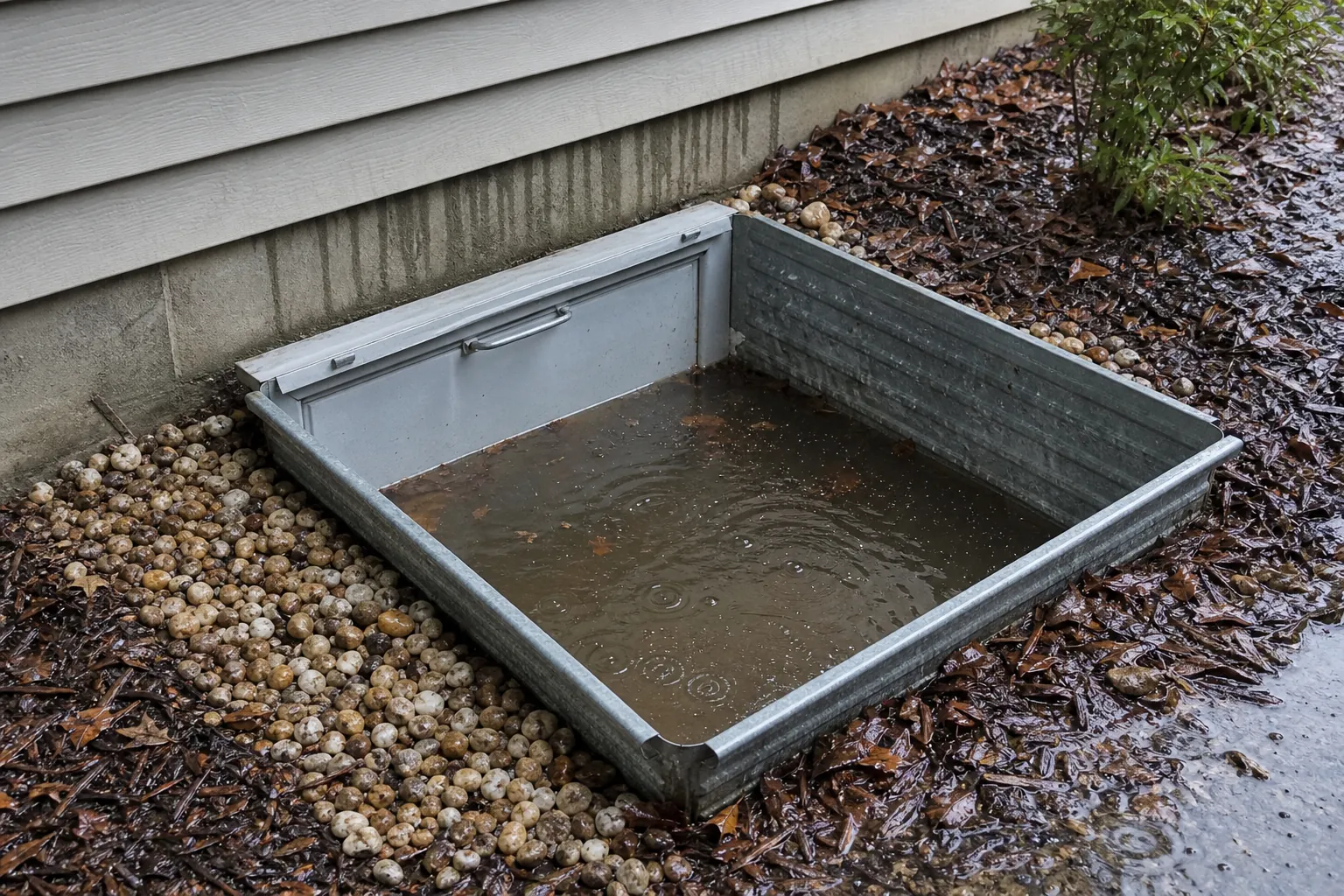
When an exterior crawl space access well fills with water, the door opening can become a direct path into the crawl space. The practical response is to determine where the water originates, correct drainage outside the well, and address weak points around the access opening. Start with observations during rainfall rather than choosing a repair based only on standing water found afterward.
Identify How Water Is Reaching the Access Well
Look at the access well during steady rain if it is safe to do so. Water may be flowing across the yard, spilling from a gutter or downspout, collecting beside the foundation, or entering through gaps around the well. Also note whether the water rises from the bottom rather than pouring over the top. That distinction matters because surface runoff and subsurface water require different responses.
Photograph the area before, during, and after rainfall. Record where water first appears, how high it rises, and how quickly it drains. Check whether the crawl space door sits below the surrounding soil and whether the top edge of the well is lower than nearby grade. Do not enter a flooded crawl space or touch electrical equipment near standing water. A clear record of water movement makes it easier to evaluate the problem and avoid spending money on a cover or seal that does not address the main source.
Direct Roof Runoff Away From the Opening
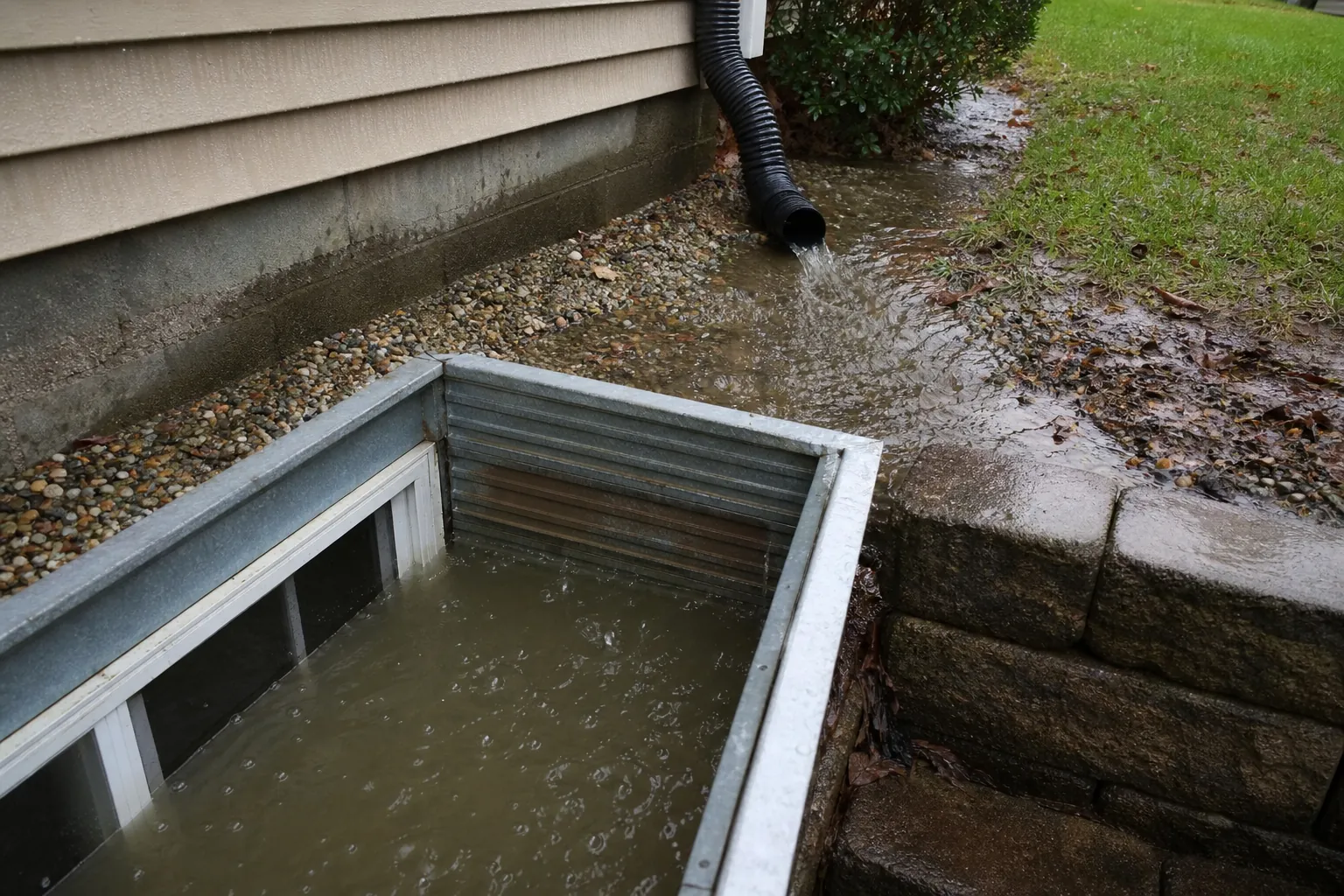
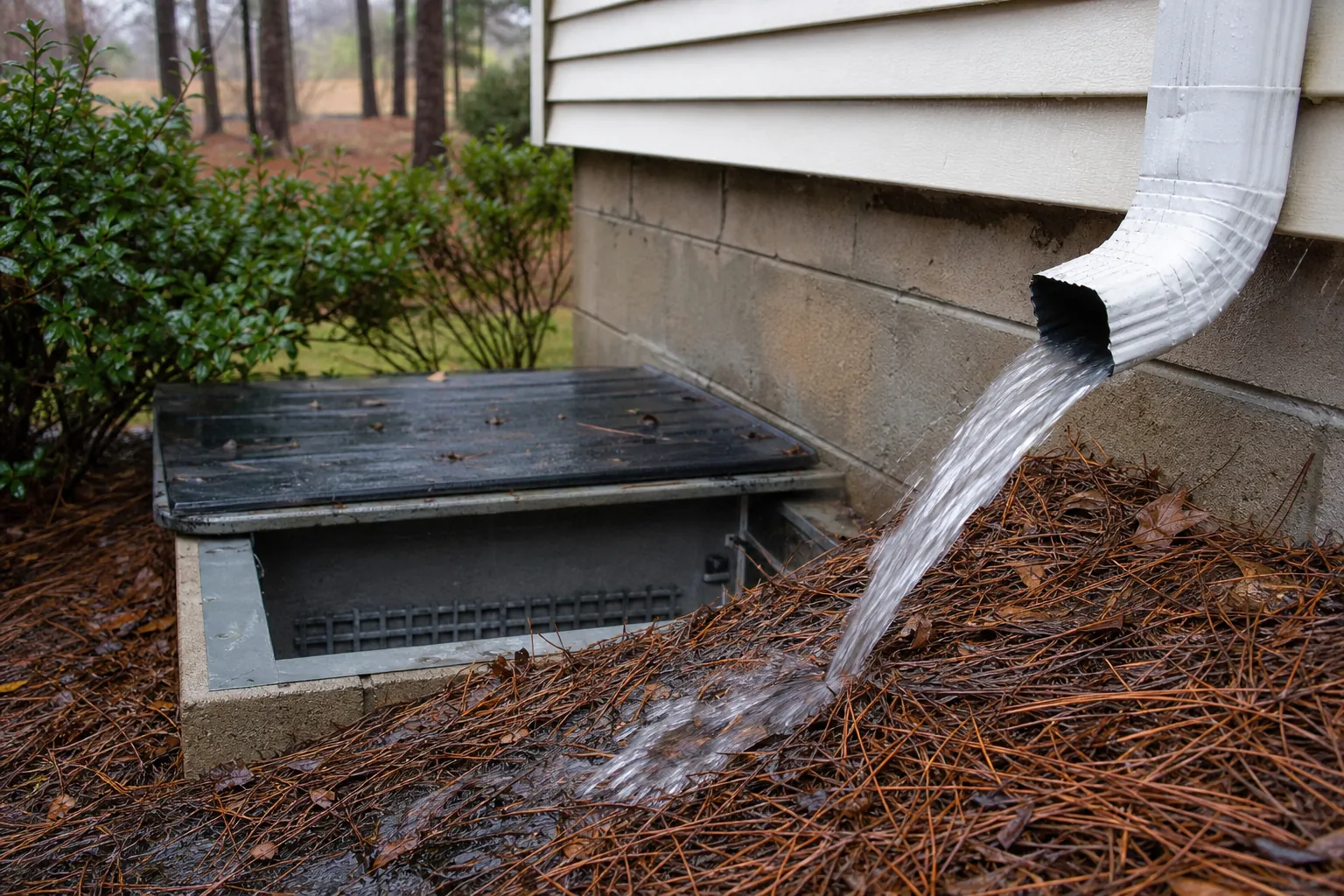
Roof runoff can overwhelm a low access area quickly when gutters or downspouts release water near the foundation. During rain, check for overflowing gutters, leaking joints, disconnected downspouts, and discharge points aimed toward the access well. Leaves and debris can also redirect water over the gutter edge.
Downspout discharge should move away from the opening without creating a new low spot beside the house. Inspect extensions for crushed sections, separated fittings, and outlets blocked by soil or vegetation. If an underground line is present, confirm that water is not backing up at the connection. Avoid assuming that a buried pipe works simply because it is out of sight.
After making adjustments, observe the next substantial rainfall. The key question is whether roof water now bypasses the access well and continues toward a safe discharge area. If water still collects, grading or drainage around the well may also need attention.
Evaluate Grade, Well Height, and Local Drainage
The ground near the foundation should not funnel surface water toward the crawl space entrance. Examine the slope from several directions because a small channel, landscape border, walkway, or settled patch can concentrate runoff. Soil piled against the well can also allow water to spill over its edge.
- Compare the top of the access well with the surrounding ground.
- Look for low areas between the well and the yard.
- Check whether mulch, leaves, or soil block drainage paths.
- Watch for erosion lines that point toward the opening.
- Confirm that nearby hard surfaces do not drain toward the foundation.
Correcting the grade may involve reshaping a limited area so water moves away rather than pooling. Changes should not cover siding, vents, or other building components. If the site cannot drain by gravity, a drainage approach may need professional evaluation. Before digging, account for buried utilities and avoid creating a route that sends runoff onto neighboring property or back toward another part of the foundation.
Inspect the Cover, Door, Seams, and Drain
A cover can reduce direct rainfall and debris, but it should fit the opening and shed water beyond the well rather than into it. Inspect for cracks, distortion, missing fasteners, and gaps at the wall. A cover alone is unlikely to stop flooding caused by concentrated runoff or rising water.
Examine the crawl space door and frame for damaged materials, open joints, and a threshold that sits below the likely water level. Sealing visible gaps may reduce incidental entry, but relying on sealant to hold back accumulated water can hide the drainage problem instead of solving it. Any materials used near the opening should be compatible with the existing construction.
If the well contains a drain, remove accessible surface debris and determine where the drain leads before depending on it. A drain with no effective outlet can remain full or send water elsewhere. Do not open unknown piping or use chemicals in a drain without understanding its destination.
Check the Crawl Space After the Water Source Is Addressed
Once exterior water is redirected, inspect the crawl space from the access opening when conditions are safe. Look for damp soil, water lines, wet insulation, staining, deteriorated wood, and debris carried through the doorway. Persistent moisture can have more than one source, so separate access-well flooding from plumbing leaks or humid-air condensation.
Moisture on ducts does not automatically mean water entered through the exterior door. Temperature and humidity can contribute to condensation, particularly during warm, humid weather. For related guidance, read crawl space condensation on ductwork in North Carolina.
Continue monitoring the access well through several rain events. Recheck gutters, discharge points, grade, the cover, and the door after soil work settles or heavy debris falls. If water still reaches the opening, document the timing and direction of flow. That information can help distinguish a minor maintenance issue from a drainage condition that requires a broader assessment.
Discuss the Access Well Problem
If you are deciding what to do about an exterior crawl space access well that floods, call Carolina Encapsulation Company at 704-207-9348. Describe what you see during rain, where the water enters, and any changes already attempted.
Call 704-207-9348 to talk through next steps.