What Are the Signs of a Clogged Crawl Space French Drain?
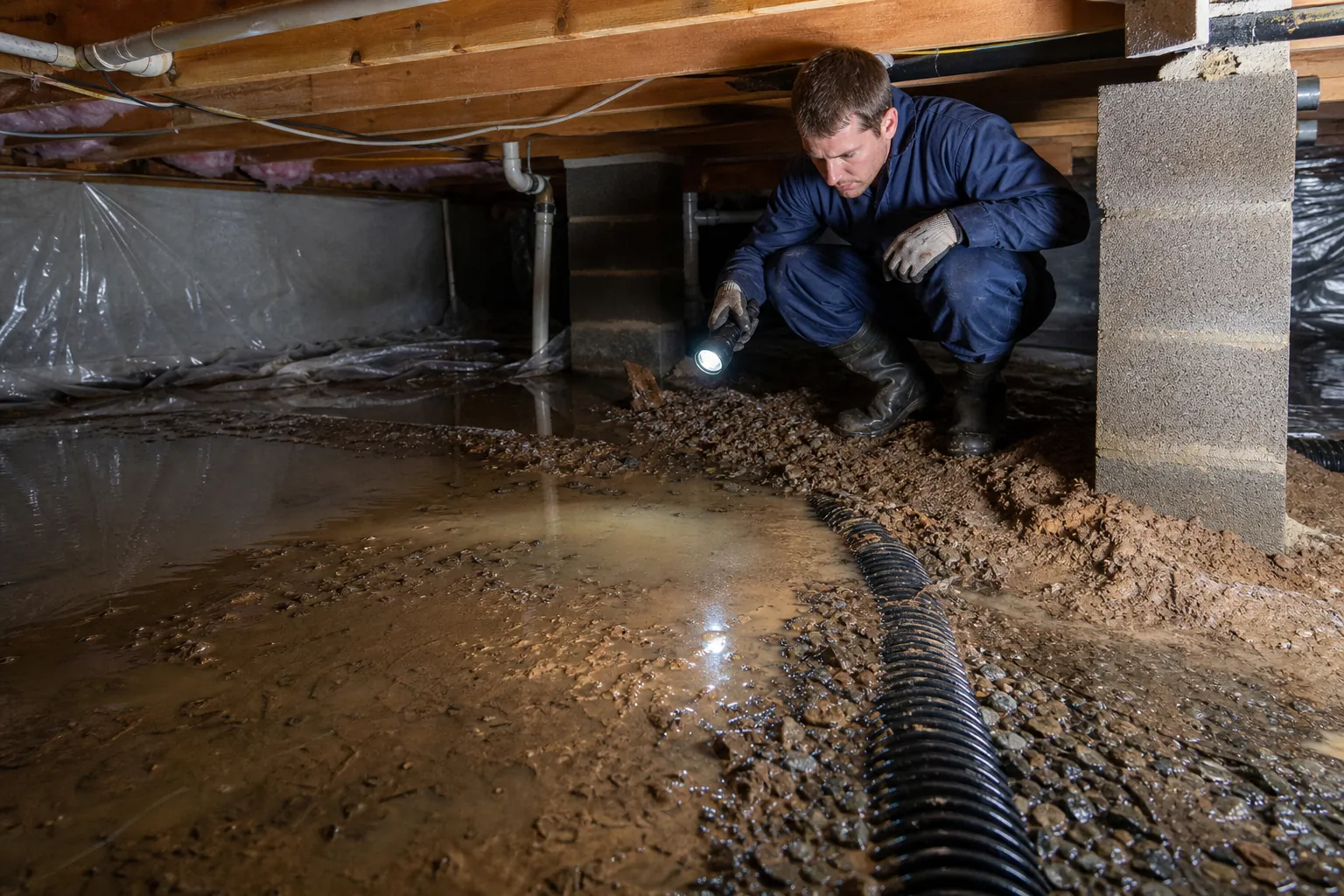
A clogged crawl space French drain may stop moving water as intended, allowing moisture to linger near the foundation or inside the crawl space. Because several moisture problems can look similar, one symptom alone does not prove that the drain is blocked. Look for patterns during and after rain, document what you see, and avoid entering any area that appears unsafe.
Standing Water That Remains After Rain
Standing water is one of the clearest reasons to investigate a crawl space drainage problem. Pay attention to where the water appears, how deep it seems, and how long it remains after rainfall ends. Water that repeatedly collects along a drainage path or near a low area may indicate that flow is restricted. However, standing water can also result from grading, runoff, plumbing leaks, groundwater, or another moisture source, so it should not automatically be blamed on a clogged French drain.
Start with observations you can make safely from the crawl space entrance. Take dated photos after rain and again later to compare conditions. Note whether the affected area expands during heavier storms or stays limited to one location. If water is near electrical components, damaged materials, pests, or unstable ground, do not enter. A consistent record helps distinguish a recurring drainage issue from a one-time event and gives you useful information when deciding what to do next.
Slow Drainage and Repeated Wet Areas
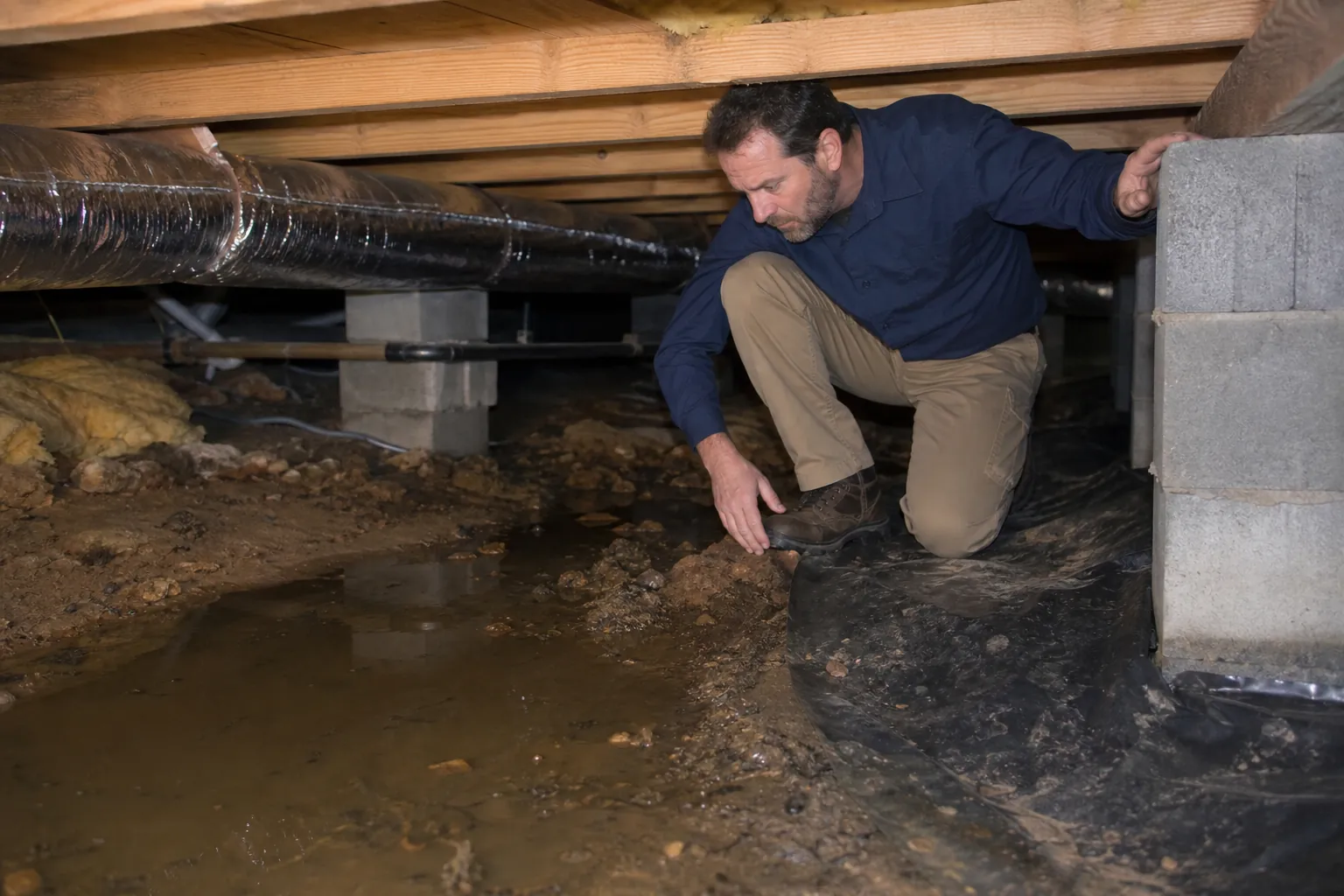
A working drainage route should give water somewhere to go. When the same strip of soil, gravel, or nearby material remains saturated longer than surrounding areas, restricted flow may be part of the problem. You might also notice water appearing quickly during moderate rain, then receding very slowly. These patterns can be more informative than a single puddle because they show how the area behaves over time.
Compare several rain events rather than relying on one inspection. Record the rainfall date, the location of visible water, and whether conditions changed within the next day or two. Do not dig into a drainage line or move major materials unless you understand the system and can do so safely. Disturbing the area may hide the original flow pattern or create another route for water. If the crawl space stays wet between storms, consider other possible sources, including plumbing leakage or water entering from outside. The goal is to identify the source before choosing a response.
Sediment, Debris, or Displaced Gravel
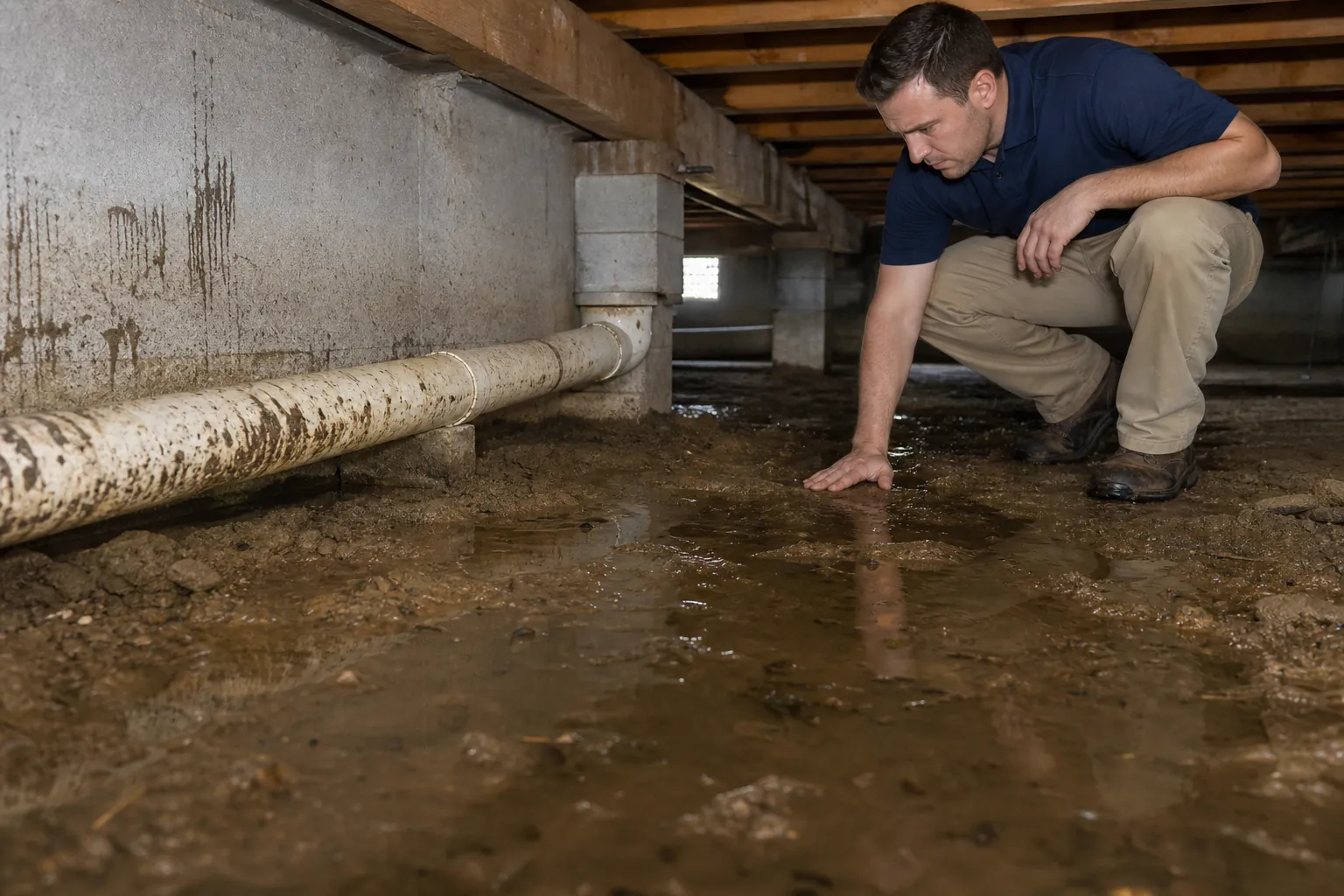
Visible sediment and debris can provide clues about how water is moving. Fine soil, leaves, organic material, or displaced gravel near a suspected drainage route may suggest that runoff is carrying material toward the system. Over time, accumulated material can restrict openings or reduce the space available for water movement. A washed-out area may also show that water is bypassing its intended path rather than entering it.
Look for changes instead of assuming that any soil near the drain is abnormal. Older crawl spaces may already have uneven gravel or exposed soil. Recent channels, fresh deposits, and debris that return after cleanup are more useful observations. Check accessible exterior areas for downspout discharge, low spots, and runoff paths that direct water toward the foundation. Avoid forcing rods, hoses, or chemicals into a drain because these actions can damage components or shift a blockage. Useful documentation includes:
- Dated photos before, during, and after rainfall
- Locations and approximate sizes of wet areas
- New sediment, debris, erosion, or displaced gravel
- Visible changes at accessible drain openings or outlets
- Nearby runoff, downspout, or plumbing concerns
Moisture Symptoms Beyond Visible Water
A drainage concern does not always present as a large pool of water. Damp soil, water staining, musty odors, or consistently wet surfaces may indicate that moisture is not leaving the area effectively. Condensation can complicate the picture, especially when humid air meets cooler surfaces. If you see water droplets on HVAC ducts, review this guide to crawl space condensation on ductwork in North Carolina. Condensation and drainage problems can occur separately or at the same time.
Try to determine whether moisture appears mainly after rain or during warm, humid weather. Rain-linked symptoms may point toward runoff or drainage, while droplets limited to cold duct surfaces may have a different cause. Also note whether staining looks fresh and wet or old and dry. Do not use odor alone to diagnose a clog, since odors can have multiple sources. When several clues appear together, such as recurring saturation, sediment movement, and slow drainage after storms, further evaluation becomes more reasonable.
How to Decide on the Next Step
Begin by ruling out simple, visible explanations without taking unnecessary risks. From outside, observe whether gutters or downspouts release water near the foundation and whether the ground directs runoff toward the home. From a safe access point, compare the suspected drainage area with the rest of the crawl space. If an outlet is visible and safely accessible, observe whether water flows from it during or shortly after rain. Do not enter standing water or handle electrical equipment.
Your decision should reflect the frequency, extent, and source of the moisture. A small wet spot after an exceptional storm is different from water that returns after ordinary rainfall. Repeated standing water, increasing sediment, persistent saturation, or an outlet that shows no flow when the crawl space is collecting water are stronger reasons to seek help. Keep your photos and notes available so the pattern can be reviewed. Avoid covering the problem or making major changes before the source is understood, since that can make diagnosis more difficult.
Discuss What You Are Seeing
If you are seeing recurring water or possible drain blockage in a North Carolina crawl space, call Carolina Encapsulation Company at 704-207-9348. Describe when the moisture appears, where it collects, and what changes after rain. A calm, evidence-based conversation can help you consider the next step.
Call 704-207-9348 to talk through next steps.