Does a Concrete Crawl Space Floor Still Need a Vapor Barrier?
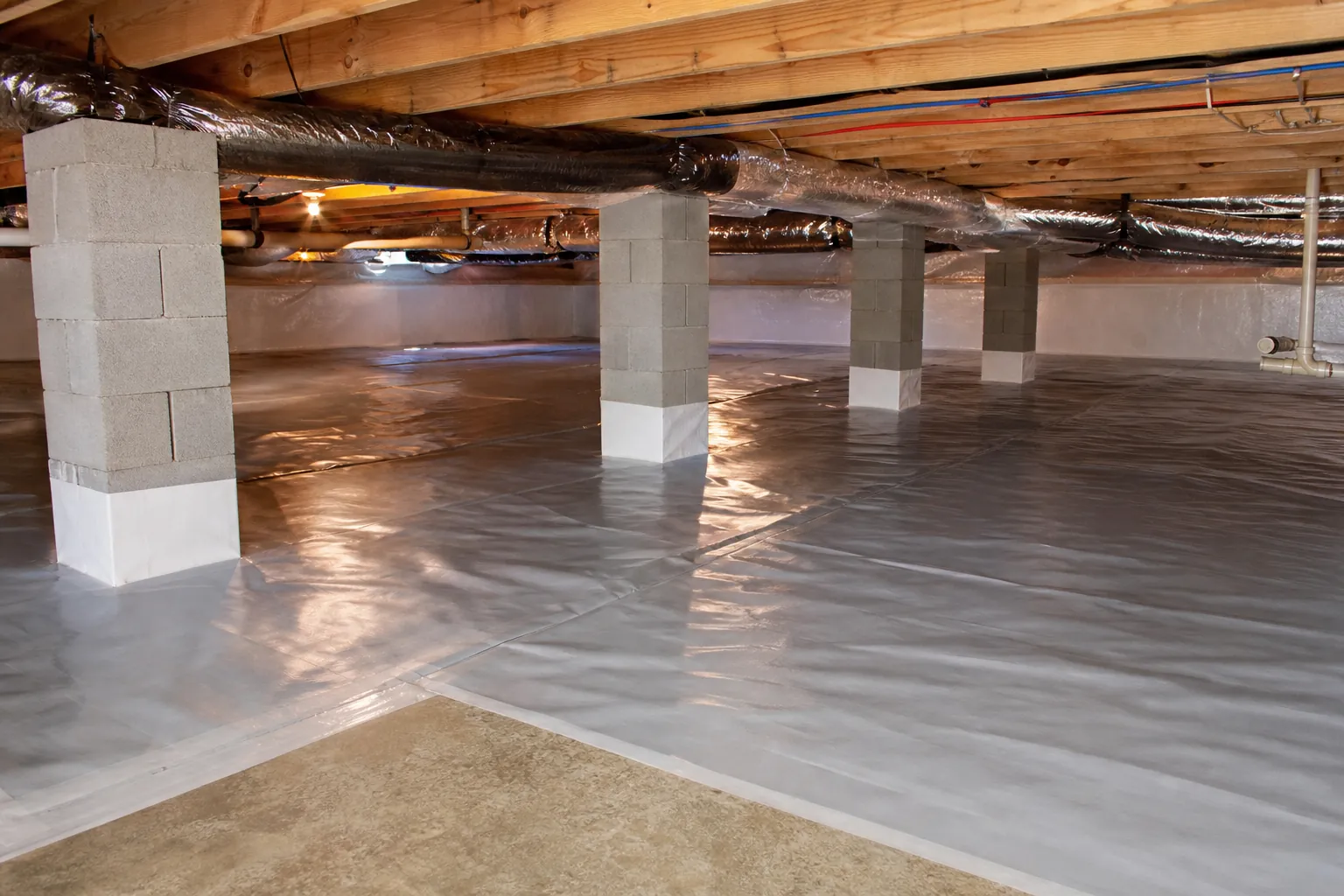
A concrete floor can make a crawl space look dry and finished, but appearance alone does not answer the moisture question. Concrete is porous, and water vapor can move through it from the soil below. Gaps, cracks, edges, drains, and penetrations can also provide paths for moisture. For a North Carolina homeowner considering a crawl space liner over a concrete floor, the right decision begins with conditions in the space, not an assumption that concrete already serves as a vapor barrier.
Why Concrete Alone May Not Control Moisture
A crawl space slab and a vapor barrier do different jobs. The slab provides a firm surface, while a liner is intended to limit water vapor entering from below. Some concrete floors may have a barrier underneath them, but that detail is often difficult to confirm in an existing home. Even when an under-slab layer was installed, its condition and continuity may be unknown.
Concrete can transmit moisture without visible standing water. The slab may look dry during one visit while still contributing vapor as soil conditions, rainfall, and humidity change. Cracks and joints can create additional entry points. The perimeter, where concrete meets the foundation walls or piers, also deserves attention because the floor may not form a continuous seal there.
Do not make the decision based only on whether the surface feels dry. Look at the entire crawl space, including framing, insulation, ducts, foundation walls, penetrations, and corners. A broader inspection helps distinguish ground-vapor concerns from drainage, plumbing, or outdoor-air problems that require separate attention.
What to Check Before Choosing a Liner
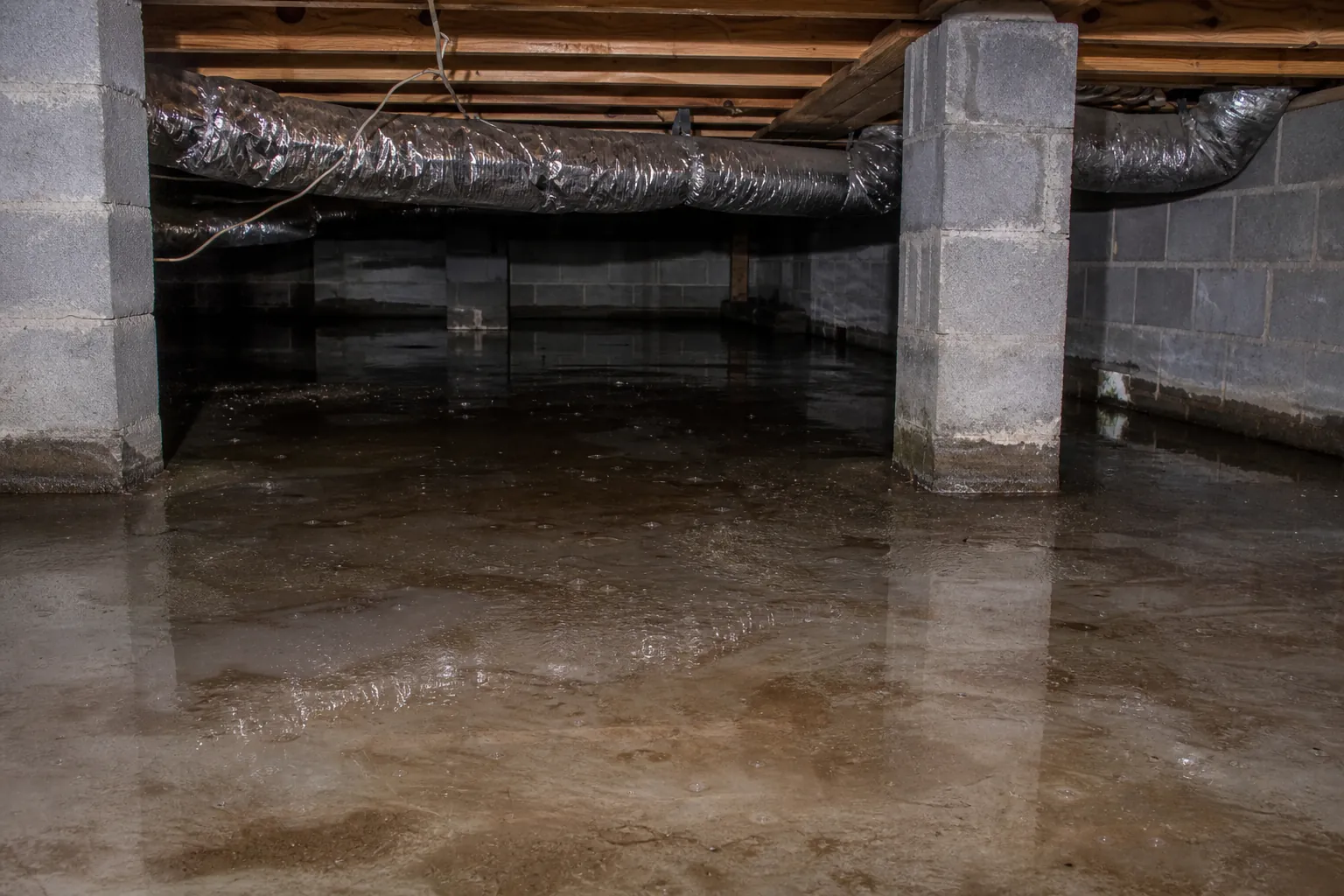
Start by documenting what is actually present. Look for cracks, damp areas, mineral deposits, discoloration, debris, and openings around pipes or supports. Check the floor after wet weather as well as during a dry period. Conditions that appear only after rain can point toward bulk-water entry rather than vapor movement alone.
Use a simple decision checklist:
- Determine whether the concrete covers the entire floor or leaves exposed soil at edges and around piers.
- Look for visible water, damp cracks, stains, or deposits on the slab and walls.
- Check whether downspouts, grading, or drainage conditions direct water toward the foundation.
- Inspect ducts and nearby surfaces for condensation, especially during humid weather.
- Identify drains, cleanouts, plumbing penetrations, access points, and equipment that must remain usable.
- Ask whether documentation confirms a continuous vapor barrier beneath the slab.
These observations help define the problem before materials are selected. A liner should be considered as one moisture-control component, not a substitute for correcting active leaks or exterior water flowing into the crawl space.
How to Evaluate Moisture at the Floor and Air
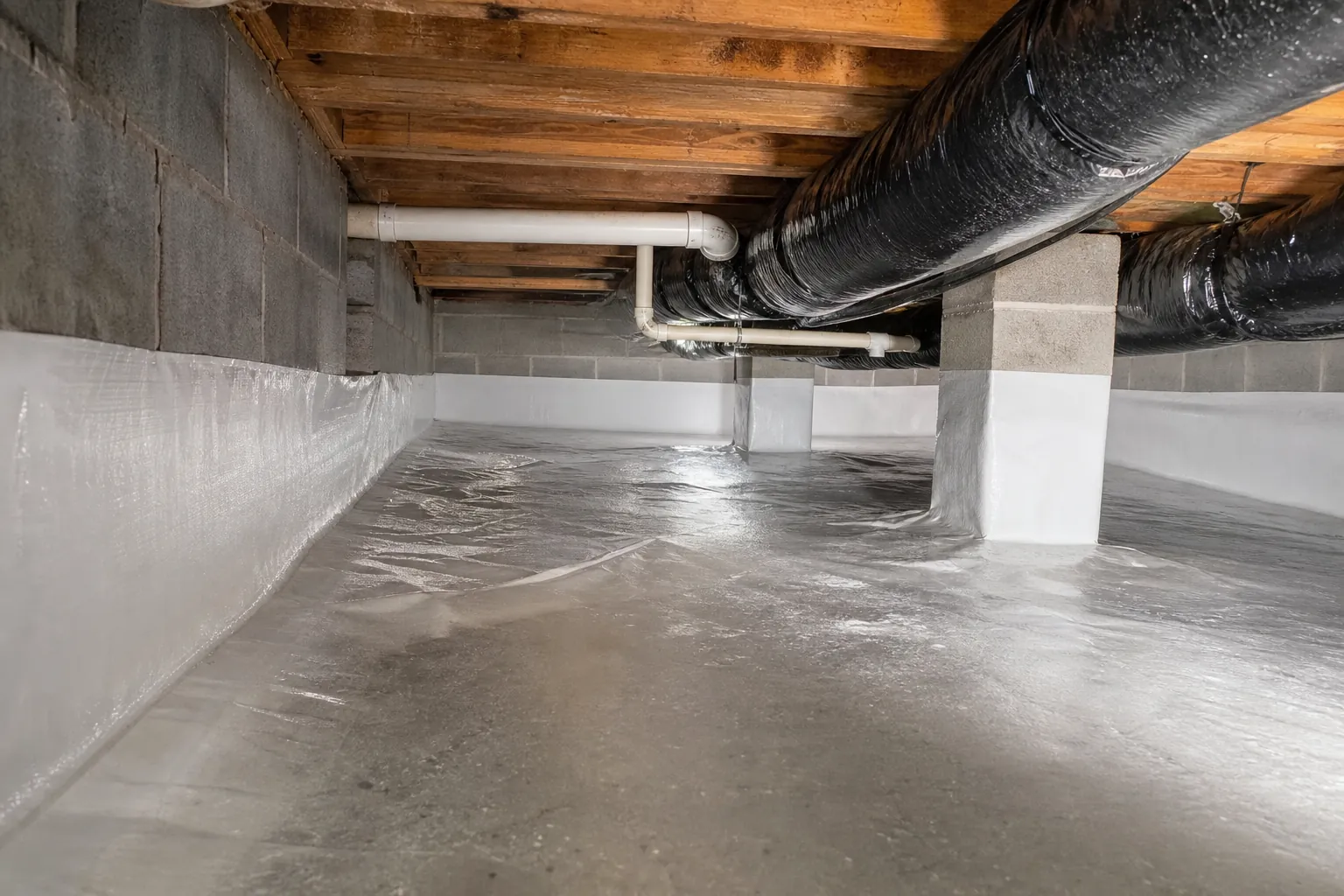
A good assessment separates three possible moisture sources: liquid water, vapor from the ground, and humid air. Liquid water may enter through foundation openings, cracks, plumbing leaks, or drainage problems. Ground vapor can move through exposed soil and concrete. Humid outdoor air can enter and condense on cooler surfaces. More than one source may be present at the same time.
Note where moisture appears first. Wetness concentrated near a wall after rain suggests a different path than widespread dampness across the slab. Condensation on metal ducts can indicate that humid air is contacting a cool surface. If that is part of what you see, read this related guide to crawl space condensation on ductwork in North Carolina.
Measurements taken at a single moment may not represent seasonal conditions. Record dates, weather, visible changes, and areas of concern. Photos can make comparisons easier. This practical record gives you better information when discussing whether a liner over the concrete floor fits the conditions.
Details That Matter When Covering Concrete
If a liner is being considered, continuity matters. The concrete surface should be reviewed for sharp debris, damaged areas, protrusions, and features that cannot be covered. Pipes, piers, drains, cleanouts, and access routes need individual consideration. Covering an opening without a plan can interfere with drainage, inspection, or maintenance.
Transitions are especially important. A floor liner that stops short at the perimeter can leave vapor pathways around its edges. Penetrations can also interrupt the layer. Ask how the proposed approach addresses seams, columns, wall transitions, irregular sections, and any exposed soil. The goal is to understand whether the liner will form a consistent boundary rather than simply lie across the center of the slab.
Also consider future access. Plumbing components or other items may need inspection later, so they should remain identifiable and reachable. Before work begins, request a clear explanation of what will be covered, what will remain exposed, and how existing water entry will be handled. Those details are more useful than choosing solely by appearance or material thickness.
Making a Practical Decision for Your Home
A concrete crawl space floor does not automatically mean a liner is necessary, and it does not automatically mean one is unnecessary. The decision depends on whether moisture is moving through or around the slab, whether exposed soil remains, and whether other water sources have been identified. Begin with evidence from the crawl space and the surrounding property.
Compare options by asking each provider to describe the observed moisture paths and the limits of the proposed work. A useful proposal should distinguish floor vapor from active water intrusion and air-related condensation. It should also explain treatment around edges and penetrations. Avoid relying on a visual promise that the space will simply look cleaner.
If there is standing water, a plumbing leak, or drainage toward the foundation, address that cause as part of the decision process. Then consider whether a liner over the concrete would create a more continuous ground-vapor boundary. Taking these steps in order helps you evaluate the project based on the house in front of you rather than on a general rule.
Discuss Your Crawl Space Conditions
If you are deciding whether a concrete crawl space floor needs a liner, call Carolina Encapsulation Company at 704-207-9348. A calm conversation about what you are seeing can help you identify the next questions to ask.
Call 704-207-9348 to talk through next steps.