Can a Crawl Space Vapor Barrier Be Installed Over Gravel?
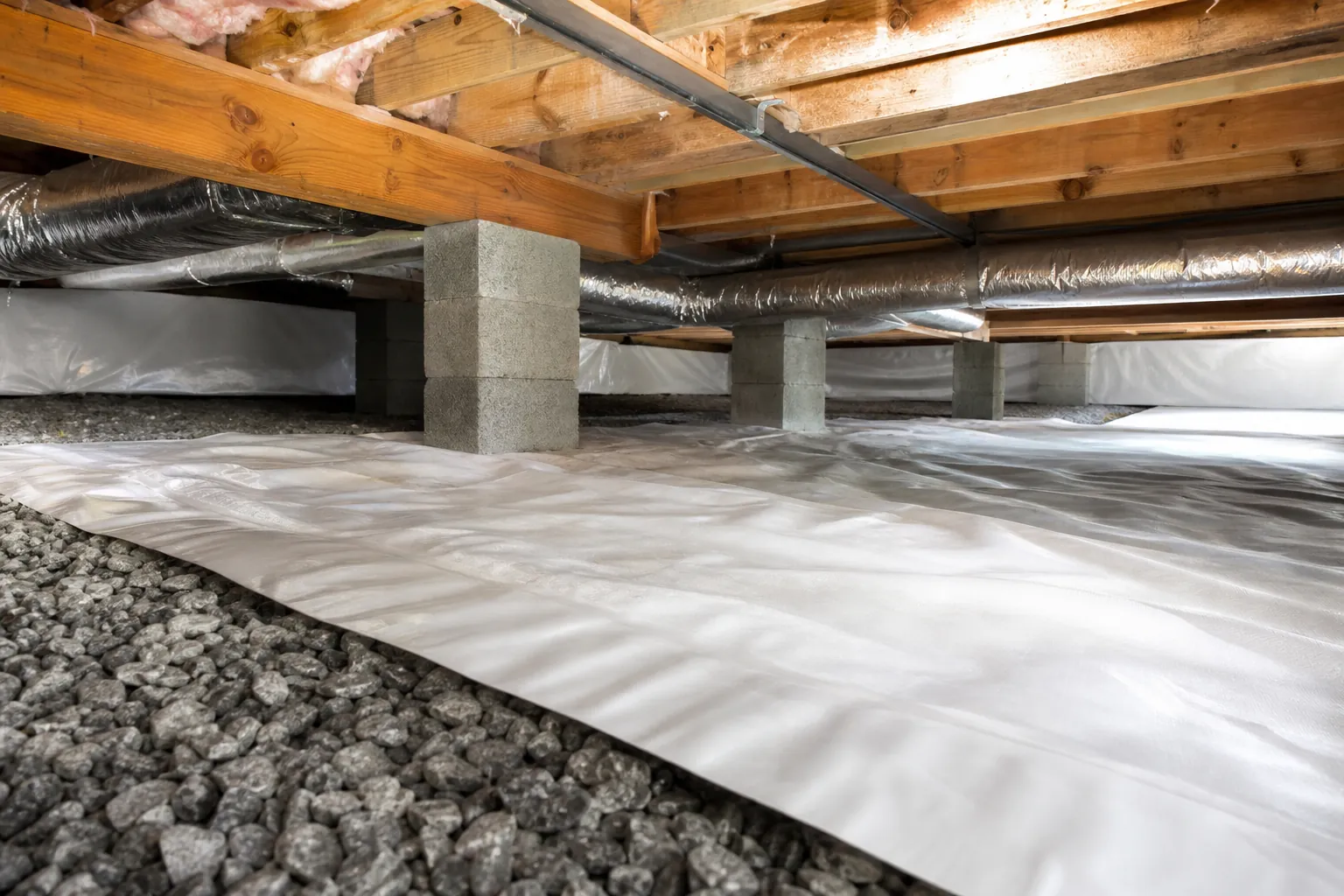
Yes, a crawl space vapor barrier can be installed over gravel, but the condition of the gravel and the preparation beneath the liner matter. Sharp stones, uneven piles, debris, standing water, and crowded penetrations can make coverage difficult or damage the material. North Carolina homeowners comparing options should start with the crawl space itself, not just the liner. A careful review of the ground, drainage, access, foundation edges, and existing moisture signs helps determine what preparation is appropriate.
Start With the Condition of the Gravel
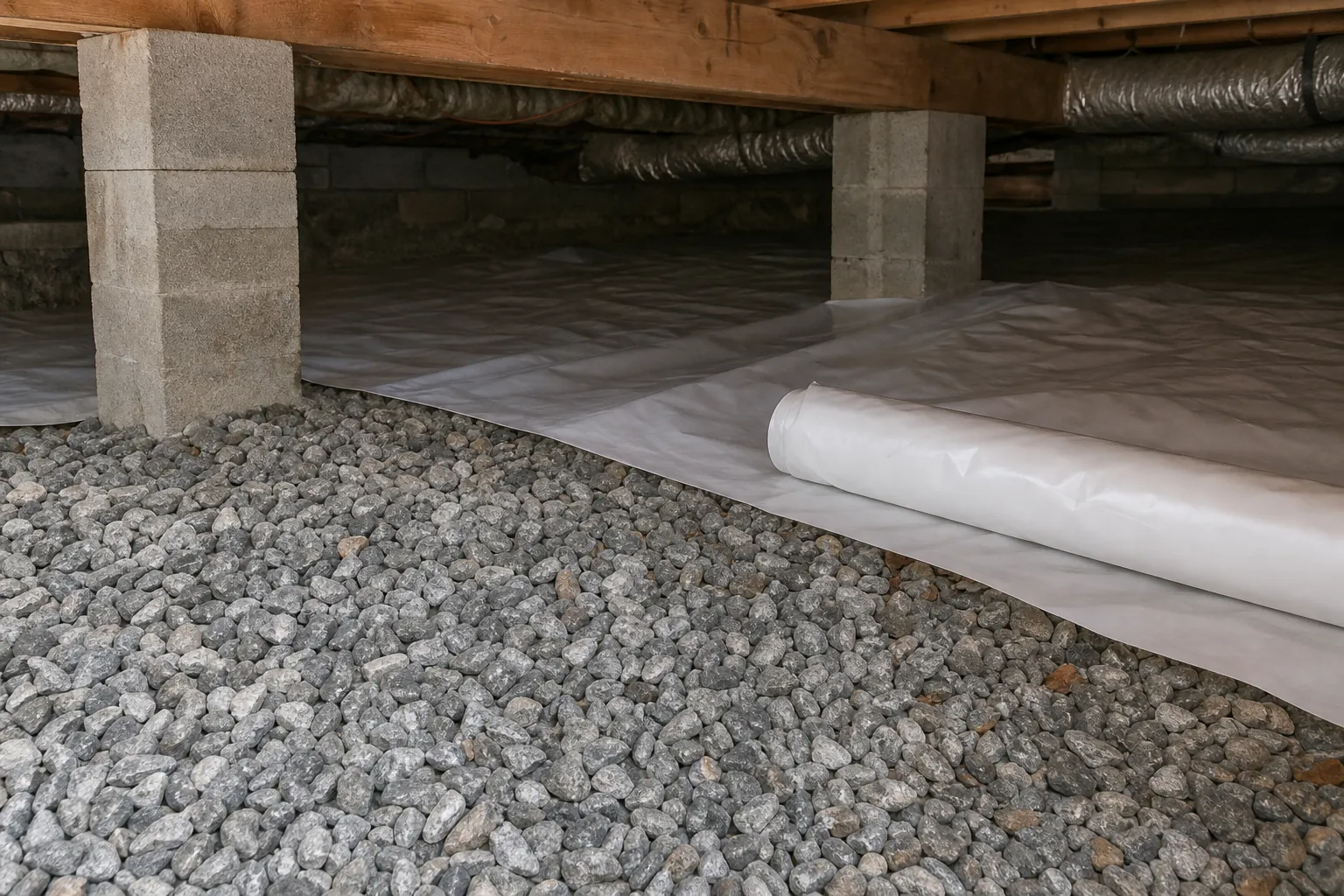
Gravel is not automatically a poor base for a crawl space liner. The key question is whether the surface allows the material to lie evenly without being forced against sharp points. Walkable areas, low-clearance sections, plumbing routes, piers, and foundation walls deserve close attention. Large or angular stones may create concentrated pressure when someone crawls across the finished surface. Loose piles can also shift and leave unsupported areas beneath the liner.
Before deciding how to proceed, look for construction debris, exposed fasteners, broken masonry, wood scraps, roots, and other objects that could puncture or lift the material. Note whether the gravel is generally level or mounded in certain areas. Do not assume that covering an irregular surface will correct it. The liner will follow much of the shape below. Surface preparation should create a more consistent base while preserving access to components that may require future inspection or repair.
Address Water Before Covering the Ground
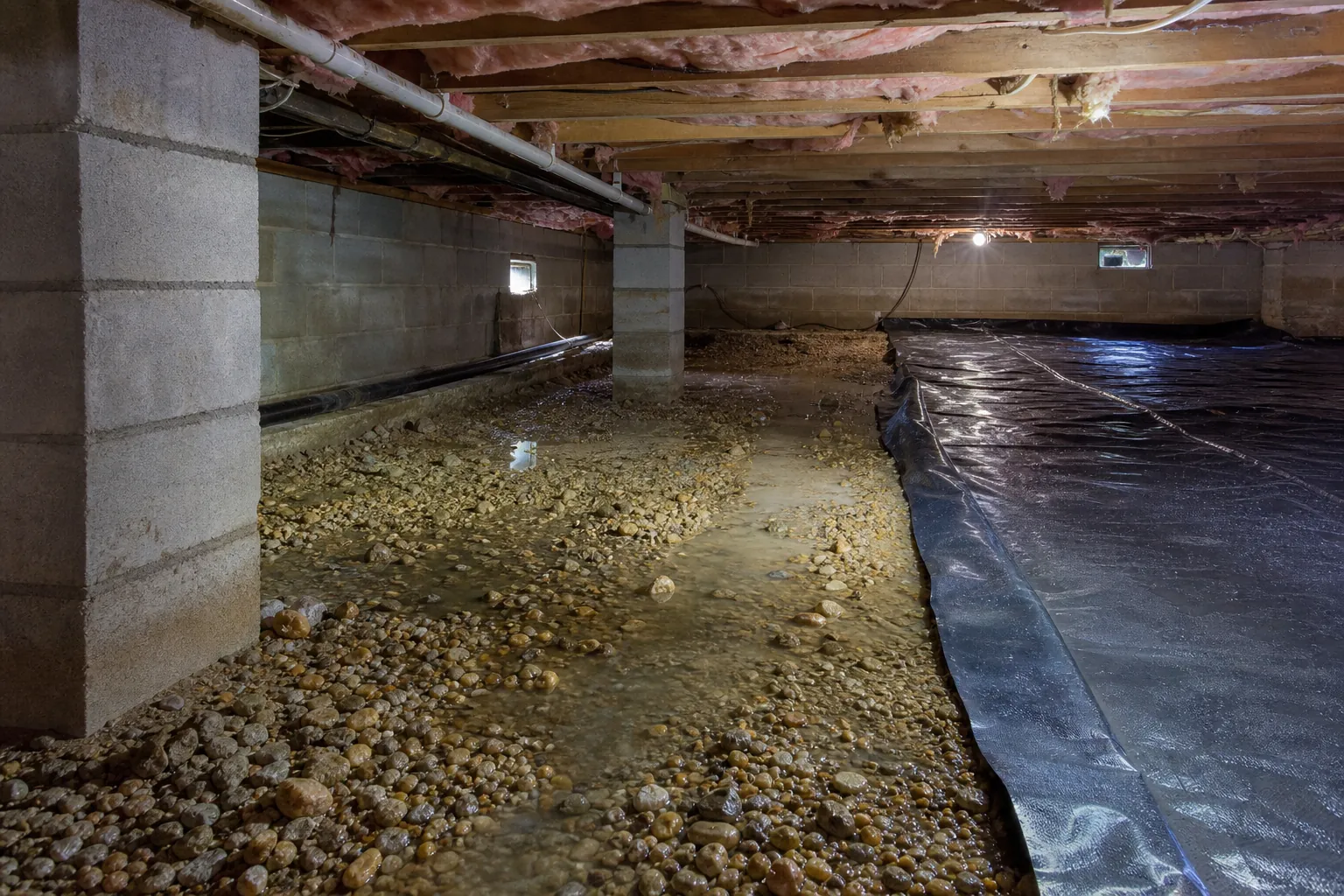
A liner is intended to separate the crawl space from moisture in the ground, but it should not be treated as a substitute for understanding active water entry. Check the crawl space after rain when possible. Look for standing water, washed gravel, soil channels, staining, damp foundation areas, or water entering around penetrations. These observations can reveal whether runoff, drainage, grading, plumbing, or another condition needs attention before the ground is covered.
Document where water appears and whether it remains in one place or moves across the crawl space. Covering the floor without recognizing an active pathway can make future troubleshooting more difficult. Also inspect overhead surfaces. Condensation on ducts is a different observation from liquid water on the ground, even though both involve moisture. Homeowners who see droplets on HVAC components can review this guide to crawl space condensation on ductwork in North Carolina while evaluating the broader conditions below the home.
Plan Seams, Edges, Piers, and Penetrations
A crawl space floor is rarely an open rectangle. Foundation piers, plumbing lines, supports, steps, low sections, and irregular perimeter walls interrupt the installation area. A practical plan accounts for these features before material is cut. Otherwise, the project may produce unnecessary seams, undersized pieces, or awkward gaps around obstacles.
Begin by sketching the crawl space and marking fixed elements. Identify a route for bringing material through the access opening. Consider how sections will meet and how the liner will transition around piers and penetrations. Perimeter conditions also matter because stone, mortar, and foundation surfaces can be uneven. The goal is consistent ground coverage without careless stretching that places tension on corners or cutouts.
- Measure the full ground area and note irregular sections.
- Mark piers, pipes, supports, and access routes.
- Remove objects that could puncture the liner.
- Level unstable gravel piles where appropriate.
- Plan seams before cutting individual sections.
- Preserve access to components requiring future service.
Choose Material With Crawl Space Use in Mind
Not every plastic sheet is equally suited to an irregular gravel surface. When comparing products, review the manufacturer's stated application, thickness, reinforcement, seam method, and installation instructions. Gravel shape and crawl space traffic should be part of that decision. A surface with rounded, stable stone presents different demands than one with sharp aggregate and frequent access for plumbing, electrical, or HVAC work.
Pay attention to how the material handles folds and cuts around obstacles. A liner that is difficult to position may invite shortcuts near piers or along edges. Compatibility between the liner and any tape or fastening components also matters. Product instructions should guide those choices rather than assumptions.
Think beyond installation day. Future workers may need to cross the crawl space, move tools, or reach equipment. Establishing a reasonable travel path can help limit unnecessary disturbance. No material choice eliminates the need for careful movement, periodic observation, and prompt attention if a seam, edge, or exposed area changes.
Use a Decision Checklist Before Moving Forward
The best next step depends on what the inspection reveals. A relatively even gravel bed with no visible water pathway may require a different preparation plan than a crawl space with sharp rubble, deep mounds, or recurring puddles. Compare proposals by asking how each observed condition will be handled, not simply what material will be placed on the floor.
Request a clear explanation of surface preparation, layout, seams, penetrations, perimeter details, and protection in traffic areas. Ask what must be moved, what will remain accessible, and whether any existing water concern should be evaluated first. Take photographs before work begins so you can compare visible conditions later.
After installation, inspect from the access area and, when safely possible, along normal travel routes. Look for shifted sections, exposed gravel, strained corners, open seams, or damage caused by later work. A crawl space liner over gravel can be a practical approach when the decision is based on site conditions and the installation plan accounts for the surface below.
Discuss Your Crawl Space Conditions
If you are deciding whether a liner can be placed over gravel in your North Carolina crawl space, call Carolina Encapsulation Company at 704-207-9348. Describe the gravel, any visible water, and the obstacles beneath the home so the conversation can begin with concrete conditions.
Call 704-207-9348 to talk through next steps.