Why Is My Crawl Space Liner Pulling Away From the Foundation Wall?
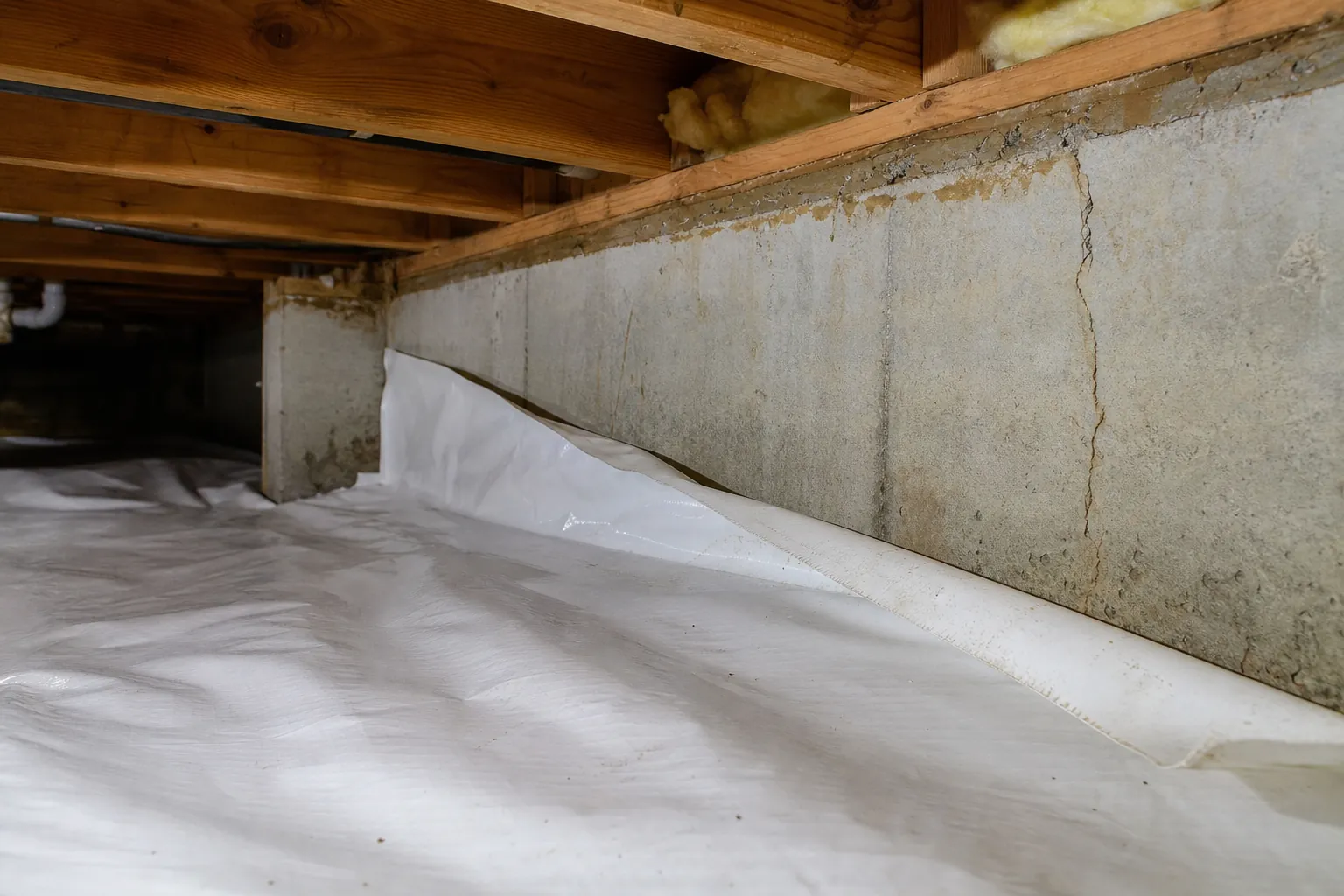
A crawl space liner that is pulling away from a foundation wall deserves a closer look. The visible gap may be limited to one area, or it may indicate movement, moisture, loose attachment points, or installation details that need attention. Before deciding what to do, determine where the liner has separated, whether water is present, and whether the condition is changing.
Start by Identifying What Has Actually Moved
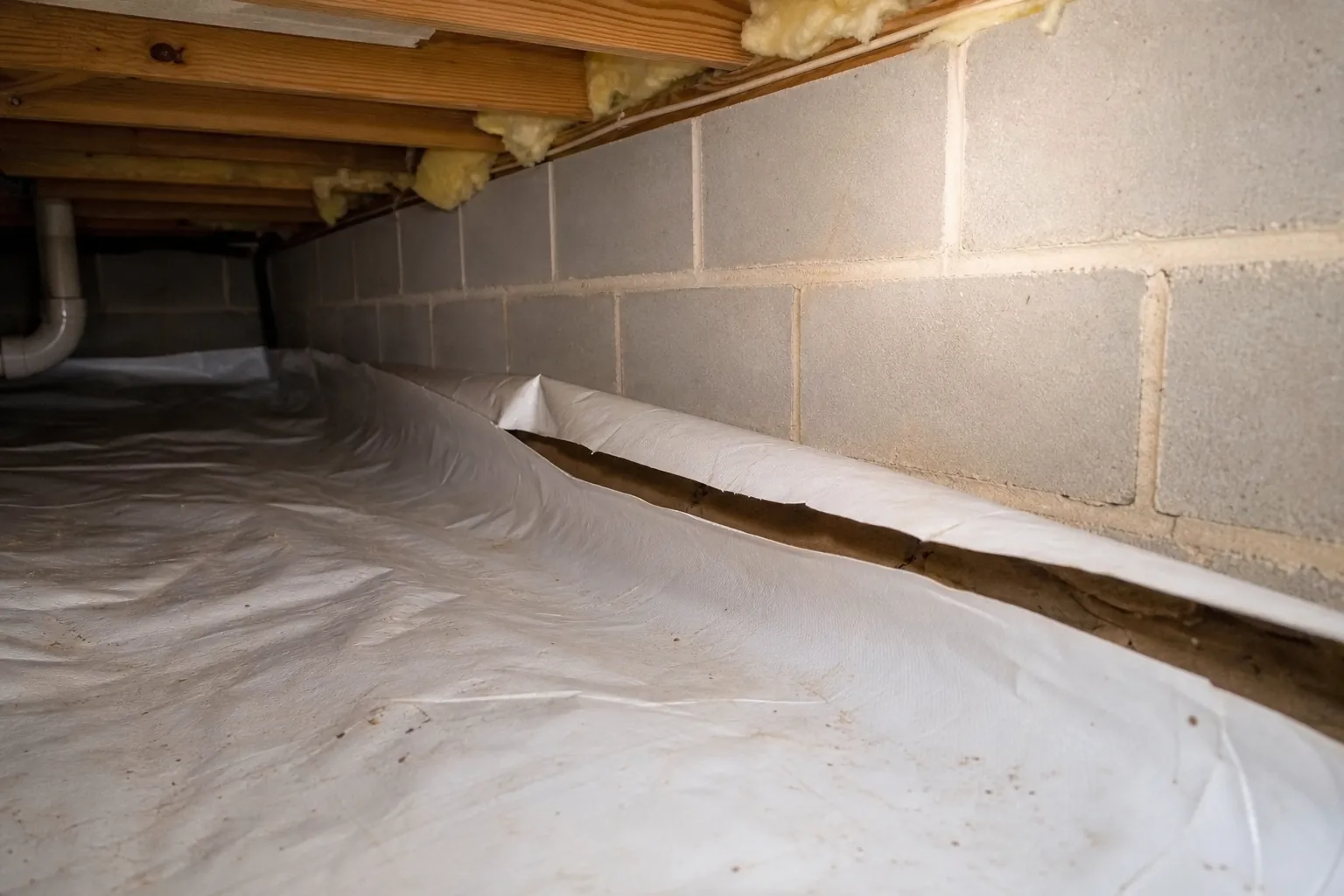
Look carefully at the separation before touching or repositioning the liner. A wall liner can appear loose because the upper edge has detached, the material has shifted across the floor, or the liner has torn around an attachment. Those conditions may look similar from the entrance but call for different next steps.
Use a flashlight to follow the affected edge. Note whether the separation occurs at one attachment point, along an entire wall, or near a corner, pier, pipe, or doorway. Check whether the liner remains flat on the floor or has pulled upward. Wrinkles alone do not explain why an edge has moved, so focus on the attachment and the material around it.
Avoid assuming that a loose section is only cosmetic. Documenting the exact location and extent of the movement helps you compare changes and describe the issue clearly when asking for help.
Check for Moisture Near the Loose Liner
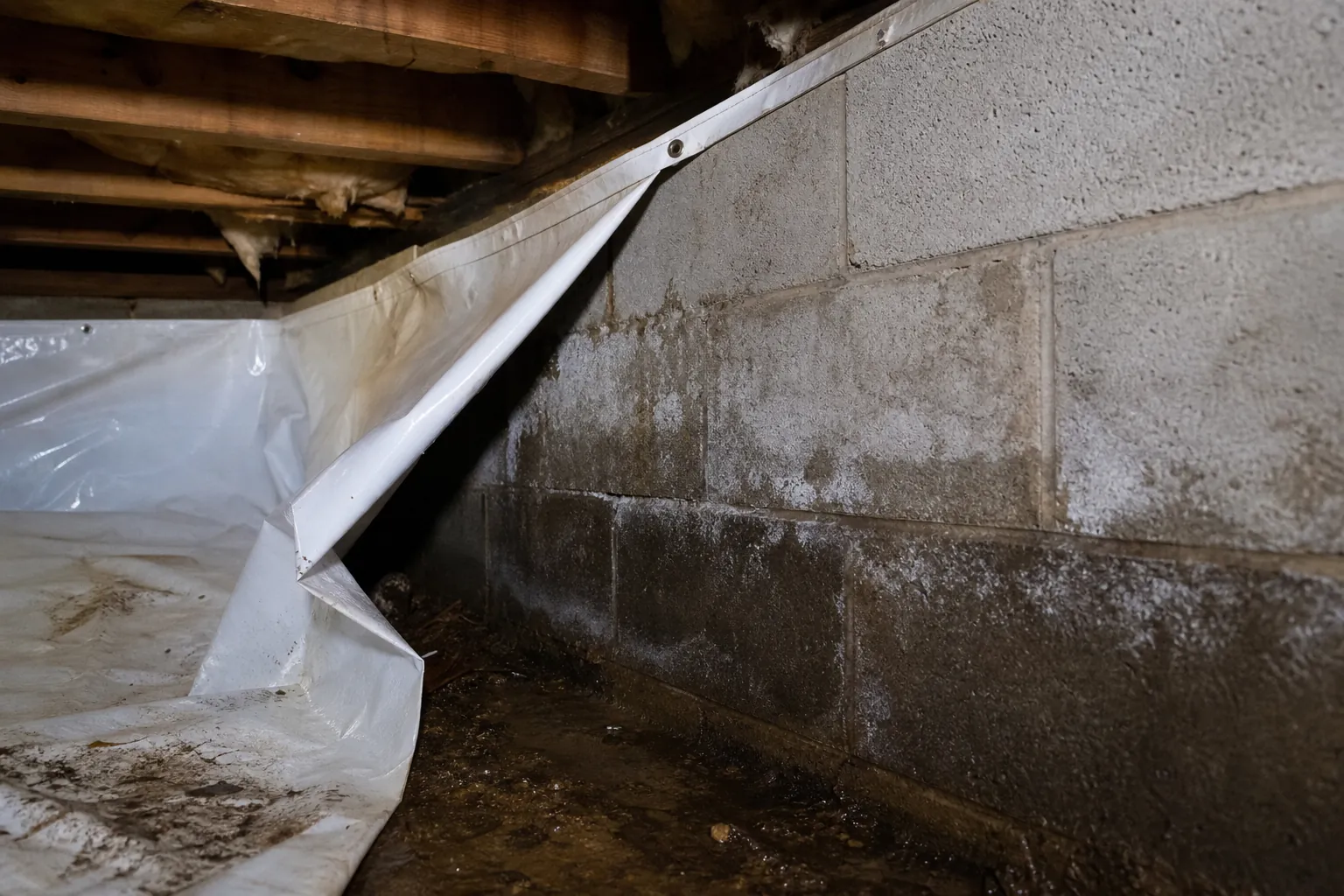
Moisture can affect how a liner sits and can help explain why a previously secure edge appears displaced. Look for standing water, damp foundation surfaces, darkened material, droplets, or wet soil near the gap. Also inspect above the separated area for plumbing leaks or signs that water is entering from another direction.
Condensation is another condition worth considering. Moist air can create droplets on cool surfaces, including ducts. If you also see moisture overhead, read this guide to crawl space condensation on ductwork in North Carolina to understand related observations.
Do not conclude that the liner itself caused the moisture. The useful question is whether water, humid air, or another source is affecting the material or its attachment. If electrical components, deep water, mold-like growth, animals, or unstable footing make entry unsafe, stop and seek appropriate assistance rather than continuing the inspection.
Review Attachments, Seams, and Nearby Openings
Once you understand the moisture conditions, examine the physical details around the loose edge. Fasteners or attachment materials may be missing, loose, damaged, or no longer holding as intended. The liner may also be under tension because a floor section shifted or because material was pulled around an obstruction.
Use a simple checklist to keep the inspection focused:
- Photograph the gap from nearby and from farther away.
- Measure the widest visible separation without pulling the material.
- Check whether adjacent seams remain closed and aligned.
- Look for punctures, stretched areas, or tears around fasteners.
- Note nearby pipes, piers, doors, vents, drains, or equipment.
- Record dampness, standing water, odors, or condensation.
- Mark the date so you can tell whether the gap grows.
These observations create a practical record. They also reduce the risk of covering up an underlying condition by making a quick adjustment before the cause is understood.
Decide Whether a Simple Adjustment Is Appropriate
A small loose edge may tempt you to tape, tuck, or refasten it immediately. First consider what that action could conceal. If the wall is damp, the material is torn, water is collecting behind the liner, or the gap continues to widen, securing the visible edge may not address the reason it moved.
Consider the surrounding condition rather than the size of the gap alone. A short separation in dry, undamaged material is different from a loose section beside standing water or a damaged seam. The liner should also be evaluated as a connected system. Pulling one area tight can transfer tension to another edge or seam.
If you choose to monitor the area, take repeat photographs from the same position after rain and during different weather conditions. Do not disturb attachments while monitoring. Clear documentation can show whether the condition is stable, weather-related, or progressing, which makes the next decision more informed.
Prepare for a Clear Crawl Space Conversation
When you contact Carolina Encapsulation Company, be ready to explain what you observed rather than offering only a diagnosis. State which wall is affected, how long the separation appears to be, whether the floor portion has shifted, and whether you found water, dampness, tears, or loose attachment points. Mention any recent weather or plumbing event that coincided with the change.
Photos can make the initial conversation more useful. Include one image showing the full wall, one close view of the attachment, and one showing the floor and any nearby obstruction. If you have older photos, compare them for movement. Avoid entering an area you cannot access safely just to obtain additional images.
The goal is to understand the condition before choosing a response. A calm, methodical inspection helps distinguish an isolated loose edge from a broader moisture or attachment concern and gives you better information for deciding what should happen next.
Talk Through What You Are Seeing
If your North Carolina crawl space liner is pulling away from the foundation wall, call Carolina Encapsulation Company at 704-207-9348. Describe the location, moisture conditions, and visible damage so the conversation can begin with concrete details.
Call 704-207-9348 to talk through next steps.