How Can Homeowners Prevent Punctures in an Encapsulation Liner?
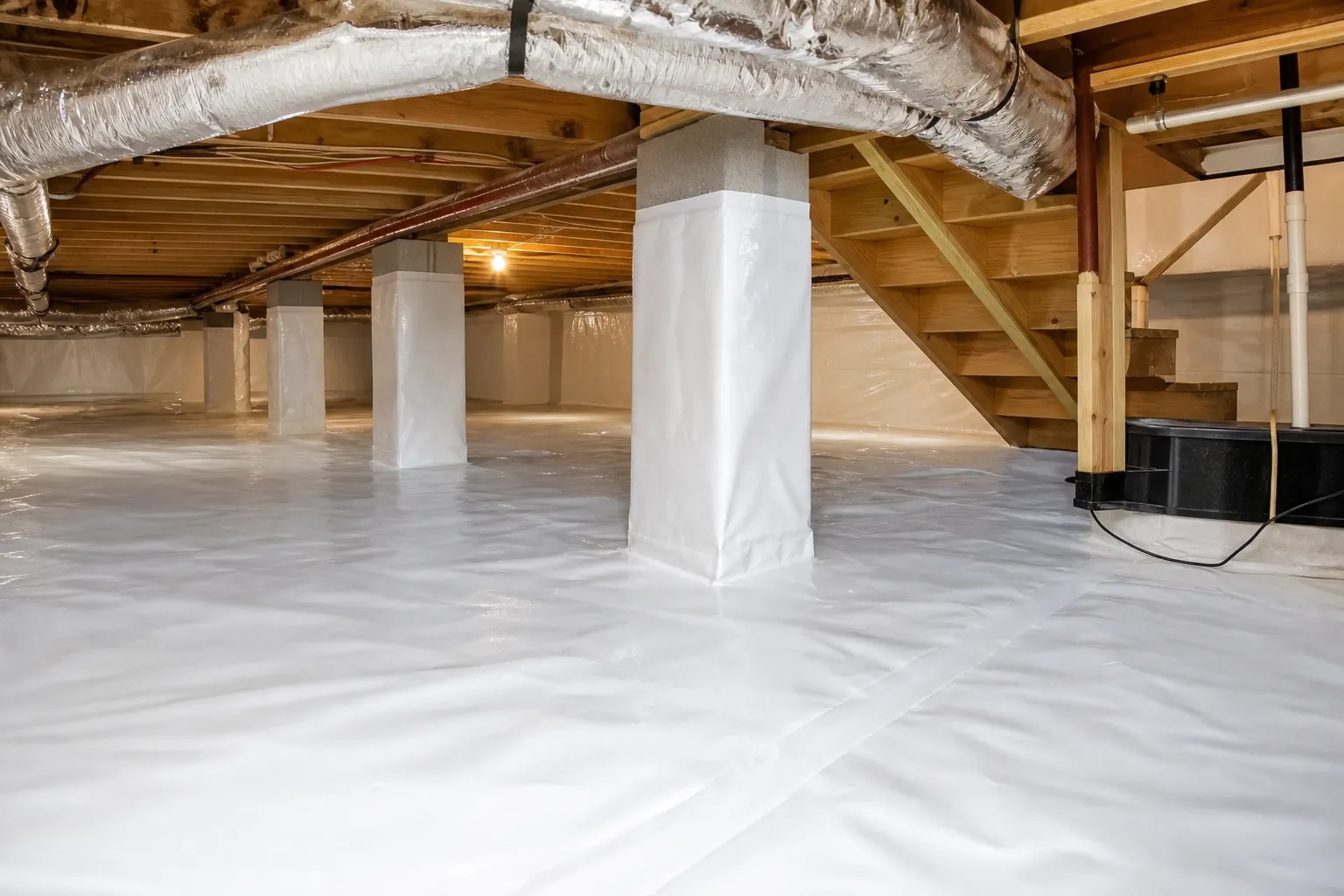
A crawl space liner can be damaged when sharp objects, repeated foot traffic, stored materials, or work around utilities place too much pressure on it. Prevention starts with controlling how the crawl space is used. North Carolina homeowners can reduce puncture risks by keeping access routes clear, preparing before anyone enters, and checking the liner after maintenance. The following steps can help you protect the liner while making informed decisions about crawl space access.
Remove Sharp Debris Before It Becomes a Problem
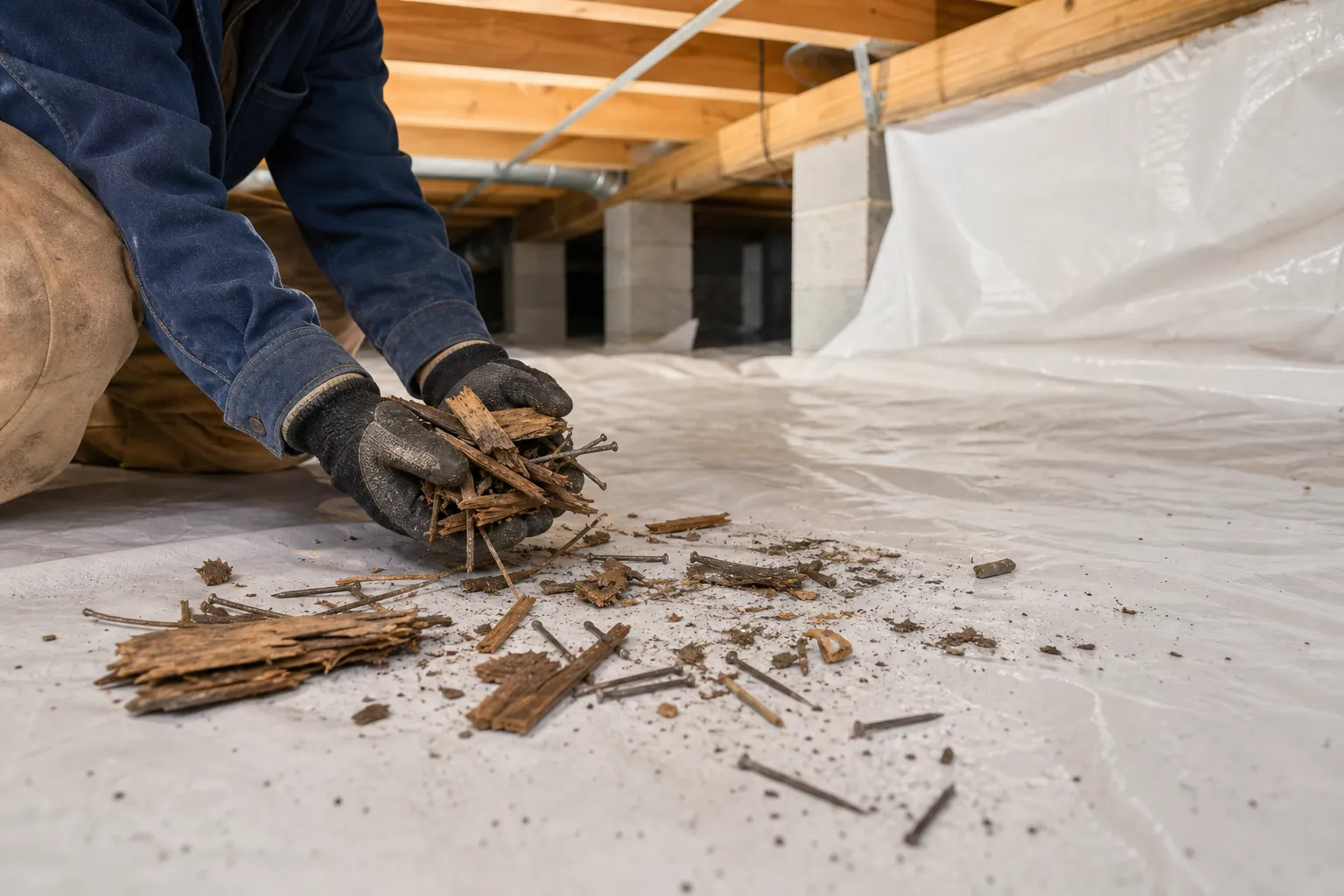
Sharp material beneath or on top of a liner can create a puncture when someone crawls or kneels over it. Before routine access, look for loose screws, nails, wire ends, broken plastic, sharp stones, and construction scraps. Do not drag these items across the liner. Pick them up carefully and place them in a rigid container that will not tear or spill.
Pay attention to areas near the crawl space entrance and beneath common travel paths. Debris can be carried inside on boots, dropped during repairs, or left behind after work. A small fastener may seem harmless until body weight or a tool box presses it into the liner.
If an object appears trapped beneath the material, avoid pulling or forcing it through the liner. Mark the location and determine whether the area can be addressed without stretching or cutting the material. When the safe approach is unclear, pause before proceeding. Preventing one avoidable puncture is simpler than discovering damage after moisture has reached the exposed area.
Plan a Safe Route for Crawl Space Access
Repeated movement can concentrate wear in the same places, especially near entrances, utility equipment, plumbing connections, and low-clearance areas. Before entering, identify the shortest practical route to the work area. Remove obstacles that could cause someone to twist, slide, or place a knee on a sharp object.
Anyone entering should move slowly and lift tools rather than dragging them. Tool bags, buckets, extension cords, ladders, and equipment with metal corners can catch the liner. Inspect the bottoms of containers before bringing them inside. A protruding screw, chipped edge, or piece of gravel can cause damage even when the load itself is not heavy.
Use extra caution where the liner changes direction, such as around piers, walls, pipes, and seams. Avoid pulling on the material for balance. If technicians or contractors need access, explain that a liner is present and ask how they will protect it. A brief conversation before work begins can prevent unnecessary cuts, scuffs, and displaced sections.
Handle Storage and Equipment Carefully
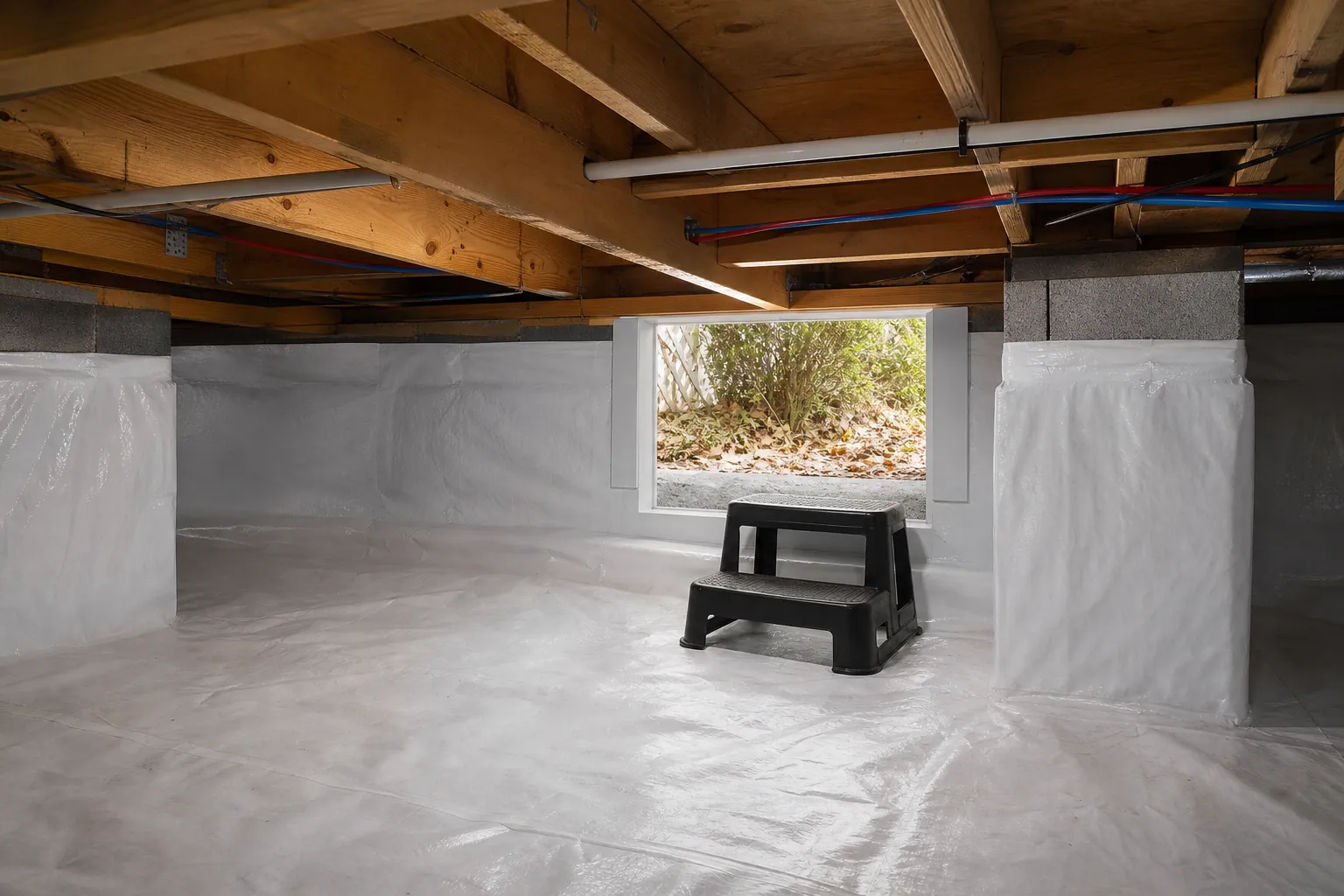
A lined crawl space should not become an unplanned storage area. Cardboard boxes, scrap lumber, garden tools, paint cans, and loose household items can introduce sharp edges or hide developing damage. Stored materials may also make inspections difficult and force workers to drag equipment over the liner.
Before placing anything in the crawl space, consider its weight, shape, stability, and reason for being there. Avoid direct contact between the liner and items with narrow feet, rough bottoms, exposed fasteners, or pointed corners. Do not assume a smooth-looking object is safe. Check its underside and remove attached debris first.
- Keep the entrance and normal travel route free of stored items.
- Do not slide bins, tools, lumber, or equipment across the liner.
- Use clean, stable protection when temporary work requires kneeling or tool placement.
- Remove scraps and fasteners immediately after repairs.
- Never cut the liner to create space for a stored object or new utility.
Good storage decisions preserve visibility, reduce traffic hazards, and make future checks easier.
Protect the Liner During Plumbing and Utility Work
Maintenance is a common time for accidental liner damage because technicians may need to carry tools, remove components, or work in confined areas. Tell every worker about the liner before entry. Ask them not to cut, drill through, or move it without discussing the plan with you.
Prepare a clean staging area for tools. Small parts should be kept in a container rather than placed directly on the liner. When a task may produce metal shavings, cut wire, pipe fragments, or other sharp waste, collect debris as the work progresses. The area should be checked again when the job is finished.
After plumbing, electrical, HVAC, pest-related, or structural work, inspect the route from the entrance to the service location. Look for cuts, holes, disturbed seams, pulled edges, and objects left underneath or on top. Moisture visible near ductwork may involve additional factors beyond a puncture. Homeowners evaluating that issue can read about crawl space condensation on ductwork in North Carolina for related guidance.
Inspect Damage Without Making It Worse
Routine visual checks can catch damage before repeated traffic enlarges it. Use good lighting and follow the established access path. Examine the entrance first, then seams, wall edges, corners, piers, pipe penetrations, and frequently serviced equipment. Look for small holes, cuts, abrasions, wrinkles under pressure, or sections that have shifted.
Do not test a suspicious spot by pulling it, pushing a finger through it, or peeling back nearby material. Mark the location without puncturing the liner, photograph it, and note whether water, debris, or exposed ground is visible. These details can help when discussing the next step.
A repair decision should account for the size and location of the damage, the liner condition around it, and whether an underlying sharp object remains. Simply covering the visible opening may not address movement, contamination, or debris below. If several defects appear along a traffic route, review how the space is being accessed. Prevention may require changing work practices in addition to addressing existing damage.
Discuss Your Crawl Space Liner Concerns
If you have found a puncture or want help deciding how to protect a crawl space liner, call Carolina Encapsulation Company at 704-207-9348. A calm conversation can help you explain what you observed and determine an appropriate next step.
Call 704-207-9348 to talk through next steps.