Is White or Clear Liner Better for a North Carolina Crawl Space?
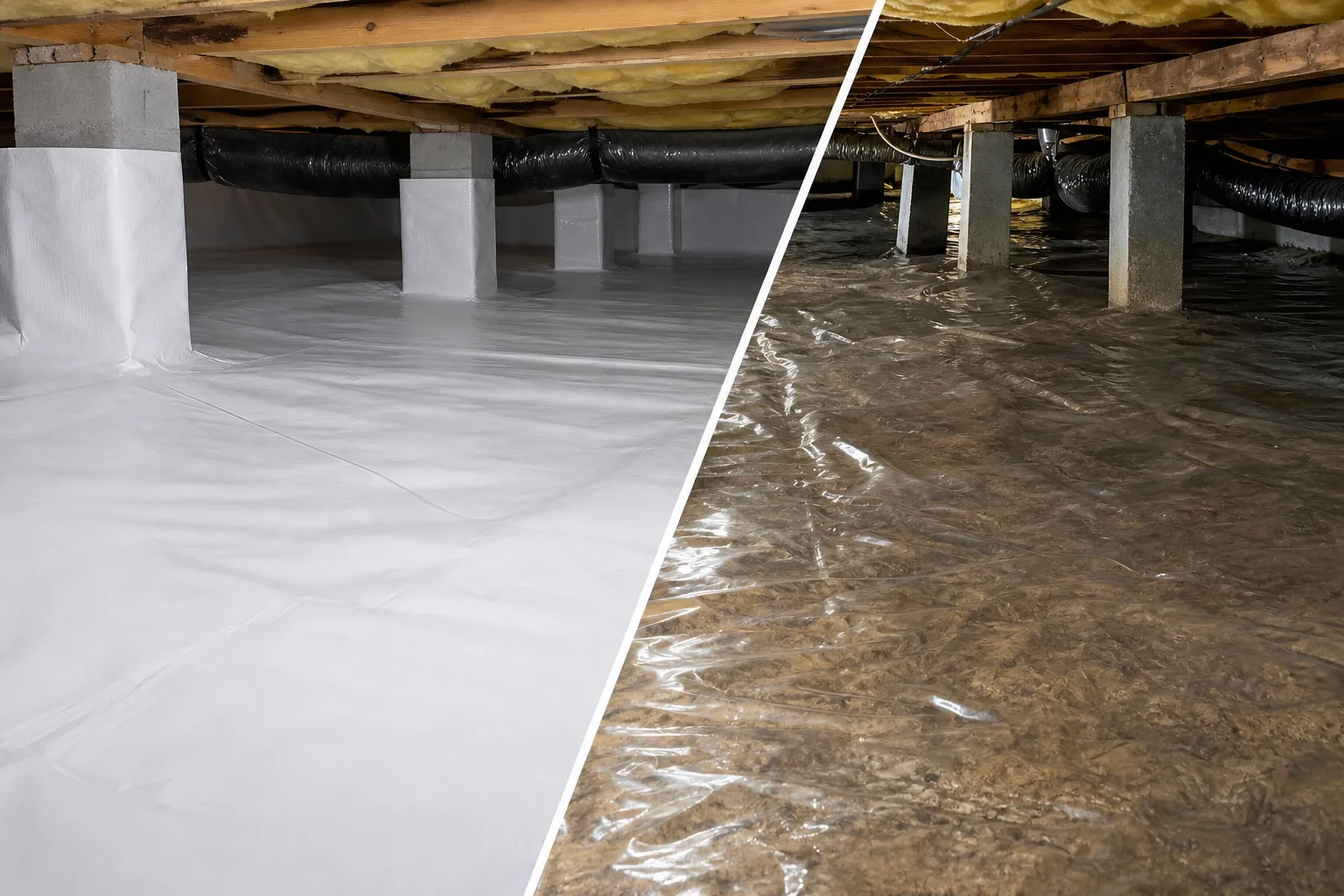
Choosing between a white and clear crawl space liner is less about finding one universally superior color and more about deciding what you need to see after installation. Both options can create a defined surface over the area they cover, but they offer different visibility, appearance, and inspection conditions. Before selecting a liner for a North Carolina crawl space, examine the space, identify recurring concerns, and compare materials beyond color alone.
Start With the Condition of Your Crawl Space
Begin the decision with a careful look at the crawl space as it exists today. Note whether the ground is consistently damp, whether water collects after rain, and whether plumbing or ductwork shows visible moisture. Also identify debris, uneven areas, sharp objects, or other conditions that could affect the liner.
This initial review matters because liner color does not correct an unresolved water source or prepare the surface. If moisture is visible on HVAC components, read this guide to crawl space condensation on ductwork in North Carolina before treating the liner choice as the main decision.
Photograph the crawl space from several angles and record where pipes, supports, walls, and equipment meet the ground. These reference points make it easier to discuss coverage and future access. The best color choice becomes clearer once you know whether inspection visibility, brightness, or seeing the ground below is your main priority.
Understand What a White Liner Makes Easier
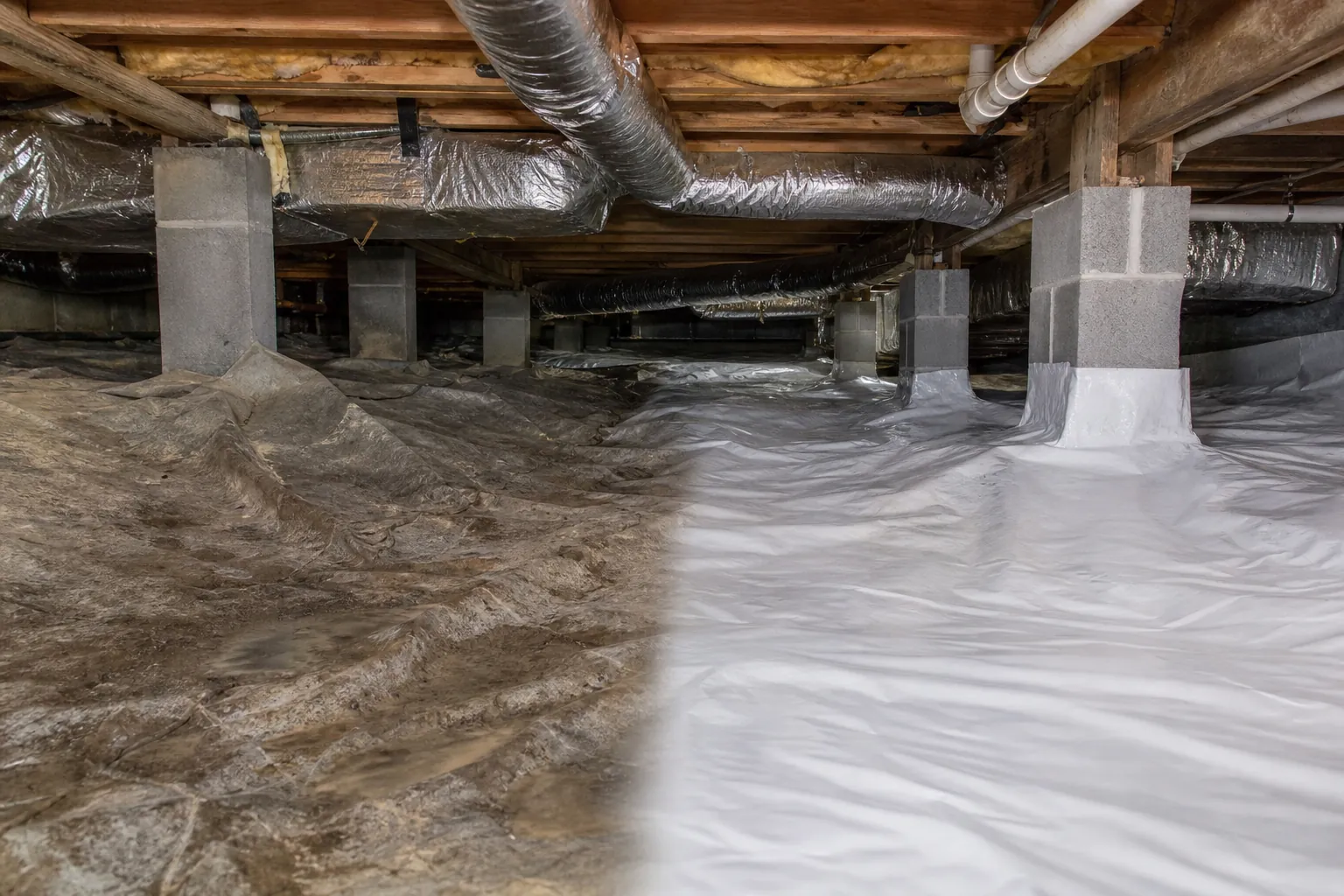
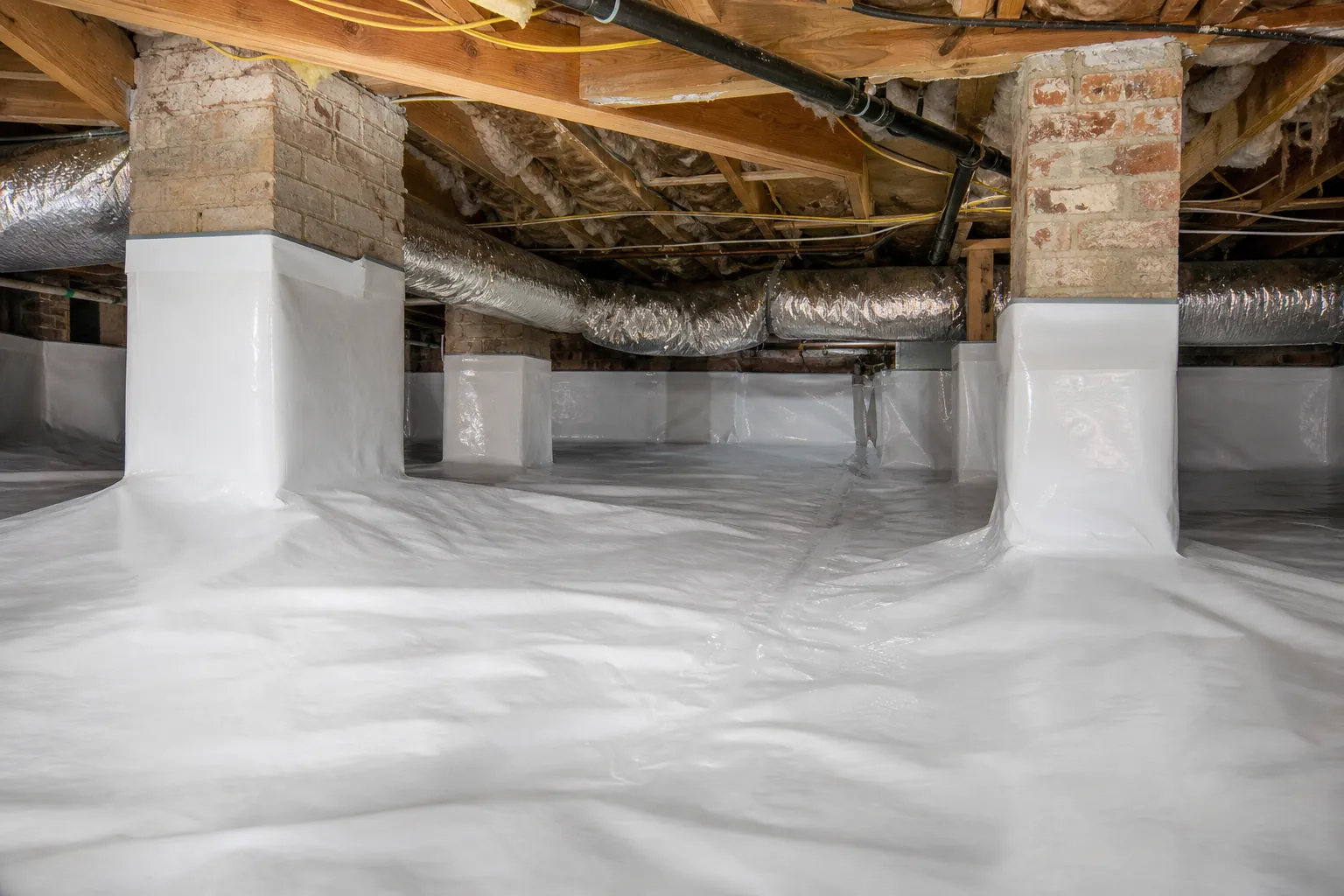
A white crawl space liner creates a bright, uniform background. That appearance can make the space feel easier to visually scan, especially when using a flashlight. Dirt, stains, tracked mud, and some forms of surface moisture may contrast with white, helping you notice changes that warrant a closer look.
The tradeoff is that white visibly records normal activity. Footprints, installation marks, dust, and debris tend to stand out. Homeowners who expect frequent access should decide whether that visibility is useful documentation or an unwanted cosmetic issue. A pristine appearance immediately after installation should not be confused with long-term performance.
White can be a practical choice when you want a clean visual field around supports, pipes, ducts, and other components. However, color should remain secondary to the material's stated specifications, the way seams and transitions are handled, and whether the liner suits the intended application. Ask to see the exact proposed product rather than relying on a generic description such as “white liner.”
Know What a Clear Liner Lets You See
A clear liner allows some visibility of the surface beneath it. That may help when you want to retain reference to ground features, changes in soil appearance, or objects that would otherwise be hidden. The practical value depends on the product's actual transparency. A liner described as clear may appear cloudy, textured, or less transparent after installation and use.
Seeing through a liner is not the same as being able to diagnose every condition below it. Lighting, wrinkles, overlapping sections, dust, and moisture can limit visibility. Clear material may also show the natural color and irregularity of the ground, so it generally will not produce the bright, uniform appearance associated with white.
Before choosing clear, inspect a full-size sample over soil under lighting similar to your crawl space. Look through both a single layer and an overlap. This simple test gives you a more realistic expectation than a small sample held under bright indoor light. Decide whether the available visibility will genuinely assist future observations or merely change the finished appearance.
Compare More Than Color Before Deciding
Color is easy to compare, but it should not dominate the purchase decision. Request written product information and review how the proposed liner will be used throughout the crawl space. Products with the same color can differ, and a general color label does not tell you how a particular material is constructed.
Use a short decision checklist:
- Ask for the exact product name and its written specifications.
- Examine samples of white and clear material under realistic lighting.
- Discuss seams, edges, penetrations, supports, and access routes.
- Identify areas where service work or regular entry may occur.
- Clarify how existing water, debris, or sharp surfaces will be addressed.
- Photograph current conditions before any material covers the ground.
Also consider how you plan to inspect the crawl space later. If quick visual contrast is valuable, white may fit that preference. If seeing the underlying surface is more important, clear may be worth considering. In either case, review the complete plan rather than selecting a product based on a photograph or color name alone.
Make a Practical Choice for Your North Carolina Home
For many homeowners, the choice can be reduced to one question: what information do you want the installed surface to reveal? Choose white when a brighter, more uniform background and strong contrast for surface marks are priorities. Consider clear when retaining some view of the area underneath matters more than creating a uniform visual field.
Next, verify that your preference works with the actual crawl space. Walk through the photographs from your initial review, mark places that need continued observation, and consider how lighting affects visibility. If possible, place both samples on the ground and view them from the crawl space entrance as well as up close. Make notes instead of relying on memory.
Do not use color as a substitute for investigating moisture, drainage, plumbing, ductwork, or other visible concerns. A thoughtful decision accounts for existing conditions, the exact material, installation details, and future access. This process gives you a defensible reason for choosing white or clear rather than simply following a general recommendation that may not match your home.
Discuss Your Liner Decision
If you want to talk through white versus clear liner for your North Carolina crawl space, call Carolina Encapsulation Company at 704-207-9348. Have your crawl space photos and key questions ready so the conversation can stay focused on the conditions you can see and the decision you need to make.
Call 704-207-9348 to talk through next steps.