Do Wrinkles in a Crawl Space Liner Cause Water to Puddle?
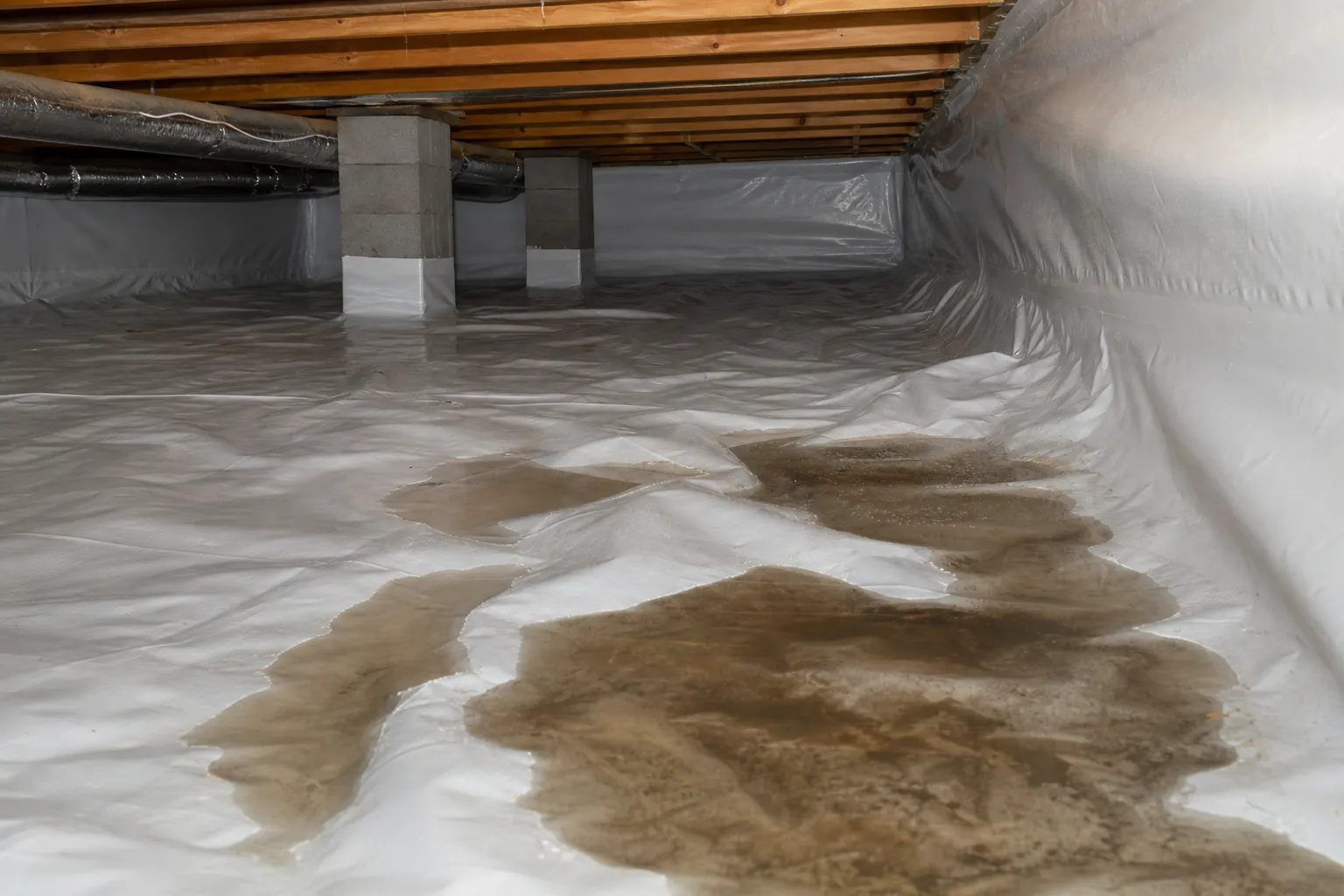
Wrinkles in a crawl space liner can create low spots where water collects, but the wrinkles are not necessarily the source of the moisture. Before deciding what to do, determine whether the water came from condensation, plumbing, groundwater, drainage, or another source. The pattern, timing, and location of each puddle can help you make a better-informed decision.
Why Wrinkles Can Hold Water Without Causing It
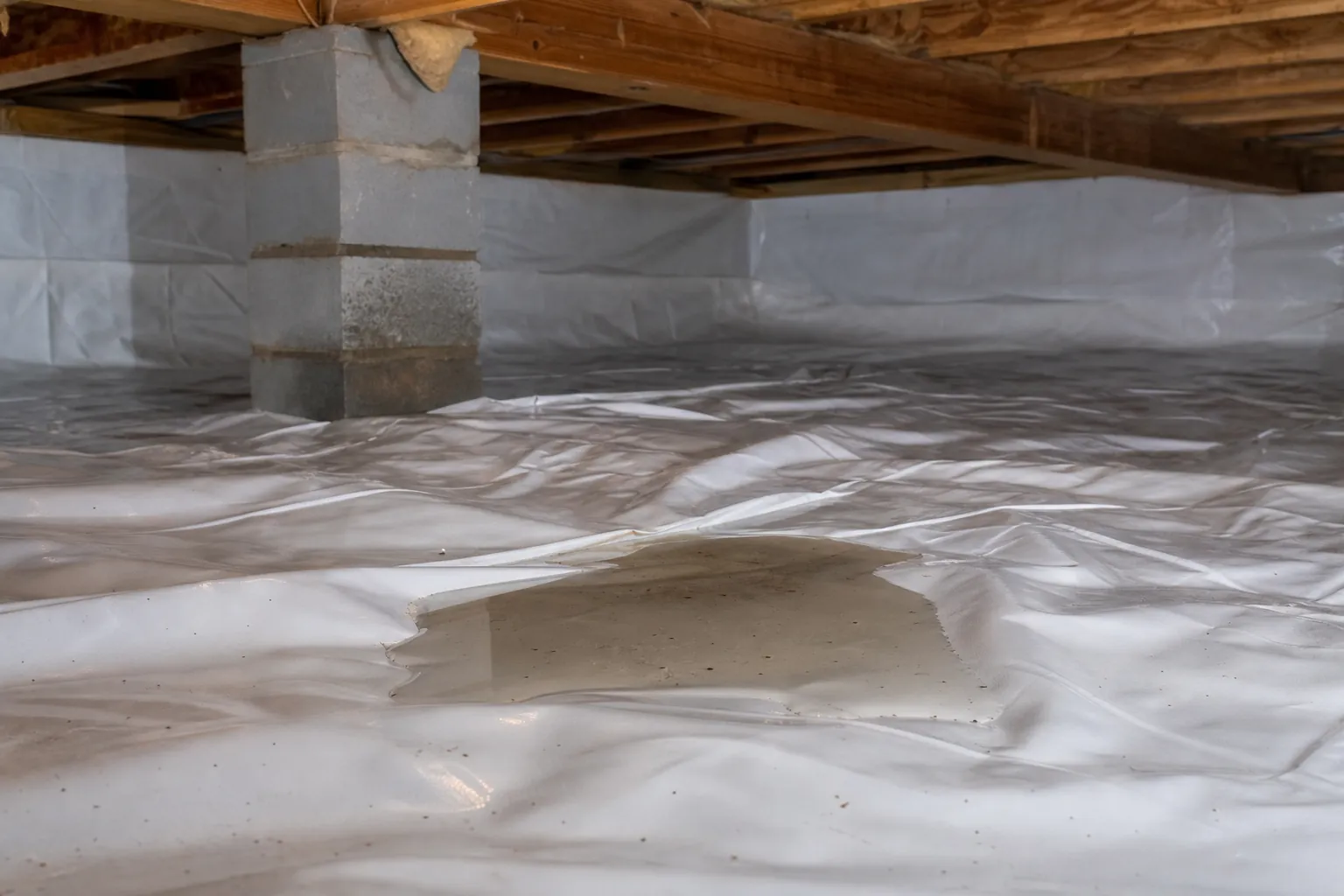
A flexible liner rarely lies perfectly flat across every part of a crawl space. Seams, corners, piers, soil contours, and transitions can leave folds or shallow depressions. When moisture reaches the liner, gravity carries it toward those lower areas. A wrinkle may therefore determine where a puddle appears even though it did not introduce the water.
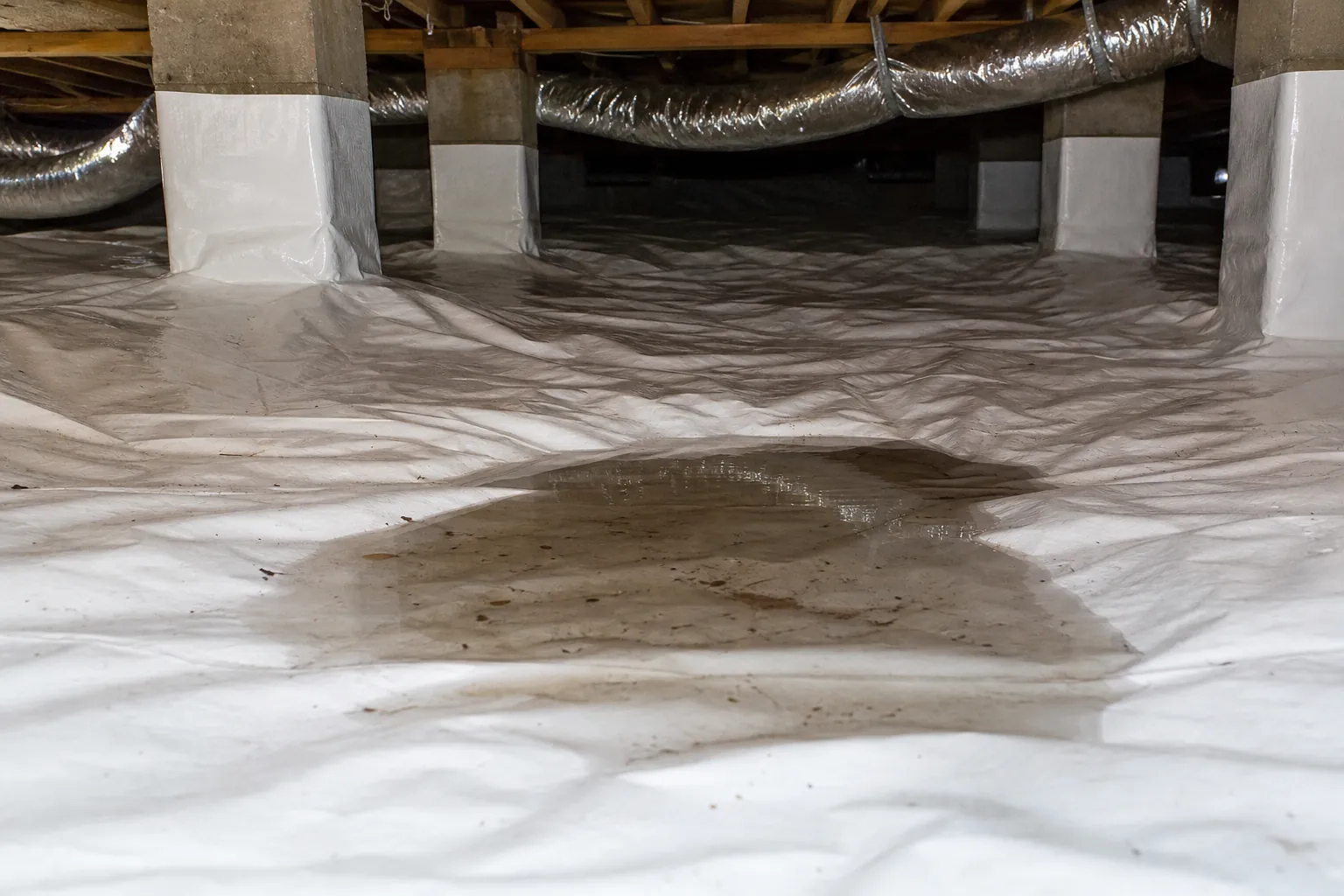
This distinction matters. Flattening one fold may move the water to another low point without addressing the underlying condition. Start by looking beyond the puddle. Check the area above it, nearby pipes and ducts, perimeter walls, supports, seams, and the route water could have followed. A puddle directly beneath a pipe suggests a different investigation than water concentrated near an exterior wall.
Also note whether the moisture is isolated or widespread. One small wet spot can have a local cause. Multiple puddles or dampness across a broad area may point to a larger moisture pattern that deserves a more complete evaluation.
Clues That Help Identify the Moisture Source
Timing is one of the most useful clues. If puddles appear after rainfall, inspect where they are located relative to perimeter walls and any visible paths across the liner. If water appears during dry weather, look carefully at plumbing and other components above the wet area. Moisture around ductwork may involve condensation, especially when humid air contacts cooler surfaces.
Do not rely on appearance alone. Water can travel along a pipe, framing member, wall, or liner before collecting in a wrinkle. The visible puddle may be some distance from where the moisture first entered. Trace stains, droplets, or damp paths upward and outward rather than stopping at the lowest point.
For more context on one potential source, read crawl space condensation on ductwork in North Carolina. That information can help you compare the location and timing of the puddle with signs of moisture forming on ducts.
A Practical Inspection You Can Document Safely
Begin from a safe access point and avoid entering any area with standing water near electrical components, unstable materials, pests, or other hazards. If conditions permit observation, document what you see before moving the liner or drying the water. Photos taken from the same position on different dates can reveal whether a puddle is recurring, spreading, or associated with weather.
Use a simple checklist so that important details are not missed:
- Record the date, recent weather, and whether the puddle followed rain.
- Photograph the entire area, then photograph seams, folds, walls, pipes, and ducts nearby.
- Mark the puddle’s approximate size and location without puncturing the liner.
- Look above the wet spot for droplets, discoloration, or a visible drip path.
- Check whether water seems trapped in one fold or extends beneath overlapping material.
- Recheck the same location during dry weather and after the next rainfall.
This record gives you concrete observations to discuss instead of relying on a single snapshot.
When the Liner Itself Deserves Attention
Some wrinkles are mainly cosmetic, while others affect how water moves or make inspection more difficult. Pay closer attention when a fold forms a pronounced basin, directs water toward a seam, hides the edge of a puddle, or prevents you from seeing what is happening underneath. Also note material that has shifted away from a wall, pier, penetration, or transition.
Avoid cutting, puncturing, or randomly fastening the liner to release pooled water. A hole may allow moisture to move through the material and can complicate later assessment. Likewise, pushing water out of one depression without finding its source only changes the puddle’s location.
When comparing next steps, ask whether the proposed work addresses both the liner’s shape and the moisture pathway. A useful assessment should distinguish between a surface low spot and the condition supplying water to it. That distinction helps prevent spending money on a visible symptom while leaving the cause unchanged.
How to Decide What to Do Next
Your next step should reflect recurrence, extent, and evidence. A small puddle that appears once after an unusual event may call for documentation and monitoring. Water that returns after rain, develops beneath a pipe, or appears in several areas warrants closer attention to the associated pattern. Prompt investigation is sensible if the amount is increasing or the source cannot be identified.
When speaking with someone about the crawl space, share photographs, dates, rainfall timing, and the locations of pipes, ducts, walls, seams, and folds. Ask what evidence supports the proposed source and how the recommended response addresses that source. If the explanation focuses only on smoothing wrinkles, ask where the collected water originated and what would keep it from returning.
The key decision is not whether every liner must look perfectly smooth. It is whether water is present, why it reached the liner, and whether the folds are affecting drainage, visibility, or continued pooling.
Discuss What You Are Seeing
If you are deciding how to respond to wrinkles or puddles in a North Carolina crawl space, call Carolina Encapsulation Company at 704-207-9348. Describe when the water appears and where it collects so the conversation can begin with the facts you have documented.
Call 704-207-9348 to talk through next steps.