Crawl space repair for Burlington, NC homes
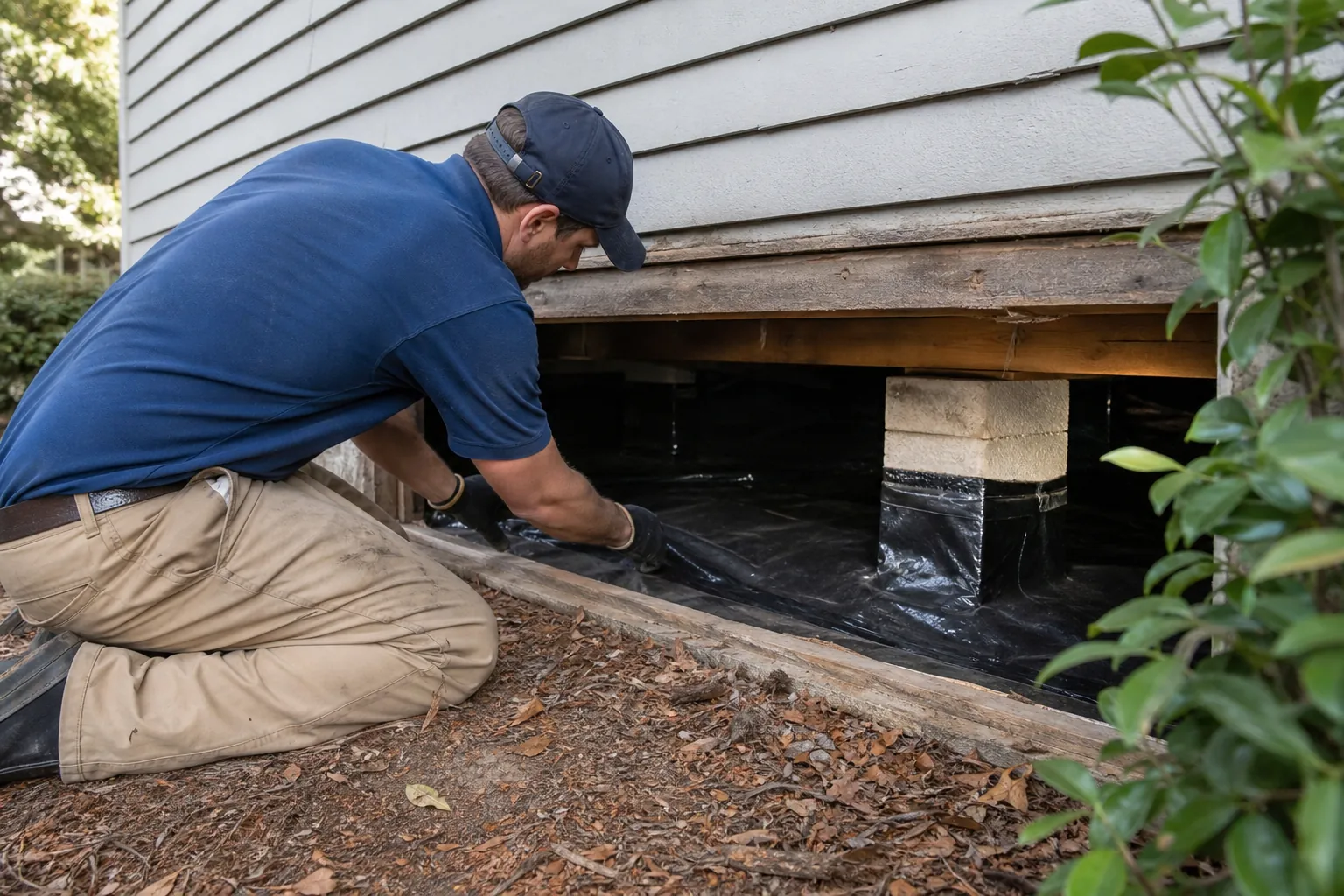
A damp crawl space can affect far more than the area beneath your home. Moisture may contribute to musty odors, damaged insulation, wood decay, pest activity, and uncomfortable indoor conditions. Because air naturally moves upward through a house, crawl space conditions can also influence the air your family breathes.
Carolina Encapsulation Company provides crawl space repair in Burlington, NC, with solutions designed for North Carolina homes. The right approach begins with a careful evaluation, not a one-size-fits-all package. By identifying how water and humidity enter the space, a contractor can recommend repairs that address the cause instead of simply covering visible symptoms.
Why Burlington Crawl Spaces Develop Moisture Problems
Burlington experiences humid summers, seasonal storms, and periods of heavy rainfall. These conditions can place considerable moisture pressure on a vented crawl space. Warm, humid outdoor air enters through foundation vents and meets cooler surfaces below the home. When that air cools, relative humidity rises and condensation may form on ductwork, floor framing, pipes, or insulation.
Ground moisture is another common source. Even soil that appears dry can release water vapor into an uncovered crawl space. Drainage issues may make the problem worse. Clogged gutters, short downspouts, negative grading, foundation openings, or plumbing leaks can introduce additional water.
Moisture problems often develop gradually, which makes them easy to overlook. A crawl space inspection can help distinguish between seasonal humidity, active water intrusion, plumbing concerns, and damage that requires structural attention.
Warning Signs That Deserve Attention
You do not have to crawl under your home to notice every sign of trouble. Changes inside or around the house can indicate that the area below the floor needs professional evaluation.
- Persistent musty odors: Earthy smells that are strongest near floors, closets, or HVAC registers may originate below the living space.
- Sagging or uneven floors: Soft, bouncy, or sloping areas can indicate weakened framing, failing supports, or prolonged moisture exposure.
- High indoor humidity: Condensation on windows and a clammy indoor feel may be connected to moisture moving upward from the crawl space.
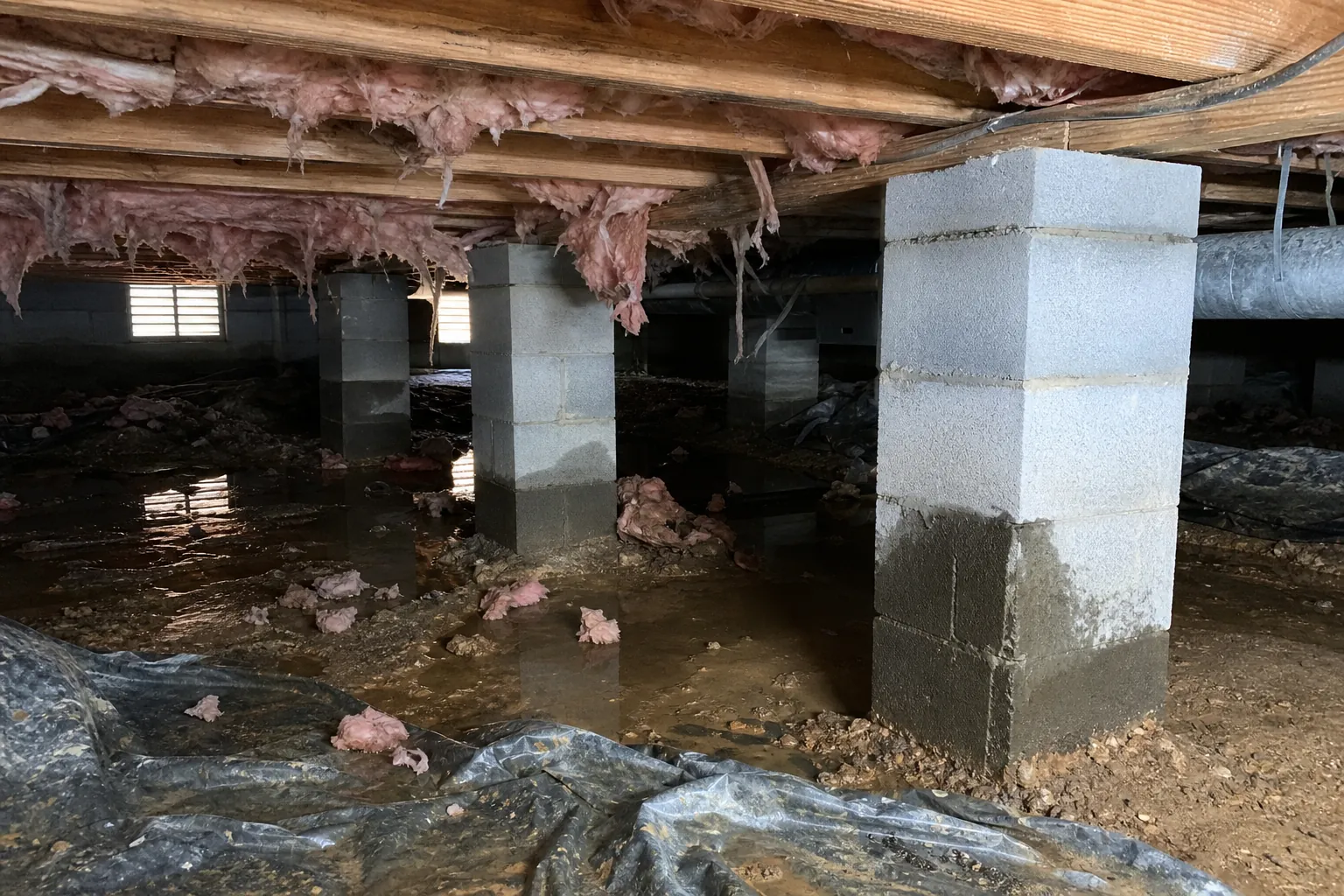
- Damaged insulation: Fiberglass batts that hang down, appear wet, or show staining may no longer perform as intended.
- Visible fungal growth: Discoloration on joists or subflooring should be assessed to determine the moisture source and appropriate response.
- Pest activity: Damp, sheltered spaces can attract insects and other pests, especially when wood or insulation has deteriorated.
- Standing water: Puddles after rain may point to drainage, grading, groundwater, or foundation entry problems.
These symptoms do not all require the same repair. For example, adding a dehumidifier without controlling standing water may produce limited results. Accurate diagnosis helps prevent unnecessary work and supports a more durable outcome.
What Crawl Space Repair May Include
Crawl space repair Burlington NC homeowners need often involves several coordinated steps. The scope depends on site conditions, existing damage, foundation design, and the way moisture reaches the area.
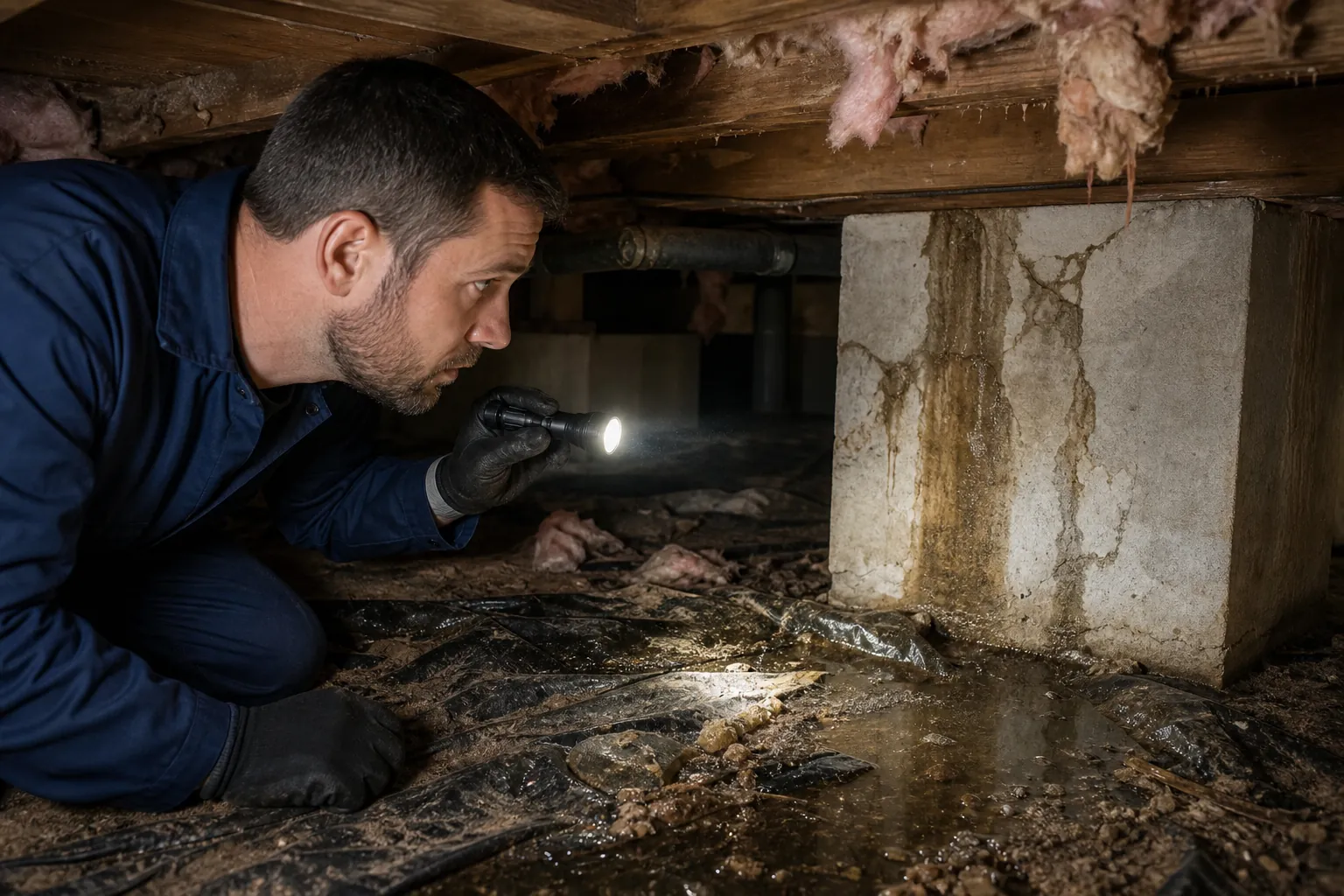
Initial work may include removing fallen insulation, damaged vapor barriers, or other debris so the framing and foundation can be evaluated. Active plumbing leaks should be corrected, while exterior drainage improvements may be recommended when roof runoff or grading directs water toward the foundation.
If wooden components have sustained damage, repairs may involve joist reinforcement, beam work, or support improvements. Structural recommendations should be based on the location and severity of deterioration rather than appearance alone.
Moisture control can include a ground vapor barrier or full crawl space encapsulation. Encapsulation typically uses a durable liner across the floor and up foundation walls, with seams and penetrations sealed carefully. Foundation vents and outside-air openings may also be sealed as part of a controlled system.
Some homes benefit from a properly sized crawl space dehumidifier. Where water intrusion is possible, drainage measures such as interior channels, sump equipment, or discharge planning may also be needed. Each component should serve a clear purpose within the complete moisture-management plan.
Encapsulation Versus A Basic Vapor Barrier
A basic vapor barrier covers exposed soil and reduces the amount of ground vapor entering the crawl space. It can be helpful when conditions are relatively mild, but thin or loosely installed material may shift, tear, or leave large areas exposed around piers and foundation walls.
Encapsulation creates a more comprehensive separation between the crawl space and surrounding moisture sources. A heavier liner is fitted around supports and penetrations, seams are sealed, and the material extends onto foundation walls. The goal is to create a cleaner, more manageable environment where humidity can be controlled consistently.
Encapsulation is not a substitute for fixing leaks, drainage failures, or damaged framing. Those concerns should be addressed as part of the project. When properly planned, however, an encapsulated crawl space can help protect insulation and wood components while reducing musty air and excessive humidity.
How A Professional Evaluation Helps
A useful inspection looks beyond surface stains. The technician should consider moisture readings, wood condition, drainage patterns, vapor barrier coverage, ventilation, ductwork, plumbing, and signs of pest activity. Photos can help homeowners understand areas that are difficult to access.
Recommendations should explain which problems are active, what may have caused them, and how each proposed service contributes to the solution. Homeowners should also ask about liner thickness, sealing methods, dehumidifier drainage, equipment access, warranties, and future maintenance.
After repairs, routine checks remain valuable. Gutters should stay clear, downspouts should discharge away from the foundation, and plumbing leaks should be addressed promptly. Dehumidifiers and sump systems may require periodic service to continue operating effectively.
Plan A Drier Space Beneath Your Home
Delaying crawl space work can allow moisture-related damage to spread, but a thoughtful plan can restore control. Carolina Encapsulation Company helps Burlington homeowners evaluate dampness, damaged materials, air-sealing needs, and encapsulation options without pushing a predetermined solution.
If you have noticed musty odors, uneven floors, high humidity, or water below your home, schedule a crawl space assessment. Call Carolina Encapsulation Company at 704-207-9348 to discuss your Burlington, North Carolina property and the next practical step.
Call 704-207-9348 to talk through next steps.