What Are the Signs of a Faulty Crawl Space Sump Pump Check Valve?
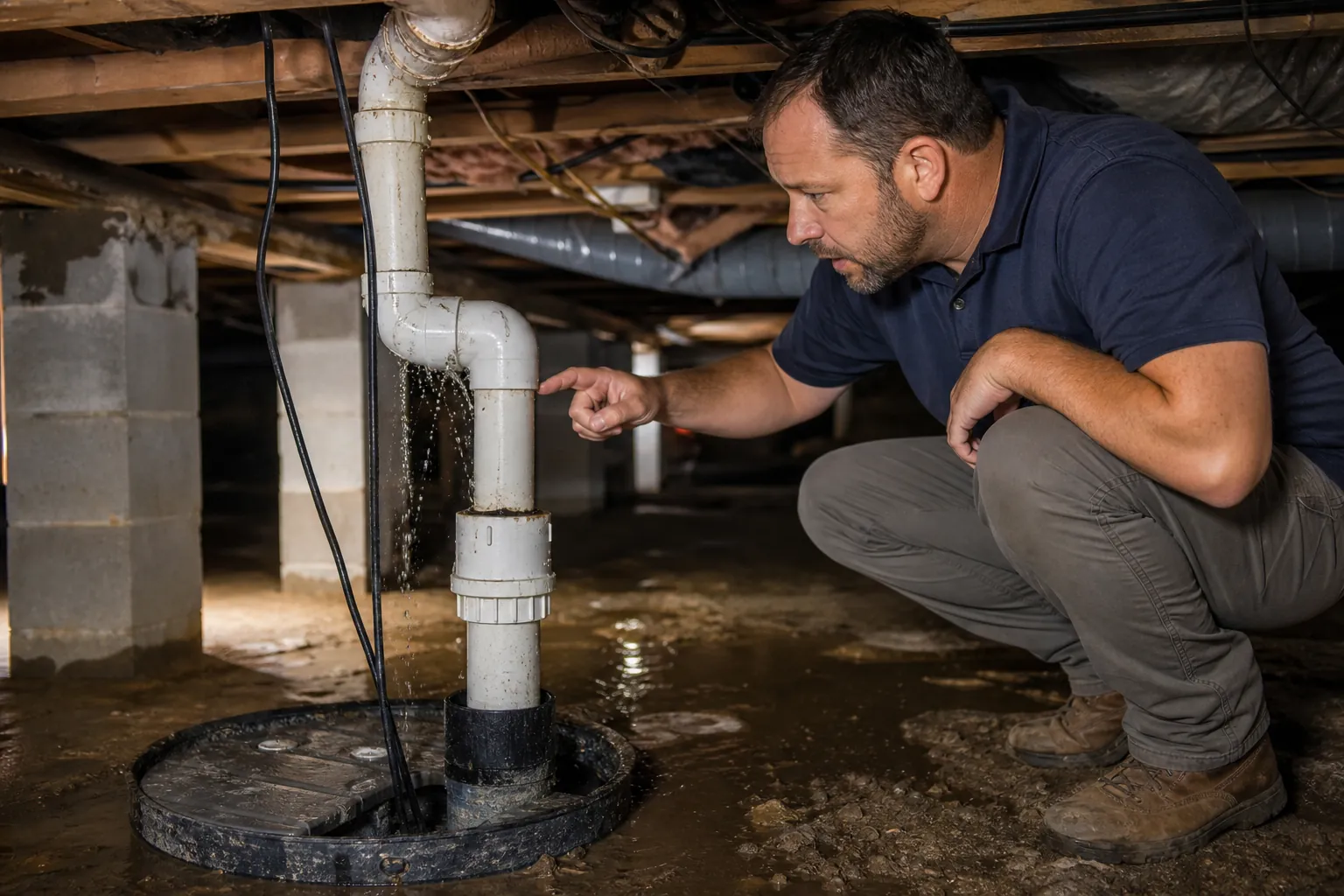
A crawl space sump pump check valve is intended to keep discharged water from flowing backward toward the sump pit after the pump stops. When it is not working correctly, the pump may handle the same water repeatedly, make unusual sounds, or leave clues around the pit and discharge pipe. Recognizing these symptoms can help you decide what to inspect, what to document, and when to seek guidance.
Repeated Pump Cycling After Water Is Discharged
One of the clearest warning signs is a pump that stops and then starts again soon afterward. Some cycling is expected when water continues entering the pit, especially during wet conditions. The concern is a quick restart that appears connected to water returning through the discharge pipe.
Stand at the crawl space entrance or another safe observation point and listen through several complete cycles. After the motor stops, note whether you hear a noticeable rush of water back toward the pit. Then watch the water level, if the pit is safely visible. A rapid rise immediately after shutdown may point to backflow through the discharge line rather than new groundwater entering the pit.
Do not judge the valve from a single cycle. Record when cycling happens, how long the pump remains off, and whether rain or visible inflow explains the rising water. This distinction helps separate a possible check valve problem from a pump responding normally to ongoing water entry.
Water Falling Back Into the Sump Pit
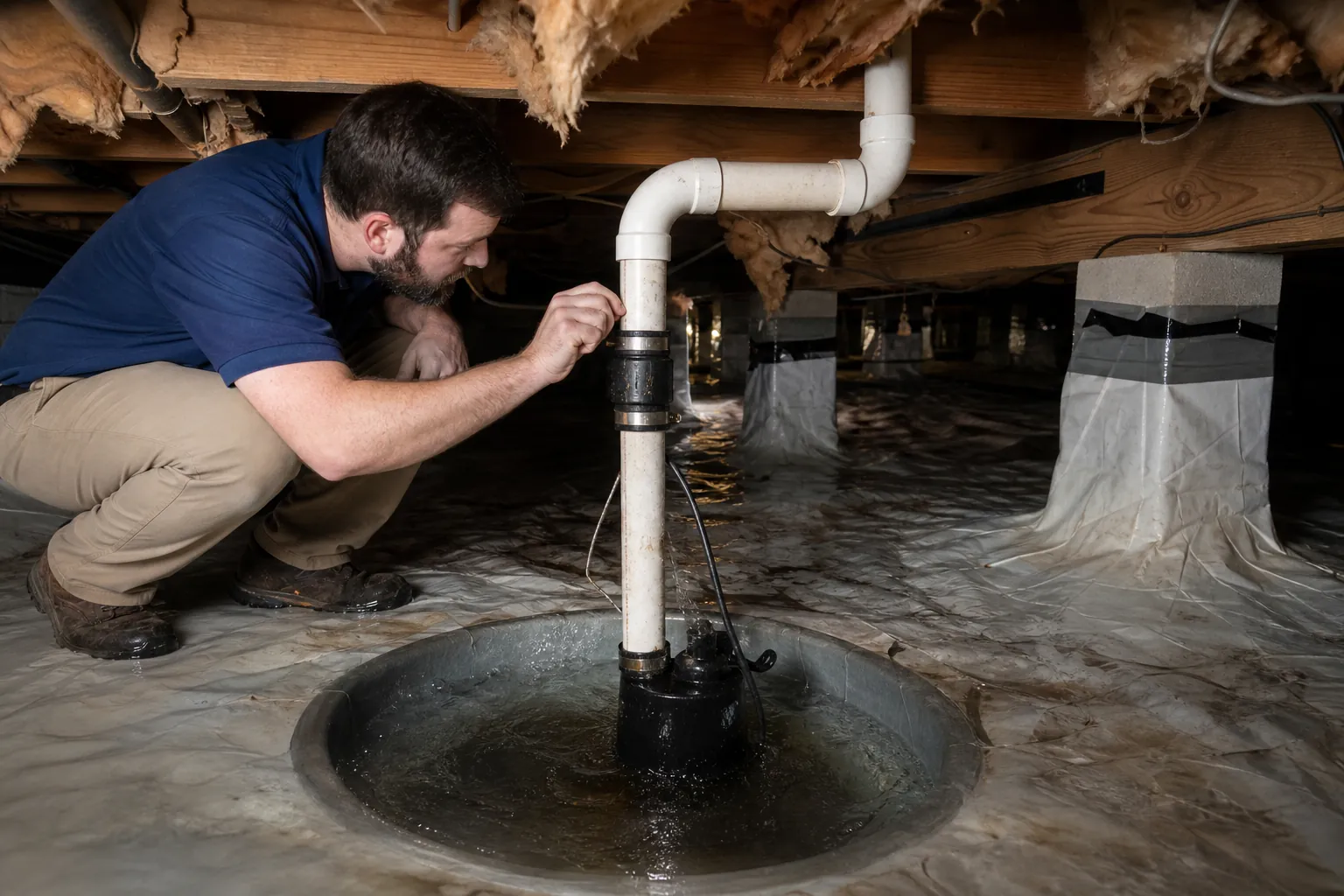
Visible or audible backflow is another important symptom. When a pump shuts off, a limited amount of movement in the piping may occur, but a substantial return of water deserves attention. You might hear splashing, gurgling, or a sudden surge into the pit. If the cover can be viewed without disturbing wiring or components, you may also see the water level jump.
Backflow can be associated with a check valve that is obstructed, worn, installed in the wrong direction, or unable to seal. The observation alone does not identify the exact cause. The discharge piping, valve orientation, fittings, and pump behavior need to be considered together.
Use a flashlight from stable footing and avoid reaching into the pit. Do not handle electrical connections in a damp crawl space. Instead, take a short video that captures the sound and water movement when the pump stops. This provides a useful record and can make a later conversation more specific.
Unusual Noises Near the Valve or Discharge Pipe
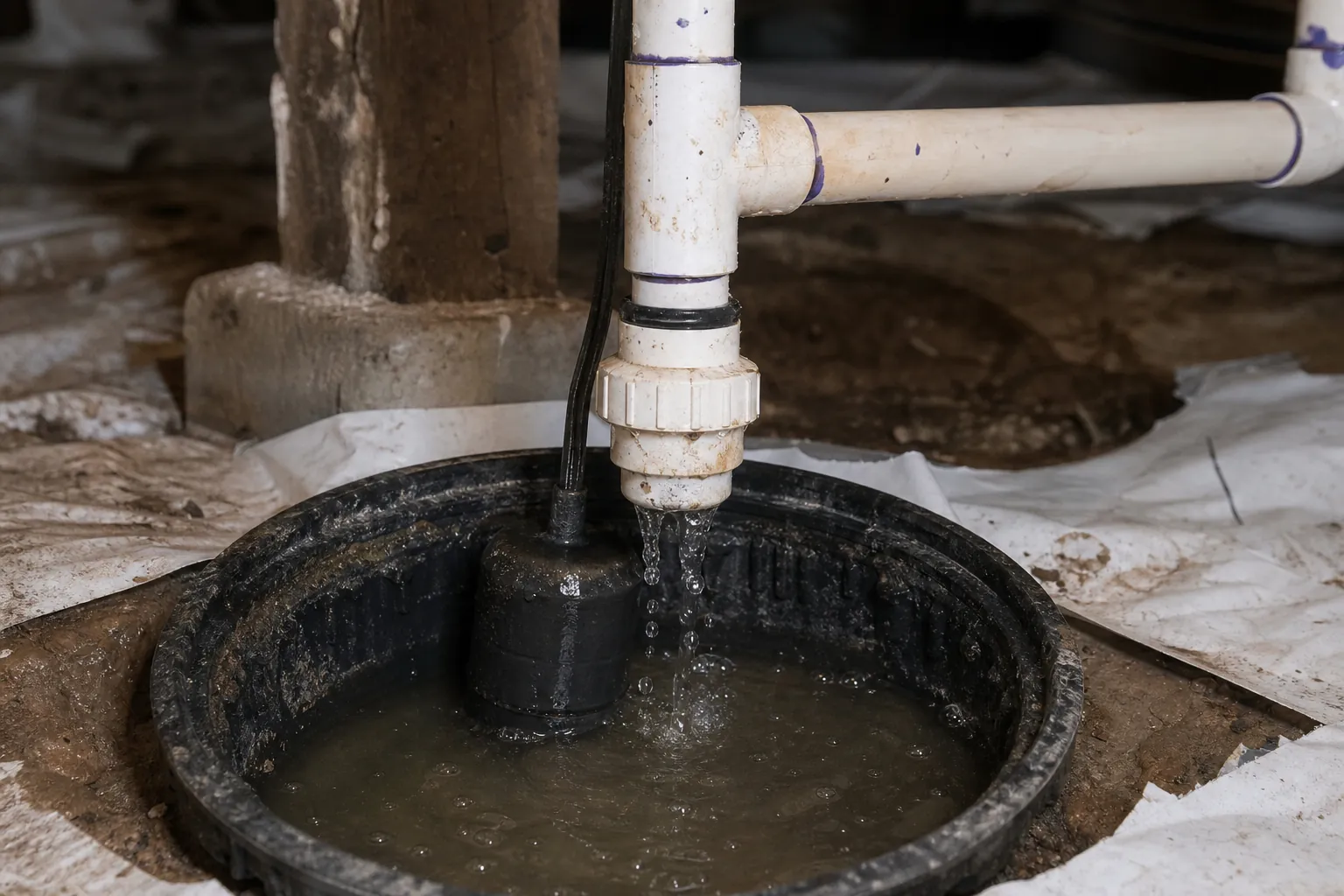
A faulty or poorly operating check valve can produce sounds that are easy to notice. A sharp bang at shutdown may occur when the moving water column stops abruptly. Repeated rattling can suggest that an internal valve component is moving irregularly. Gurgling or sustained draining sounds may indicate water moving backward after the pump finishes its cycle.
Sound by itself is not a complete diagnosis. Pipes can transmit vibration, and a loose fitting or unsupported section may amplify normal pump operation. Focus on the timing and location of the noise. A sound that occurs consistently at the valve immediately after shutdown is more relevant than a general hum while the motor runs.
- Note whether the sound occurs during startup, pumping, or shutdown.
- Count how many times it happens during several cycles.
- Look for visible pipe movement from a safe position.
- Check for moisture around accessible valve connections without touching electrical parts.
- Record a video or audio clip for comparison.
These details help clarify whether the valve, piping, or another component should receive closer attention.
Leaks, Damp Fittings, and Changing Crawl Space Conditions
Inspect the accessible area around the check valve and discharge fittings for drips, water trails, mineral deposits, or damp surfaces. A connection may leak only while the pump is running, so a dry pipe between cycles does not always rule out a problem. Observe from a safe distance while the system operates, without loosening clamps or fittings.
Moisture near the valve matters beyond the immediate plumbing issue. Water released into the crawl space can add to damp conditions around wood, insulation, ducts, and other materials. If you also see moisture collecting on HVAC components, read this guide to crawl space condensation on ductwork in North Carolina. Condensation and a discharge leak are different issues, but both observations can be relevant when evaluating the overall moisture pattern.
Document where moisture begins rather than assuming every wet surface has the same source. Note whether it appears only during pump operation, after rainfall, or during humid weather. That timeline supports a more informed decision.
How to Decide What to Do Next
Start by confirming the symptom over several cycles. Look for rapid restarts, water returning to the pit, noises at shutdown, leaks near fittings, or visible pipe movement. Write down the date, recent weather, approximate cycle timing, and changes in the water level. Photos and short videos can preserve details that are difficult to describe later.
Next, consider safety. A crawl space may contain standing water, limited clearance, exposed wiring, or unstable footing. Do not enter if conditions appear unsafe. Do not place your hands in the pit, modify the discharge pipe while the pump is powered, or work around wet electrical connections. If you cannot observe the system without those risks, stop and seek guidance.
A check valve symptom also does not automatically mean the pump itself has failed. Backflow, continuing water entry, discharge restrictions, fittings, and pump controls can create overlapping signs. The useful decision is whether the pattern is repeatable and whether water management is being disrupted. Clear observations make that decision easier and reduce guesswork.
Discuss What You Are Seeing
If your crawl space sump pump repeatedly cycles, sends water back toward the pit, or makes unusual shutdown noises, Carolina Encapsulation Company can discuss your observations. For calm, straightforward guidance on the next step, call 704-207-9348.
Call 704-207-9348 to talk through next steps.