How Can a Crawl Space Sump Pump Discharge Line Be Protected From Freezing?
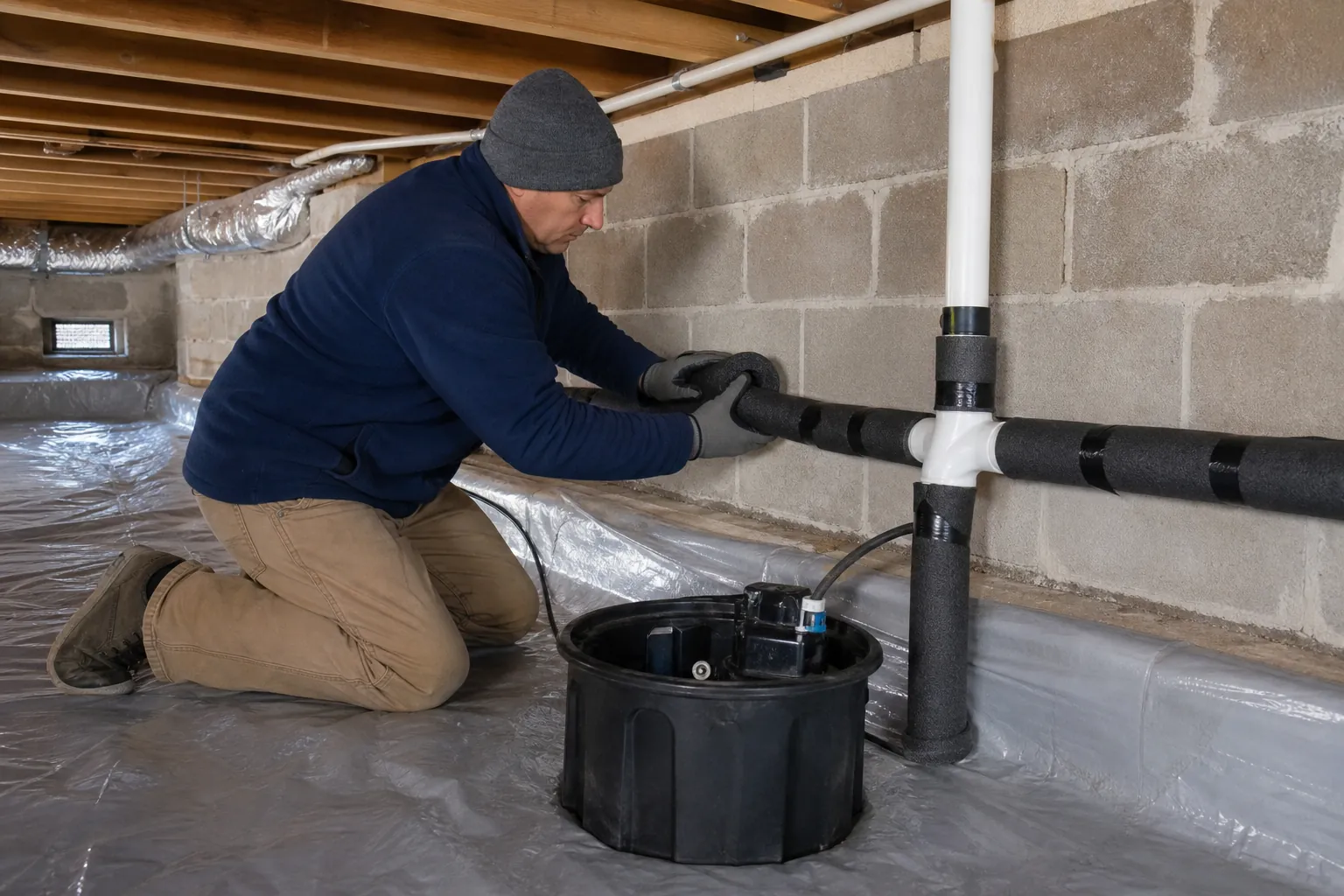
A crawl space sump pump can move collected water away from the foundation, but the discharge line must remain open for that water to leave. During a North Carolina cold spell, water left inside an exposed or poorly routed section may freeze. The resulting blockage can stop normal discharge, place added strain on the pump, and send water back toward the crawl space. Protecting the line starts with understanding its route, checking its slope, and correcting places where water can remain after each pumping cycle.
Understand Where the Discharge Line Can Freeze
Begin by tracing the discharge line from the pump to its outlet. Freezing is most likely in sections exposed to outdoor air, especially near the crawl space exit, along the exterior wall, or at the final outlet. Bends, low spots, narrow fittings, and corrugated extensions can retain water after the pump stops. That standing water is more vulnerable when temperatures fall.
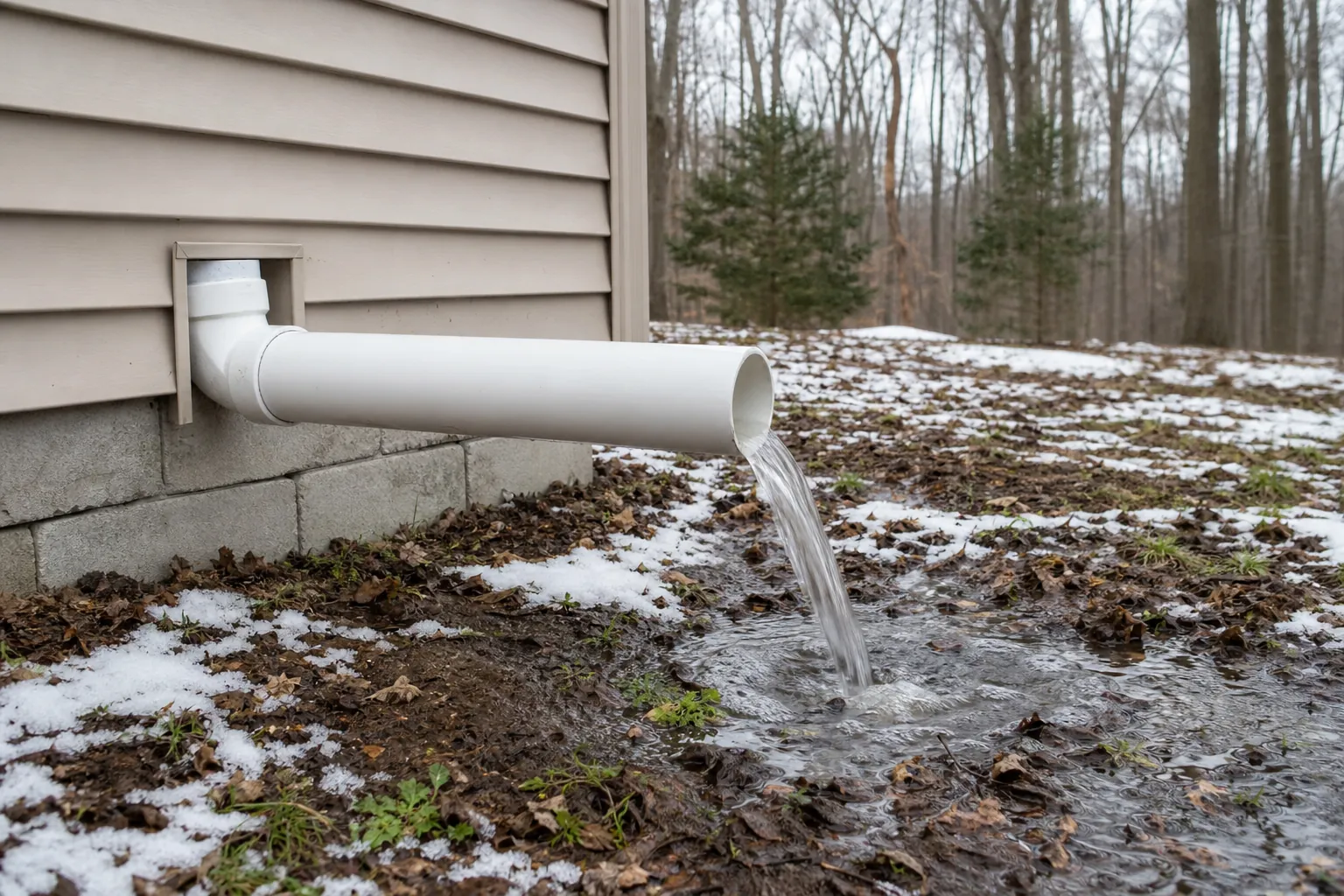
Look for an outlet blocked by leaves, soil, ice, or debris. Also check whether the end of the line is submerged in pooled water. A submerged outlet can restrict flow and leave more water in the pipe. Inside the crawl space, inspect accessible connections for leaks or separation, but do not enter an unsafe area or handle electrical equipment in standing water.
The goal is not merely to cover the pipe. First determine why water remains in it. Insulation may slow heat loss, but it does not correct a sagging route, blocked outlet, or section pitched back toward the pump.
Promote Drainage After Every Pumping Cycle
A discharge route should allow water to move away without collecting in low sections. Review accessible piping for dips, upward turns, or crushed extensions. A line that rises and falls repeatedly may trap water even when the outlet appears clear. Supports should hold the pipe in a consistent route rather than allowing it to sag between attachment points.
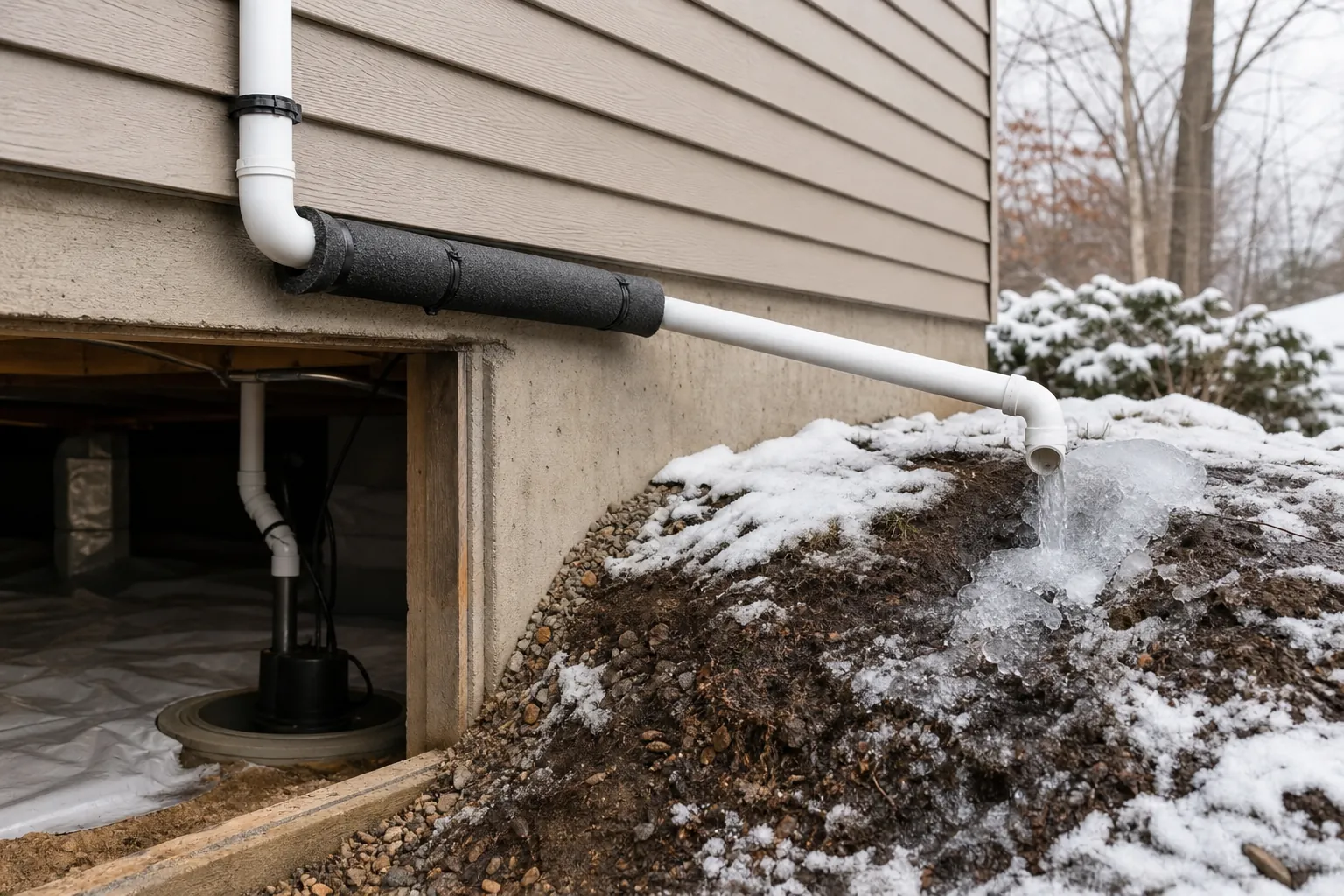
The outlet also needs a clear path for released water. If discharge immediately pools around the pipe end, freezing can build inward from the outlet. Observe the area after rainfall or a pumping cycle, if it is safe to do so. Note whether water exits freely, where it travels, and whether it returns toward the foundation.
Do not create an improvised opening that releases water beside the crawl space. Any routing decision should consider drainage, site conditions, and the existing system. When the correct pitch or termination is uncertain, request an evaluation instead of repeatedly thawing the same section. Recurring freezing generally points to a routing, drainage, or exposure issue that still needs attention.
Reduce Exposure Without Creating New Restrictions
Once the route drains properly, reducing cold-air exposure may help protect vulnerable sections. Exterior piping should be intact, appropriately supported, and free from openings where debris can enter. Pipe insulation may reduce heat loss in some exposed areas, but it must stay dry, fit the pipe, and avoid covering defects that require repair. Insulation alone cannot keep trapped water from freezing through a prolonged cold period.
Avoid packing the outlet with towels, foam, or other materials that can block discharge. Do not use an open flame to thaw plastic pipe, and do not apply unapproved heat sources in a crawl space. These methods can damage piping or create fire and electrical hazards. If ice is already present, switch attention to preventing overflow and arranging a safe inspection.
Cold air entering the crawl space can also affect plumbing and moisture conditions. If you notice damp ducts or dripping surfaces while inspecting the area, read this guide to crawl space condensation on ductwork in North Carolina for related decision points.
Inspect the System Before Cold Weather Arrives
A short inspection before a forecast freeze can reveal correctable problems. Start outside and work back toward the crawl space so that you do not overlook a blocked termination. Photograph questionable sections and note whether the problem appears only during cold weather or also follows heavy rain.
- Clear leaves, soil, and visible debris from around the discharge outlet.
- Check accessible piping for cracks, loose joints, crushing, sags, and sharp bends.
- Confirm that the outlet is not submerged in standing water.
- Look for erosion or pooling that sends discharged water back toward the foundation.
- Listen for repeated pump cycling or operation without visible discharge.
- Check the crawl space for new water, damp materials, or leakage near connections.
- Keep the pump's electrical connection and surrounding area dry and unobstructed.
Do not test equipment by reaching into a sump basin or touching wiring in wet conditions. If the pump runs but little or no water reaches the outlet, shut down only if that can be done safely and according to the equipment instructions. A blocked line should be addressed promptly because continued operation may not move water out of the crawl space.
Know When the Discharge Route Needs Evaluation
Some warning signs call for more than a seasonal check. Repeated freezing at the same location suggests retained water or excessive exposure. Water returning through a connection, a pump that cycles frequently, ice forming directly at the outlet, or new crawl space water after pump operation also warrants attention. These observations help distinguish an isolated weather event from a persistent discharge problem.
Before requesting help, record where ice appeared, whether the pump was running, and whether any water reached the outlet. Note recent rainfall and temperature changes. Clear photos of the outlet, exterior route, and accessible interior piping can make the initial conversation more productive.
Do not wait for standing water to spread across the crawl space before acting. The practical decision is whether the line drains fully, stays unobstructed, and moves water away from the foundation. If you cannot verify those conditions safely, an evaluation can identify the next appropriate step without relying on temporary thawing methods.
Discuss Your Crawl Space Discharge Concern
If a crawl space sump pump discharge line is freezing, backing up, or leaving water near your North Carolina foundation, call Carolina Encapsulation Company at 704-207-9348. Describe what you observed, when it happened, and where the line appears blocked so the conversation can focus on the relevant conditions.
Call 704-207-9348 to talk through next steps.