Is My Crawl Space Sump Pump Discharging Too Close to the House?
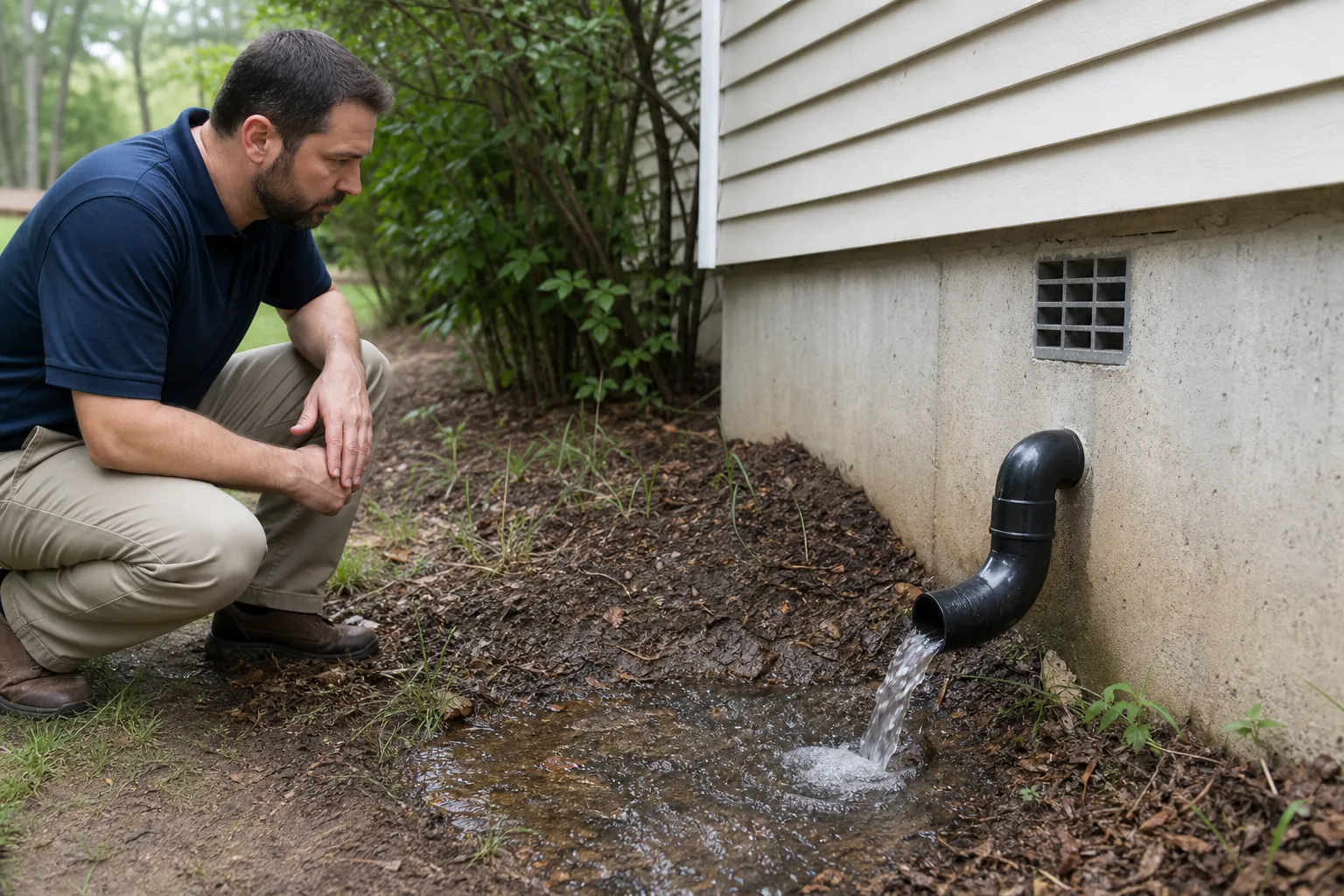
A crawl space sump pump may remove collected water, but where that water goes afterward matters. If the discharge ends too close to the house, water can remain near the foundation and potentially return toward the crawl space. Before changing anything, observe the outlet during a pump cycle, inspect the surrounding grade, and determine whether discharged water moves away or collects nearby.
Why the Discharge Location Deserves Attention
A sump pump addresses water at its collection point. The discharge line is responsible for carrying that water to an appropriate release area. When the outlet is close to the house, the system may move water out of the crawl space only to place it beside the foundation. The result can be repeated pumping or persistently damp soil near the structure.
Distance alone does not provide the full answer. The direction and speed of surface drainage are also important. An outlet farther away can still be poorly positioned if the ground slopes back toward the building. Conversely, a carefully selected release point should allow water to continue moving away without creating a puddle, eroding soil, or affecting a walkway.
Watch the outlet while the pump runs. Note whether water flows away freely, remains near the termination point, or travels back toward the house. This direct observation is more useful than judging the pipe location by appearance alone.
Signs That Water May Be Returning
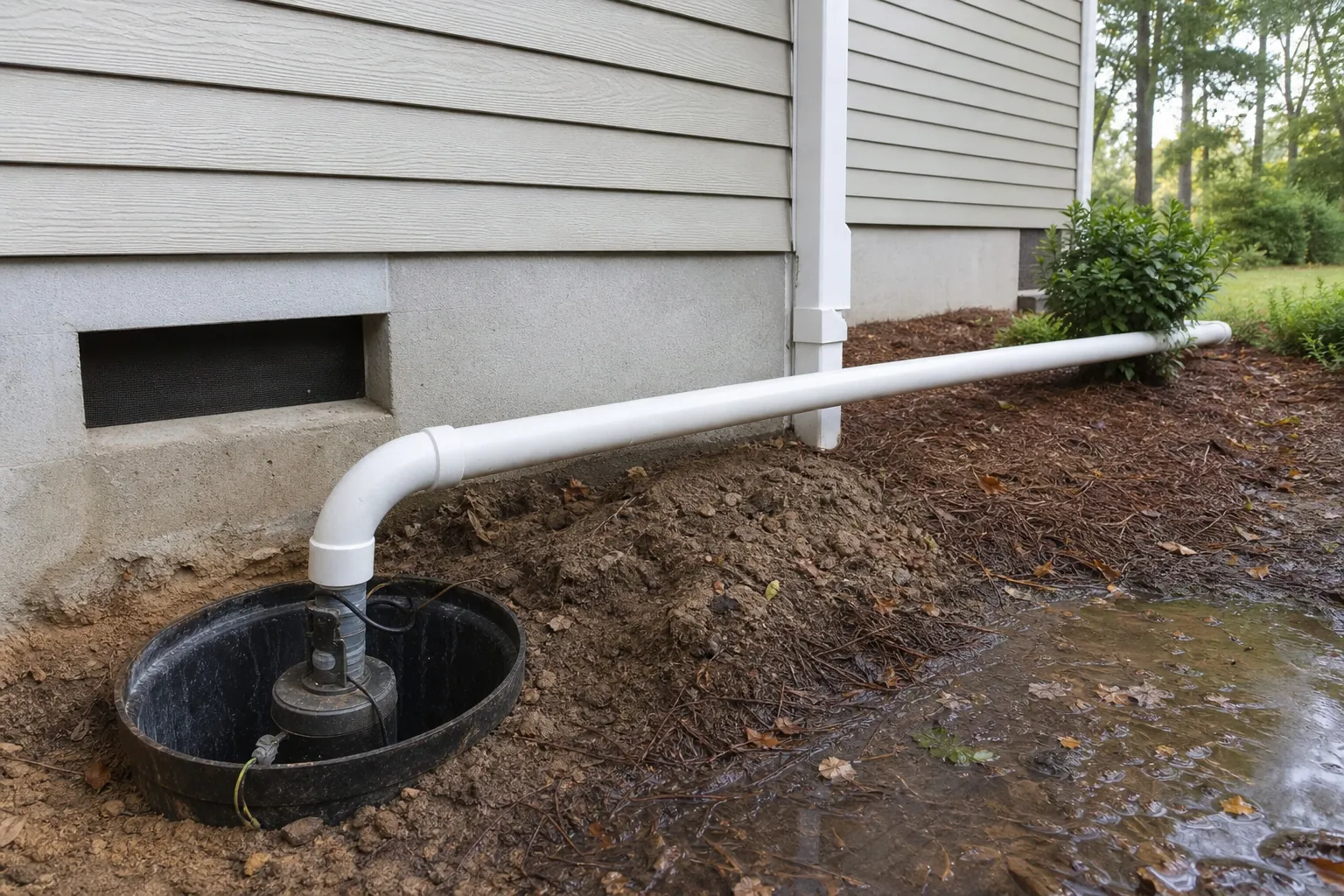
Look for patterns rather than relying on a single damp spot after heavy rain. If the pump activates repeatedly while discharged water gathers near the foundation, the release area may be contributing to recirculation. Soft soil, standing water, washed-out channels, or a persistently wet strip leading toward the house can also indicate that the drainage path needs attention.
Inside the crawl space, note whether the sump area refills quickly after the pump stops. A fast refill does not automatically prove that the discharge location is responsible. Groundwater, rainfall, grading, and other drainage conditions may also be involved. Still, matching the timing of pump operation with water movement outside can help clarify what is happening.
Moisture may also appear elsewhere. Damp framing, musty conditions, or droplets on mechanical surfaces deserve investigation. If moisture is appearing on ducts, read this related guide to crawl space condensation on ductwork in North Carolina to understand how condensation differs from an active drainage issue.
How to Evaluate the Outlet Safely
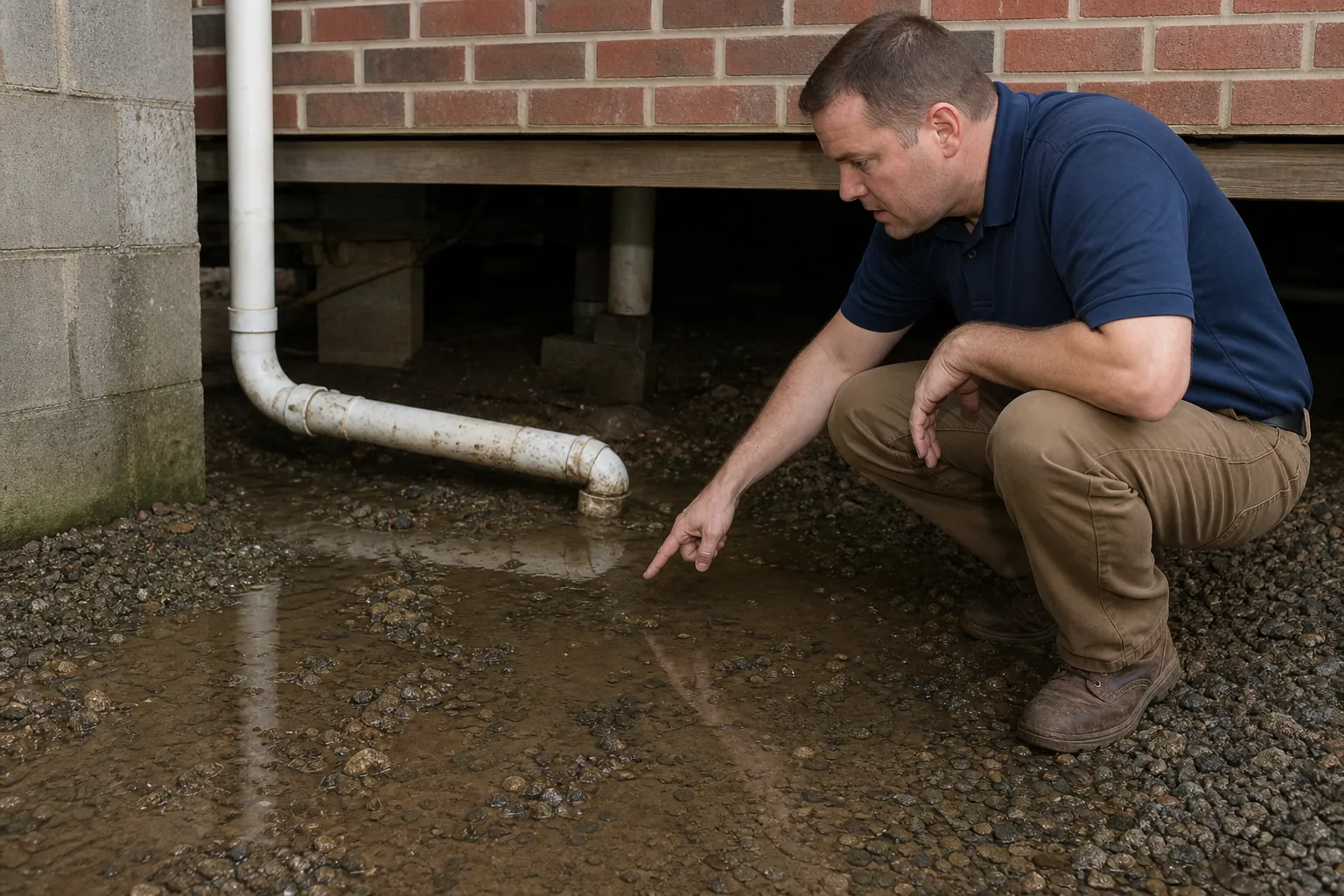
Start with a visual inspection during daylight and avoid entering standing water or handling electrical equipment in wet conditions. From a safe location, follow the discharge line from the crawl space exit to its termination. Look for disconnected joints, crushed sections, visible leaks, obstructions, and low areas where water may sit inside or around the line.
Then observe one complete operating cycle if the pump activates naturally. Do not force equipment to run unless you know the correct procedure for that specific setup. Record where the water exits and what happens during the next several minutes.
- Confirm that water leaves the outlet instead of leaking near the house.
- Check whether the ground carries flow away from the foundation.
- Look for pooling, erosion, mud, or water returning along the pipe trench.
- Note nearby walkways, neighboring property, and areas where runoff could create another problem.
- Photograph the outlet and wet areas after rain for comparison.
These observations create a practical record and make it easier to explain the concern when requesting an evaluation.
What a Better Discharge Path Should Accomplish
The goal is not simply to add pipe. A useful discharge path moves water away from the structure and releases it where the site can manage the flow. It should avoid directing water back toward the foundation, onto walking surfaces, or into a location where erosion and persistent pooling may develop.
Site conditions determine what is practical. Grade, soil, landscaping, property boundaries, existing drainage routes, and the location of the pump all affect the decision. A longer line may require attention to slope and support. A buried section may face different concerns than an exposed section. Any proposed change should also account for the possibility of blockage or damage.
Do not assume that the nearest downhill-looking area is automatically suitable. Follow the water’s likely path beyond the outlet. If it crosses a driveway, settles beside another part of the house, or creates a low wet area, the change may only relocate the problem. The best next step begins with the entire drainage path, not an arbitrary distance measurement.
Deciding Whether to Adjust or Seek Help
A simple observation may reveal an obvious issue, such as a disconnected extension or an outlet pointing directly toward the foundation. Even then, consider why the line was arranged that way and where the water will go after any adjustment. Moving the endpoint without assessing grade and runoff can create a different moisture concern.
Seek further evaluation when the pump runs frequently, the sump refills soon after discharge, water pools beside the house, or the route is difficult to inspect. It is also sensible to pause before making changes when the line is buried, passes beneath hard surfaces, or terminates near a property boundary. Document pump timing, recent weather, visible water paths, and any crawl space moisture. That information helps distinguish a discharge issue from a broader drainage condition.
When comparing next steps, ask for a clear explanation of where water currently travels, why the proposed endpoint is more suitable, and how the route will avoid returning water to the house. A sound decision should address both removal from the sump and drainage after release.
Discuss Your Crawl Space Concern
If your sump pump appears to discharge too close to the house, call Carolina Encapsulation Company at 704-207-9348. Share what you have observed, including pooling, pump frequency, and the location of the outlet.
Call 704-207-9348 to talk through next steps.