Why Does My Crawl Space Sump Pump Run When the Basin Looks Dry?
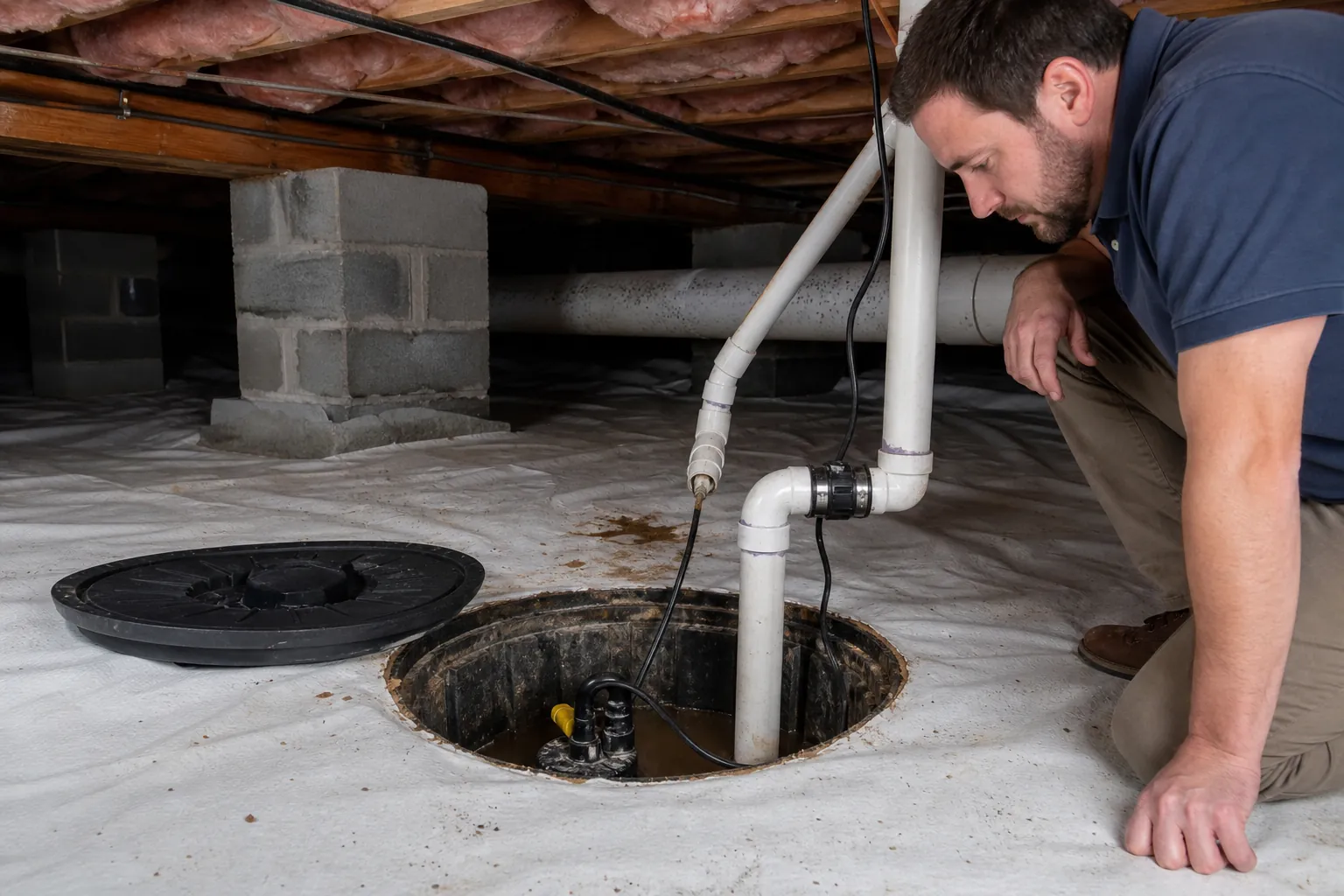
A crawl space sump pump can run even when the basin looks dry. That does not always mean the pump is moving water. A float may be stuck, a switch may be misreading the water level, or water may be entering below the point you can easily see. Because a pump that continues running can wear out or overheat, the safest response is to observe the system, complete a few basic checks, and avoid dismantling electrical equipment in a damp crawl space.
Start by Confirming What the Pump Is Doing
Listen carefully before entering the crawl space. A normal pumping cycle usually has a clear start and stop. Continuous humming, rapid cycling, grinding, or a motor that never shuts off can point to different problems. From a safe location, note whether the sound is constant or intermittent and whether it began after rain, plumbing use, or a power interruption.
If you can view the basin without touching wiring or standing in water, use a flashlight to check the visible water level. A basin that appears dry at the top may still contain water below the pump or beneath a fitted cover. Also look for movement in the discharge pipe when the motor runs. Do not remove a sealed lid merely to investigate.
Record how long the pump runs and how often it restarts. These observations make it easier to distinguish a one-time cycle from a persistent fault and help explain the situation clearly when requesting assistance.
A Stuck Float or Switch May Keep It Running
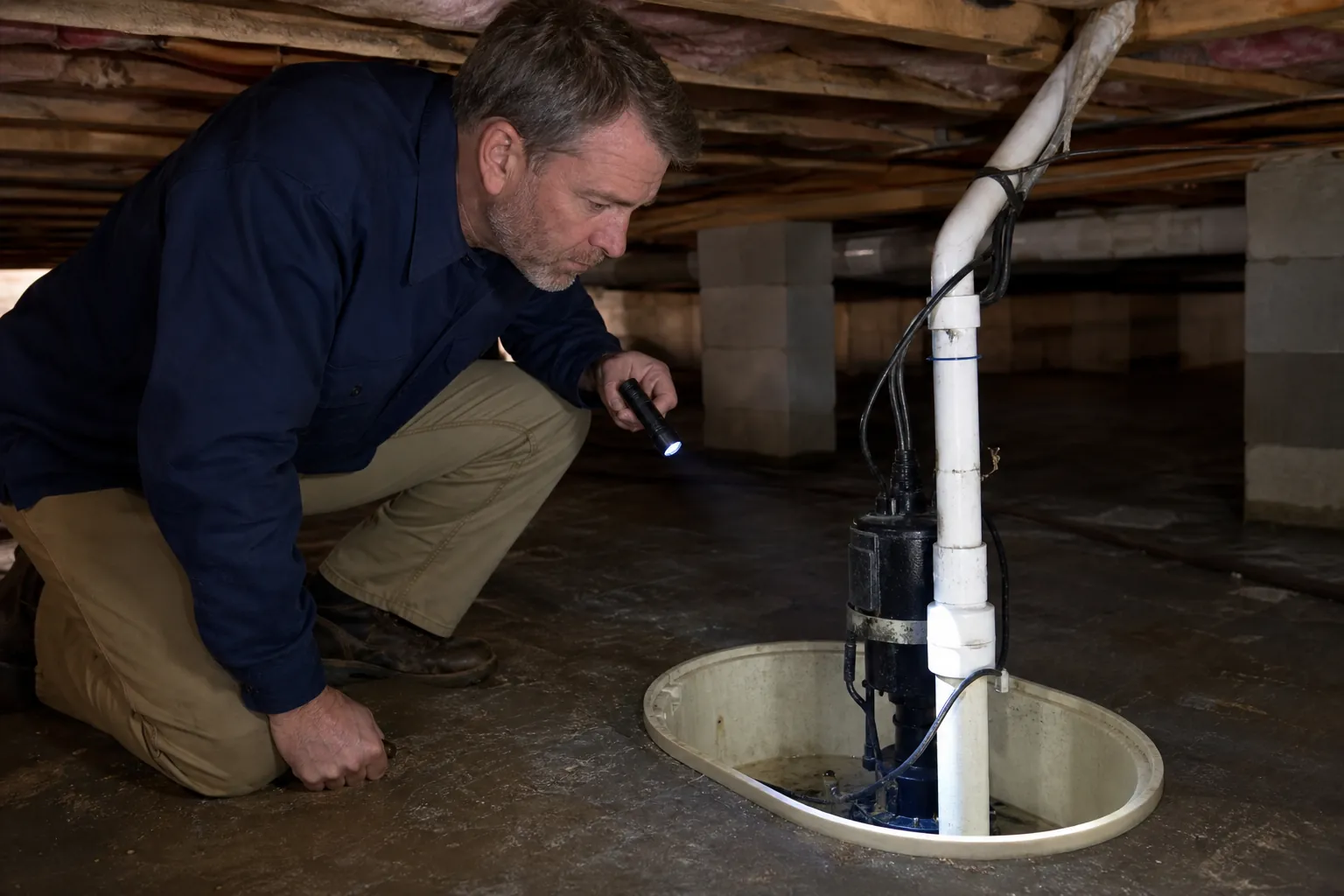
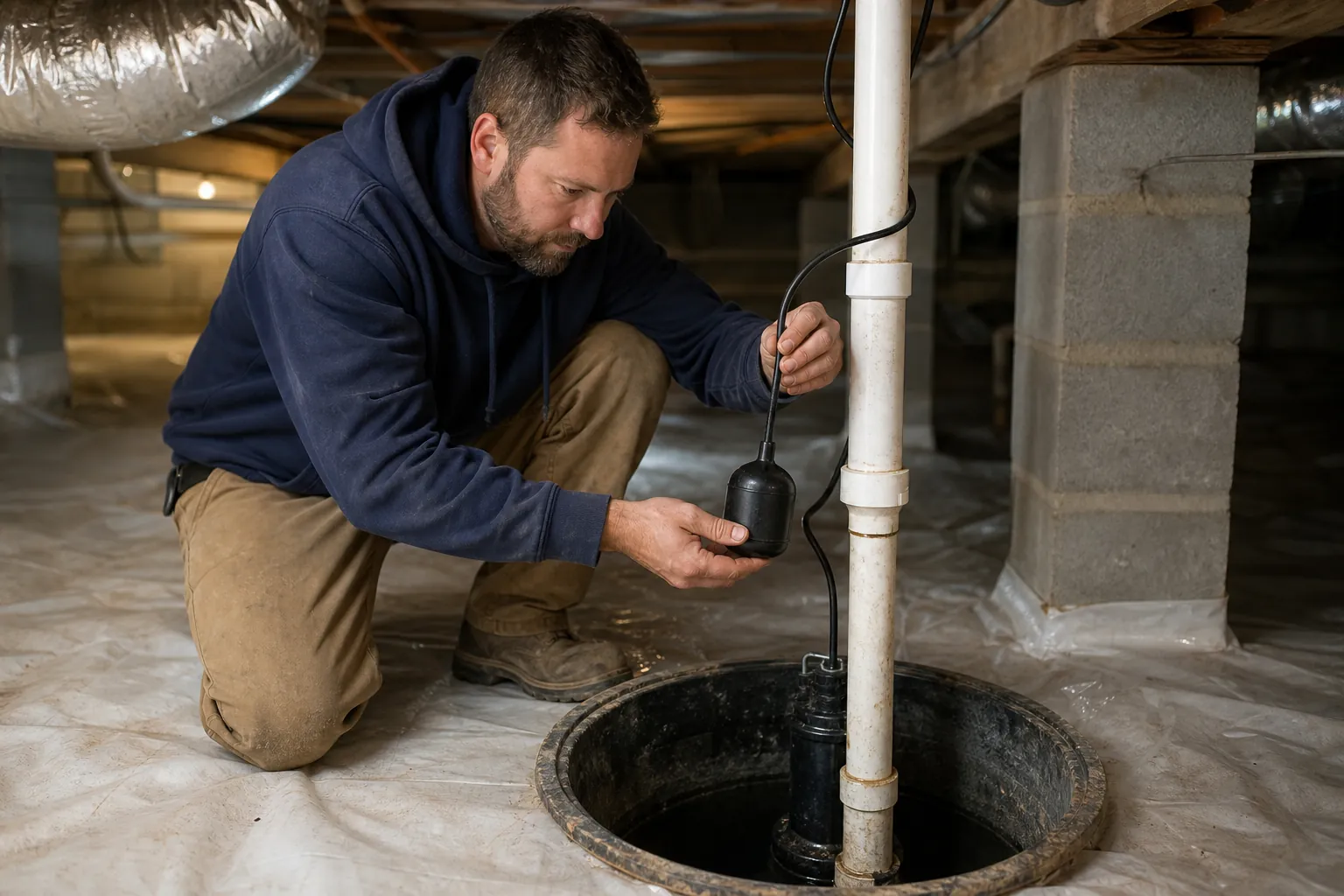
Many sump pumps start when a float rises with the water and activates a switch. If the float catches against the basin wall, pipe, cord, sediment, or another component, it may remain in the on position after the water drops. Some systems use a different style of water-level sensor, but the underlying issue can be similar: the control continues signaling that pumping is needed.
Inspect only what is plainly visible and reachable without entering standing water. Do not pull on cords, bypass a switch, or reach into the basin while the pump has power. If debris appears to be obstructing the float, disconnecting power at an appropriate dry location is an important safety step before any closer assessment. When the power source, cover, or pump arrangement is unclear, leave the system undisturbed.
A pump that stops only after power is disconnected needs attention before being returned to unattended operation. Repeatedly resetting it does not identify or correct the underlying cause.
The Basin May Look Dry While Water Still Enters
Visible dryness does not always describe conditions around or beneath the basin. Groundwater can enter at a low point and be removed before it rises into easy view. Water may also drain toward the basin through pathways hidden below the crawl space floor. In that situation, the pump may be responding normally even though the upper portion of the basin looks empty.
North Carolina weather can change crawl space moisture conditions quickly, so compare pump activity with recent rainfall and site drainage. Check outdoor areas from ground level. Look for downspouts releasing water near the foundation, low spots holding water, or runoff moving toward the house. These observations do not prove the source, but they provide useful context.
Moist air can create separate signs that are easy to confuse with groundwater. If you notice moisture collecting on HVAC surfaces, read about crawl space condensation on ductwork in North Carolina. Condensation and sump-basin water require different lines of investigation.
Check for Discharge and Power Problems Safely
A running motor does not necessarily mean water is leaving the crawl space. The discharge line could be restricted, frozen during cold weather, disconnected, or arranged so that water returns toward the basin. A failed internal component can also allow the motor to run without effective pumping. Avoid assuming the basin is dry simply because the pump sounds active.
Use this practical checklist without opening the pump or modifying its wiring:
- Keep away from standing water, exposed wiring, damaged plugs, and wet electrical connections.
- Observe whether the pump runs continuously, cycles rapidly, or stops normally.
- Look for obvious leaks, loose visible piping, or water returning near the foundation.
- Check the outdoor discharge endpoint only if it is safely accessible.
- Note recent rain, power outages, unusual noises, odors, or heat near the equipment.
- Photograph visible conditions without moving components or removing covers.
If water and electricity may be in contact, do not enter the area or touch the equipment. Use an appropriate dry, accessible shutoff only if you can do so safely.
Decide Whether to Monitor, Shut Down, or Call
A brief cycle after rainfall may call for observation, especially if the pump stops and the discharge appears normal. Continuous operation with no visible water deserves a faster response because it can indicate a stuck control, ineffective pumping, or an unseen water supply. Rapid on-and-off cycling also should not be ignored, even if each cycle is short.
Consider shutting off power from a safe, dry location when the motor will not stop, smells hot, makes grinding sounds, or appears damaged. Do not shut it down and forget it if the crawl space is actively taking on water. The basin could fill while the pump is off. Instead, note the water level and seek guidance promptly.
Your decision should account for electrical safety, current weather, visible water, and whether the discharge is working. Avoid improvised repairs, extension cords in damp areas, or forcing the float into position. A clear description of the sound, cycle pattern, basin level, and recent conditions can make the next conversation more productive.
Talk Through the Next Step
If your crawl space sump pump keeps running when the basin looks dry, Carolina Encapsulation Company can help you discuss the visible signs and decide on a sensible next step. Call 704-207-9348 for calm, practical guidance.
Call 704-207-9348 to talk through next steps.