How a crawl space vapor barrier protects Wilmington homes
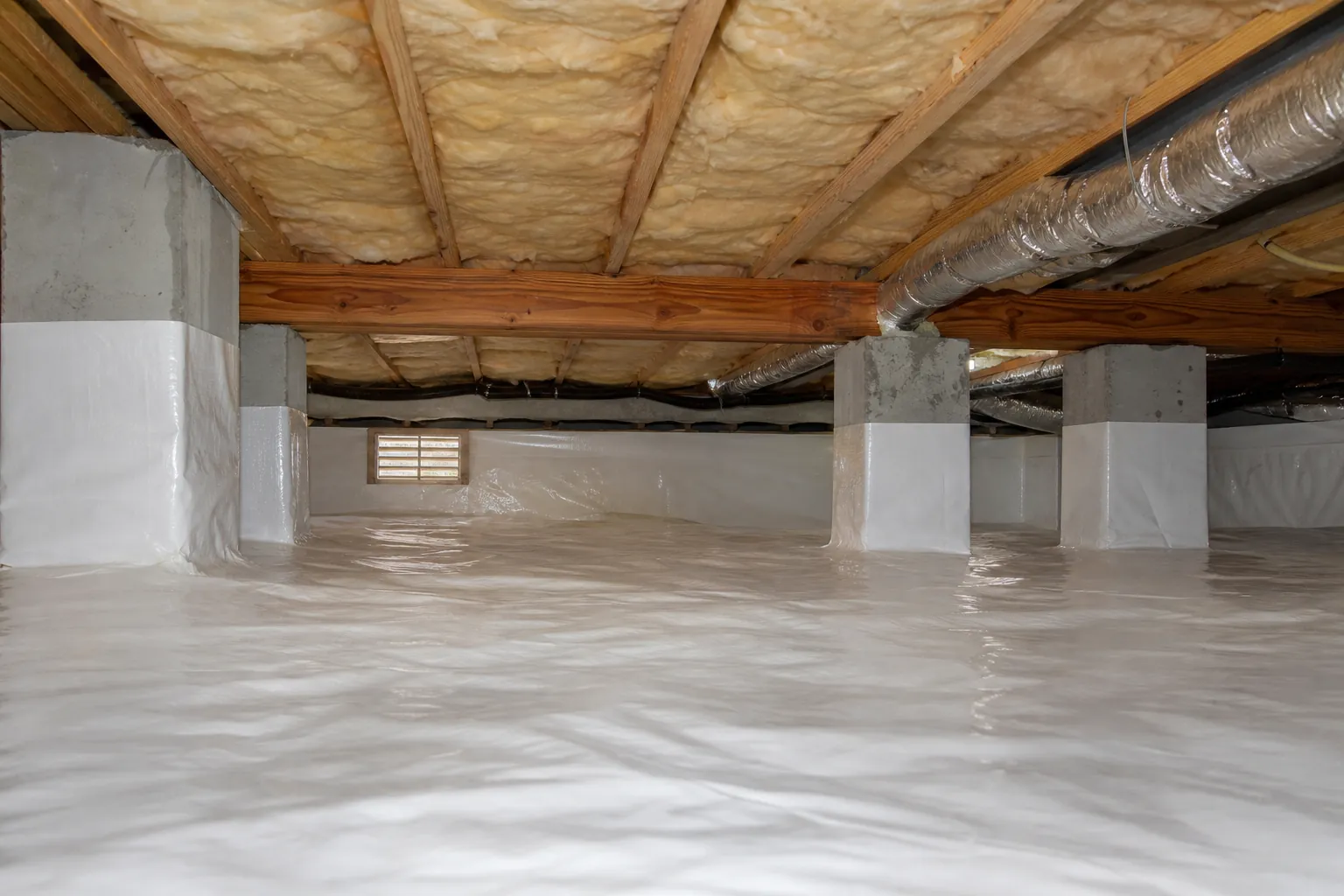
Moisture beneath a home can affect far more than the soil. In Wilmington, warm temperatures, humid air, seasonal storms, and a high regional water table can create persistent dampness in vented crawl spaces. Over time, that moisture may contribute to musty odors, damaged insulation, wood deterioration, mold-friendly conditions, and uncomfortable indoor humidity.
A properly installed crawl space vapor barrier helps control moisture at its source. It covers exposed soil so water vapor is less likely to enter the crawl space air. For many North Carolina homes, this is an important part of a broader moisture-control plan tailored to the property.
Why Wilmington crawl spaces need moisture protection
Bare soil continuously releases moisture through evaporation. Even when the ground does not look wet, water vapor can migrate upward into the crawl space. Open foundation vents may add more humid outdoor air rather than drying the area during coastal North Carolina summers.
This combination can keep wood framing and insulation damp for long periods. Because air from the crawl space can move into living areas through gaps around plumbing, wiring, and ductwork, conditions below the floor may also influence indoor comfort and air quality.
Every property is different. Drainage patterns, foundation height, HVAC equipment, plumbing leaks, and previous repairs all affect the best solution. That is why an inspection should come before recommending a barrier or full encapsulation system.
What a crawl space vapor barrier does
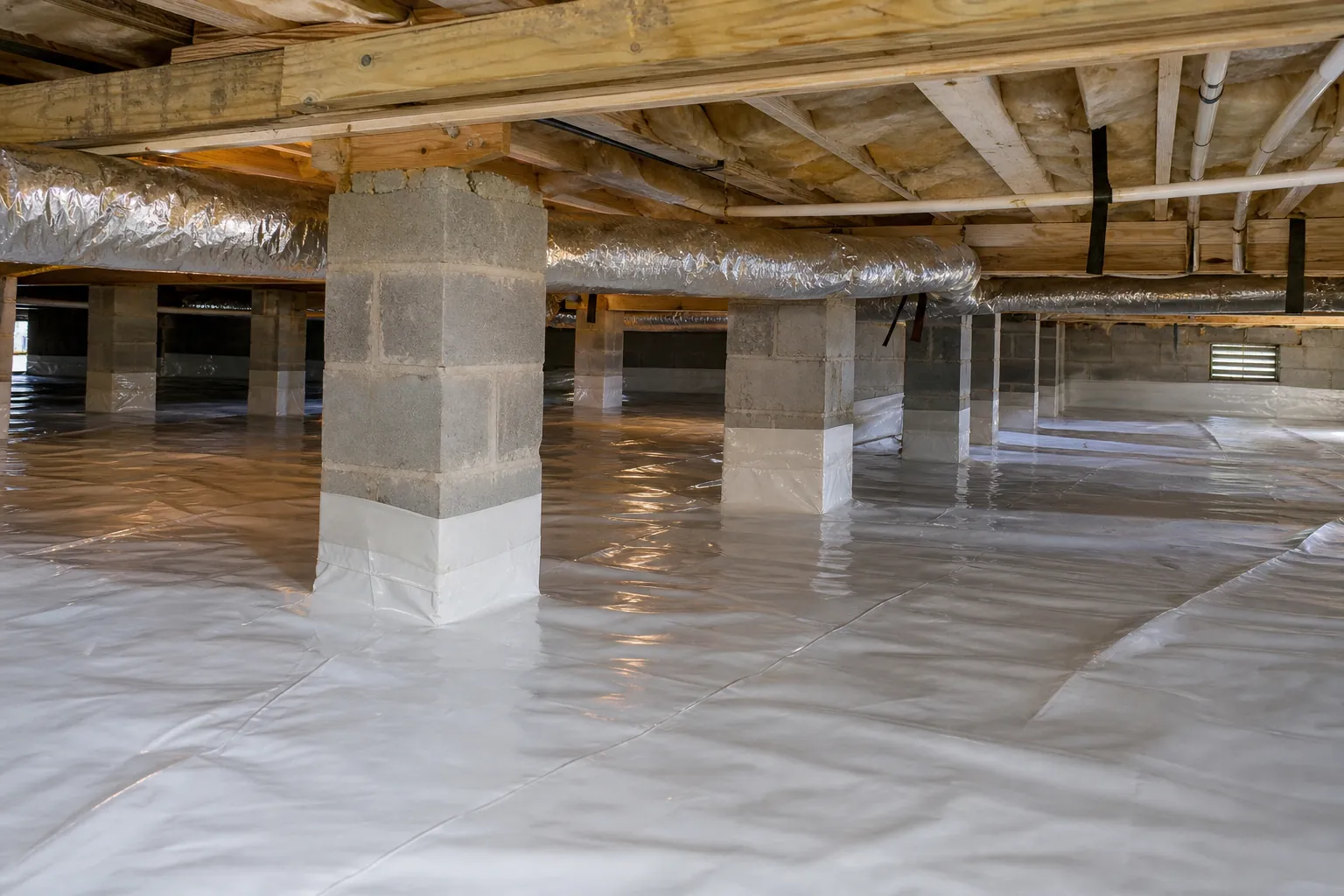
A vapor barrier is a durable, moisture-resistant liner installed over crawl space soil. Its primary job is to limit ground moisture from evaporating into the space. Quality installation matters because loose sheets, uncovered soil, and poorly sealed penetrations can reduce performance.
A basic ground cover may be appropriate when the crawl space has limited moisture concerns and otherwise favorable conditions. In more humid or problematic spaces, the liner may be extended and sealed at foundation walls, piers, and penetrations as part of an encapsulation approach.
Homeowners comparing options for a crawl space vapor barrier in Wilmington, NC should ask whether the proposed work addresses only ground evaporation or also outside air, drainage, and humidity. A liner is valuable, but it cannot repair plumbing leaks, redirect standing water, or mechanically control high humidity by itself.
Signs your crawl space may have excess moisture
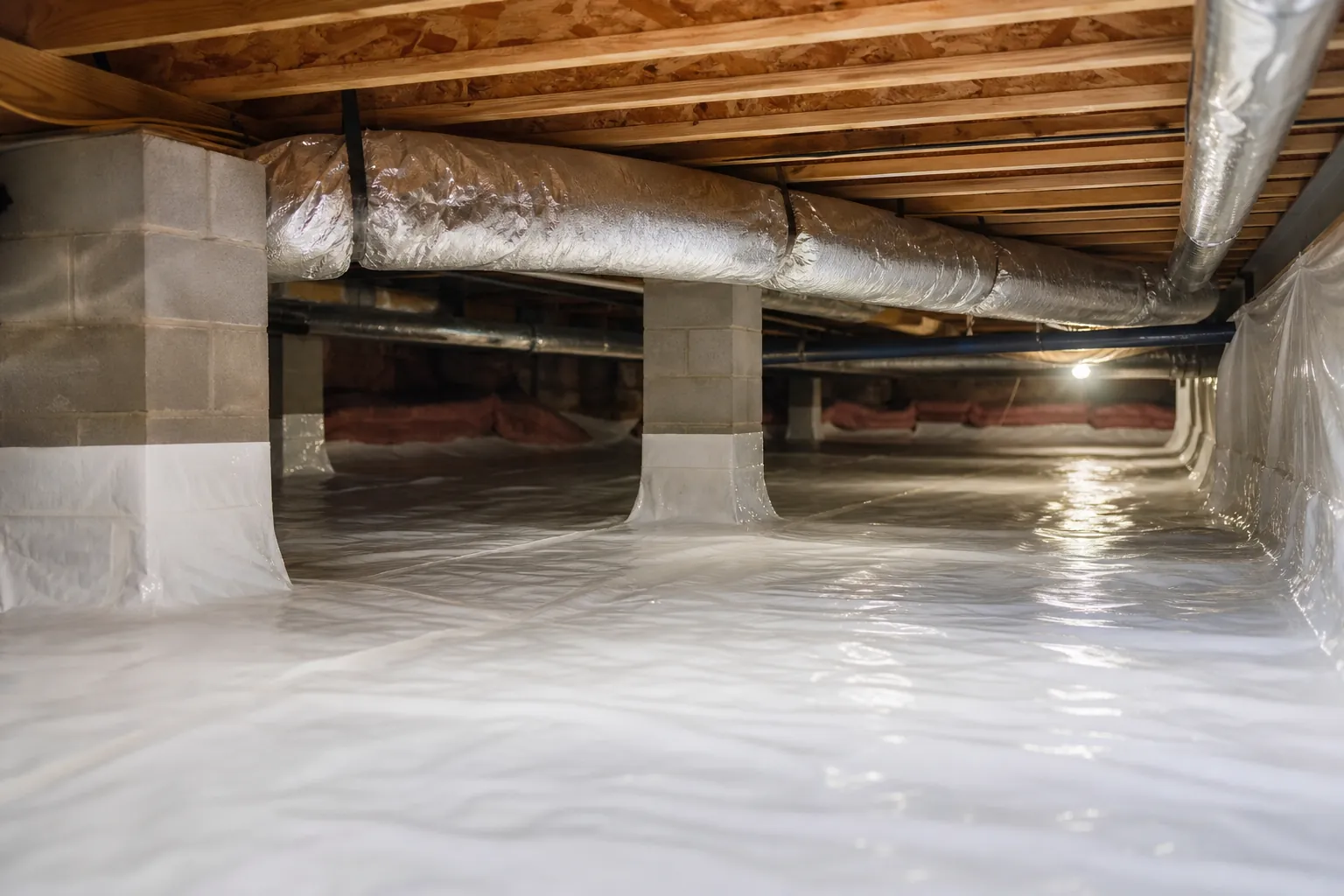
Moisture problems are not always obvious from inside the home. Some warning signs appear gradually, while others become noticeable after heavy rain or during the most humid months. A professional evaluation can help identify where the moisture is coming from instead of relying on symptoms alone.
- Musty odors: Persistent earthy smells on the first floor may be connected to damp crawl space materials.
- Sagging or wet insulation: Fiberglass batts can absorb moisture, fall from floor joists, and lose effectiveness.
- Condensation: Water droplets on ducts, pipes, or framing often indicate elevated humidity.
- Visible fungal growth: Discoloration on wood should be evaluated, especially when framing stays damp.
- Soft or damaged wood: Long-term moisture can weaken subflooring, joists, and other structural components.
- Pest activity: Damp, sheltered environments may attract insects and other pests.
- Uneven floors: Changes in wood moisture can contribute to cupping, warping, or movement.
- High indoor humidity: A clammy home or frequent HVAC operation may signal moisture entering from below.
These signs do not automatically mean that every component of encapsulation is required. They do indicate that the crawl space deserves closer attention before the damage becomes more extensive.
Vapor barrier installation versus full encapsulation
The terms vapor barrier and encapsulation are often used interchangeably, but they can describe different scopes of work. A ground vapor barrier generally covers exposed soil. Full crawl space encapsulation creates a more comprehensive separation between the crawl space and outside moisture sources.
An encapsulation project may include a reinforced liner across the floor, sealed seams, coverage around piers, attachment at foundation walls, closed vents, sealed access doors, and air sealing at penetrations. Depending on site conditions, drainage improvements, a sump pump, or a crawl space dehumidifier may also be recommended.
The right approach depends on measured humidity, evidence of water entry, crawl space construction, and the homeowner's goals. For example, a home with occasional ground dampness may need a different solution than a property with standing water after storms. Carolina Encapsulation Company focuses on matching the moisture-control strategy to actual conditions instead of assuming that every Wilmington home needs identical work.
What to expect from a professional installation
A thorough process starts with inspecting the entire accessible crawl space. The technician should look for plumbing leaks, drainage issues, wet insulation, wood moisture, air leakage, foundation concerns, and signs of previous water intrusion. Existing debris or damaged materials may need to be removed before a liner is installed.
The ground should be prepared so the barrier can lie securely without unnecessary punctures. Sections of liner are overlapped and sealed, with careful detailing around columns, pipes, supports, and other obstacles. If the project includes wall coverage, the liner is mechanically fastened and sealed while leaving appropriate inspection areas where required.
Humidity management should also be discussed. Closing vents without accounting for moisture can create new problems. When dehumidification is part of the plan, the equipment should be properly sized, drained, and positioned for effective circulation. Homeowners should receive a clear explanation of what is included, what is not included, and what ongoing maintenance is recommended.
How to maintain a protected crawl space
A vapor barrier is designed for durability, but the crawl space should not be ignored after installation. Periodic checks can catch small issues before they compromise the system. Look for displaced liner sections, open seams, plumbing drips, pest damage, or water entering near the foundation.
Keep gutters clear and direct downspouts away from the house. Make sure exterior grading encourages water to move away from the foundation rather than collecting beside it. If a dehumidifier or sump pump is installed, follow the maintenance guidance for filters, drains, and power supplies.
It is also helpful to monitor relative humidity. Conditions change with weather, landscaping, plumbing, and HVAC use. Consistently elevated readings may indicate that the crawl space needs adjustment or further investigation.
Plan a practical moisture-control solution
A well-installed vapor barrier can make a meaningful difference by reducing moisture released from crawl space soil. The best results come from treating it as part of a complete assessment that considers drainage, ventilation, humidity, leaks, and the condition of the home's framing.
If you are concerned about dampness beneath your Wilmington-area home, Carolina Encapsulation Company can help you understand the available options. For a calm, no-pressure conversation about crawl space conditions and vapor barrier installation, call 704-207-9348.
Call 704-207-9348 to talk through next steps.