Why Does Water Seep Through My Crawl Space Wall After Rain?
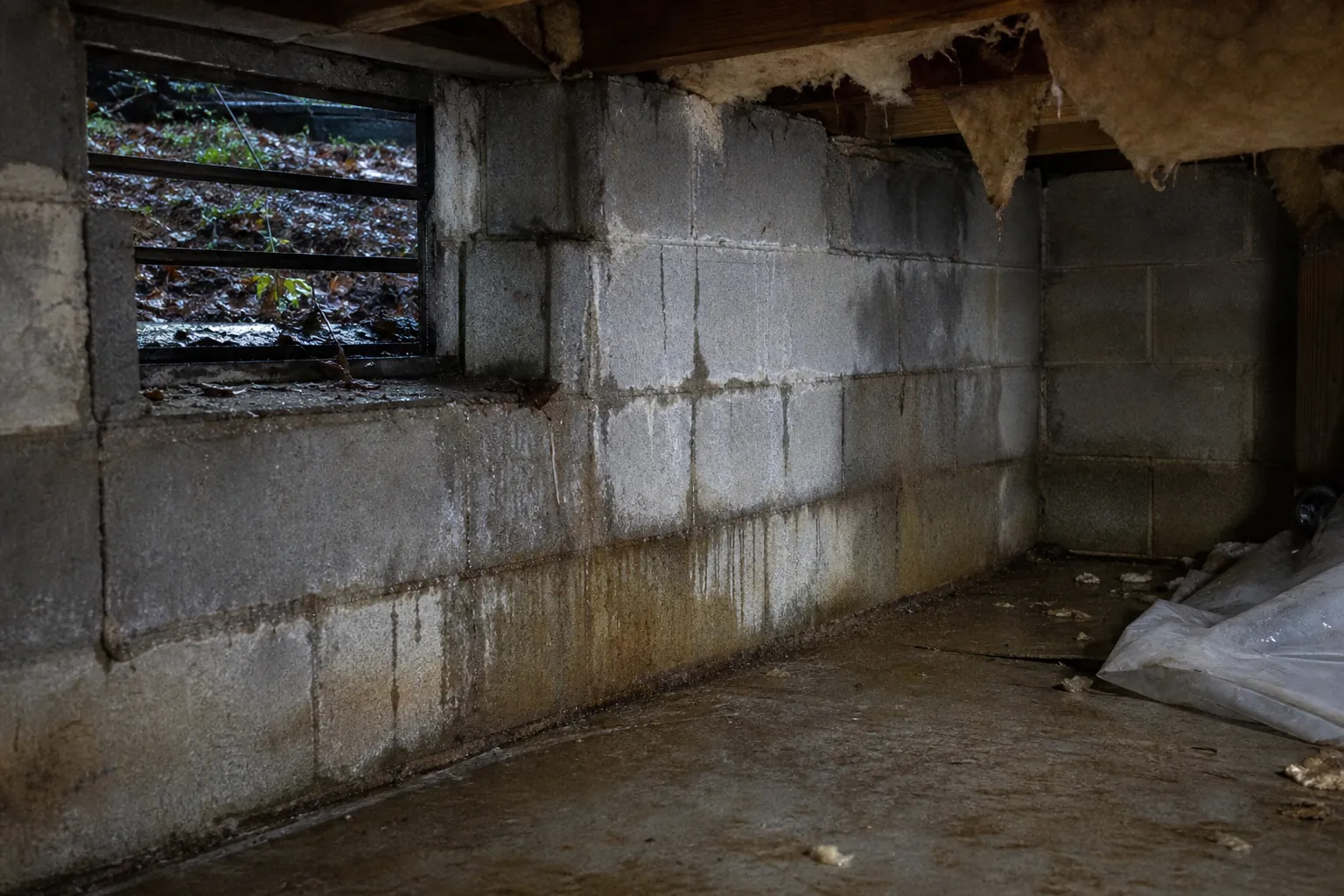
Water appearing along a crawl space wall after rain is a useful clue. The timing often points to rainwater moving toward the foundation, entering through a joint, crack, opening, or porous masonry, then collecting on the wall or floor. The source is not always obvious from inside, so avoid choosing a solution based only on the location of one wet spot. Start by documenting the pattern, checking exterior drainage conditions, and distinguishing seepage from condensation. These steps will help you make a more informed decision about what needs attention.
Why Seepage Often Appears After Rain
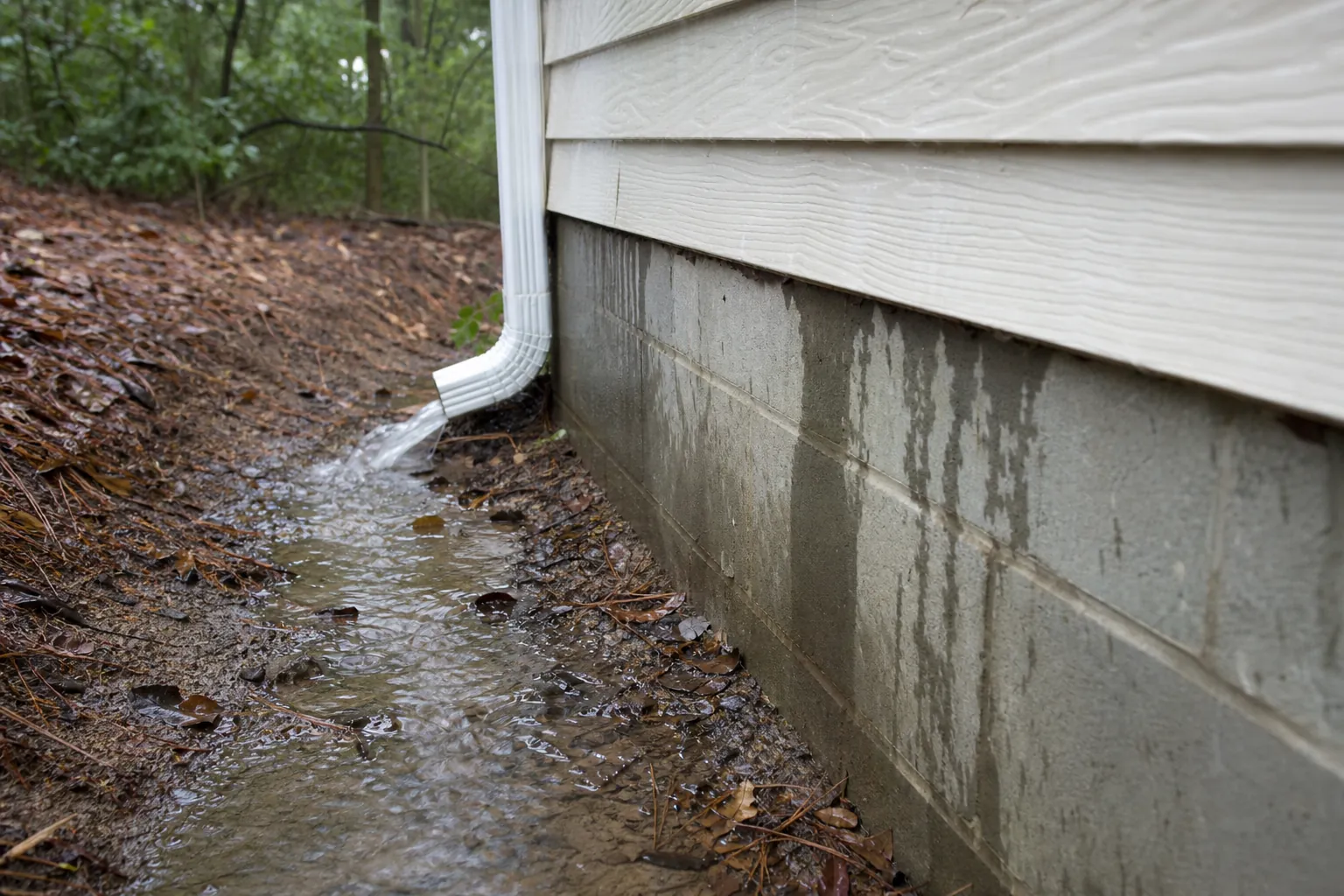
Rain changes the moisture conditions in the soil surrounding a foundation. Water may collect near the house when roof runoff is released beside the foundation, downspouts discharge poorly, soil slopes toward the structure, or low areas hold water. As the surrounding soil becomes wetter, water may find a path through vulnerable points in the crawl space wall.
Common entry paths can include wall cracks, mortar joints, penetrations for utilities, and the joint where the wall meets the crawl space floor or ground. Masonry can also absorb moisture, which may produce a broad damp area rather than a clearly defined stream.
The place where water becomes visible is not necessarily where its journey began. Water can move along a surface or through a joint before emerging. For that reason, inspect both the interior stain and the corresponding exterior area. Note whether seepage starts during heavy rain, appears only after prolonged rain, or continues after the weather clears. Timing helps narrow the likely pathway.
Check Exterior Water Movement First
Begin outdoors after rain, provided conditions are safe. Look at how water leaves the roof and moves across the ground. You are not trying to diagnose every detail. You are identifying visible conditions that may be directing water toward the crawl space wall.
- Check whether gutters are overflowing or releasing water near the foundation.
- Observe where downspouts discharge and whether water flows back toward the house.
- Look for soil, mulch, or hard surfaces that slope toward the crawl space wall.
- Identify low areas where water ponds beside the foundation.
- Check visible wall penetrations and vents for gaps or signs of water entry.
- Note cracks, deteriorated joints, staining, or dampness on the exterior wall.
Photograph these conditions during or soon after rainfall. A dry-day inspection can miss temporary ponding, overflowing drainage components, and runoff patterns. Do not enter standing water or work near electrical hazards. If the area is difficult to access safely, document what you can from outside and discuss the observations when requesting professional help.
Separate Wall Seepage From Condensation
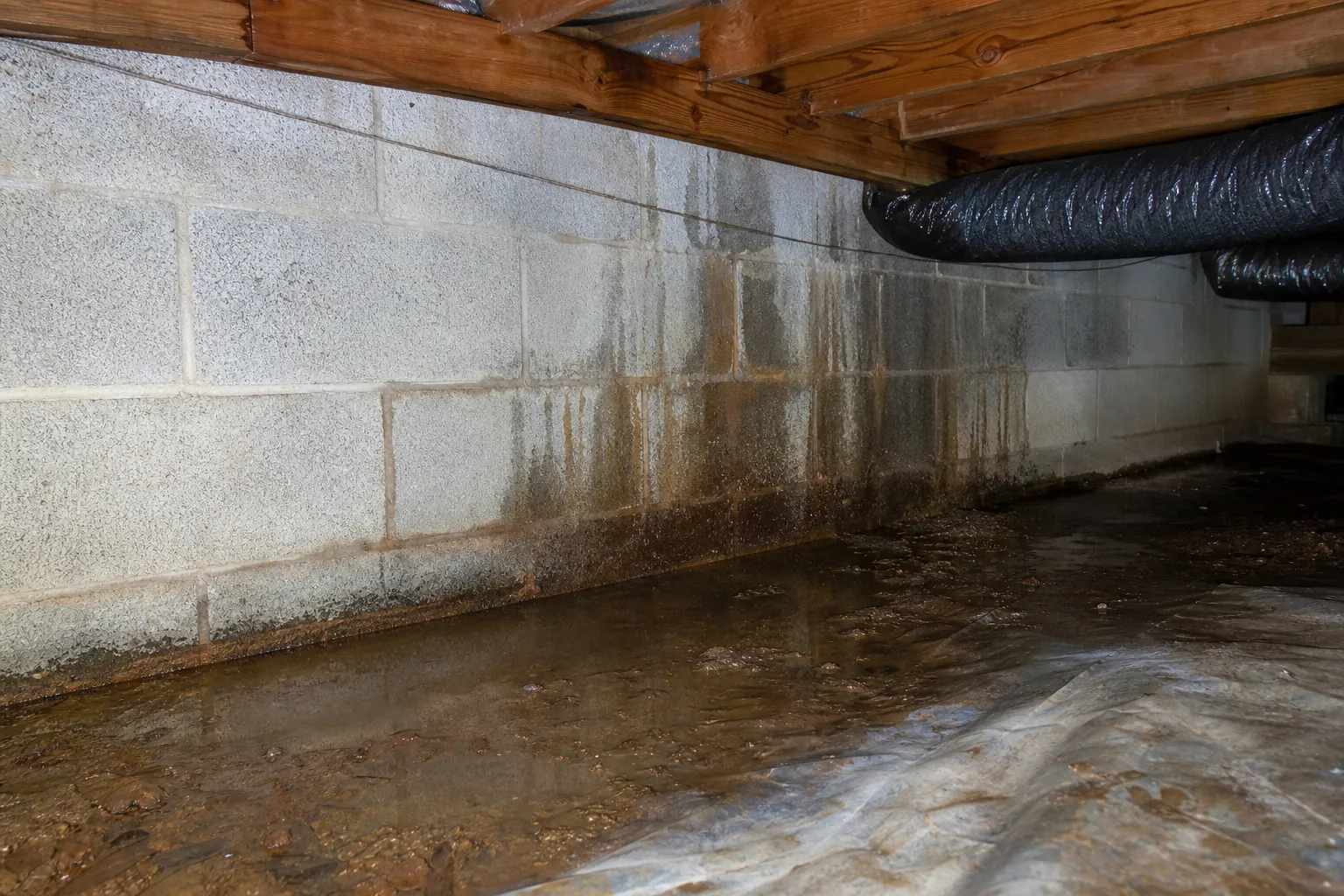
Not every wet crawl space wall is leaking from the exterior. Humid air can leave moisture on cooler surfaces, including masonry, pipes, ducts, and nearby framing. Condensation may occur during warm, humid periods even when there has been little rain. Rain-related seepage, by comparison, usually has a repeatable relationship with storms and may begin at a crack, penetration, joint, or lower portion of the wall.
Look at the pattern rather than relying on touch alone. A concentrated trail below an opening suggests a defined entry point. Dampness spreading upward from the wall-floor joint may indicate water entering low on the foundation. Widespread surface moisture on several cool materials can suggest condensation. More than one moisture source can also be present at the same time.
If ducts are sweating while the wall is damp, review this guide to crawl space condensation on ductwork in North Carolina. Correctly identifying the source matters because exterior water entry and airborne moisture require different decisions.
Document the Pattern Before Choosing a Response
A simple rain log can make an intermittent problem easier to evaluate. Record the date, approximate duration and intensity of the rain, when moisture first appeared, where it appeared, and how long the area remained wet. Take photos from the same positions each time so changes are easier to compare.
Mark the wet area's location on a basic sketch of the crawl space. Include nearby downspouts, exterior low spots, utility penetrations, vents, and visible cracks. Note whether water collects on the ground, follows the wall, or reaches insulation, wood, ducts, wiring, or stored belongings. Avoid moving electrical equipment or entering water to investigate.
Temporary observation can be helpful, but cosmetic changes may hide the evidence needed to understand the source. Painting over a stain, covering the wall, or placing belongings against it does not explain why the area becomes wet. Before deciding what to do, seek an assessment that considers roof runoff, grading, the foundation wall, entry points, interior moisture patterns, and where the water ultimately collects.
Questions to Ask When Comparing Next Steps
Use your notes to have a focused conversation. Explain whether the issue occurs after every storm or only after long or heavy rain. Share photos of exterior ponding, gutter overflow, wall cracks, penetrations, and the interior seepage pattern. Clear evidence can help keep the discussion centered on the source instead of only the visible symptom.
Ask what conditions appear to be directing water toward the foundation, where water is likely entering, and whether multiple moisture sources may be involved. Request an explanation of how the proposed response addresses the observed pathway. If the recommendation focuses only on the interior wet spot, ask how exterior runoff and drainage conditions were considered.
Also ask what preparation or follow-up observation will be needed. A sound decision should account for when the seepage occurs, how water moves outside, and what happens after it enters. No single wet mark tells the entire story. The goal is to understand the sequence from rainfall to visible moisture, then evaluate an appropriate response based on site conditions.
Discuss Your Crawl Space Seepage
If water appears along your crawl space wall after rain, gather your photos and rain notes before calling. Carolina Encapsulation Company can discuss the situation and help you determine the next step. Call 704-207-9348 for a calm, straightforward conversation.
Call 704-207-9348 to talk through next steps.