Why Does Water Collect in the Corners of My Crawl Space?
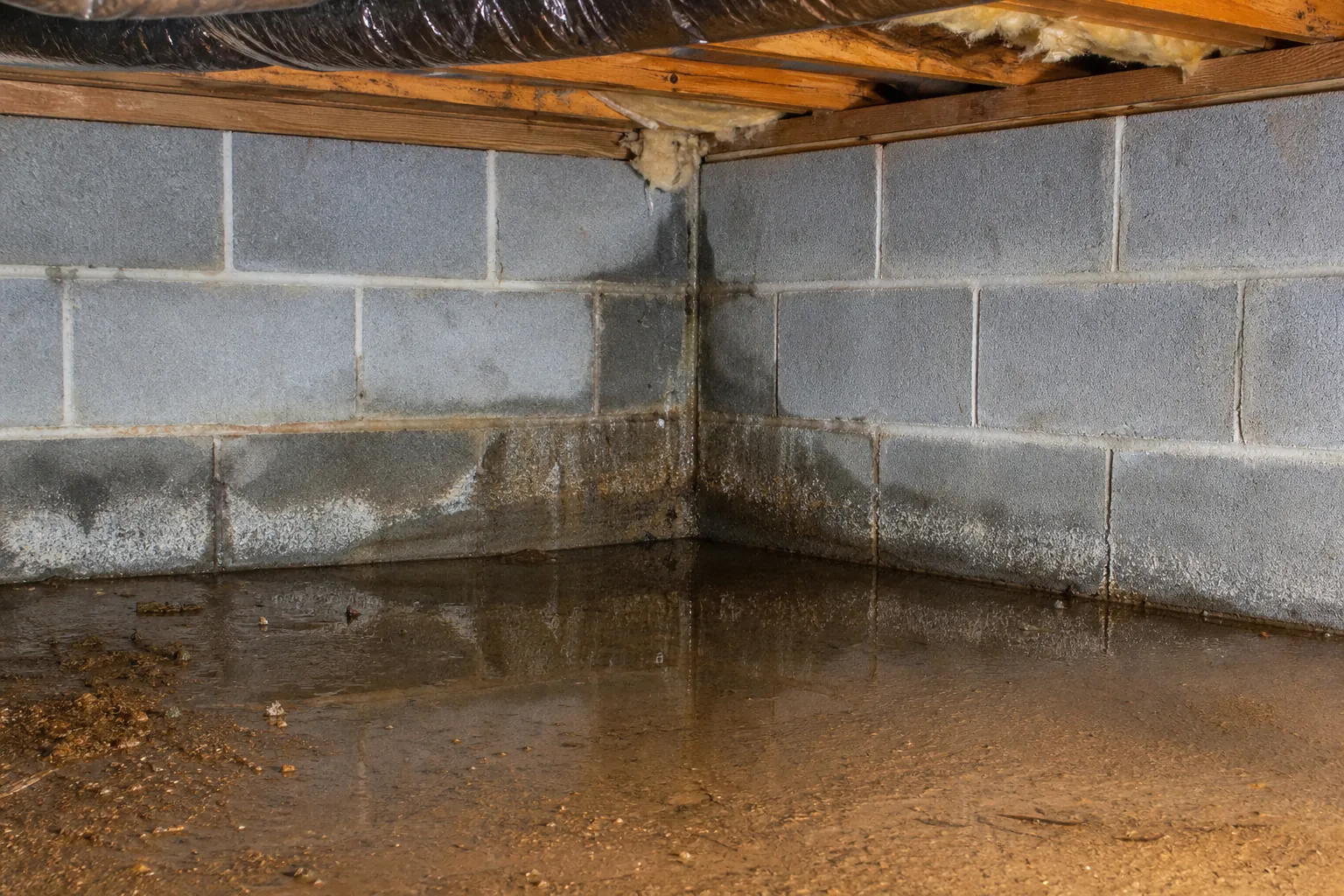
Water collecting at foundation corners is a warning worth investigating, but the wet corner is not always the source. Water can enter higher on the foundation, move along a wall or across the soil, and settle at the lowest point. North Carolina homeowners can make a better decision by observing when the water appears, checking conditions outside, and documenting the path it may have taken.
Why Crawl Space Corners Often Hold Water
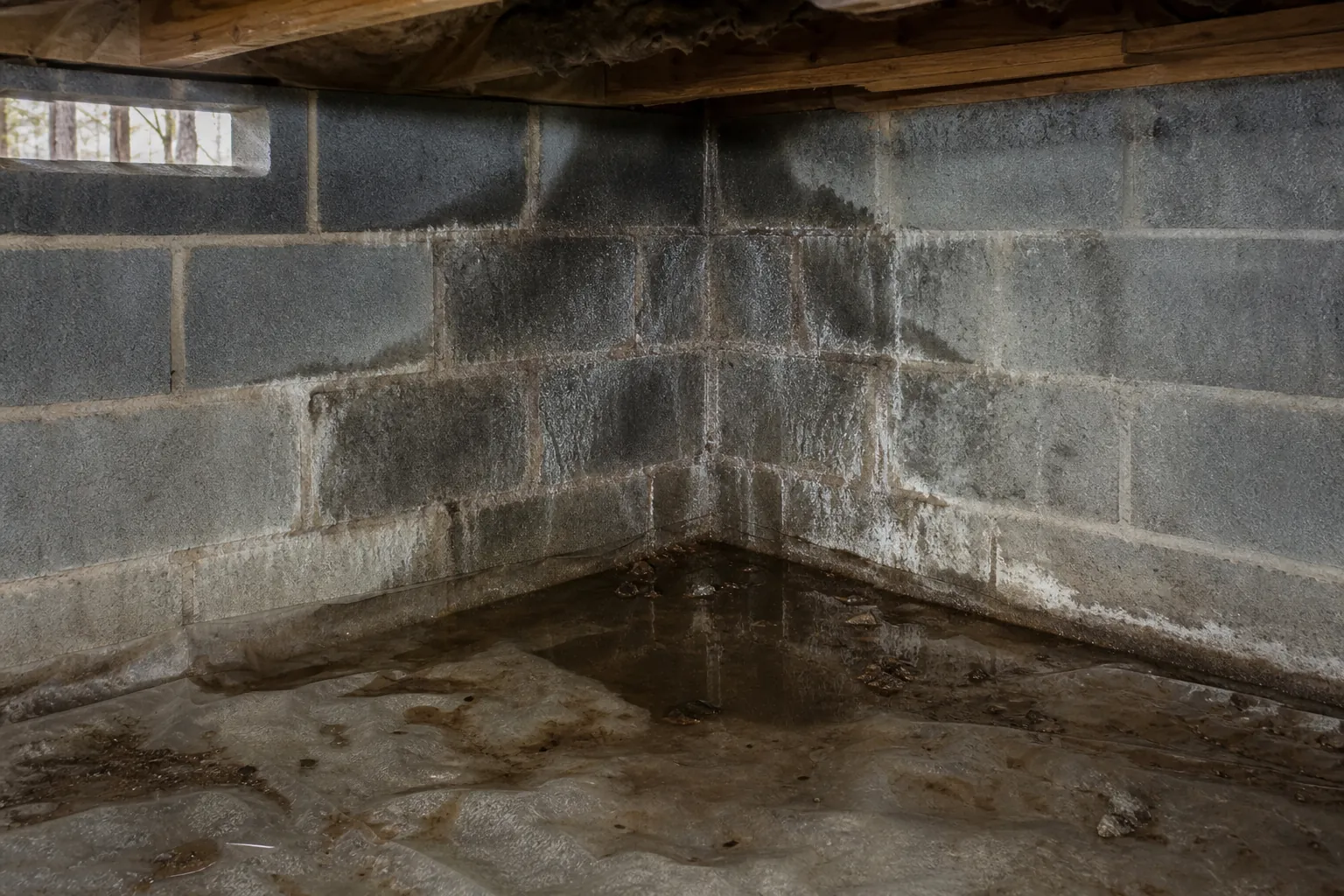
Foundation corners are natural collection points because several surfaces meet there. Small differences in soil elevation can direct water toward one corner, while shallow depressions inside the crawl space can hold it. A corner may also be near a downspout, roof valley, porch connection, exterior faucet, plumbing route, or a place where two foundation walls meet.
Do not assume that a visible puddle entered through the nearest wall. Water may travel along the top of the soil, follow a foundation surface, or drip from an overhead source before reaching the corner. Look for staining, damp soil, residue on masonry, wet wood, and a visible trail leading toward the puddle. If the water appears only after rain, exterior drainage deserves close attention. If it appears during dry weather, plumbing, condensation, or another ongoing moisture source may be involved. The timing is often more informative than the puddle itself.
Start Outside Before Entering the Crawl Space
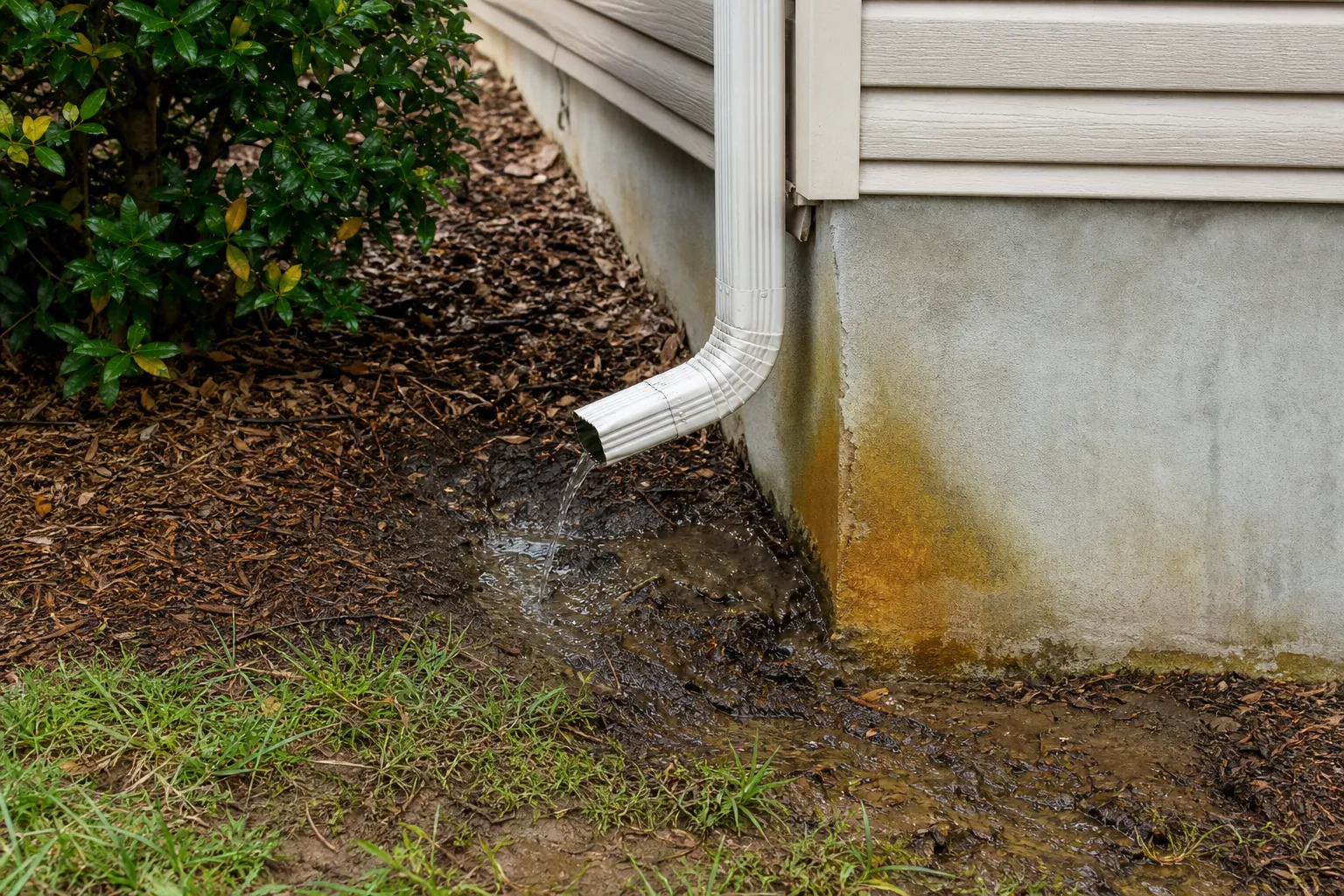
Inspect the exterior near the affected corner during daylight and, if practical, shortly after rainfall. Begin at the roofline and work downward. Observe where roof runoff lands, whether a downspout discharges close to the foundation, and whether soil slopes toward the house. Check for low areas where water ponds beside the wall. Also note hard surfaces that may direct runoff toward the corner rather than away from it.
Use a simple inspection list so important details are not missed:
- Photograph the corner inside and outside from consistent angles.
- Note recent rain, including whether it was brief, steady, or wind-driven.
- Check gutters and downspout outlets for overflow, blockage, or discharge near the wall.
- Look for settled soil, erosion, ponding, and channels leading toward the foundation.
- Record nearby hose bibs, plumbing lines, outdoor equipment, and paved surfaces.
Avoid making major changes before documenting the existing conditions. Clear evidence helps distinguish a one-time event from a repeatable drainage pattern.
Check Interior Clues Without Guessing
Inside the crawl space, focus on the relationship between wet and dry areas. A sharp wet line on a foundation wall can suggest water moving through or down that surface. A broad damp area on the ground may indicate spreading runoff or a low spot. Drips beneath supply or drain piping point toward a different source. Moisture on ducts can also create isolated wet areas below them, especially when humid air contacts cooler surfaces.
If overhead moisture is present, compare the pattern with the information in this guide to crawl space condensation on ductwork in North Carolina. That comparison can help determine whether the corner puddle is connected to dripping ducts rather than direct foundation entry.
Use caution in tight or unstable areas. Do not touch exposed wiring, disturb damaged materials, or enter standing water where electrical hazards may exist. A phone camera or flashlight used from the access opening may capture enough initial evidence to guide the next step.
Match the Pattern to Weather and Household Use
A short observation log can make the cause easier to narrow down. Record whether the corner is dry before rain, when moisture first appears, how far it spreads, and how long it remains. Compare light rain with prolonged storms and note whether wind direction seems relevant. Water appearing quickly during rain may follow a different route than moisture that develops hours later.
Also compare the wet area with household water use. Check whether it changes after showers, laundry, dishwasher cycles, toilet use, or outdoor faucet use. This does not prove a plumbing problem, but it can reveal a useful pattern. Condensation may be more likely when the weather is humid and cool surfaces are present overhead. Repeated photographs taken from the same position are particularly helpful because memory can be unreliable when changes are gradual.
Do not rely on smell alone or cover the area before identifying the source. The goal is to connect the water with a specific condition, not merely hide the visible puddle.
Choose the Next Step Based on Evidence
Once you have documented the corner, prioritize the most direct observations. If roof runoff repeatedly lands near the affected area or exterior water visibly moves toward the foundation, address that pathway first. If water appears beneath a pipe during household use, a plumbing evaluation may be appropriate. If droplets form on ducts or other cool surfaces, investigate condensation as a separate moisture source. More than one condition can occur at the same time, so avoid forcing every clue into a single explanation.
When discussing the issue, be ready to share the location of the corner, recent weather, the depth and extent of water, exterior photographs, interior staining, nearby utilities, and whether the condition is recurring. Ask how the observed recommendation connects to the documented water path. A sound next step should address the likely source rather than only the place where water settles.
Prompt attention is sensible when water is near electrical components, wetting structural wood, expanding after storms, or returning despite basic exterior corrections.
Discuss Your Crawl Space Water Concern
If water keeps collecting at a foundation corner and you need help deciding what to investigate next, call Carolina Encapsulation Company at 704-207-9348. Have your photos and observation notes ready so the conversation can begin with clear facts.
Call 704-207-9348 to talk through next steps.