Is Water Near a Crawl Space Pipe Penetration From a Leak or Rain?
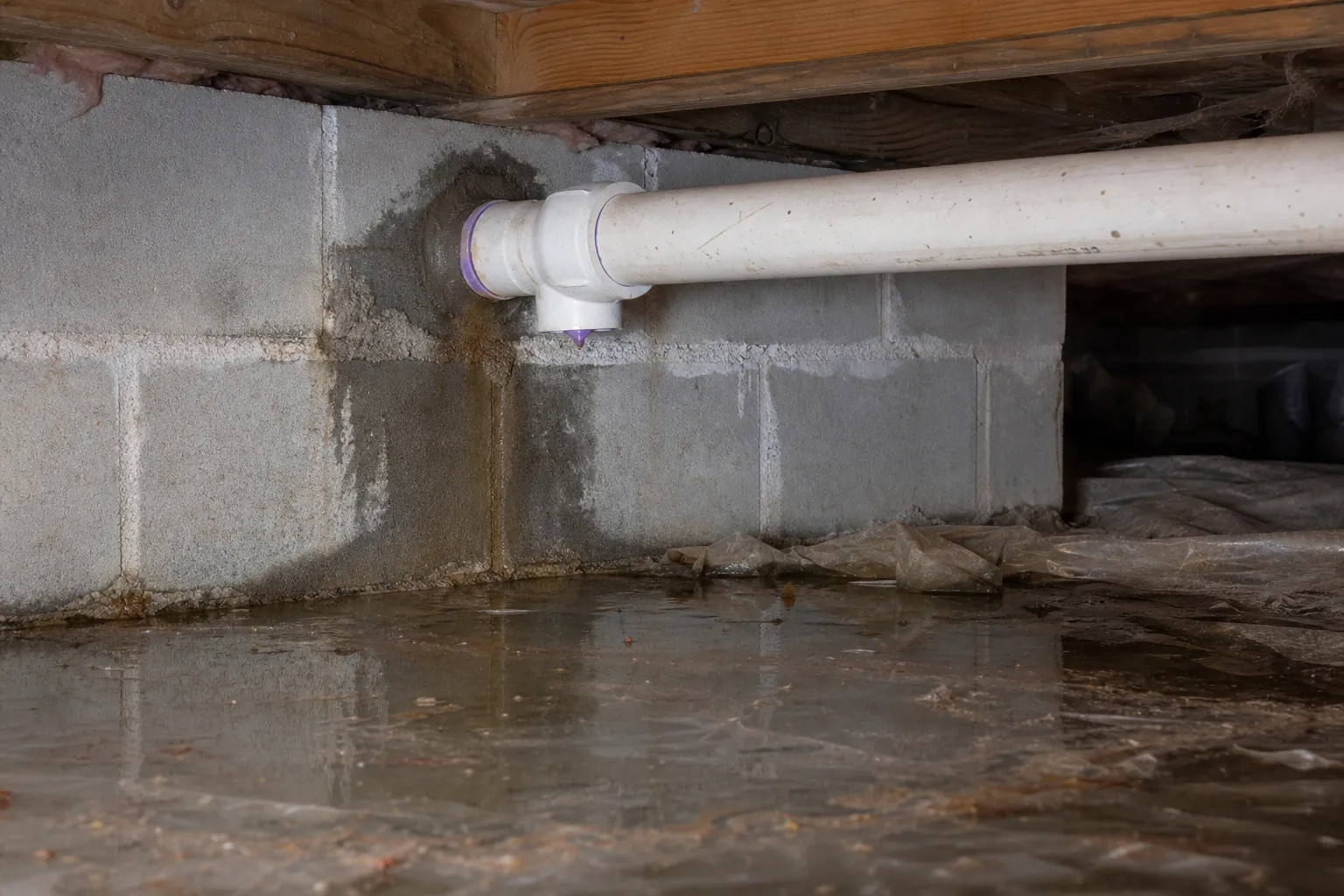
Water beside a pipe penetration can look like an obvious plumbing leak, but the wettest spot is not always the source. Rainwater may enter elsewhere, travel along a pipe or building material, and collect around the opening. Condensation can also drip from cool plumbing or nearby ductwork. Before deciding what to do, document when the moisture appears, trace its path, and avoid covering the area until the source is clearer.
Start With Timing, Weather, and Water Use
The first useful clue is timing. Check the area during dry weather, after rain, and after plumbing fixtures have been used. Water that appears or increases during rainfall points toward exterior entry, surface drainage, or water moving through the structure. Moisture that develops after a sink, shower, toilet, washing machine, or other fixture is used may indicate a plumbing connection or drain issue.
Do not rely on a single inspection. A small leak may be intermittent, while rainwater may remain visible long after a storm ends. Take dated photos from the same angle and note recent weather and household water use. Mark the edge of a damp area with removable tape or chalk only if doing so will not damage the material. This makes changes easier to recognize.
If water is actively flowing, approaching electrical components, or creating an unsafe access condition, stay out of the crawl space. Address the immediate safety concern before trying to identify the source.
Inspect the Pipe and Penetration Separately
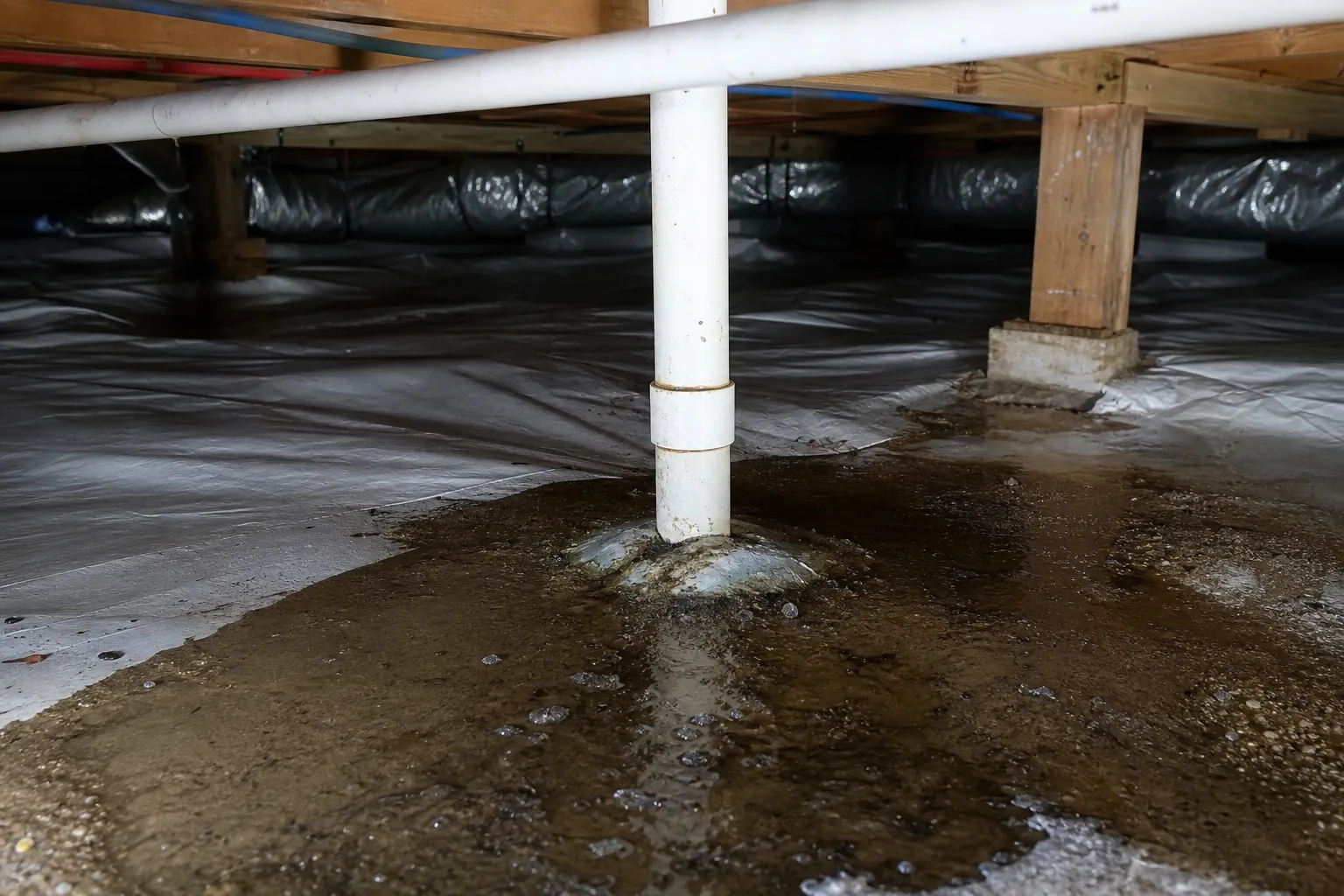
A pipe and the opening around it are two different possible pathways. Begin with the pipe. Using a flashlight, look above and around the wet area for droplets, mineral residue, staining, corrosion, loose connections, or a wet trail. Follow the pipe in both directions where it is safely visible. Water can run along the underside of a pipe and drip at a low point far from its origin.
Next, inspect the penetration itself. Look for gaps, deteriorated material, staining around the opening, damp framing, or a trail that begins above the pipe. A wet ring around the opening does not prove that rain entered there. It may simply be where water collects.
Dry accessible surfaces with a disposable cloth, then observe where moisture returns first. Do not disconnect plumbing, open walls, or apply sealant as a diagnostic shortcut. Sealing the visible gap before understanding the path can conceal continuing moisture without correcting its source.
Look for Signs That Point Toward Rainwater
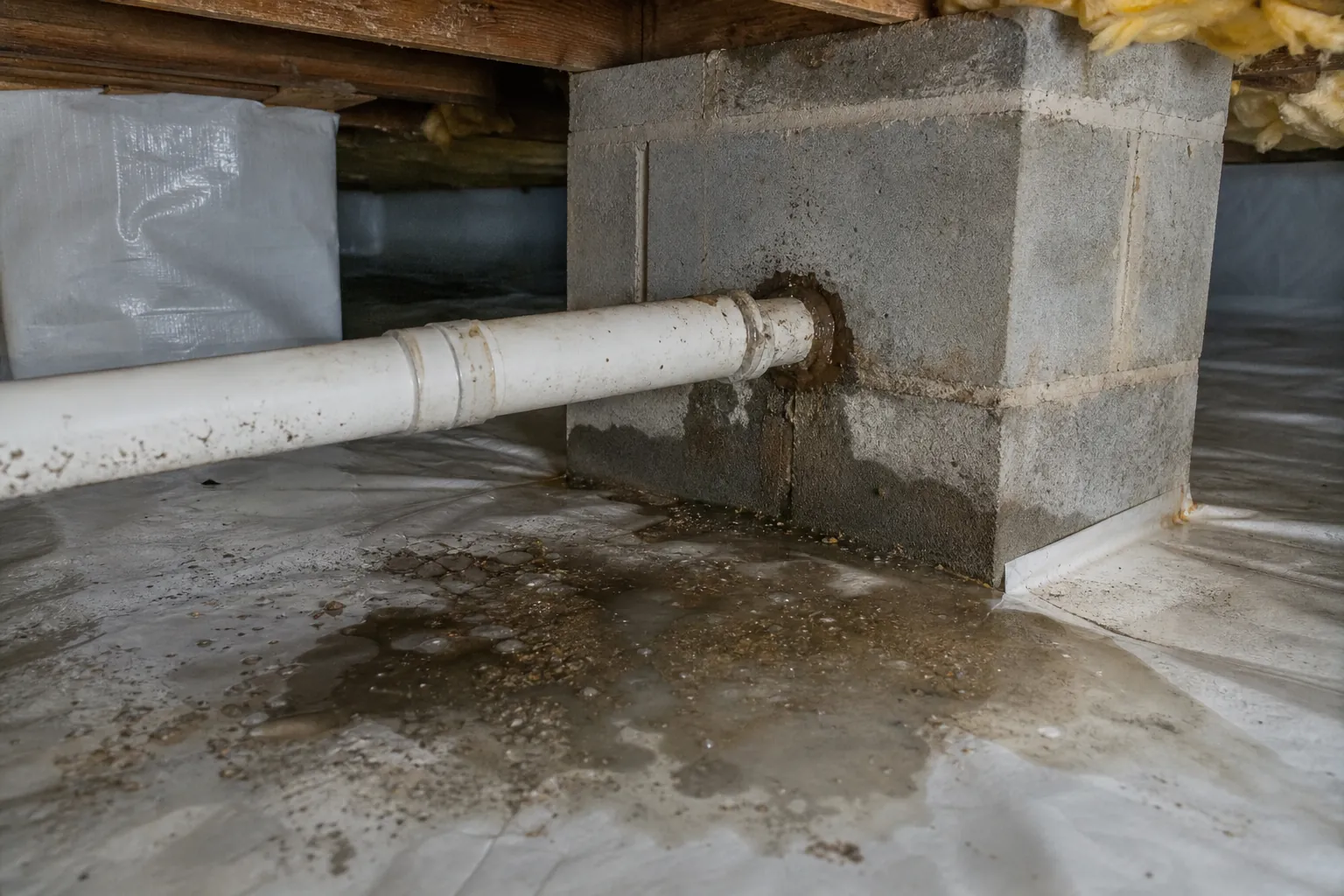
Rain-related moisture usually has a relationship to storms, but the path may not be direct. Water can move across soil, down foundation surfaces, through openings, or along framing before it reaches the pipe penetration. From outside, visually compare the wet area with nearby grade, roof runoff paths, downspout discharge, utility openings, and visible foundation conditions. Keep the inspection observational and avoid unsafe work during a storm.
Use a short checklist to organize what you see:
- Does the wet area expand after rain?
- Is the soil nearby wetter than the surrounding crawl space?
- Is staining present above or beside the penetration?
- Does exterior water appear to move toward that section of the foundation?
- Are nearby materials dry during an extended rain-free period?
A pattern tied closely to rainfall supports a rainwater explanation, but it does not identify the exact entry point by itself. Continue tracing upward and outward rather than assuming the pipe opening is responsible.
Consider Condensation Before Choosing a Repair
Condensation can resemble a supply-line leak because droplets form directly on a cool surface. In humid crawl-space air, cool plumbing may become wet even when no fitting is leaking. Nearby ductwork can also collect moisture and drip onto a pipe, framing, insulation, or soil. If the pipe is uniformly damp rather than wet at one joint, condensation deserves consideration.
Check whether droplets are spread across the pipe and whether nearby surfaces show similar moisture. Compare observations at different times of day and after changes in weather. Condensation may vary with humidity and equipment operation, while a plumbing leak may track fixture use or remain steady. For more context on this related moisture pattern, read about crawl space condensation on ductwork in North Carolina.
Avoid treating visible droplets as proof of one cause. The practical goal is to distinguish water coming from inside the pipe, water entering from outside, and moisture forming from the surrounding air.
Choose the Next Step Based on Evidence
Once you have several observations, match the next step to the strongest pattern. If moisture appears immediately after a particular fixture is used, stop using that fixture when practical and arrange for the plumbing connection or drain path to be evaluated. If the area changes primarily after rain, document exterior conditions and the interior water trail. If widespread droplets form on cool surfaces, include humidity and condensation in the assessment.
Do not close the investigation simply because the visible water dries. Damp materials, recurring stains, odors, or repeated soil wetness indicate that monitoring should continue. Also avoid replacing wet insulation or covering stained materials before the source has been addressed, because new material can hide recurrence.
Bring your photos, dates, weather notes, and fixture-use observations to any professional conversation. Clear evidence reduces guesswork and helps focus the inspection on the likely pathway. When observations conflict, keep the possibilities open. More than one moisture source can affect the same location.
Talk Through What You Are Seeing
If you are deciding how to respond to water near a crawl space plumbing penetration in North Carolina, call Carolina Encapsulation Company at 704-207-9348. Share when the water appears, what is wet, and whether the pattern follows rain or plumbing use.
Call 704-207-9348 to talk through next steps.