Protect your Fayetteville home with crawl space waterproofing
Moisture beneath a home can be easy to overlook, but it rarely stays confined to the crawl space. Damp air, musty odors, damaged insulation, mold growth, and wood deterioration can eventually affect the comfort and condition of the rooms above. For homeowners researching crawl space waterproofing Fayetteville NC solutions, the first step is understanding how water enters and which improvements can provide lasting protection.
Carolina Encapsulation Company helps North Carolina homeowners address crawl space moisture with solutions tailored to the property. Rather than covering up visible symptoms, a thorough waterproofing plan considers groundwater, outdoor drainage, humid air, plumbing concerns, and the condition of the crawl space itself.
Why Fayetteville Crawl Spaces Develop Moisture Problems
Fayetteville experiences warm, humid summers and periods of heavy rainfall. Many local homes also have vented crawl spaces, exposed soil, aging vapor barriers, or low areas where water can collect. These conditions allow moisture to enter as liquid water or water vapor.
Open crawl space vents do not always dry the area effectively. During humid weather, warm outdoor air can enter the cooler crawl space and raise moisture levels. Bare soil also releases water vapor continuously, even when the ground does not look wet. If grading or downspouts direct rain toward the foundation, the problem can become more severe.
Plumbing leaks, air conditioning condensation, and poorly sealed access doors may contribute as well. Because several sources can exist at once, simply installing plastic over part of the floor may not be enough.
Warning Signs Homeowners Should Not Ignore
Crawl space moisture can produce visible and hidden warning signs. A professional inspection can identify the source, but homeowners may notice changes inside or around the house first.
- Persistent musty odors: Smells rising through floors or entering through ductwork may indicate damp materials or microbial growth below.
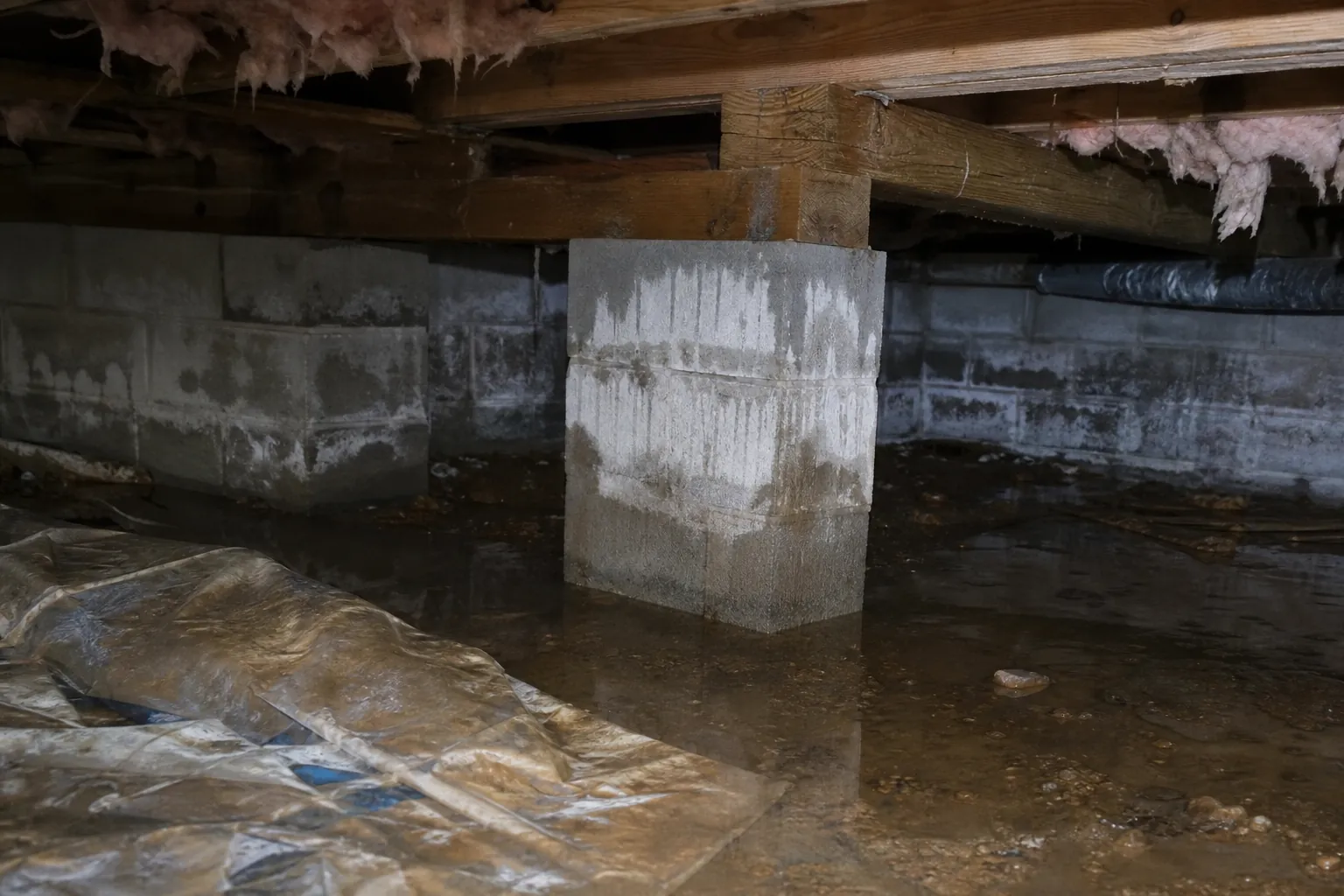
- Sagging or wet insulation: Fiberglass insulation can absorb moisture, lose effectiveness, and fall from the floor system.
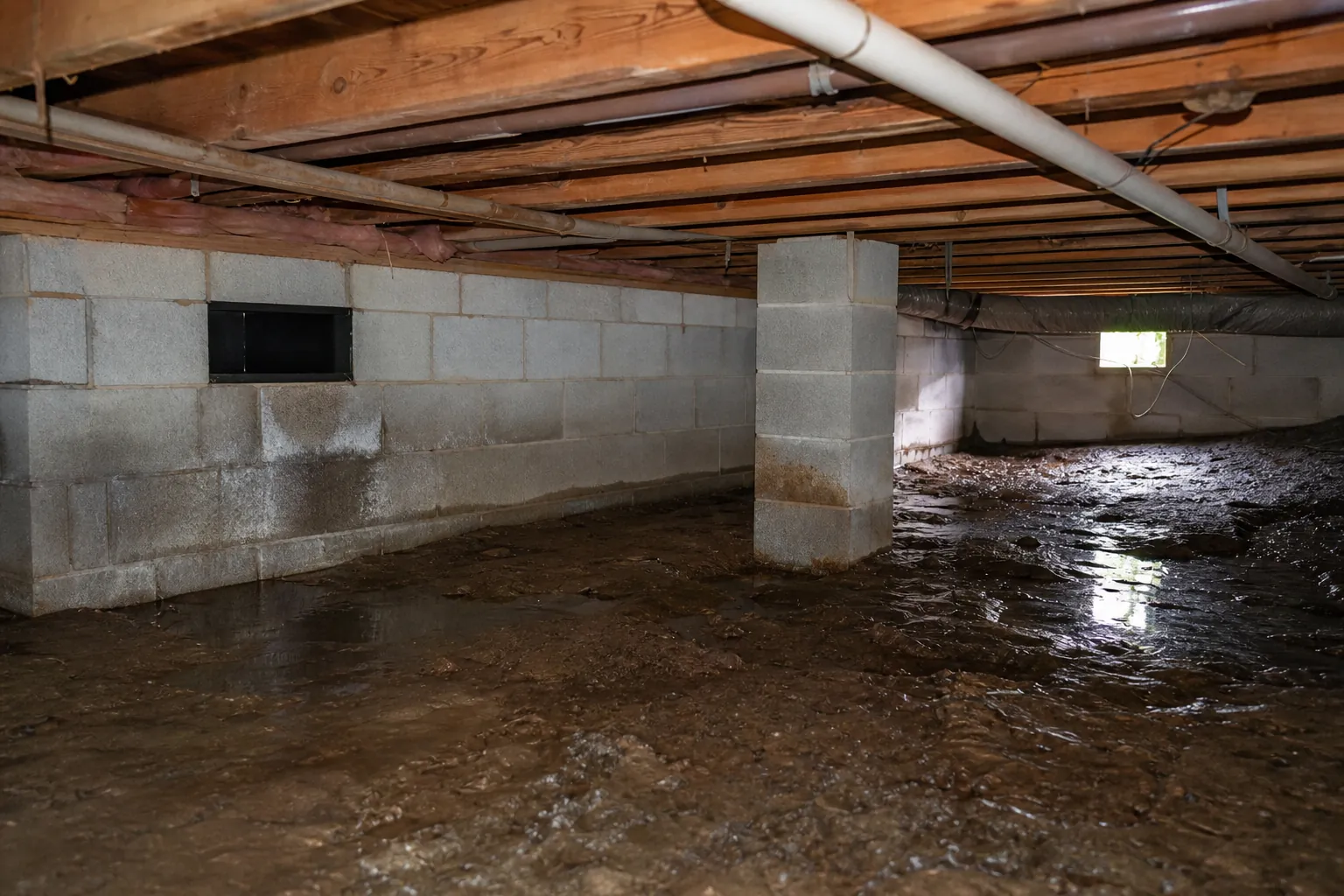
- Standing water: Puddles after rain can point to drainage, grading, groundwater, or foundation-entry issues.
- Condensation: Moisture on ducts, pipes, masonry, or framing often indicates high crawl space humidity.
- Wood discoloration or decay: Dark staining, soft wood, and fungal growth deserve prompt evaluation.
- Uneven or bouncy floors: Moisture-damaged joists, beams, or supports can affect the floor structure above.
- Pest activity: Damp environments can attract insects and other pests seeking water and shelter.
- Higher indoor humidity: Moist air from below may influence comfort and air quality throughout the home.
These signs do not all confirm the same problem. For example, standing water requires a different response than seasonal humidity. Correct diagnosis helps prevent unnecessary work and supports a more effective result.
What A Complete Waterproofing Plan May Include
Crawl space waterproofing is not a single product. It is a coordinated approach designed to control water entry, ground vapor, and humidity. The recommended components depend on the home, site conditions, and severity of the moisture.
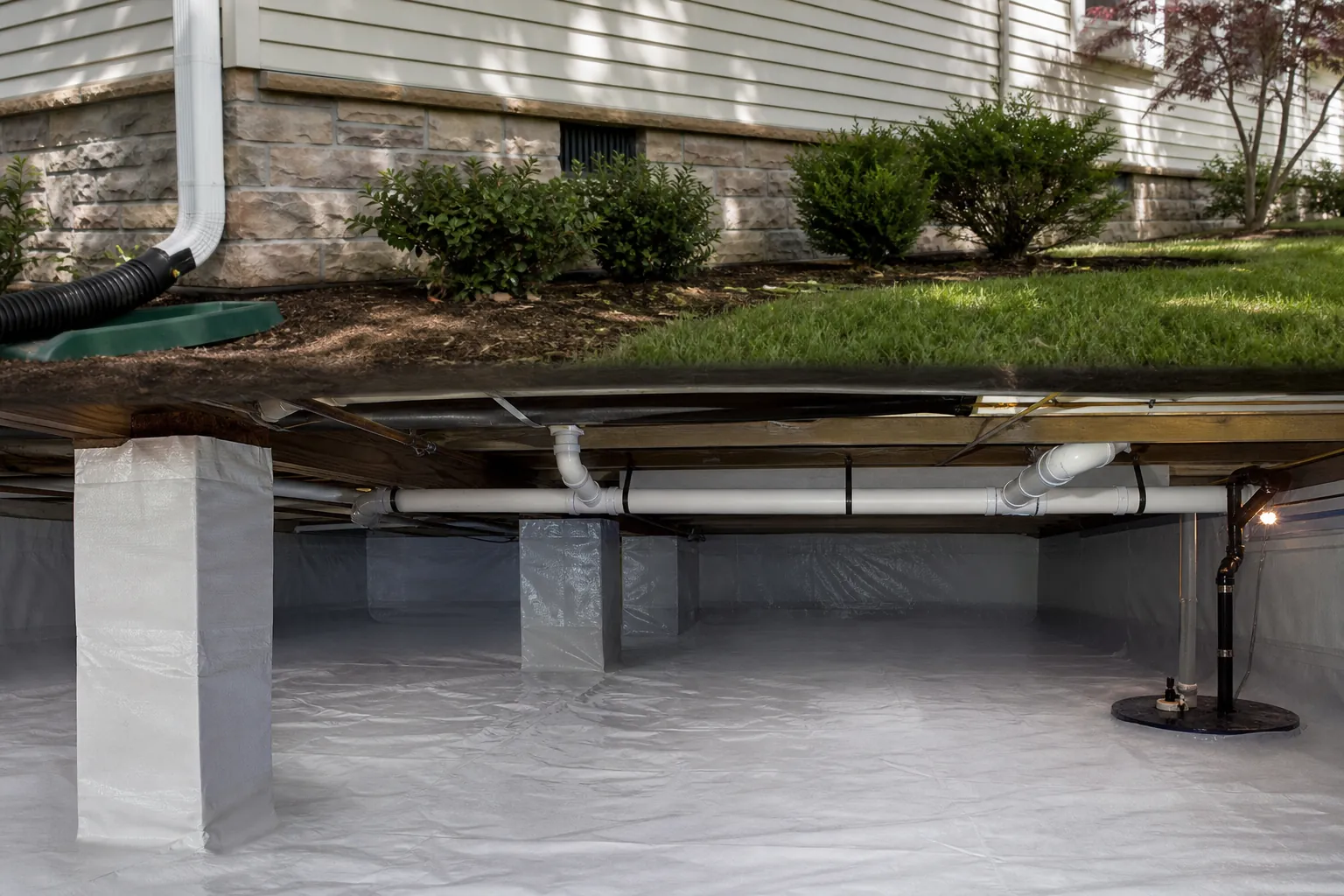
When water enters around the foundation, an interior drainage system may be used to collect it and direct it toward a sump basin. A properly selected sump pump then moves water away from the house. Discharge placement matters because water should not cycle back toward the foundation.
A durable vapor barrier or encapsulation liner can isolate the crawl space from damp soil. During full encapsulation, the liner typically covers the ground and extends up foundation walls or piers, with seams and penetrations carefully sealed. Vents, access doors, plumbing openings, and other air leaks may also need attention.
Humidity control is another important part of the system. A crawl space dehumidifier can help maintain appropriate moisture levels after bulk water and ground vapor have been addressed. Existing wet insulation, organic debris, or damaged materials may need to be removed before the space is sealed.
Waterproofing Vs. Crawl Space Encapsulation
Although the terms are often used together, waterproofing and encapsulation address related but distinct concerns. Waterproofing focuses primarily on managing liquid water. This may involve drainage channels, sump pumps, discharge lines, and corrections that reduce rainwater intrusion.
Encapsulation focuses on separating the crawl space from ground moisture and humid outdoor air. It generally includes a reinforced liner, sealed vents, wall coverage, and humidity management. A home with high humidity but no standing water may benefit mainly from encapsulation. A property that floods during storms may need drainage and pumping before encapsulation can perform properly.
Many Fayetteville homes benefit from a combination of both. Installing a liner without addressing active water can trap moisture beneath it. Likewise, removing standing water without controlling vapor can leave the crawl space humid. An integrated design provides more dependable protection.
Benefits Of A Dry, Controlled Crawl Space
A dry crawl space helps protect floor joists, beams, subflooring, insulation, ductwork, and other components. Reducing humidity can make conditions less favorable for mold and wood-destroying organisms. It may also limit musty odors that move into living areas.
Comfort can improve when damp air and failing insulation are addressed. HVAC equipment and ductwork located below the home may also operate in a cleaner, more controlled environment. While results vary by house, moisture control supports the overall durability and usability of the property.
Waterproofing can also make future maintenance easier. A clean, lined crawl space offers better access for inspecting plumbing, wiring, ducts, and structural components. Homeowners can spot new leaks sooner instead of searching through mud, standing water, or deteriorated insulation.
How To Choose The Right Local Solution
Before approving work, ask for a clear explanation of the moisture sources and why each proposed component is needed. A useful assessment should examine drainage patterns, downspouts, foundation walls, soil conditions, vents, insulation, plumbing, wood moisture, and existing equipment.
Homeowners should also ask about liner thickness, seam sealing, sump pump capacity, discharge routing, dehumidifier sizing, warranties, and maintenance needs. The lowest initial price may not provide good value if key water sources remain unresolved or materials are installed incompletely.
Carolina Encapsulation Company develops crawl space moisture-control plans based on the conditions found at each North Carolina home. If you are concerned about odors, humidity, standing water, or damaged materials beneath your Fayetteville property, call 704-207-9348 to discuss an inspection. A calm, informed evaluation can help you choose practical next steps without guessing.
Call 704-207-9348 to talk through next steps.