Crawl space waterproofing for Wilson, NC homes
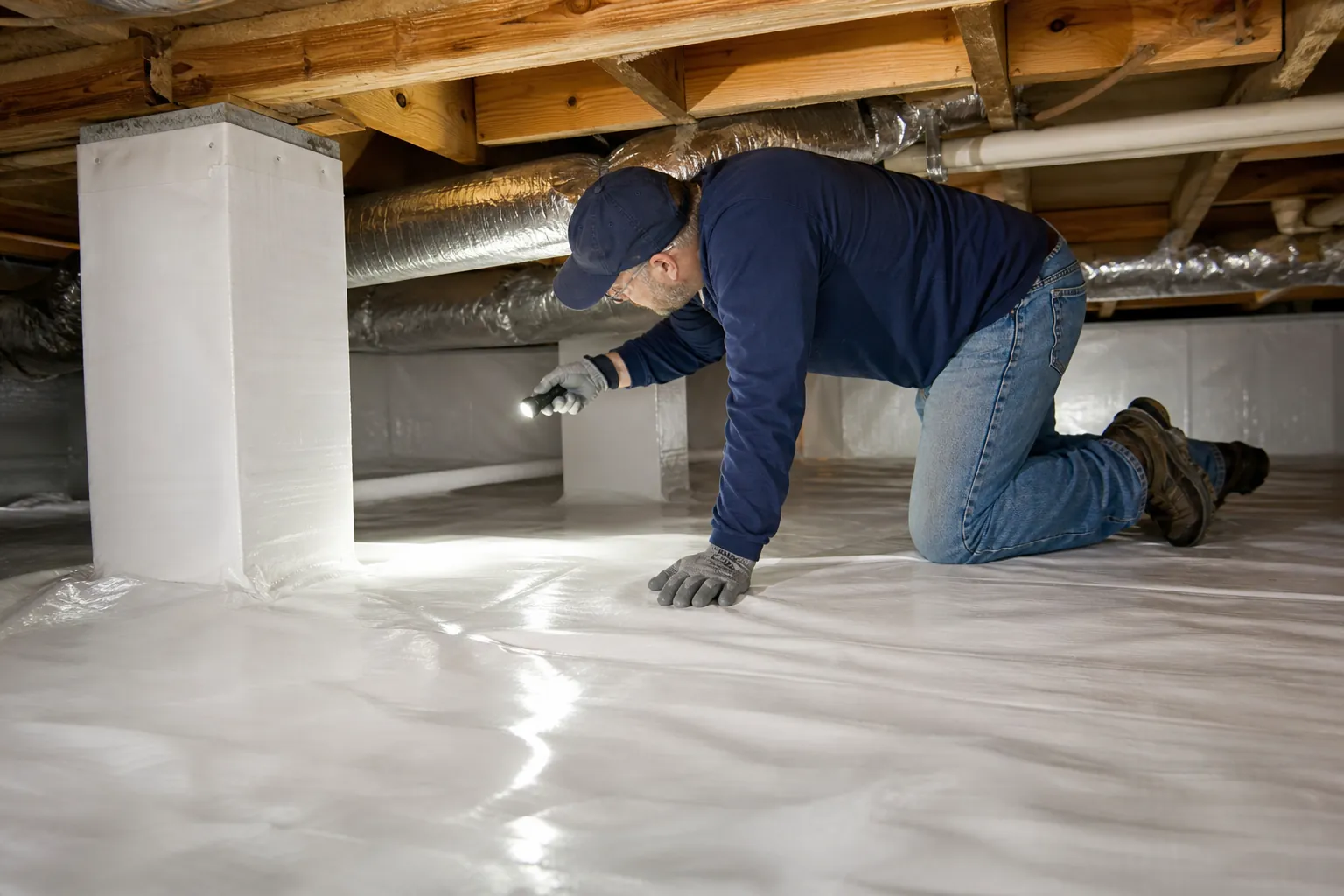
Moisture beneath a home rarely stays confined to the crawl space. Damp air can move upward through gaps around plumbing, wiring, ductwork, and framing, potentially contributing to musty odors and uncomfortable indoor conditions. Over time, persistent moisture can also affect insulation, floor systems, and stored belongings.
Carolina Encapsulation Company provides crawl space waterproofing in Wilson, NC, with solutions based on the conditions beneath each home. Instead of relying on a single product, a thorough approach considers where water enters, how humidity behaves, and what is needed to protect the structure over the long term.
Why Wilson crawl spaces develop moisture problems
North Carolina's warm, humid climate creates challenging conditions beneath homes. Traditional vented crawl spaces allow outdoor air to enter. When warm, moisture-laden air meets cooler surfaces, condensation can form on ductwork, pipes, floor joists, and insulation.
Rainwater can also collect near the foundation when gutters overflow, downspouts discharge too close to the house, or the surrounding grade directs runoff toward the structure. In some homes, groundwater or plumbing leaks add to the problem. Bare soil continually releases water vapor, even when no standing water is visible.
Because several moisture sources may be present at once, waterproofing should begin with an evaluation. Simply covering the ground or adding a fan may not correct active seepage, drainage issues, or uncontrolled humid air.
Signs that your crawl space needs attention
Homeowners do not need to enter a tight or potentially unsafe crawl space to notice warning signs. Changes inside the living area or around the foundation can indicate excessive moisture below.
- Musty odors: Earthy smells near floors, closets, or HVAC registers may originate in the crawl space.
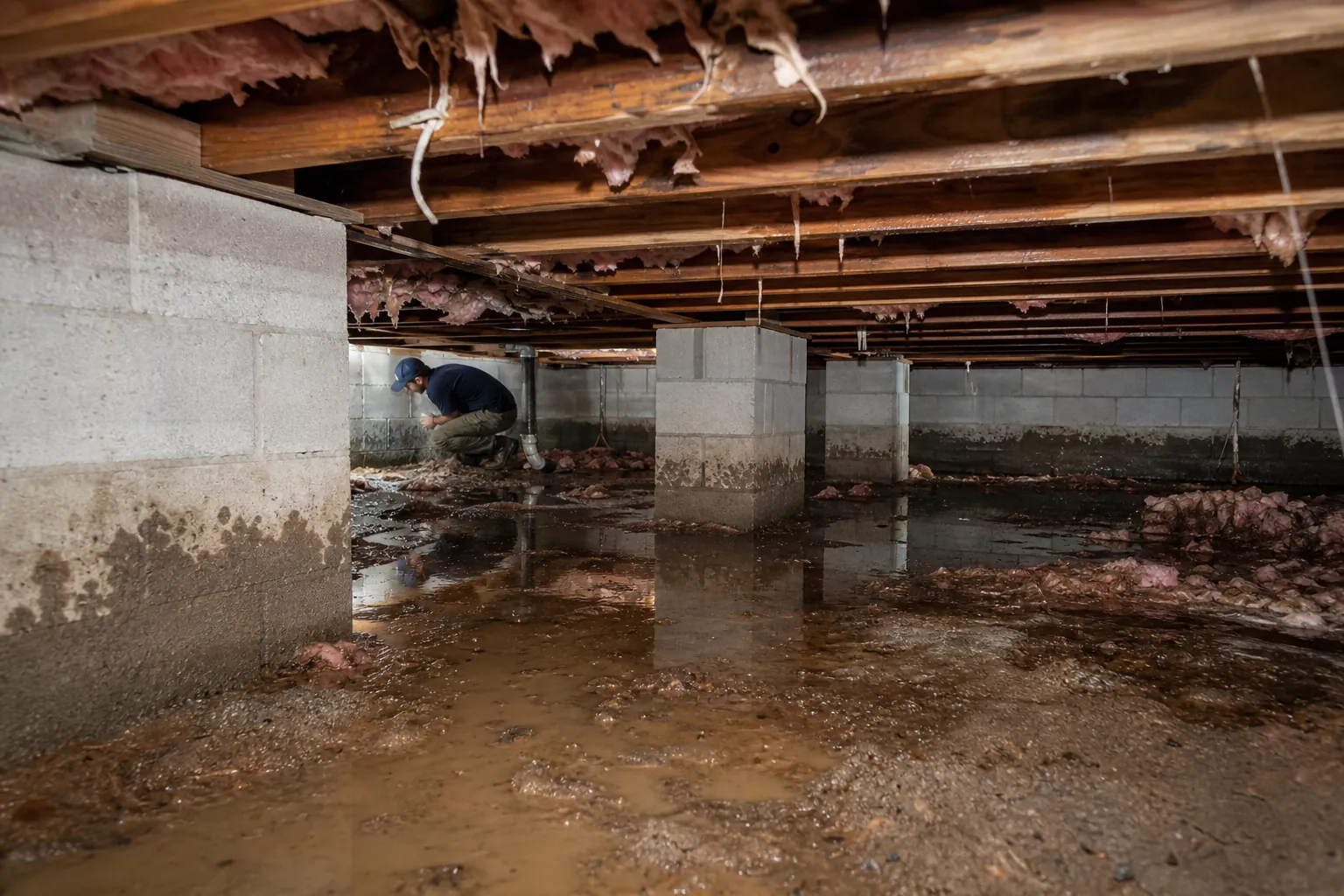
- Sagging or damp insulation: Fiberglass batts can absorb moisture, lose effectiveness, and fall away from the subfloor.
- Condensation: Water droplets on ductwork, pipes, or framing point to elevated humidity.
- Visible fungal growth: Discoloration on wood should be professionally assessed rather than covered or ignored.
- Soft or uneven floors: Long-term moisture may contribute to wood deterioration and changes in the floor system.
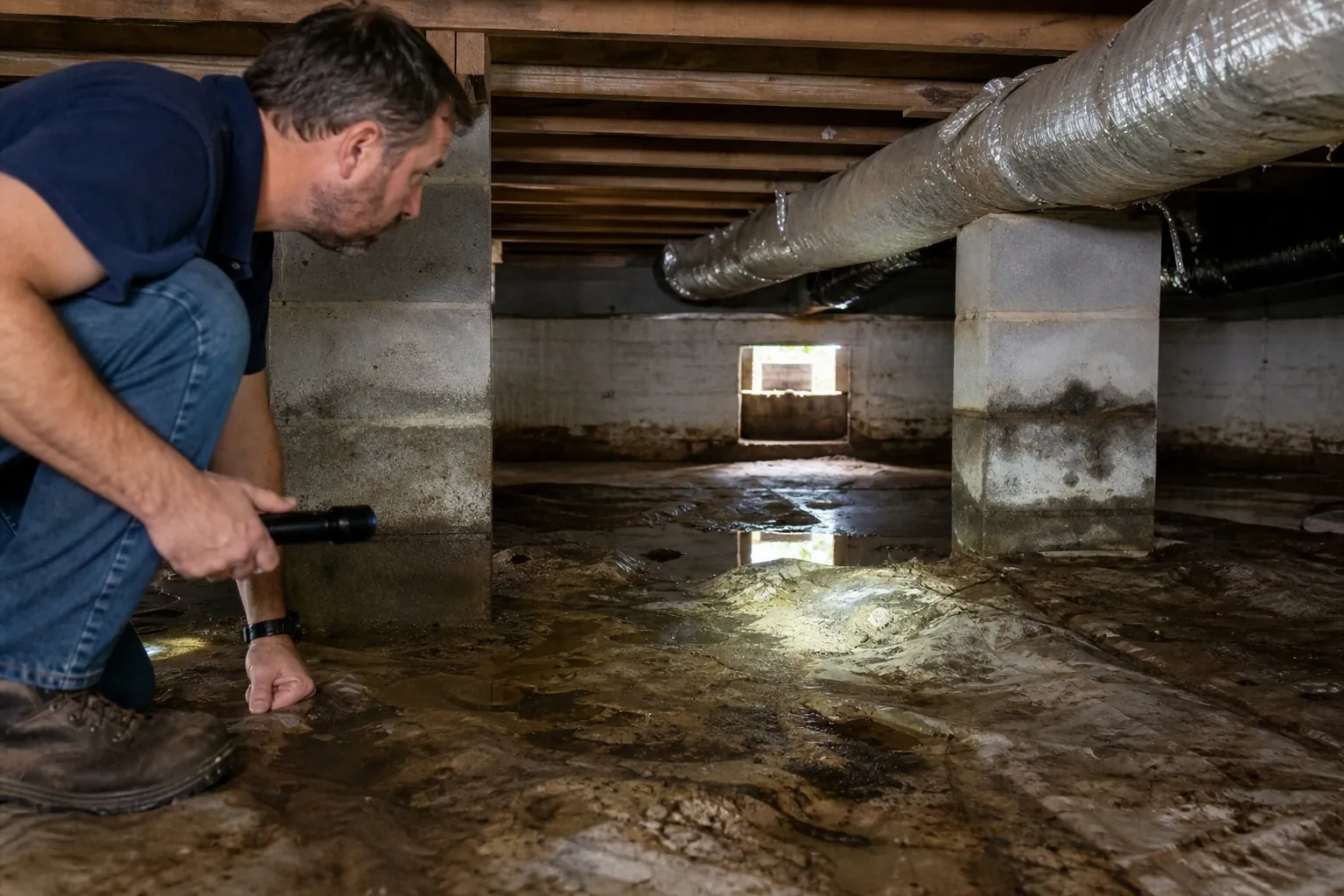
- Standing water: Puddles after rain suggest seepage, drainage deficiencies, or grading problems.
- Pest activity: Damp, sheltered environments can be attractive to insects and other pests.
- High indoor humidity: A persistently humid home may be influenced by conditions below the floor.
These symptoms can have more than one cause. A detailed inspection helps distinguish occasional dampness from an ongoing water-management problem and supports a more practical repair plan.
What crawl space waterproofing may include
An effective system manages liquid water and water vapor. The exact scope depends on the home's construction, site drainage, existing damage, and moisture levels. For some Wilson properties, exterior improvements such as extending downspouts or correcting drainage near the foundation may be an important first step.
When water enters the crawl space, an interior drainage system may be recommended to collect and direct it. A sump pump can then move collected water to an appropriate discharge location. Pump capacity, placement, discharge routing, and access for maintenance all matter.
A durable vapor barrier helps isolate the crawl space from moisture released by the soil. During full encapsulation, reinforced liner material is fitted across the ground and sealed at seams, walls, piers, and penetrations. Vents and other outside-air openings may also be sealed as part of a conditioned moisture-control strategy.
Depending on the space, humidity may be controlled with a properly sized dehumidifier designed for crawl space use. Existing wet or damaged insulation may need to be removed so the area can be evaluated and treated appropriately. Waterproofing and encapsulation often work together, but they address different parts of the moisture problem.
Waterproofing versus encapsulation
The terms are sometimes used interchangeably, although they are not identical. Waterproofing focuses primarily on controlling water intrusion. This can include drainage channels, sump equipment, grading recommendations, and measures that direct water away from vulnerable areas.
Encapsulation focuses on separating the crawl space from ground vapor and humid outside air. It typically involves a sealed liner and may include vent sealing and mechanical humidity control. If a crawl space floods during heavy rain, installing a liner without addressing the water pathway can leave the underlying problem unresolved.
Likewise, a drainage system alone may not control vapor rising from exposed soil. A balanced plan considers bulk water, ground vapor, ventilation, and humidity rather than treating one visible symptom.
Benefits of a dry, controlled crawl space
Keeping the area beneath a home dry can help protect wood framing, insulation, ducts, and other building components. It can also reduce the conditions that support musty odors and moisture-related growth. When damaged insulation is replaced and humid outside air is controlled, homeowners may notice more consistent floor temperatures and improved comfort.
Encapsulation can also make the crawl space cleaner and easier to inspect. Plumbing leaks, equipment issues, and pest evidence are often simpler to spot against a clean liner than against damp soil or deteriorated insulation.
Results depend on the home and the system design, so waterproofing should not be presented as a universal cure for every indoor air or structural concern. Its main purpose is to create a more stable environment beneath the house and reduce ongoing moisture exposure.
How to plan the right solution
Before approving work, ask what moisture sources were identified and how each proposed component addresses them. A clear scope should explain liner thickness, seam treatment, drainage routing, sump pump placement, dehumidifier sizing, and any preparation required. It should also identify components that need routine service.
After installation, keep gutters clear, direct downspouts away from the foundation, and check the crawl space periodically. Sump pumps and dehumidifiers should be maintained according to manufacturer guidance. Monitoring humidity can help reveal changes before obvious damage develops.
Schedule a crawl space evaluation in Wilson
Every crawl space has a different combination of soil conditions, drainage, construction details, and ventilation. Carolina Encapsulation Company can evaluate your Wilson, North Carolina property and explain which waterproofing or encapsulation measures fit the conditions found.
If you have noticed damp insulation, standing water, musty odors, or high humidity, call 704-207-9348 to discuss a crawl space evaluation. You will receive practical guidance focused on creating a cleaner, drier area beneath your home.
Call 704-207-9348 to talk through next steps.