Why Does Rainwater Enter My Crawl Space Through Foundation Vents?
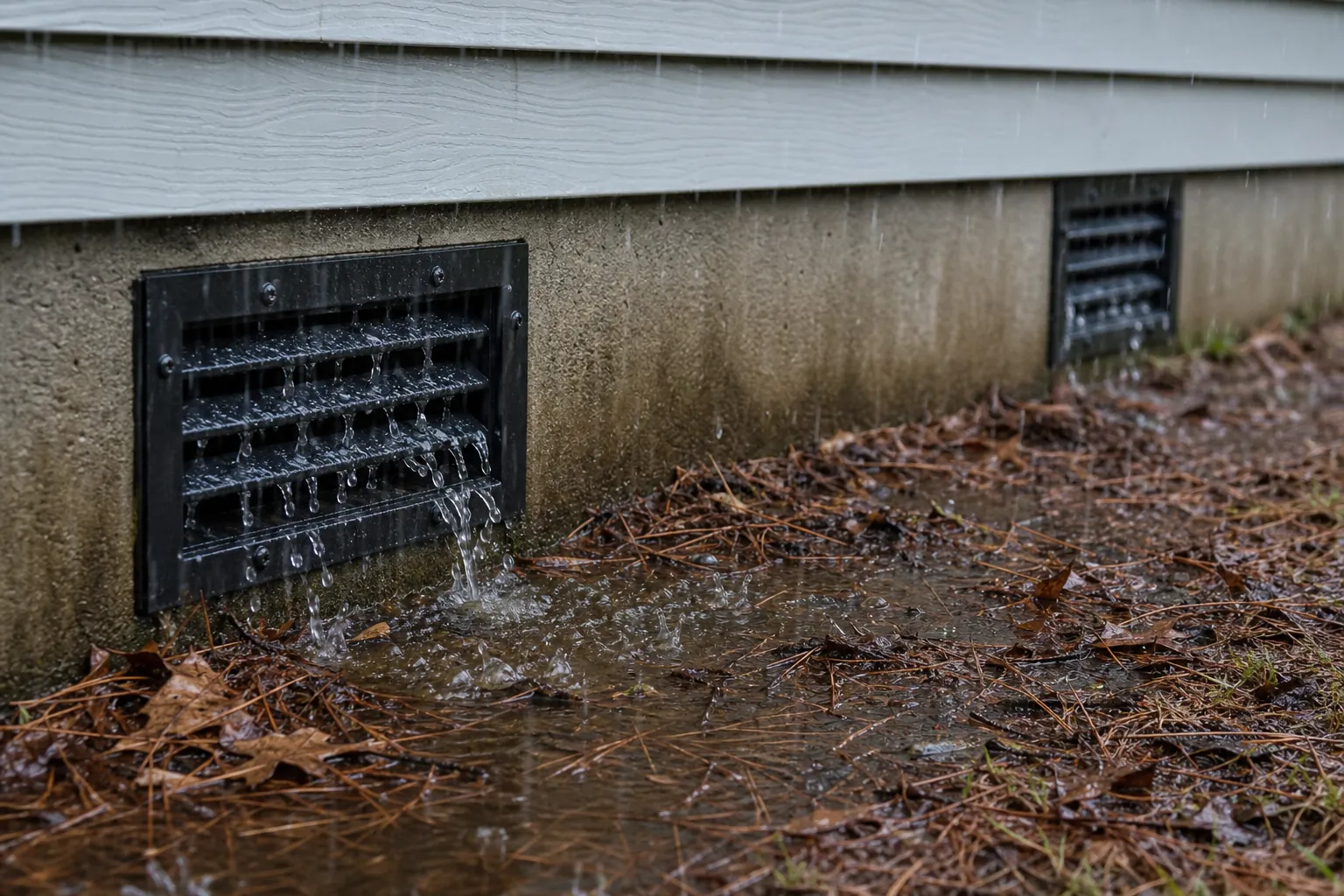
Rainwater entering a crawl space through foundation vents is a warning worth investigating, but the vent itself may not be the original source. Wind, drainage, grading, and nearby roof runoff can direct water toward an opening that normally remains dry. The most useful first step is to observe when and where the water appears, then trace its path without assuming that closing the vent alone will address the cause.
Why Rain Can Reach a Foundation Vent
Foundation vents sit low on an exterior wall, so their exposure depends heavily on conditions immediately outside the crawl space. Wind-driven rain can pass directly through a vent, particularly when a storm approaches that side of the house. Water can also splash from hard surfaces, soil, or standing water below the opening.
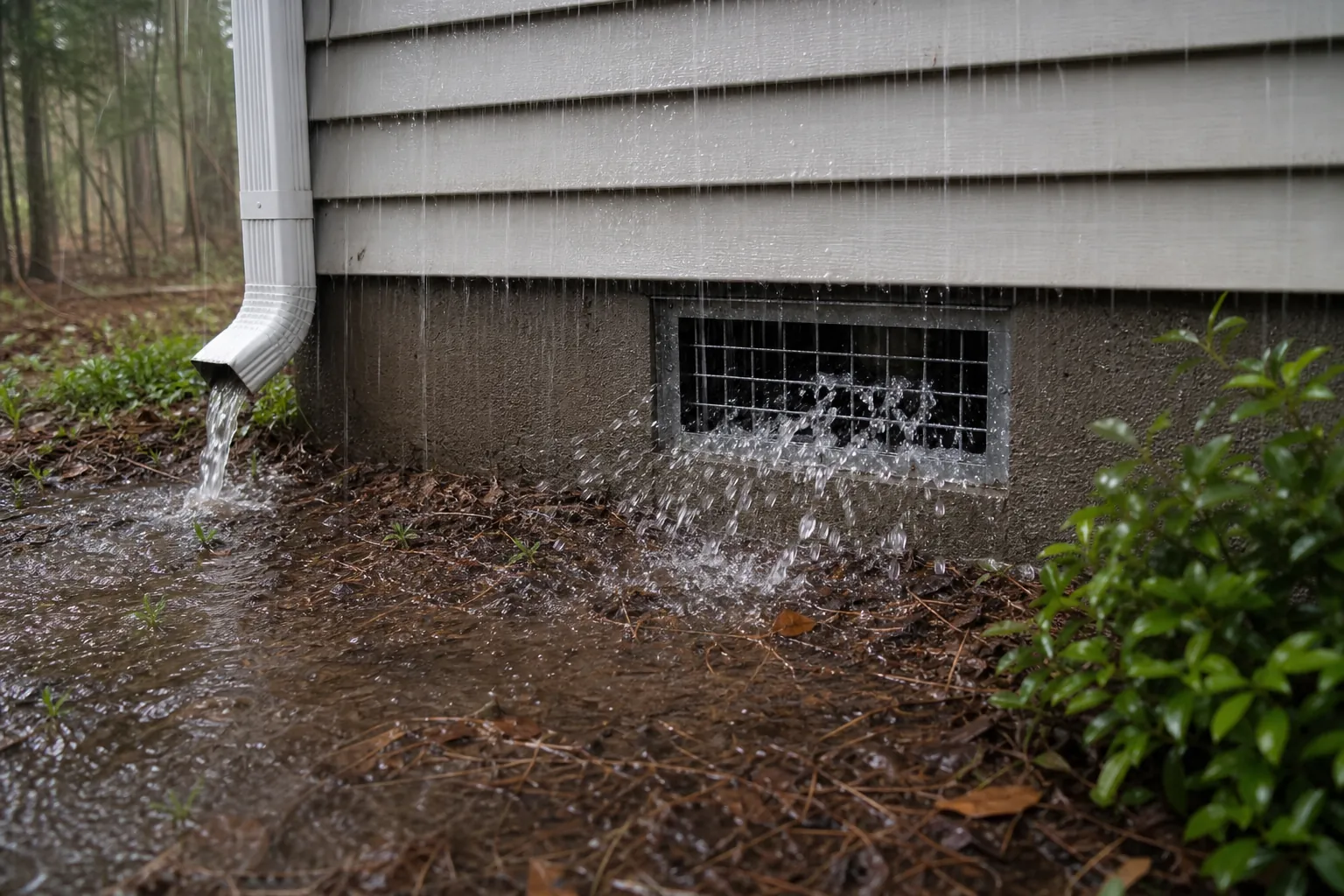
In other cases, the vent is simply the lowest visible point along a larger water path. Roof runoff may land near the foundation, flow across compacted soil, and collect beside the vent. A low spot in a planting bed can have a similar effect. Water may then cross the vent opening or enter through nearby gaps and appear beneath it.
Pay attention to whether the problem occurs during every rainfall or only during storms with strong wind, prolonged rain, or unusually heavy runoff. That distinction helps separate direct rain entry from broader site-drainage conditions. It also makes a future inspection more focused and useful.
Inspect the Exterior Before Entering the Crawl Space
Begin outside while the evidence is fresh, but wait until conditions are safe. Look at the ground, wall, vent, and roof edge as one connected drainage area. The goal is to identify how water approaches the foundation, not merely where it disappears.
- Check whether soil slopes toward the house or contains a depression near the vent.
- Look for mud lines, washed mulch, debris, or staining that indicates flowing or standing water.
- Observe where roof runoff lands and whether it moves toward the affected wall.
- Note nearby hard surfaces that may shed or splash water toward the opening.
- Inspect the vent frame and surrounding wall for visible gaps, damage, or deterioration.
- Compare the affected vent with vents on drier sides of the house.
Take photographs from several distances. A close image records the opening, while a wider image shows the slope, roofline, and surrounding surfaces. Avoid making permanent changes based on one isolated wet spot. Exterior evidence often reveals whether the vent is the primary entry point or a symptom of water concentrating beside the foundation.
Use Interior Clues to Trace the Water Path
If the crawl space is safely accessible, inspect the area behind the vent after the rain has stopped. Do not enter where there is standing water, unsafe wiring, unstable material, limited clearance, or another condition you cannot assess confidently. A flashlight and photographs can help document visible evidence from the access point.
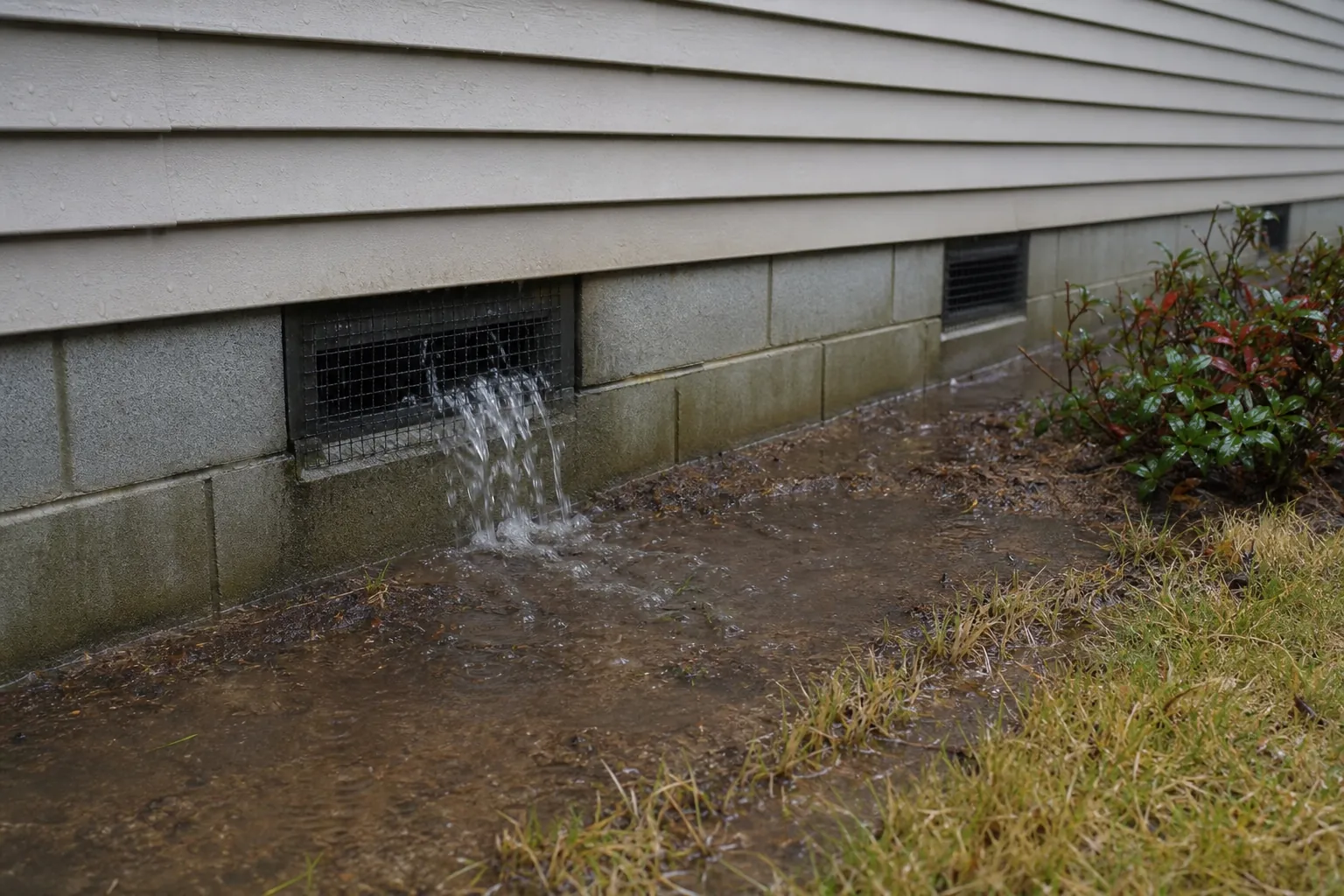
Direct entry through a vent may leave droplets, splash marks, damp soil, or a defined wet area immediately inside the opening. Water that travels along the foundation can create a longer stain or wet channel. If moisture appears far from the vent, consider whether it could be moving along soil, masonry, framing, pipes, or ducts before becoming visible.
Also distinguish liquid water from surface moisture. Wet duct surfaces may involve condensation rather than rain passing through a vent. For related guidance, read crawl space condensation on ductwork in North Carolina. More than one moisture source can be present, so document each pattern separately rather than treating every damp surface as proof of rain intrusion.
Document Storm Conditions Before Choosing a Response
A short record can turn a vague problem into a clear pattern. Write down the date, approximate rainfall duration, wind direction if known, and when water first became visible. Note whether the wet area expanded after the rain ended. Photograph the same locations during dry weather and after later storms.
Useful comparisons include light rain versus heavy rain, calm conditions versus wind-driven rain, and short showers versus prolonged rainfall. If water appears only when wind strikes one wall, direct entry becomes more plausible. If it appears after sustained runoff regardless of wind, drainage near the foundation deserves closer attention. If the area remains damp well after the surrounding soil dries, there may be an additional moisture source or limited drying.
Do not block a vent temporarily in a way that redirects water into the wall or conceals the evidence. Likewise, avoid disturbing electrical components or crawling through a wet area to obtain a better photograph. Clear, safe observations are more valuable than risky access or a quick change that makes the original path harder to identify.
Decide What Needs Attention First
The appropriate next step depends on the confirmed water path. If rainfall is crossing the opening directly, the vent’s exposure, condition, and surrounding details should be reviewed. If water is collecting outside, the priority is understanding why runoff reaches that location. If the visible moisture is condensation, addressing only the exterior vent may leave the actual issue unchanged.
Before making a decision, gather photos, storm notes, and the locations of all visible damp areas. Ask whether the proposed response addresses the source, the entry route, or only the visible symptom. Also consider whether several conditions are interacting, such as roof runoff, low soil, splashback, and wind exposure. A useful evaluation should explain how the evidence supports its conclusion.
Recheck the area after the next comparable storm. A dry result after a change is encouraging, but continued monitoring helps show whether the improvement holds under similar conditions. If water continues entering or the route remains uncertain, Carolina Encapsulation Company can discuss the crawl space concern and the observations you have collected.
Talk Through What You Are Seeing
For calm, practical help deciding what to examine next, call Carolina Encapsulation Company at 704-207-9348. Have your photos and notes available so the conversation can focus on when the water appears and where it travels.
Call 704-207-9348 to talk through next steps.