Why Does a Crawl Space Smell Musty After Heavy Rain in North Carolina?
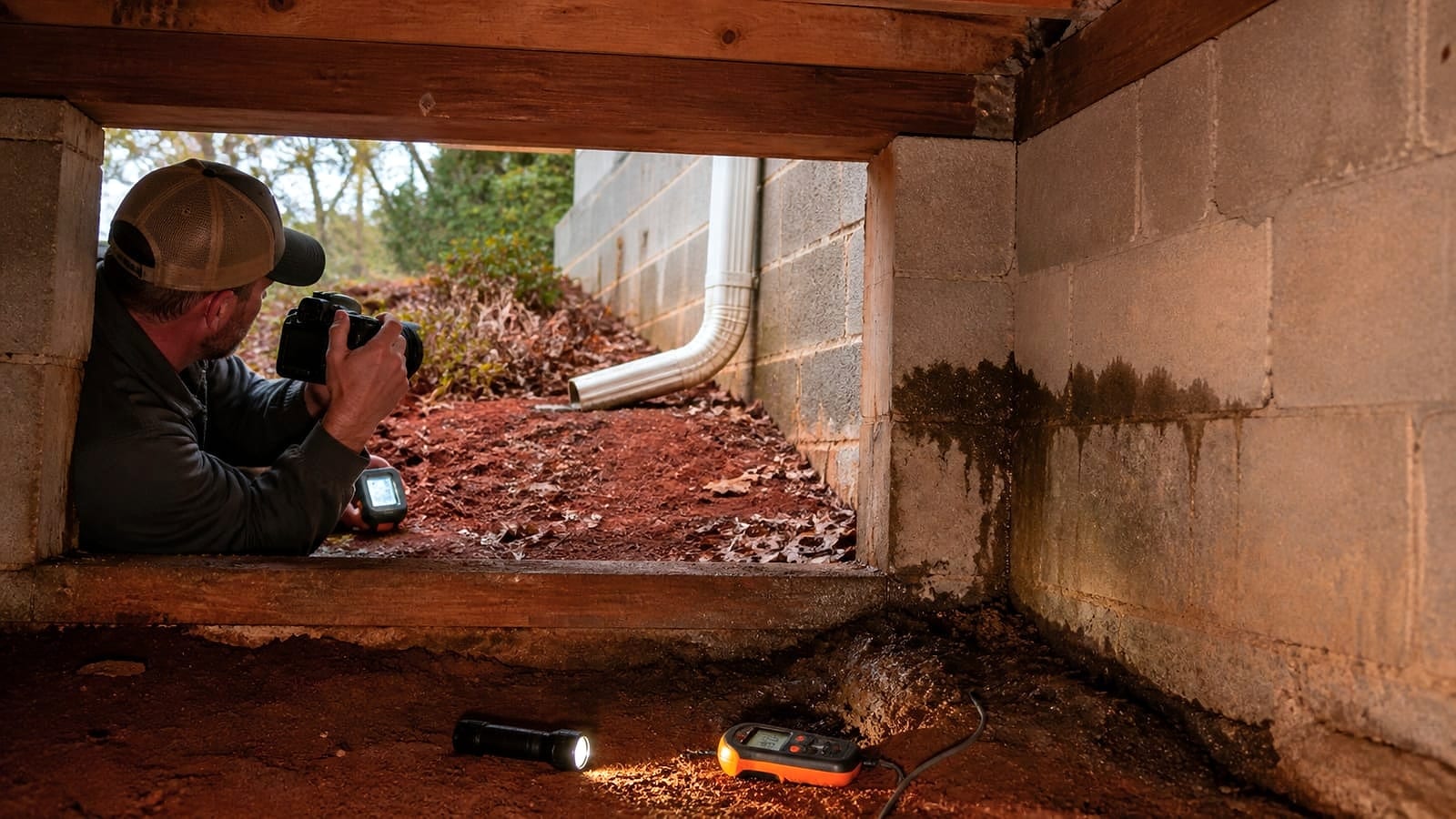
Rain can expose a water path, raise ground moisture, wet materials, or simply push humidity higher. The timing and location of the odor help narrow the next inspection step.
Benji Holiday is the owner of Carolina Encapsulation Company and the named author of the company’s blog library. The articles focus on homeowner questions involving seasonal moisture, encapsulation care, water and drainage, home transactions, insulation, access, and structural observations.
The library separates general education from a recommendation about a specific property. Articles explain what a homeowner can record, which patterns may help an inspection, and how the question connects to the site’s deeper service, problem, cost, comparison, and guide pages.
They do not present an article as a remote diagnosis. The conditions beneath a particular home still need to be observed before a project scope can be discussed responsibly.
Technical articles point readers toward relevant official and primary sources when those sources add useful context. Depending on the subject, those may include North Carolina OSFM, NC State Extension, the North Carolina Department of Agriculture and Consumer Services, the U.S. Environmental Protection Agency, and the U.S. Department of Energy.
Those sources do not decide the scope for a property. Local code officials, inspectors, engineers, pest professionals, and licensed trades address questions within their own authority and discipline.
The profile uses the verified author name and company role without adding professional claims that are not part of the company’s published facts.

Each article begins with a short answer that identifies the practical point and the limit of what can be concluded without seeing the property. The sections that follow explain timing, location, materials, equipment, exterior water, access, and other observations that may change the inspection path.
The articles are intentionally narrower than the primary service and problem pages. A post about a humidity spike, sump alarm, home sale, or trade visit answers that situation, then links to the broader page that explains the full service or condition. This keeps homeowners from receiving two conflicting pages for the same decision.
The author line identifies Benji Holiday as the owner and named author of the company’s educational library. It does not turn a general article into a recommendation for a house that has not been inspected. Water paths, moisture readings, equipment, framing, pest access, and material condition must still be evaluated where they occur.
When a subject crosses into code, engineering, electrical, plumbing, HVAC, pest control, real estate, legal, or another professional scope, the article states that boundary and points readers toward the appropriate authority or qualified discipline. That separation is part of making the information useful without overstating what one page can decide.
Rain can expose a water path, raise ground moisture, wet materials, or simply push humidity higher. The timing and location of the odor help narrow the next inspection step.
Outdoor dew points can rise before a crawl space warms. When cooling starts, colder ducts and surfaces can expose an air and moisture imbalance that was less obvious in winter.
Duct condensation is a surface-temperature and moisture problem. The droplets matter because they can wet insulation and framing even when no pipe is leaking.
Book a free inspection so the next step can be based on the conditions beneath your home.