
Crawl Space Service in Chapel Hill, NC
In Chapel Hill, NC, slope and drainage deserve attention before the crawl space is sealed. The town spans Orange and Durham counties, and many properties sit on rolling terrain where roof runoff, uphill flow, and creek drainage can send water toward the foundation.
Prefer to talk? Call 704-207-9348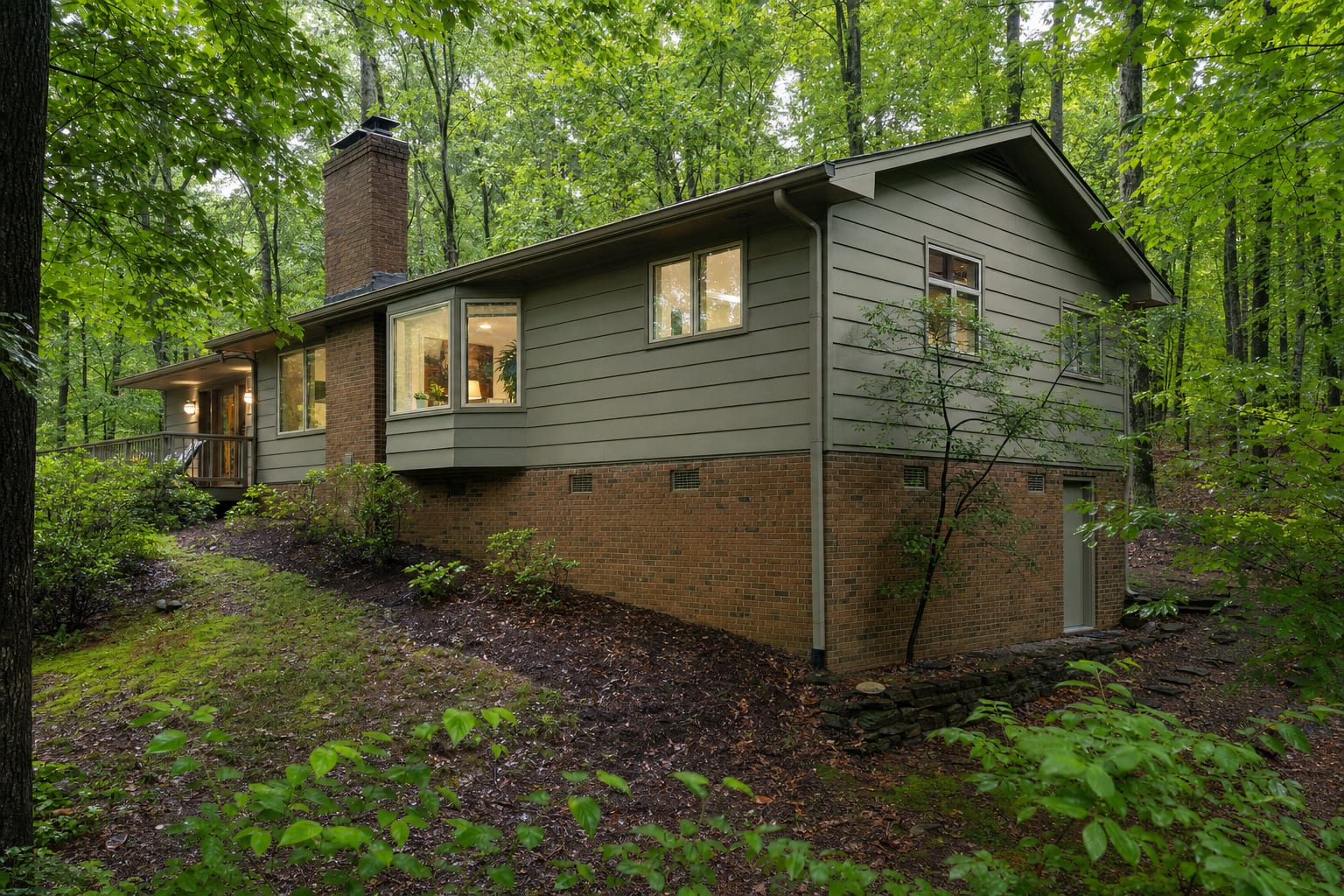
In Chapel Hill, NC, slope and drainage deserve attention before the crawl space is sealed. The town spans Orange and Durham counties, and many properties sit on rolling terrain where roof runoff, uphill flow, and creek drainage can send water toward the foundation.
Why Chapel Hill Lots Need a Water-First Review
Chapel Hill's own residential stormwater guidance asks property plans to account for topography, existing drainage patterns, roof drains, swales, pipes, stream buffers, and steep slopes. Those same features matter when crawl space water is being diagnosed because a liner cannot redirect runoff that is still moving toward the foundation.
We start outside and work inward, looking at the grade, downspout discharge, lower sides of the home, foundation openings, and visible entry paths. When liquid water is present, crawl space drainage should be considered before encapsulation. When the space is dry after rain but humid through the warm season, sealing and humidity control may be the more relevant work.
Bolin, Booker, and Morgan Creek Conditions
Chapel Hill's stormwater system drains through major local watersheds that include Bolin Creek, Booker Creek, and Morgan Creek. Town planning documents describe a network of overland flow, swales, channels, pipes, and culverts that changes with the terrain. A creek name does not predict the condition under a specific home, but it reinforces why lot elevation and the route water takes after a storm have to be inspected at the property.
If you have seen puddling, a wet liner, or water marks on foundation walls, the guide to standing water in a crawl space explains why pumping out the visible water is only a temporary step. The source and path need to be addressed so later sealing work is not placed over an unresolved problem.
Different Crawl Space Conditions Across Chapel Hill
The Franklin-Rosemary, Cameron-McCauley, and Gimghoul historic districts contain many of Chapel Hill's established properties, while other parts of town reflect later residential growth. That range produces different crawl space layouts, access points, barriers, vents, insulation, and prior repairs. We do not assign a scope from the neighborhood or the age of the home; we use those details as context and verify the condition below the floor.
The final recommendation may separate ground-moisture control, vent sealing, dehumidification, insulation work, cleaning, or repair. A property-specific sequence is more useful than assuming every Chapel Hill home needs the same complete system.
Our Approach to Chapel Hill Crawl Spaces
The short version: we start with a free inspection at your Chapel Hill home, explain what we find in plain language, and scope the work from the actual conditions rather than a fixed package. No two crawl spaces behave the same way, so the plan is built around what your space is doing, not a template applied sight-unseen.
From there we follow an evidence-first order. Any water source is addressed with drainage first, the space is sealed with a vapor barrier, and humidity is brought under control so the space stays dry long term. Sequencing the work this way is what keeps a sealed crawl space from trapping a problem inside, and it is how we handle every job across Chapel Hill and the surrounding area.
Why Chapel Hill Homes Deal With Crawl Space Moisture
Here is the direct answer: like the rest of the Triangle, Chapel Hill sits in a warm, humid climate that pushes moist air into any open crawl space for much of the year, while bare ground underneath adds its own moisture. Left unmanaged, that dampness soaks into framing and insulation and rises into the living space as musty air and higher indoor humidity.
The fix is the same principle everywhere we work: seal the space, control the humidity, and manage any water that enters. If you are noticing musty smells, cupping floors, or humidity you cannot shake, the common crawl space problems pages explain what those signs usually mean, and a full encapsulation is often the most complete answer. You can request a free inspection to see exactly what your home needs.
All Crawl Space Services in Chapel Hill, NC
Explore each service as it applies to homes in Chapel Hill. Every page below covers the local inspection focus, service sequence, maintenance considerations, and related crawl space work for that specific service.
Crawl Space Encapsulation in Chapel Hill, NC
A sealed vapor barrier system across the floor, walls, and piers, paired with moisture control, to close the crawl space off from ground moisture and humid air.
View local service page →Crawl Space Repair in Chapel Hill, NC
Targeted repairs that bring a damp, damaged, or neglected crawl space back to a dry, stable condition.
View local service page →Crawl Space Waterproofing in Chapel Hill, NC
Keeping ground water and moisture out so an encapsulated crawl space stays dry through wet North Carolina seasons.
View local service page →Vapor Barrier Installation & Repair in Chapel Hill, NC
New heavy vapor barrier installation, or repair of torn and incomplete barrier, for continuous coverage.
View local service page →Crawl Space Moisture Control in Chapel Hill, NC
Managing humidity and dampness under the home so conditions stay stable year-round.
View local service page →Crawl Space Drainage Systems in Chapel Hill, NC
Collecting and moving ground water away so it no longer pools under the home.
View local service page →Interior French Drain Installation in Chapel Hill, NC
A perimeter drain that captures water at the crawl space floor and routes it to a sump.
View local service page →Sump Pump Installation in Chapel Hill, NC
A pump set at the low point of the crawl space to remove collected water automatically.
View local service page →Sump Pump Repair & Maintenance in Chapel Hill, NC
Checking, servicing, and repairing an existing sump pump so it keeps working when needed.
View local service page →Dehumidifier Installation in Chapel Hill, NC
A dedicated crawl space dehumidifier sized to hold humidity in a stable, controlled range.
View local service page →Dehumidifier Maintenance & Filter Replacement in Chapel Hill, NC
Servicing an installed dehumidifier and replacing filters so it keeps controlling humidity.
View local service page →Mold & Fungal Cleaning in Chapel Hill, NC
Cleaning fungal and mold growth from crawl space surfaces and correcting the moisture that fed it.
View local service page →Standing Water Removal in Chapel Hill, NC
Removing pooled water and putting drainage in place so it does not return.
View local service page →Insulation Removal in Chapel Hill, NC
Removing wet, fallen, or contaminated insulation before the space is sealed and re-insulated.
View local service page →Insulation Installation in Chapel Hill, NC
Insulating the sealed crawl space perimeter to support stable, controlled conditions.
View local service page →Vent Sealing & Air Sealing in Chapel Hill, NC
Closing off foundation vents and gaps so humid outdoor air stops entering the crawl space.
View local service page →Structural Repair in Chapel Hill, NC
Addressing structural concerns under the home, coordinating with the right trade when needed.
View local service page →Joist, Beam & Subfloor Repair in Chapel Hill, NC
Repairing or reinforcing joists, beams, and subfloor damaged by ongoing dampness.
View local service page →Foundation Drainage Improvements in Chapel Hill, NC
Improving how water moves around the foundation so less of it reaches the crawl space.
View local service page →Crawl Space FAQ, Chapel Hill, NC
Do you serve Chapel Hill homes in both Orange and Durham counties?
Chapel Hill is listed as a service area, including the municipal portions in Orange and Durham counties. Call with the exact property address so coverage and scheduling can be confirmed.
How can a sloped Chapel Hill lot affect the crawl space?
Slope can concentrate roof runoff and uphill flow along one side of a foundation. The inspection reviews grading, downspout discharge, low points, and visible entry paths before recommending drainage, sealing, or humidity control.
Does living near a Chapel Hill creek mean the crawl space will be wet?
No. Watershed location is context, not a diagnosis. The condition depends on the property's elevation, drainage route, foundation, ground cover, and what happens during and after rain.
Do historic-area homes require a different crawl space system?
Not automatically. Older homes can have different access, liners, vents, insulation, and previous repairs, but the recommended work should come from the observed conditions rather than the age or neighborhood label.
What should I share when requesting a Chapel Hill inspection?
Provide the property address, the symptom you noticed, whether it changes after rain or during humid weather, and any safe photos or previous repair information. You do not need to enter the crawl space yourself.
Nearby Service Areas
Free Crawl Space Inspection in Chapel Hill
Service-area business serving Fuquay-Varina, NC.