
Foundation Drainage in Chapel Hill, NC
Improving how water moves around the foundation so less of it reaches the crawl space. Serving Chapel Hill, NC and nearby communities.
Prefer to talk? Call 704-207-9348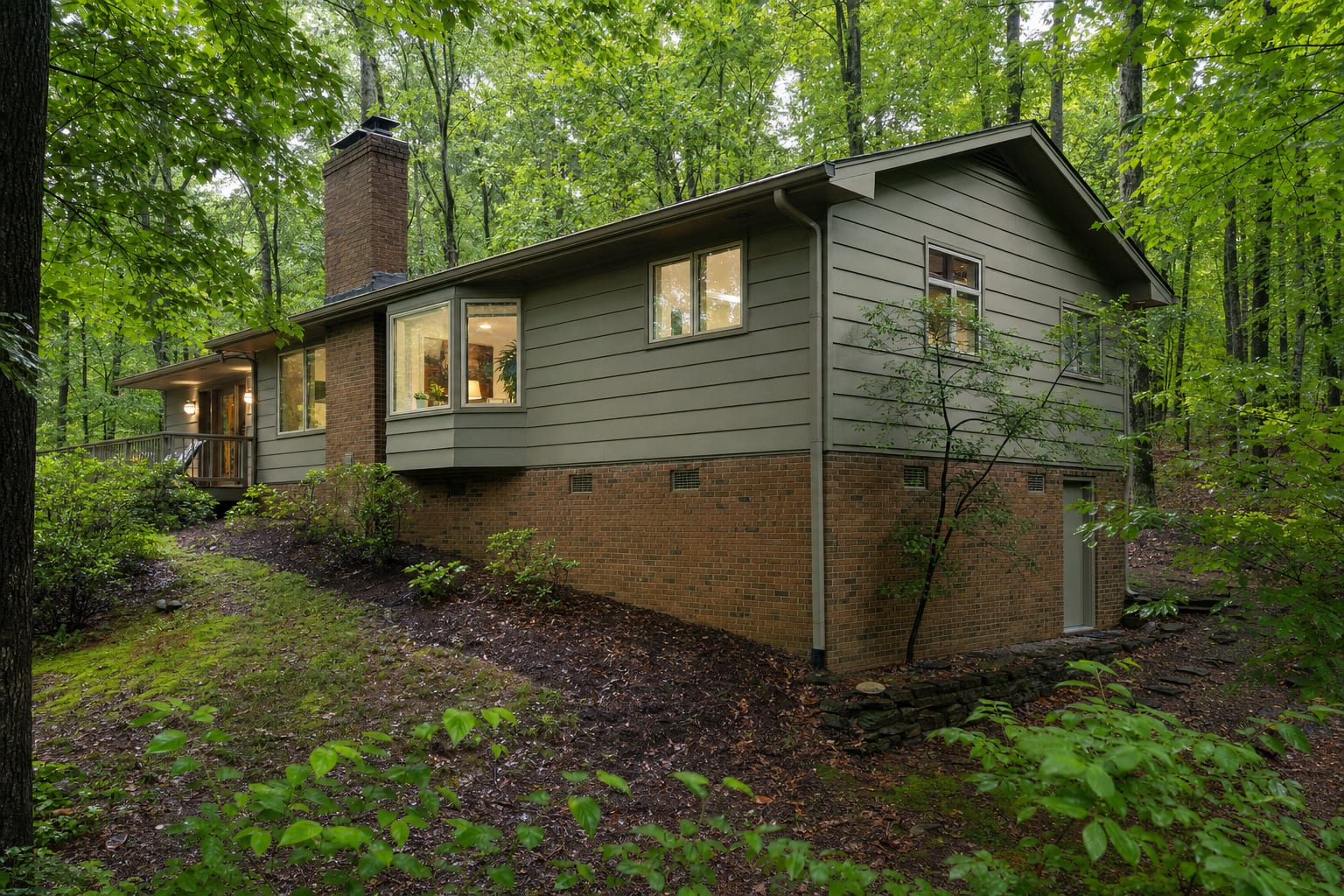
Foundation Drainage in Chapel Hill, NC: Foundation drainage improvements in Chapel Hill change how water moves around the outside of the home so less of it reaches the crawl space. The service record focuses on source reduction through exterior water management, which can reduce the load on interior drains and pumps. For foundation drainage improvements, Chapel Hill's service-area context includes wooded sloped lots, historic-district homes, later residential growth, and properties across Orange and Durham counties.
How do you build a property-specific foundation drainage improvements record in Chapel Hill?
The inspection should trace water from roof planes to gutters, downspouts, underground connections, and final outlets. Map grade, swales, landscape borders, hard surfaces, erosion, soil settlement, foundation openings, access thresholds, and low corners. During safe rainfall, note overflow and where water actually releases. Inside, compare those exterior points with wall wetness, mineral deposits, silt, soil channels, liner movement, drains, sump behavior, and standing water. In Chapel Hill, delayed humid-climate conditions make recession time important. Buried pipes should be traced or tested rather than assumed functional.
How Chapel Hill evidence connects to the foundation drainage improvements scope
Treat foundation drainage improvements in Chapel Hill as a sequence of verified decisions rather than a product bundle chosen before the under-home crawl space is inspected. For foundation drainage improvements, begin by comparing visible grade near the foundation with low areas and surface flow at the Chapel Hill address. A second checkpoint is foundation openings and wall evidence, because it can change whether the plan should state downspout or surface work before another line item begins. The written proposal should show how it will define outlet locations, avoid directing water to another problem area, and coordinate exterior and interior drainage, with locations or quantities wherever they can be documented. Keep where exterior water can discharge separate from interior timing after rain until photos, measurements, or timing connect them to one cause. If review of roof drainage and downspout outlets falls outside the provider's role, the scope should name the dependency instead of implying that it is included. After completion, use the building file to watch for erosion or settlement, review flow after meaningful rain, and update records when landscaping or paving changes. This brief adds a local decision path without claiming that every Chapel Hill home has the same under-home crawl space condition. Planning foundation drainage improvements for a Chapel Hill home requires two records: what the under-home crawl space shows now and what the proposed work is expected to change. Chapel Hill spans Orange and Durham counties and includes wooded sloped lots and several construction eras. Read that local fact beside where exterior water can discharge; the relationship is a question for the under-home assessment, not a finding supplied by the city page. Roof runoff and uphill flow can move differently across rolling terrain. For this foundation drainage improvements decision, use that second fact to plan access and documentation around interior timing after rain. No neighborhood label can determine foundation drainage improvements for a Chapel Hill house; the scope must stay tied to water, vapor, air, materials, equipment, and access at that address. Historic-district construction can present different access and barrier details from later-growth neighborhoods. If evidence for visible grade near the foundation is present but low areas and surface flow is not documented, the proposal should explain why it will state downspout or surface work and what observation supports that order. If the opposite pattern is documented, the provider should revisit whether to define outlet locations instead of carrying the first assumption into the quote. Creek and watershed names do not diagnose a building, but grade and the lower foundation side deserve review. That final Chapel Hill note makes foundation openings and wall evidence a useful checkpoint while leaving the actual condition to the building under-home assessment. A useful Chapel Hill plan for foundation drainage improvements connects visible evidence to a defined task instead of applying a preset package to every under-home crawl space. A line item to document limits and post-rain review needs a location, a stated purpose, and an exclusion that tells the customer where the service stops. The next line should connect observations to a water path and identify the photo, measurement, equipment detail, or access note used to close it. For closeout, keep outlets open and place the dated observation beside the original Chapel Hill under-home assessment record. A later reviewer should be able to see which foundation drainage improvements decision came from local context, which came from site evidence, and which remained outside the approved scope. Chapel Hill properties do not share one automatic foundation drainage improvements scope, so the first job is to record what is present and what changed. For the Chapel Hill comparison, a line item to state downspout or surface work should identify the supporting observation and the earlier task it depends on. A separate line to coordinate exterior and interior drainage should name responsibility, access, and the point at which the customer can inspect the result. Before selecting foundation drainage improvements in Chapel Hill, trace the observed condition back to its source and decide which part of the under-home crawl space system owns the response. Use interior timing after rain as one proposal checkpoint and roof drainage and downspout outlets as another, because combining them without evidence can hide a missing dependency. The completed Chapel Hill file should leave watch for erosion or settlement and review flow after meaningful rain as clear follow-up actions rather than generic maintenance language.
Which local variables shape foundation drainage improvements in Chapel Hill
The local facts do not mean every Chapel Hill lot needs regrading or an exterior drain. They establish why roof runoff, slope, low ground, and the final discharge path deserve observation. A newer home may have a tight, low crawl space and an existing barrier, while an older home may have vented foundation walls and thin or torn ground material. For foundation drainage improvements, Chapel Hill's service-area context includes wooded sloped lots, historic-district homes, later residential growth, and properties across Orange and Durham counties. Chapel Hill spans Orange and Durham counties, and many properties sit on rolling terrain where roof runoff, uphill flow, and creek drainage can move water toward a foundation. That range of terrain and construction eras does not make one foundation drainage improvements scope appropriate across the town. A home in a Chapel Hill historic district can present different access, barrier, insulation, and framing details from a home in a later-growth neighborhood. The free inspection should document the specific property before work is selected. Chapel Hill drains through local watersheds including Bolin Creek, Booker Creek, and Morgan Creek, with overland flow, swales, channels, pipes, and culverts changing with the terrain. For foundation drainage improvements, that context makes grade, downspout discharge, the lower side of the home, and foundation openings important inspection points, but a creek name does not diagnose the property.
What should be checked after foundation drainage improvements in Chapel Hill?
Keep a perimeter map with gutters, downspouts, underground routes, outlets, swales, and interior wet points. Clean and inspect visible roof-water components, watch for settlement and erosion, and confirm that outlets remain open after landscaping. In Chapel Hill, take comparison photos after significant rain because drainage conditions can change from a dry-weather observation. A new low area, backed-up adapter, submerged outlet, or sump discharge returning toward the foundation should be addressed before it increases the crawl space water load. Keep the home construction context with the record, since an older historic-district foundation may differ from a later-growth foundation.
What makes a Chapel Hill foundation drainage improvements plan complete?
The plan should identify the verified exterior contributor and the intended change, such as restoring a roof-water path, changing a discharge point, correcting a localized surface low area, or coordinating another exterior drainage feature within the proper scope. It should preserve siding, vent, wood, pest-inspection, property, and access considerations rather than simply piling soil at the wall. The Chapel Hill plan should also show how exterior work connects to interior drainage, sump discharge, waterproofing, and encapsulation when those are present. After work, the same locations should be observed during comparable rain to evaluate the actual change.
Follow the crawl space water and drainage silo
Start with the Foundation Drainage Improvements pillar for the complete service definition. Use the Chapel Hill, NC service-area hub for local coverage and nearby service paths.
- Crawl Space French Drain Contractor: Review the Water Route in Chapel Hill, NC
- Crawl Space French Drain Repair: Signs the Route Failed in Holly Springs, NC
- Crawl Space Sump Pump Installer Near Me: Hiring Checks in Angier, NC
- Crawl Space Waterproofing Company: What to Compare Before You Hire in Garner, NC
Services that may connect to foundation drainage
These are the four closest service dependencies for this scope. The inspection should determine whether any belongs in the plan and in what order.
Frequently Asked Questions
Should exterior drainage be checked before interior crawl space drainage in Chapel Hill?
Yes, the exterior path should be reviewed so roof runoff or a surface low area is not ignored. Interior drainage may still be needed for groundwater or seepage that remains. When a Chapel Hill inspection documents water collection after rain, the plan should distinguish avoidable exterior contributors from water that still needs interior collection. A coordinated scope should explain what is corrected outside and what remains to be managed inside. For Chapel Hill foundation drainage improvements, the free inspection connects that guidance to the property's slope, building era, water path, crawl space layout, and existing moisture control.
Does every Chapel Hill home need foundation drainage improvements?
No. For foundation drainage improvements, Chapel Hill's service-area context includes wooded sloped lots, historic-district homes, later residential growth, and properties across Orange and Durham counties. The inspection should measure or observe roof discharge, grade, low points, soil wetness, foundation evidence, and interior water. For Chapel Hill foundation drainage improvements, the free inspection connects that guidance to the property's slope, building era, water path, crawl space layout, and existing moisture control.
How can foundation drainage improvements be verified?
Use the same before-and-after photo locations during comparable rain. Check gutter overflow, downspout release, surface ponding, erosion, wall wetness, interior low points, drain inflow, sump behavior, and the final outlet. One light shower cannot verify work intended for heavy events. The Chapel Hill record should note rainfall context and whether ground or crawl space water recedes differently after the change. For Chapel Hill foundation drainage improvements, the free inspection connects that guidance to the property's slope, building era, water path, crawl space layout, and existing moisture control.
Need Foundation Drainage in Chapel Hill?
A free inspection makes the next step clear. Serving Chapel Hill, NC and nearby communities.