
Common Crawl Space Problems
The signs you notice inside the home usually start under it. See what common crawl space symptoms can point to, what should be inspected, and which fixes address the source.
Prefer to talk? Call 704-207-9348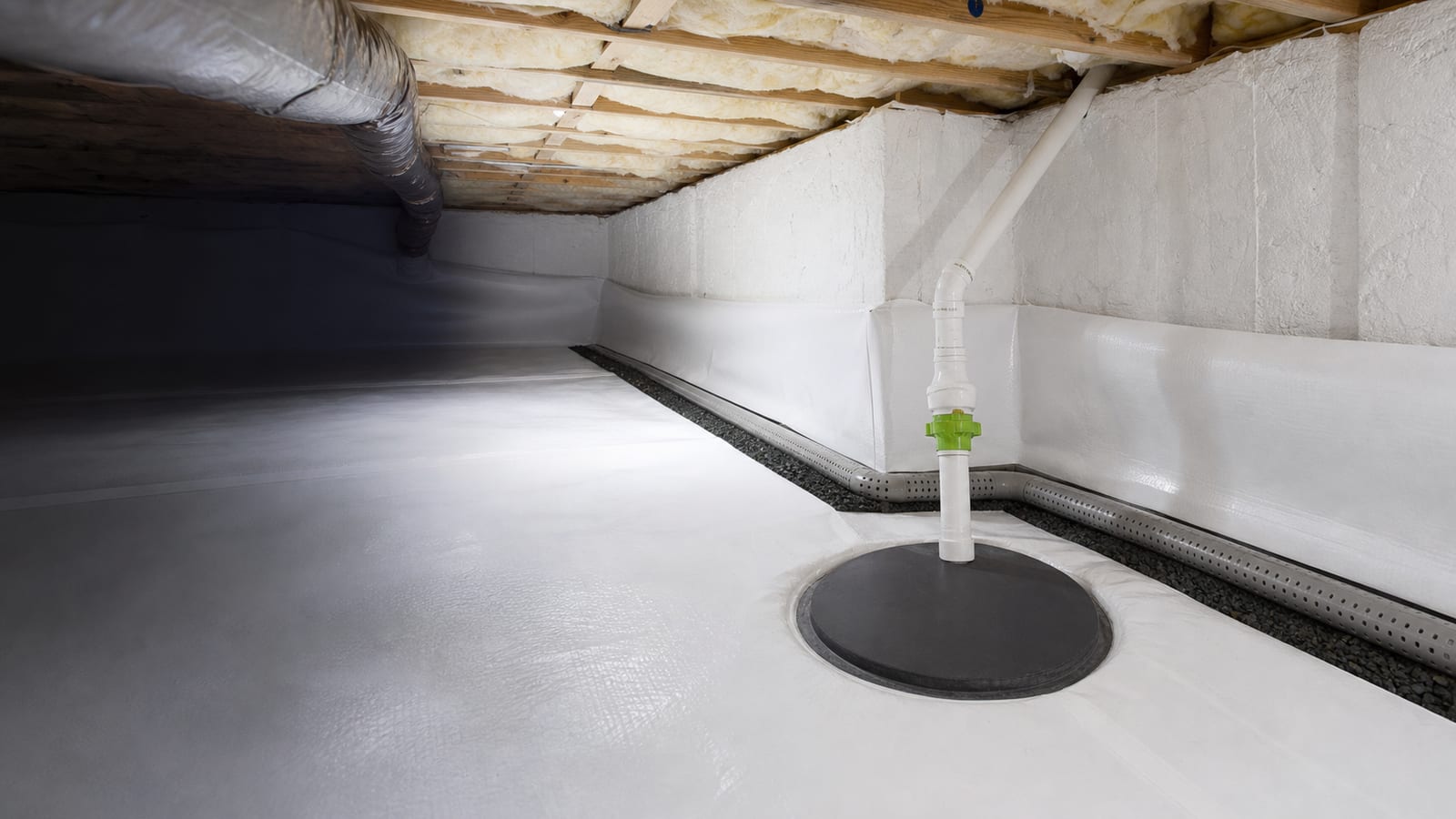
How should you interpret a crawl space symptom?
Interpret a symptom as a clue, not a complete diagnosis. Standing water, humidity, odors, condensation, damaged insulation, visible material changes, and uneven floors can point toward different causes or several conditions happening together. The useful next step is to document when the sign appears and inspect the relationships among water, ground moisture, air movement, materials, and framing.
Start with the problem page that most closely matches what you notice. Each page explains likely categories to investigate and connects the symptom to relevant crawl space services. If more than one page seems relevant, that overlap is useful information. It may show that the project needs a sequence rather than one isolated fix.
You do not need to crawl into an area that is difficult or unsafe to access in order to prepare. Record observations from accessible locations, note changes after rain or humid weather, and bring any repair history to the inspection.
Find the problem that matches what you see or notice
Use these pages to organize the symptom, possible causes, and questions for an on-site inspection.
Standing Water in the Crawl Space
Standing water in a crawl space usually means ground water is entering faster than it can drain, often after heavy rain or where t…
See causes & fixes →High Crawl Space Humidity
High crawl space humidity comes from humid outdoor air entering through vents and moisture rising from bare ground. NC State Exten…
See causes & fixes →Musty Odors from the Crawl Space
A musty smell from a crawl space is the odor of damp wood, fungal growth, and stale trapped air, and it rises into the home throug…
See causes & fixes →Crawl Space Mold & Fungal Growth
Mold and fungal growth in a crawl space appears wherever damp air meets wood and organic material. The EPA states that mold contro…
See causes & fixes →Wood Rot Under the Home
Wood rot under a home is decay caused by framing staying wet for long periods, which softens joists, beams, and the subfloor. Stop…
See causes & fixes →Sagging or Bouncy Floors
Sagging or bouncy floors often trace back to the crawl space, where long-term moisture has weakened the joists and subfloor that c…
See causes & fixes →Falling or Damaged Insulation
Insulation that sags or falls in a crawl space has usually absorbed moisture, grown heavy, and pulled away from the framing. Wet i…
See causes & fixes →Cold Floors & Energy Loss
Cold floors and energy loss often start in an open, damp crawl space that lets outdoor air and moisture reach the floor above. Sea…
See causes & fixes →Condensation & Sweating Ducts
Condensation and sweating ducts form when humid crawl space air meets cooler surfaces, dripping onto framing and insulation. It is…
See causes & fixes →Pest Entry & Damaged Vapor Barrier
Pests and a torn vapor barrier often go together: animals disturb the barrier, and gaps let ground moisture and humid air back int…
See causes & fixes →Separate liquid water from moisture in the air
Liquid water includes entry, runoff, seepage, puddling, and plumbing-related sources. It needs a path to be identified and managed. Review standing water in the crawl space when the soil or liner is visibly wet, especially when the pattern changes after rain.
Moisture in the air can appear as high humidity or condensation on cooler surfaces. It may be influenced by exposed soil, vents, leaks, drainage conditions, air movement, and mechanical equipment. The high crawl space humidity and condensation and sweating duct pages explain those signs in more detail.
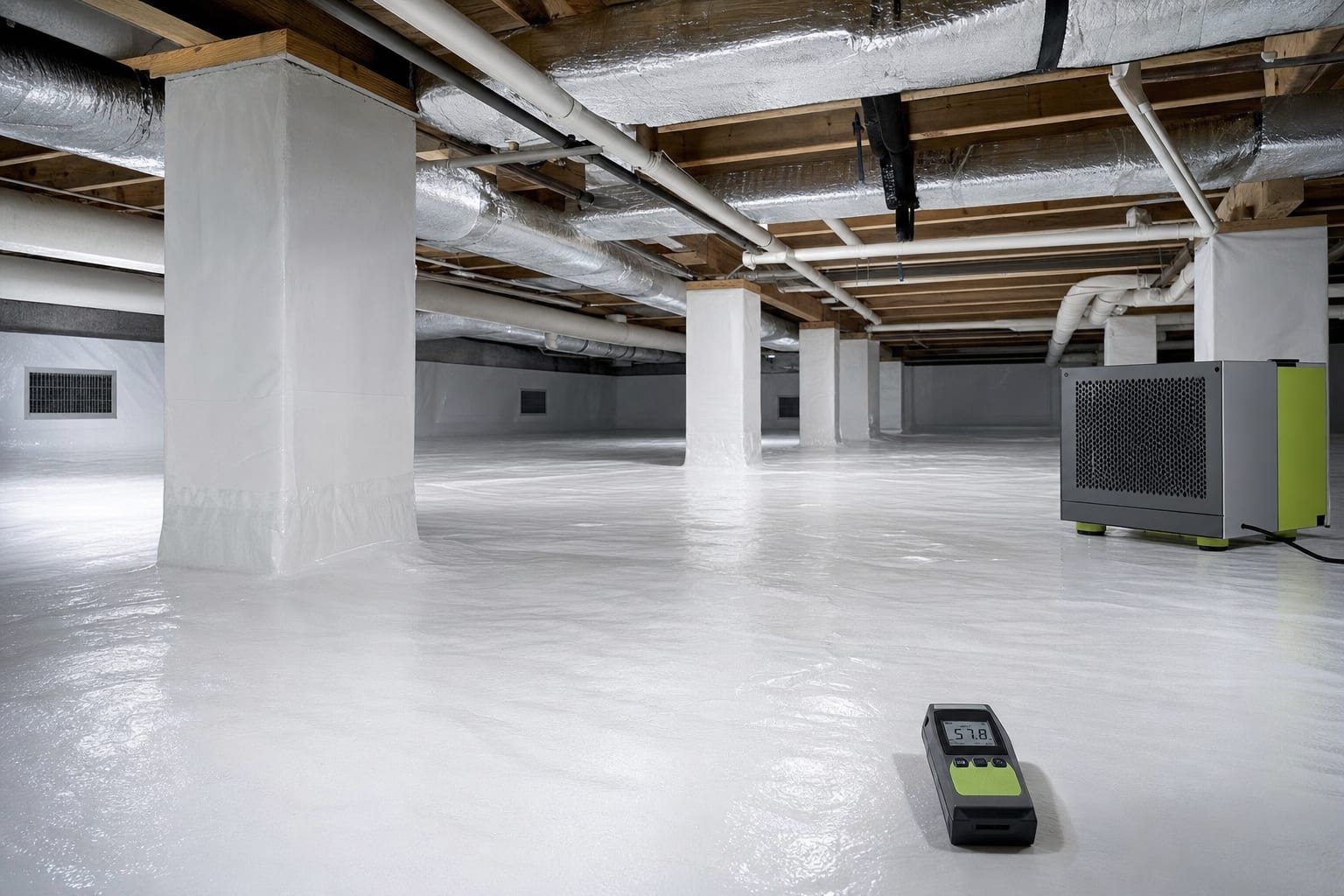
The two categories can occur together. A dehumidifier is not a drainage system, and a liner is not a route for active water. A complete inspection keeps those functions separate before recommending how they should work together.
Separate moisture control from material repair
Insulation, surface materials, wood, fasteners, and the ground cover can show the effects of a moisture problem. Repairing or replacing them may be part of the project, but the source condition should be considered first. Otherwise, new material may be installed into the same environment that affected the old material.
Use the damaged insulation, wood deterioration, and sagging or bouncy floor pages to understand the questions that belong in a repair assessment. Structural concerns should be evaluated on their own facts rather than treated as a standard add-on to moisture work.
A written scope should distinguish source control, removal, cleaning, replacement, and structural work. That separation helps you understand what each line item is intended to accomplish.
What sequence should an inspection follow?
An inspection should begin with the concern you reported, then review visible water paths, ground conditions, the existing vapor barrier, vents and openings, humidity concerns, insulation, mechanical systems, access, and framing that can be observed. The purpose is to connect symptoms to conditions before discussing a scope.
When water is active or recurring, water management is considered before the ground is sealed. When damp air is the concern, ground moisture, openings, drainage, and air movement are considered before equipment is treated as the only answer. When damaged materials are present, the plan should explain how the source condition and the repair sequence relate.
The crawl space inspection checklist can help you prepare, while the comparison hub helps you evaluate options after the conditions are documented. If pricing is the next question, use the cost-factor hub to see why scope, access, preparation, and repairs change a quote.
A clear recommendation should be understandable without technical shorthand. Ask which condition each item addresses, what should happen first, what is excluded, and what should be monitored after the work. If an item is not needed for the observed conditions, it should not be treated as automatic.
Questions About Crawl Space Problems
What are the most common signs of a crawl space problem?
Common signs include standing water, damp soil, condensation, musty odors, hanging or wet insulation, torn ground cover, visible material changes, pest entry, and floors that feel uneven or bouncy. One sign may have more than one cause, so the inspection should review the space as a system.
Does a musty odor tell me exactly what is wrong?
No. Odor can appear with elevated humidity, wet materials, affected surfaces, plumbing or drainage concerns, or air movement between the crawl space and the home. It is a useful symptom to report, but the cause must be investigated in the space.
Can a vapor barrier fix standing water?
A vapor barrier is designed to limit moisture coming from the ground. It does not by itself collect or route recurring liquid water. If puddling or water entry is present, drainage and source conditions should be considered before the floor is covered.
Why should moisture be addressed before replacing insulation?
Replacing damaged material without addressing the water or humidity source can leave the new material exposed to the same condition. The project sequence should identify the moisture source, complete the appropriate control work, and then handle insulation or repairs in the order supported by the inspection.
What should I document before a crawl space inspection?
Note when the concern started, whether it changes after rain or during humid weather, which rooms feel affected, and any repair or leak history you know. Photos taken safely can help show temporary water or condensation, but an on-site inspection is still needed.
Not Sure What You're Seeing?
A free inspection identifies the cause and the fix.