
Crawl Space Services in Fuquay-Varina, NC
Everything that keeps the space under your home dry, sealed, and stable in Fuquay-Varina, NC, from full encapsulation to targeted moisture, drainage, and structural work. Every service starts with a free inspection.
What crawl space service does a Fuquay-Varina, NC home need?
The right service depends on what is happening below the floor, not on a one-size-fits-all package. Standing water needs a route out. Humid air needs to be controlled. Damaged insulation, wood, or vapor barrier needs to be assessed in context. A crawl space inspection for a Fuquay-Varina, NC home starts with those conditions, then connects the work to the way your home is built and the outcome you want: a drier, cleaner, more stable space.
Many homes need more than one step, but not every home needs every service. A crawl space encapsulation system can combine a sealed ground cover, wall treatment, air sealing, and humidity control. In another home, the first priority may be drainage for water entering the crawl space, followed by moisture-control work after the source is addressed. The service pages below explain what each option is designed to solve, what an inspection looks for, and when it may be relevant.
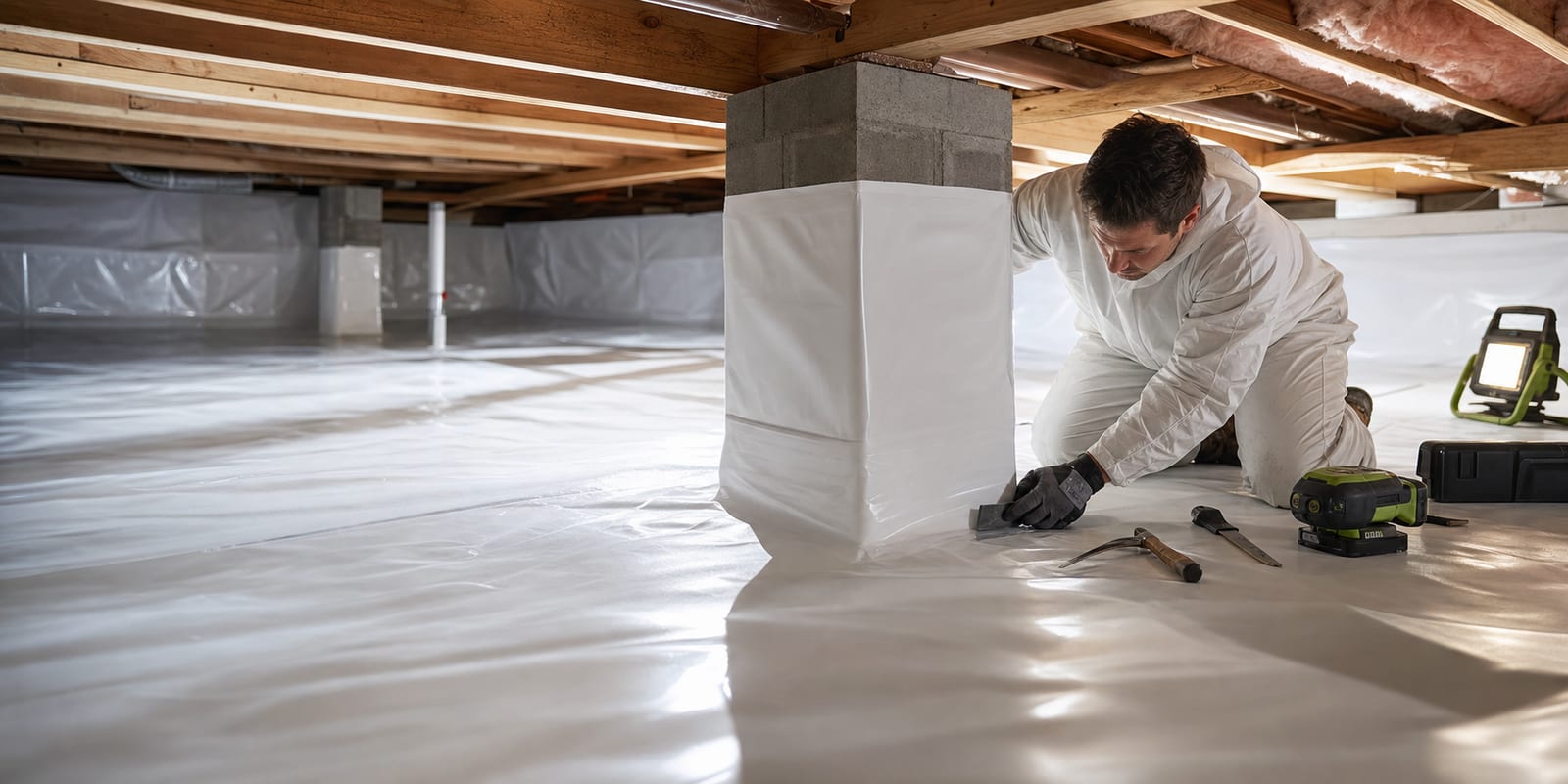
Crawl Space Encapsulation
A sealed vapor barrier system across the floor, walls, and piers, paired with moisture control, to close the crawl space off from ground moisture and humid air. Serving Fuquay-Varina, NC and nearby communities.
View service →Crawl Space Repair
Targeted repairs that bring a damp, damaged, or neglected crawl space back to a dry, stable condition. Serving Fuquay-Varina, NC and nearby communities.
View service →Crawl Space Waterproofing
Keeping ground water and moisture out so an encapsulated crawl space stays dry through wet North Carolina seasons. Serving Fuquay-Varina, NC and nearby communities.
View service →Vapor Barrier Installation & Repair
New heavy vapor barrier installation, or repair of torn and incomplete barrier, for continuous coverage. Serving Fuquay-Varina, NC and nearby communities.
View service →Crawl Space Moisture Control
Managing humidity and dampness under the home so conditions stay stable year-round. Serving Fuquay-Varina, NC and nearby communities.
View service →Crawl Space Drainage Systems
Collecting and moving ground water away so it no longer pools under the home. Serving Fuquay-Varina, NC and nearby communities.
View service →Interior French Drain Installation
A perimeter drain that captures water at the crawl space floor and routes it to a sump. Serving Fuquay-Varina, NC and nearby communities.
View service →Sump Pump Installation
A pump set at the low point of the crawl space to remove collected water automatically. Serving Fuquay-Varina, NC and nearby communities.
View service →Sump Pump Repair & Maintenance
Checking, servicing, and repairing an existing sump pump so it keeps working when needed. Serving Fuquay-Varina, NC and nearby communities.
View service →Dehumidifier Installation
A dedicated crawl space dehumidifier sized to hold humidity in a stable, controlled range. Serving Fuquay-Varina, NC and nearby communities.
View service →Dehumidifier Maintenance & Filter Replacement
Servicing an installed dehumidifier and replacing filters so it keeps controlling humidity. Serving Fuquay-Varina, NC and nearby communities.
View service →Mold & Fungal Cleaning
Cleaning fungal and mold growth from crawl space surfaces and correcting the moisture that fed it. Serving Fuquay-Varina, NC and nearby communities.
View service →Standing Water Removal
Removing pooled water and putting drainage in place so it does not return. Serving Fuquay-Varina, NC and nearby communities.
View service →Insulation Removal
Removing wet, fallen, or contaminated insulation before the space is sealed and re-insulated. Serving Fuquay-Varina, NC and nearby communities.
View service →Insulation Installation
Insulating the sealed crawl space perimeter to support stable, controlled conditions. Serving Fuquay-Varina, NC and nearby communities.
View service →Vent Sealing & Air Sealing
Closing off foundation vents and gaps so humid outdoor air stops entering the crawl space. Serving Fuquay-Varina, NC and nearby communities.
View service →Structural Repair
Addressing structural concerns under the home, coordinating with the right trade when needed. Serving Fuquay-Varina, NC and nearby communities.
View service →Joist, Beam & Subfloor Repair
Repairing or reinforcing joists, beams, and subfloor damaged by ongoing dampness. Serving Fuquay-Varina, NC and nearby communities.
View service →Foundation Drainage Improvements
Improving how water moves around the foundation so less of it reaches the crawl space. Serving Fuquay-Varina, NC and nearby communities.
View service →Start with the condition, then build the scope
A useful crawl space plan follows the evidence in the space. We begin by looking for visible moisture, water paths, ground-cover condition, insulation issues, exposed wood, vents, ductwork, and access concerns. That inspection helps separate symptoms from likely causes. A musty smell, for example, can be related to elevated humidity, wet materials, air movement from the crawl space into the home, or a combination of conditions. The goal is to understand the sequence before recommending a fix.
That sequence matters because crawl space systems work together. A vapor barrier helps limit ground moisture, but it does not by itself remove active water. A dehumidifier can help manage humidity, but it works best after drainage, sealing, and air movement have been considered. Structural work has its own inspection needs. Reviewing the conditions together makes the recommendation easier to follow and helps you compare the service options without guessing.
Common crawl space service paths
Homes with wet soil, puddling, or recurring water entry often start with crawl space waterproofing, interior drainage, or a sump-pump evaluation. Homes with damp air, condensation, or a failing ground cover may need a vapor barrier, air sealing, and a humidity-control plan. If insulation is hanging, wet, or damaged, the next step may be to evaluate removal and replacement after the moisture source is addressed.
Some conditions call for a more focused repair. A damaged joist, beam, or subfloor requires a structural assessment. A crawl space with visible fungal growth needs the moisture problem considered alongside cleaning or remediation. You can also use our crawl space problem library to start with the symptom you see and connect it to the services that may apply.
How to prepare for a crawl space inspection
You do not need to diagnose the space before calling. It helps to note when you first noticed the concern, whether it changes after rain or during humid weather, and which rooms feel affected. If there is an access door, clear a safe path to it when possible. Photos of standing water, insulation, or visible damage can also be useful, but an on-site look is still important because the relationship between moisture, drainage, insulation, and framing is rarely obvious from one image.
During the conversation, ask which conditions were observed, which work addresses each condition, and what order the work should follow. If you are comparing options, our crawl space comparisons and inspection checklist can help you frame those questions. We serve homeowners around Fuquay-Varina, NC, and a free inspection is the clearest place to start.
It is also reasonable to ask what is included in the written scope and what should be monitored after the work is complete. That does not require a technical background. A clear scope should distinguish water management, ground-moisture control, air sealing, dehumidification, insulation, cleaning, and structural repair when those items apply. If an option is not needed for the conditions observed, it should not be treated as automatic. The service guides on this page are designed to make that discussion more concrete before you schedule.
For immediate concerns, use the problem pages to describe what you are seeing, then bring those notes to the inspection. For planning, start with the service most closely connected to the condition and ask how it fits into the overall sequence. That approach keeps the decision grounded in the space beneath your home rather than a generic checklist.
Whether the concern is recent or has been developing over time, a documented inspection gives you a practical starting point. It turns broad terms such as “moisture control” into a clearer set of conditions, priorities, and next questions for your home.
Not Sure Which Service You Need?
A free inspection makes it clear. Serving Fuquay-Varina, NC.