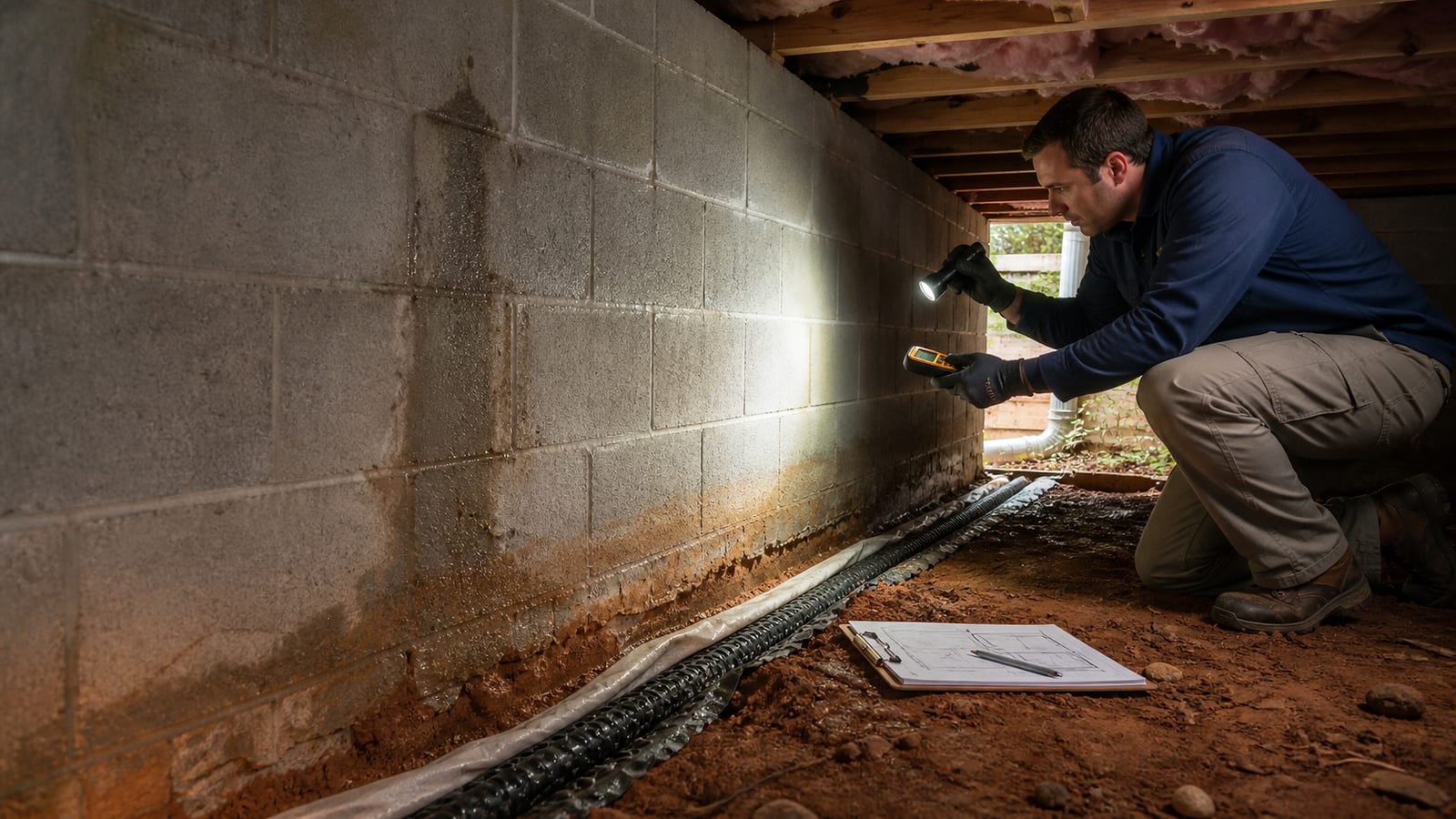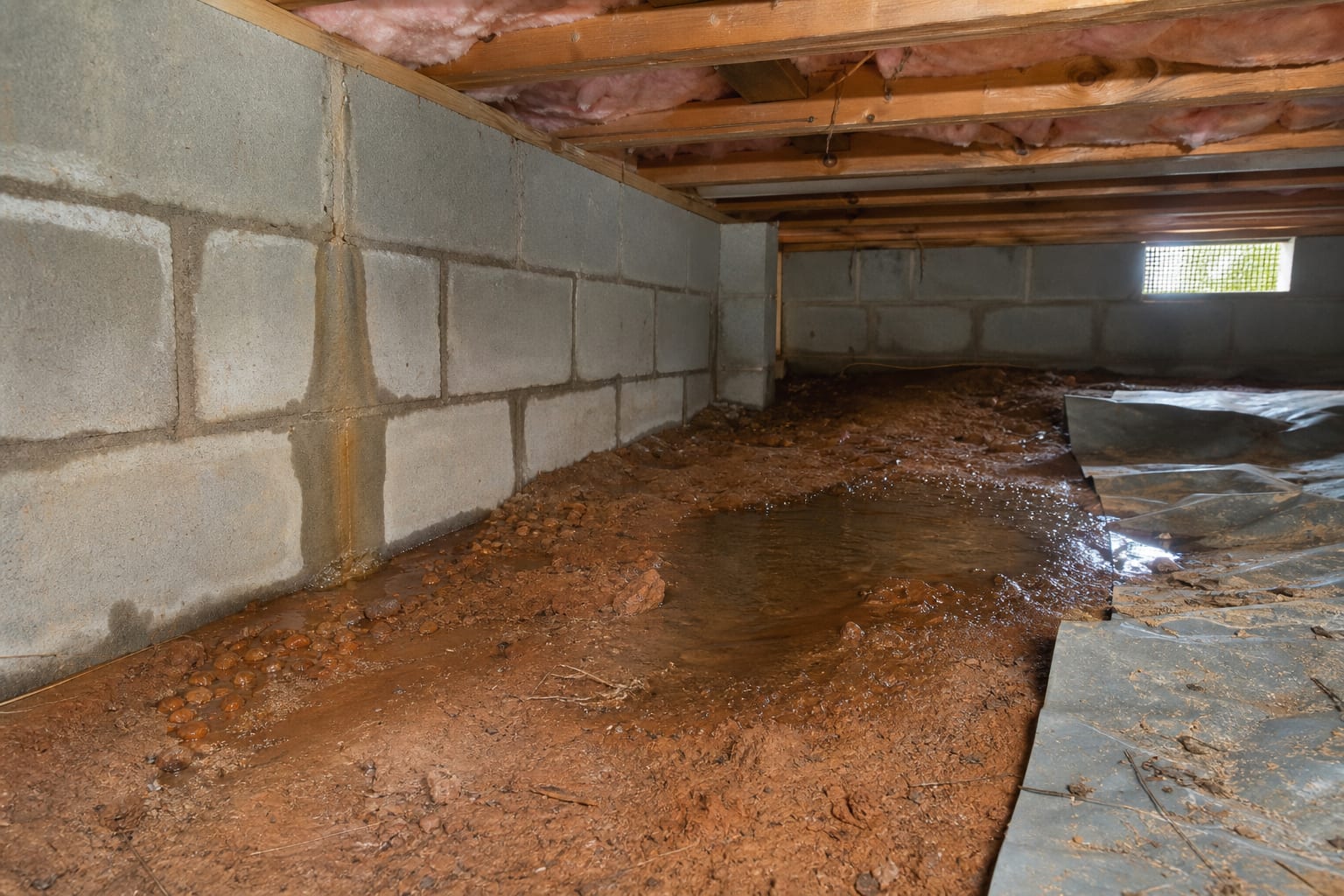
Why Does a Crawl Space Smell Musty After Heavy Rain in North Carolina?
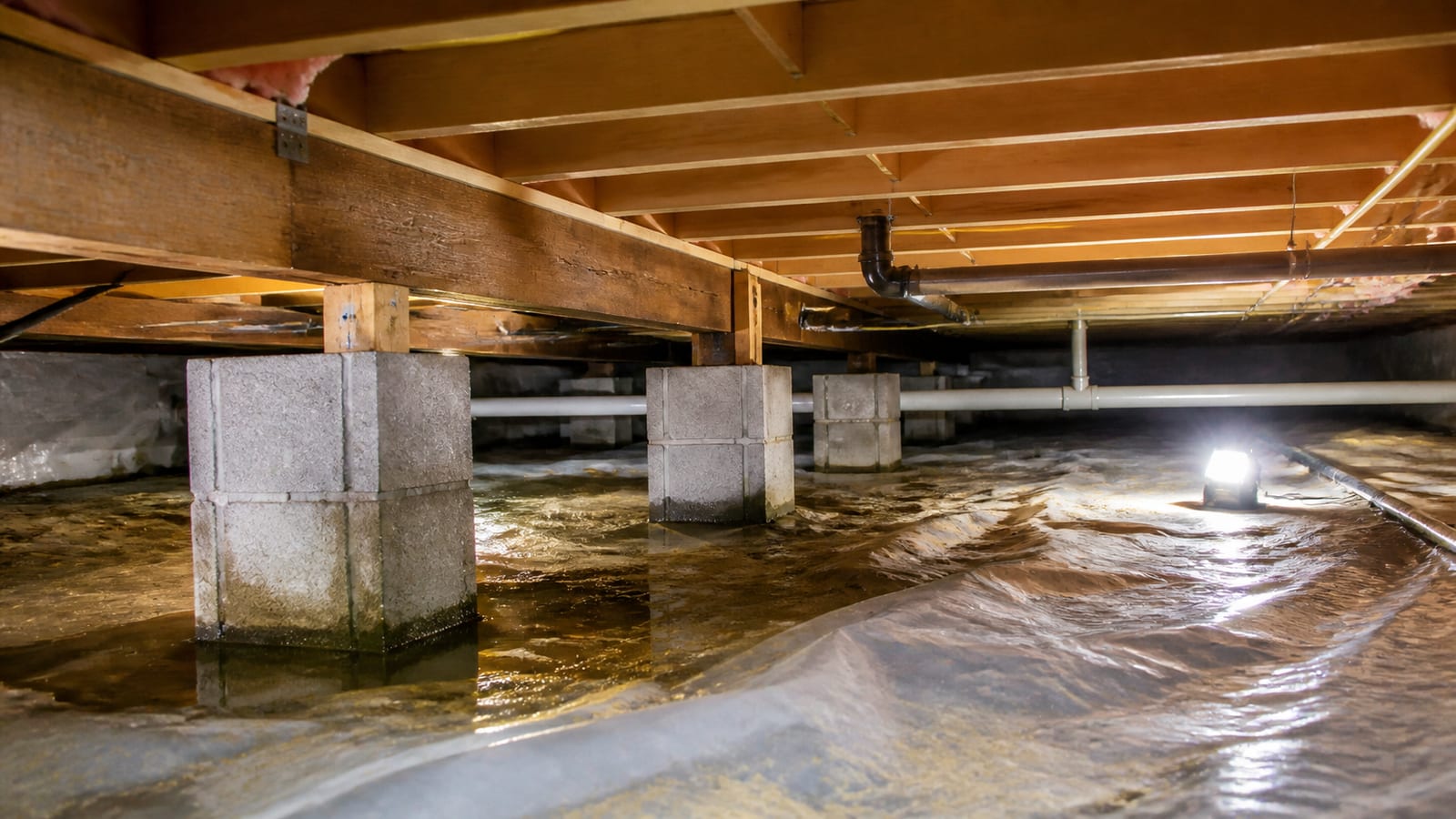
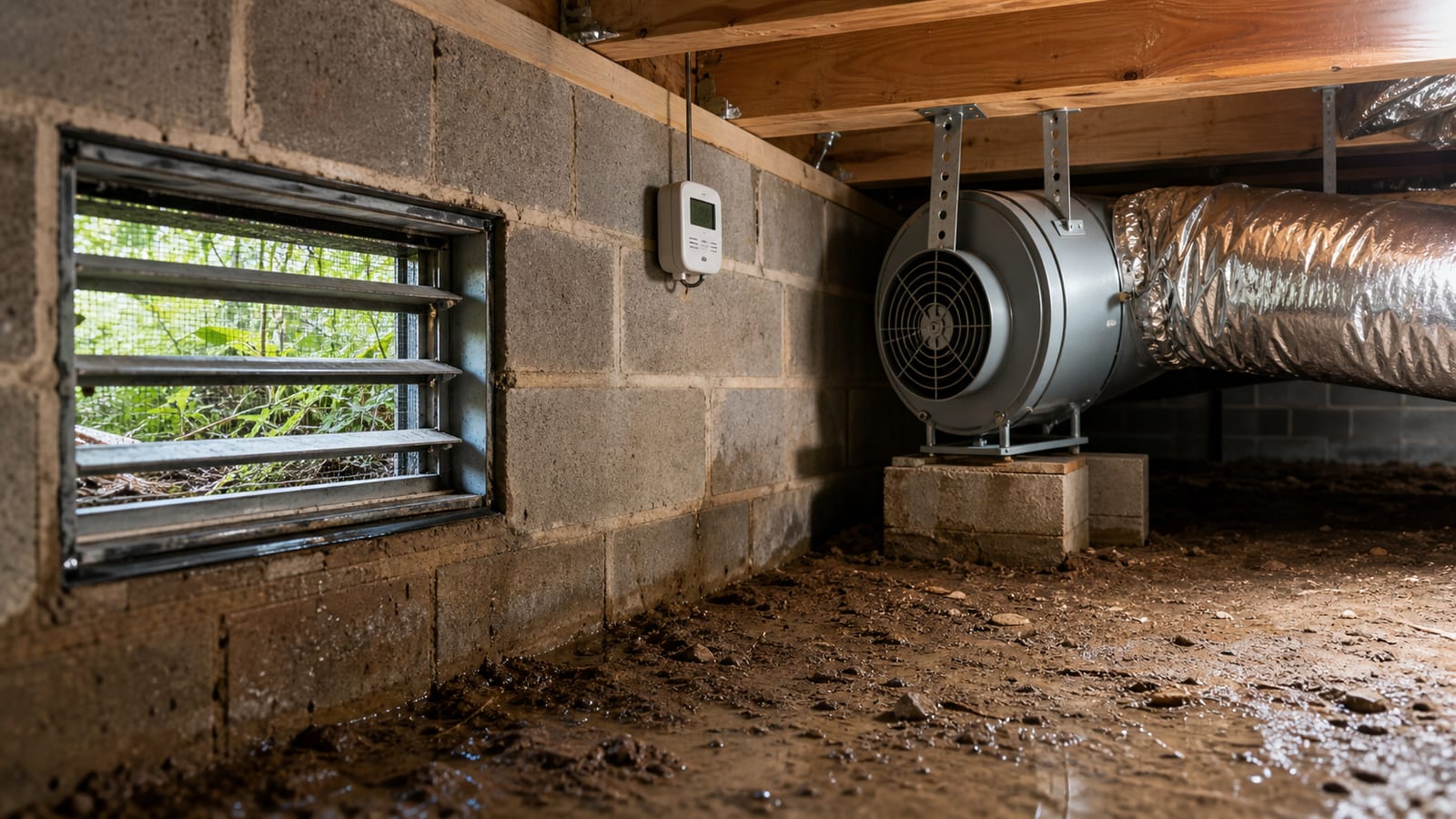
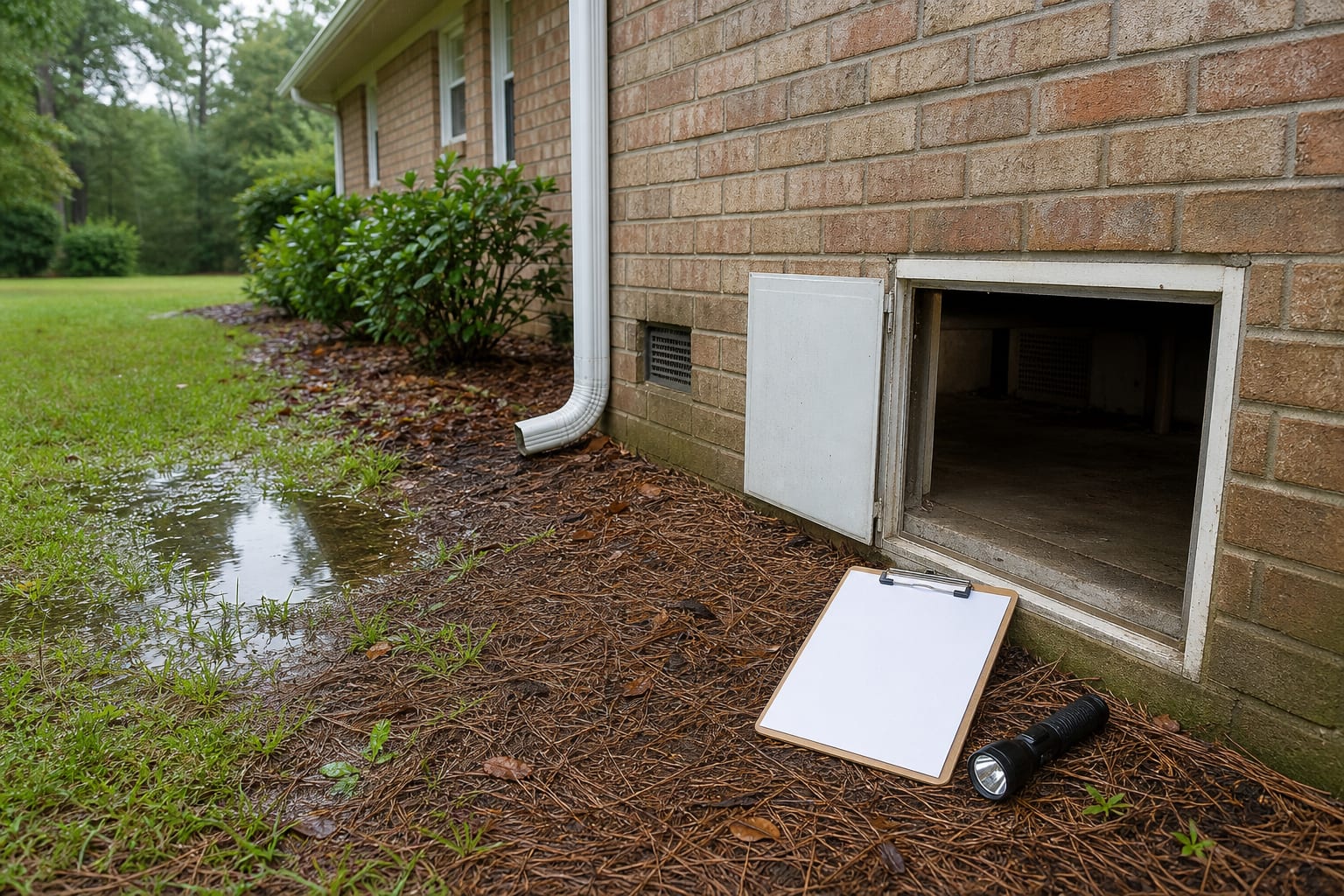
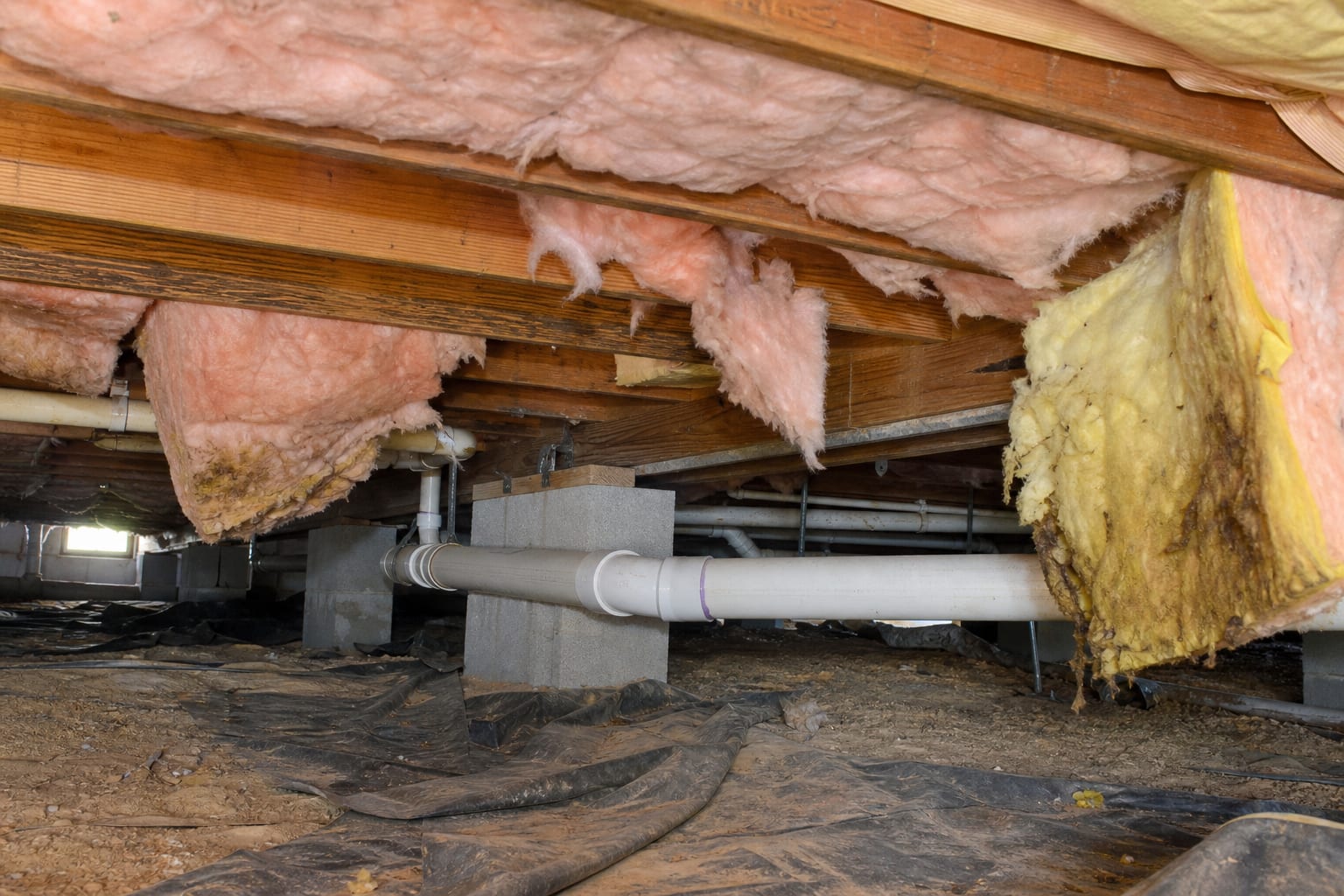
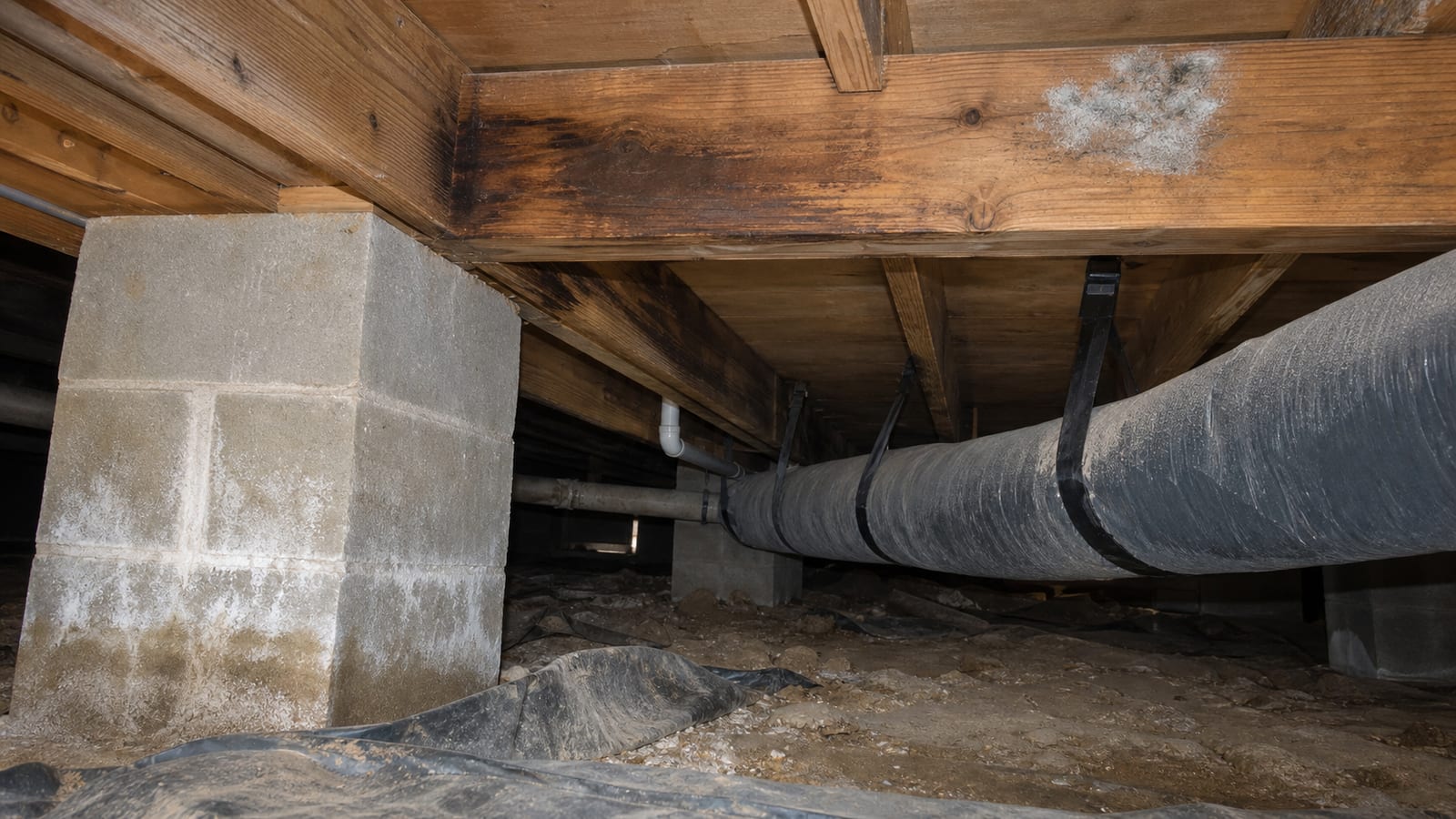
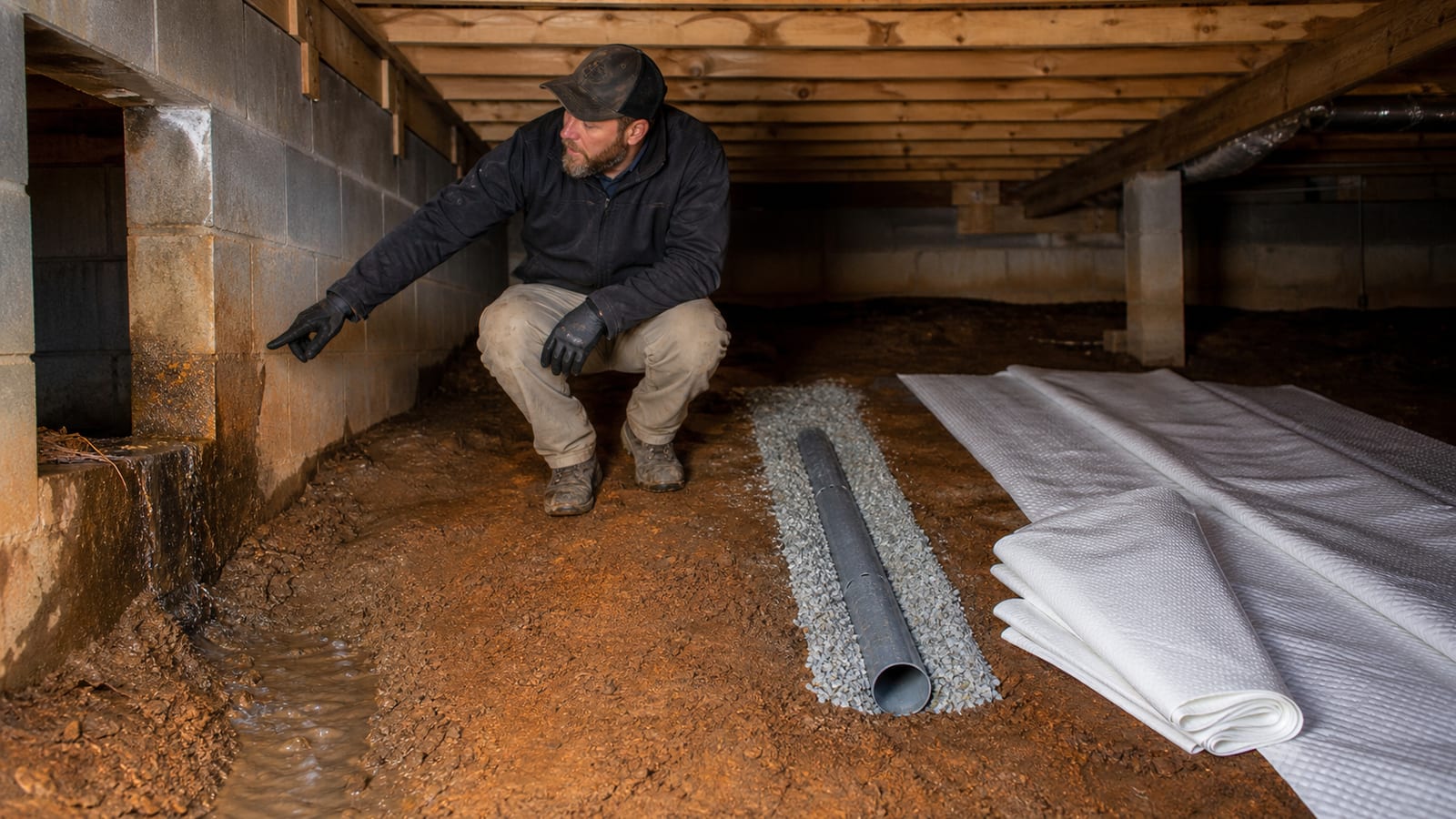
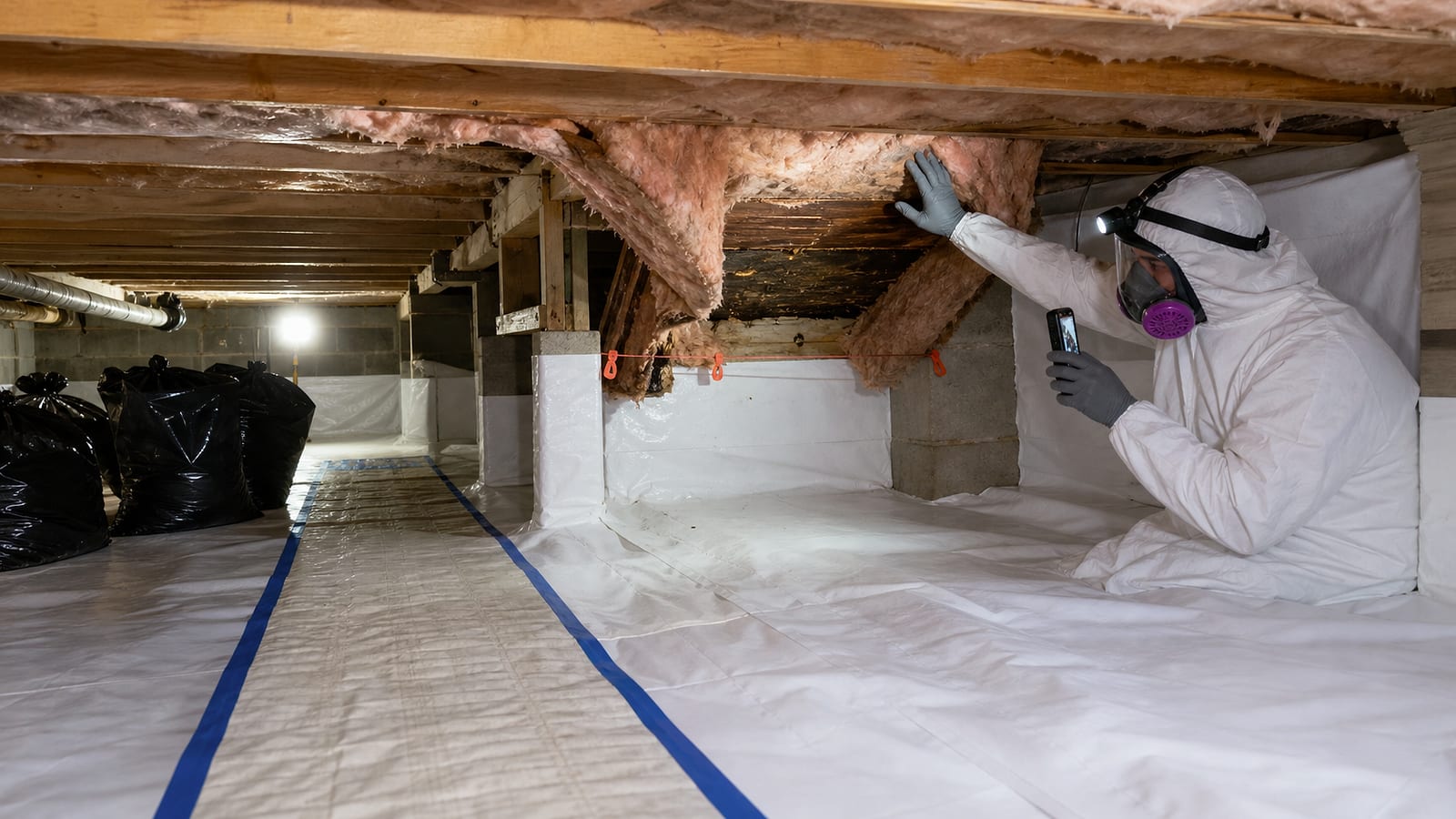
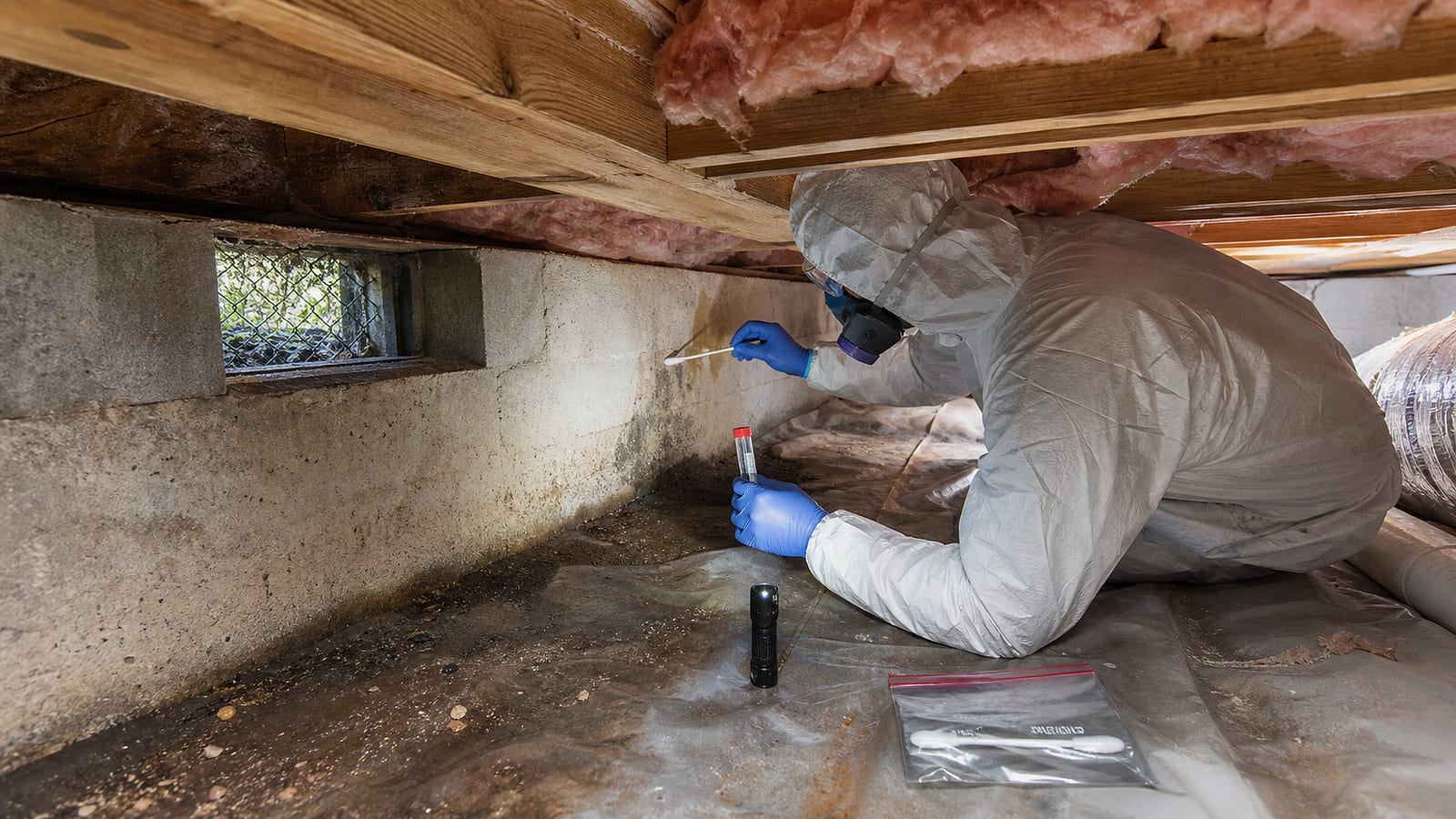
Rain can expose a water path, raise ground moisture, wet materials, or simply push humidity higher. The timing and location of the odor help narrow the next inspection step.
Clear, source-backed answers for the moments between noticing a crawl space problem and deciding what the evidence supports.
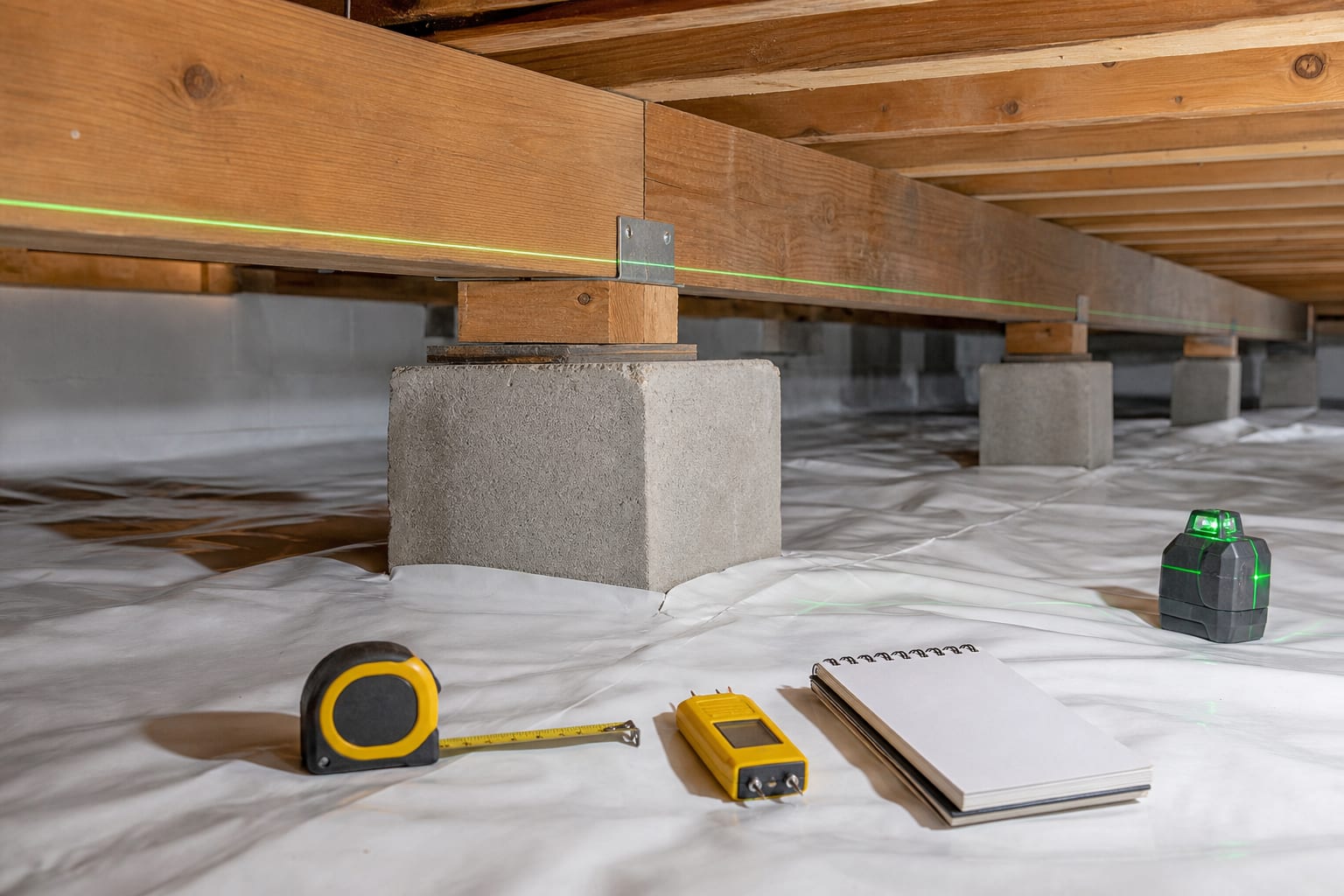
Educational guidance is not a remote diagnosis. Property-specific recommendations begin with an inspection of the water, moisture, materials, access, equipment, and framing actually present.
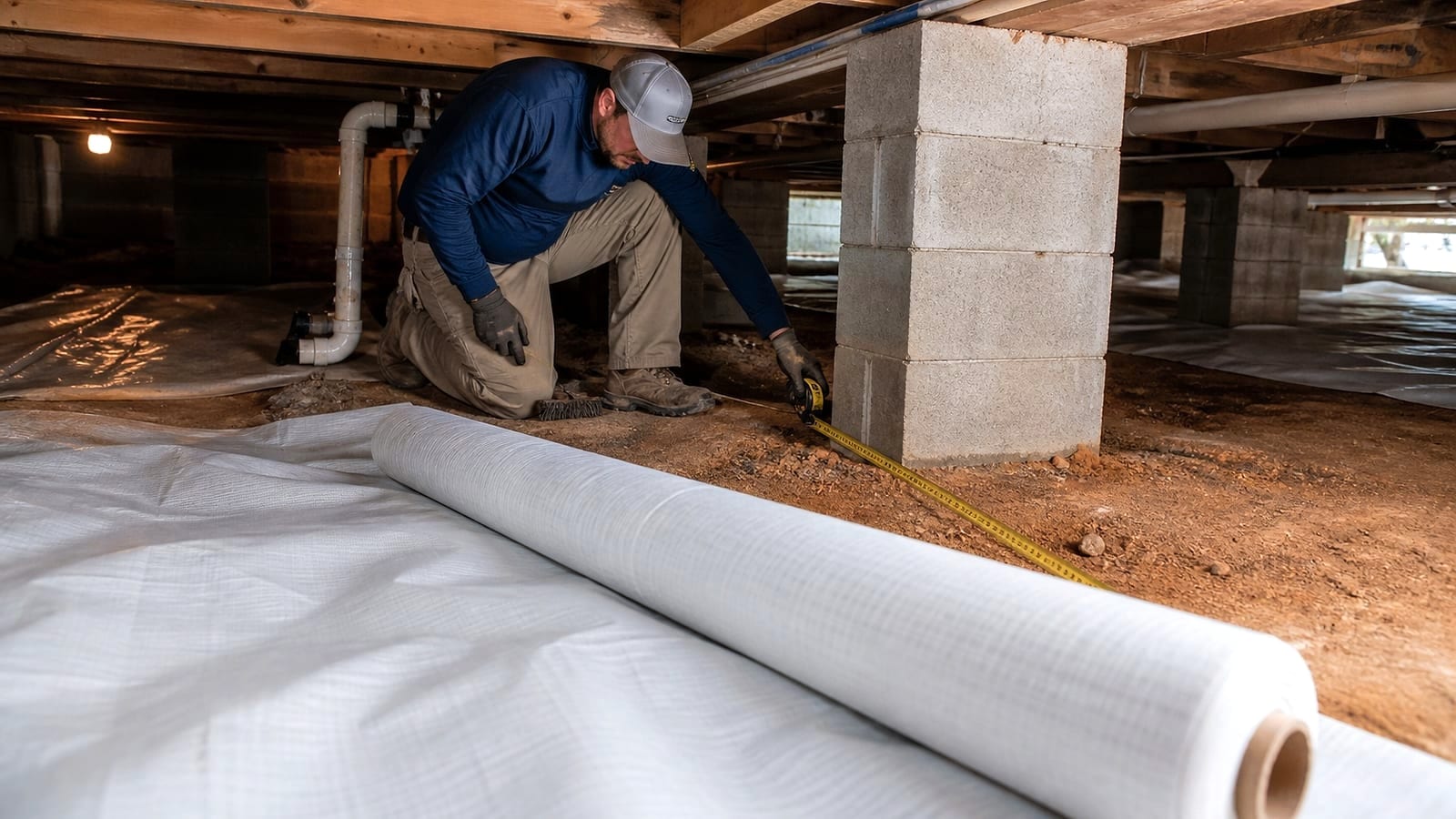
About the authorThe service pages explain the work Carolina Encapsulation Company performs. The problem pages explain common signs beneath a home. This blog fills a different role: it answers the narrower questions that arise after a storm, when a reading changes, while maintaining an encapsulated space, or during a home sale.
Every article gives the short answer first, then separates what a homeowner can record safely from what requires an on-site review. It connects the subject to the existing service, problem, comparison, cost, guide, or local page that owns the broader search intent.
One featured article from each category, selected for broad homeowner usefulness.
Rain can expose a water path, raise ground moisture, wet materials, or simply push humidity higher. The timing and location of the odor help narrow the next inspection step.
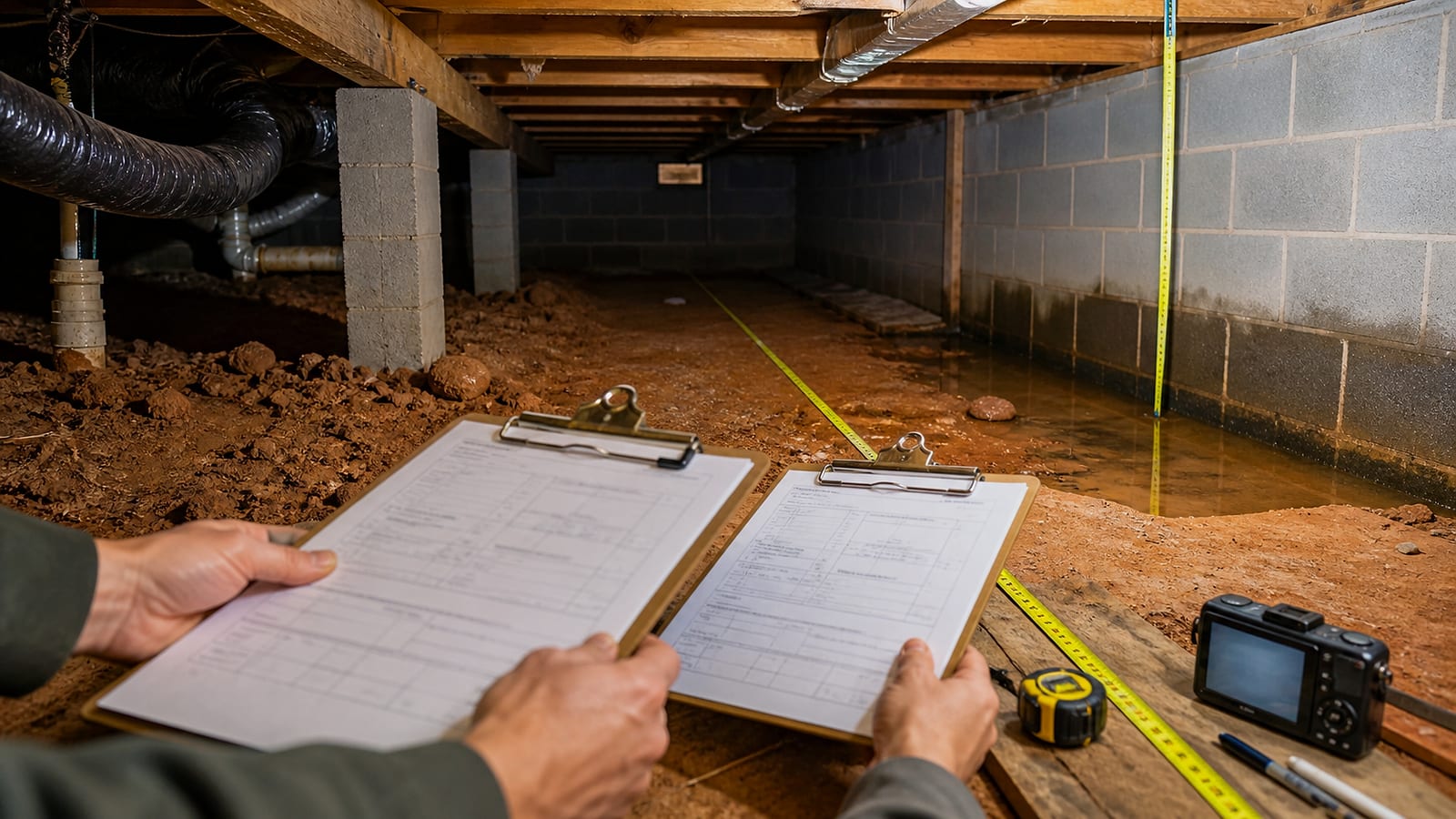
A post-storm check is most useful when it records what changed, where water appeared, and whether equipment or drains are functioning. Safety comes before entry.
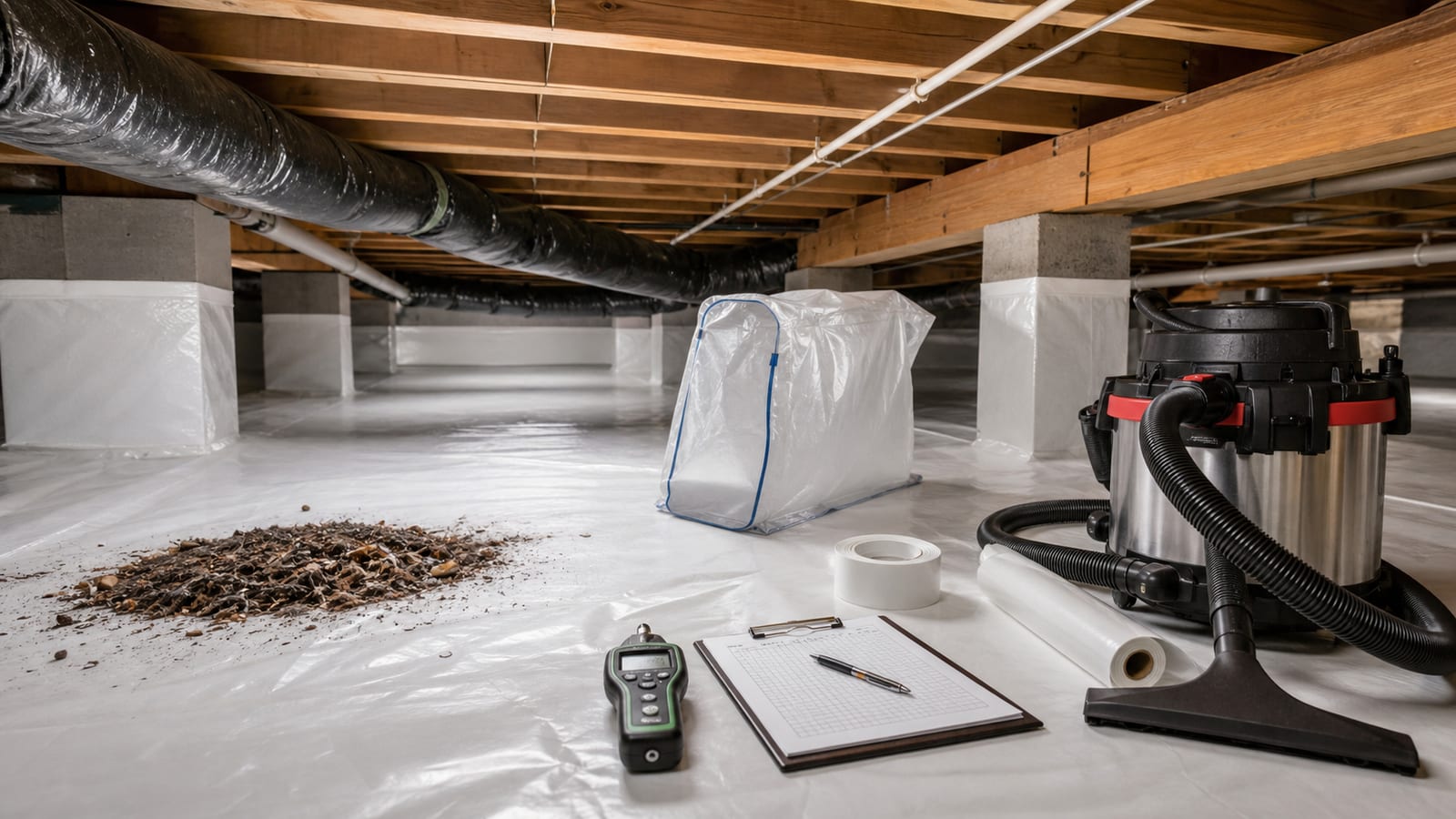
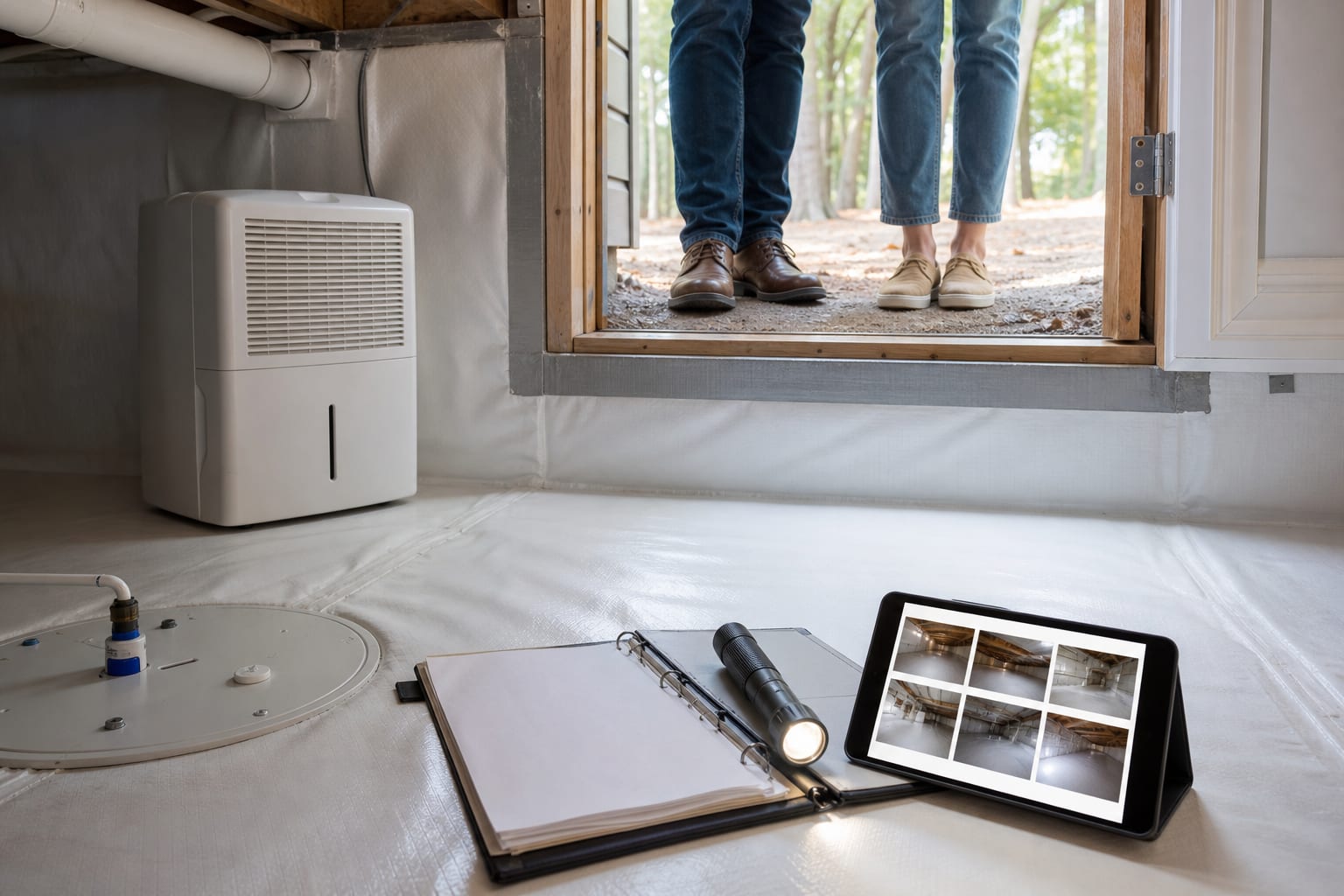
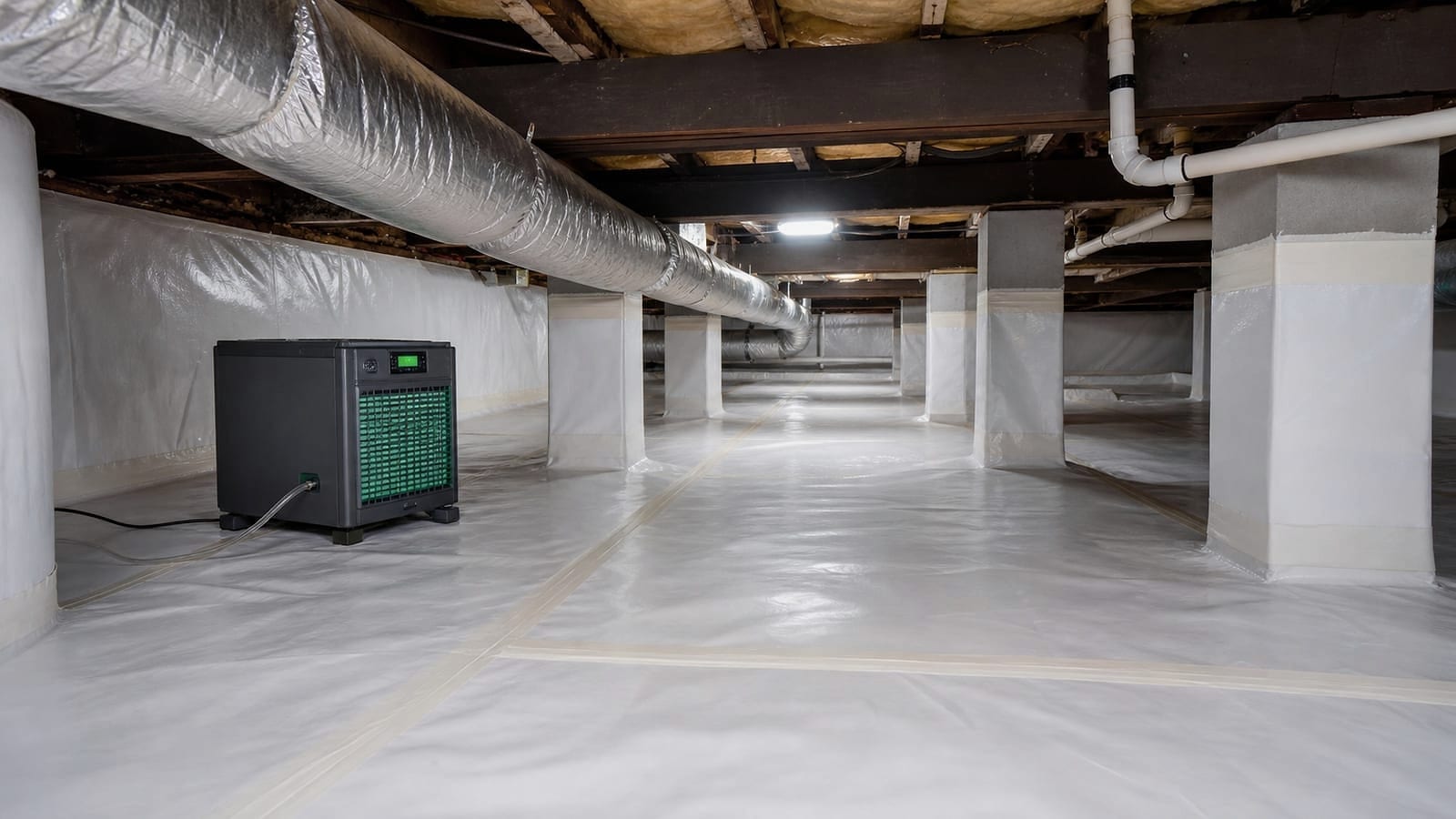
Encapsulation is a system, not a surface that can be forgotten. A short seasonal routine helps identify changes before a small maintenance item becomes a larger moisture problem.
Water that appears only after storms gives the inspection a timing clue. The useful next step is tracing the path from outside conditions to the exact collection point.
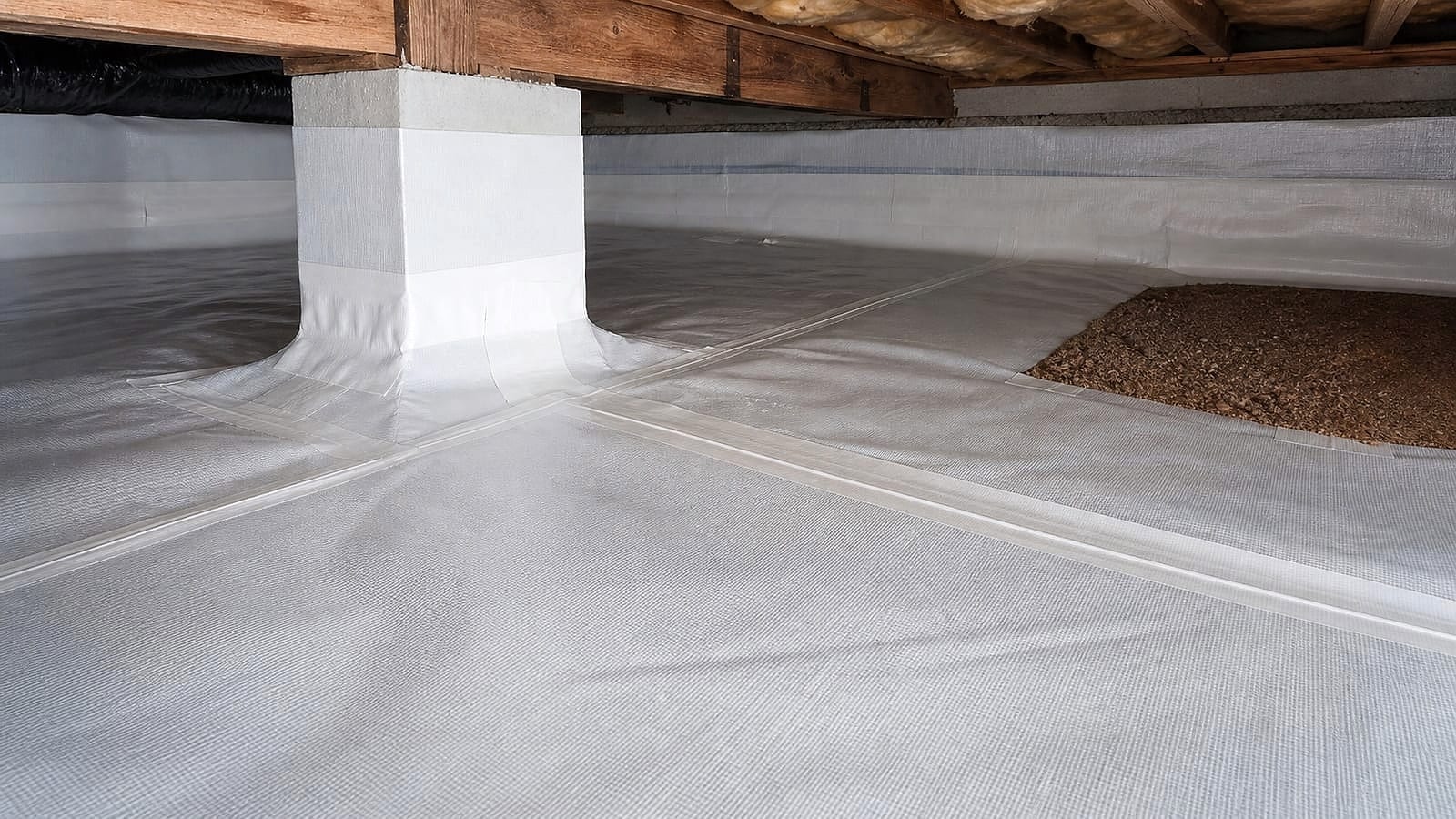
A clean liner is only one part of the story. Buyers should ask what problem was addressed, how moisture is controlled, what equipment remains, and what records transfer.
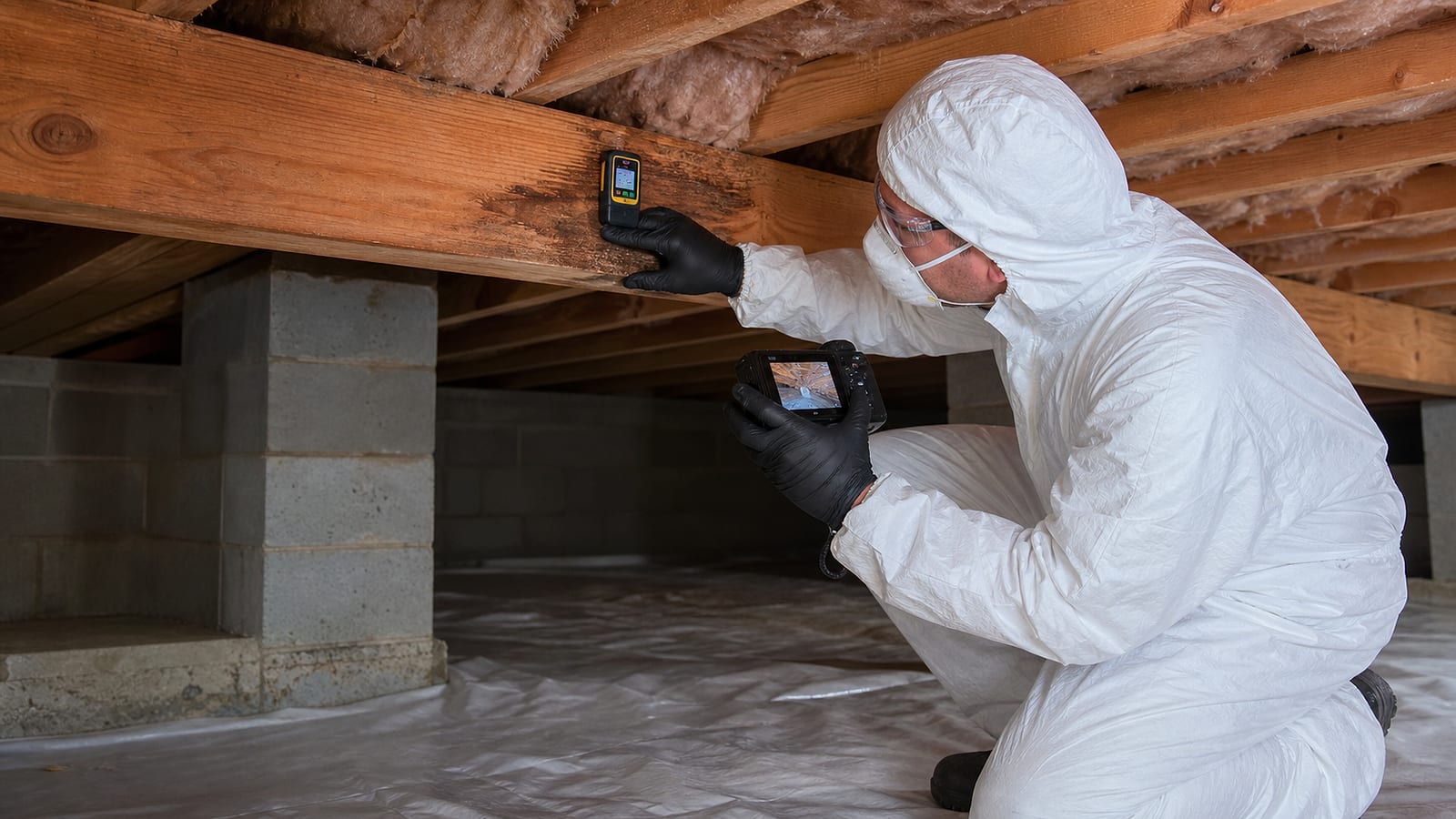
A subfloor reading needs context. The useful comparison includes dry reference areas, measurement method, exact location, and evidence of an active moisture source.
Each category approaches the crawl space from a different homeowner decision point.
Rain can expose a water path, raise ground moisture, wet materials, or simply push humidity higher. The timing and location of the odor help narrow the next inspection step.
Outdoor dew points can rise before a crawl space warms. When cooling starts, colder ducts and surfaces can expose an air and moisture imbalance that was less obvious in winter.
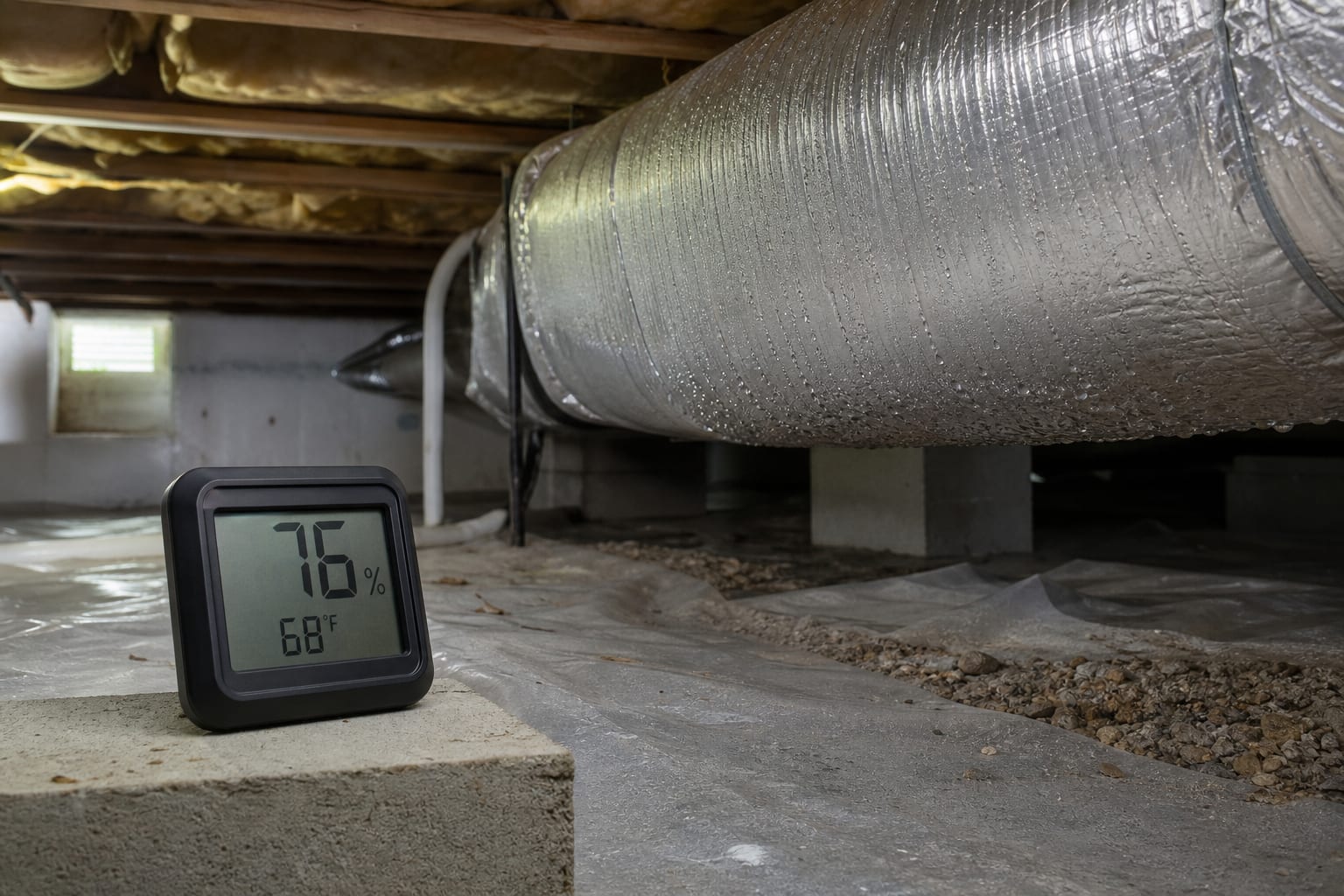
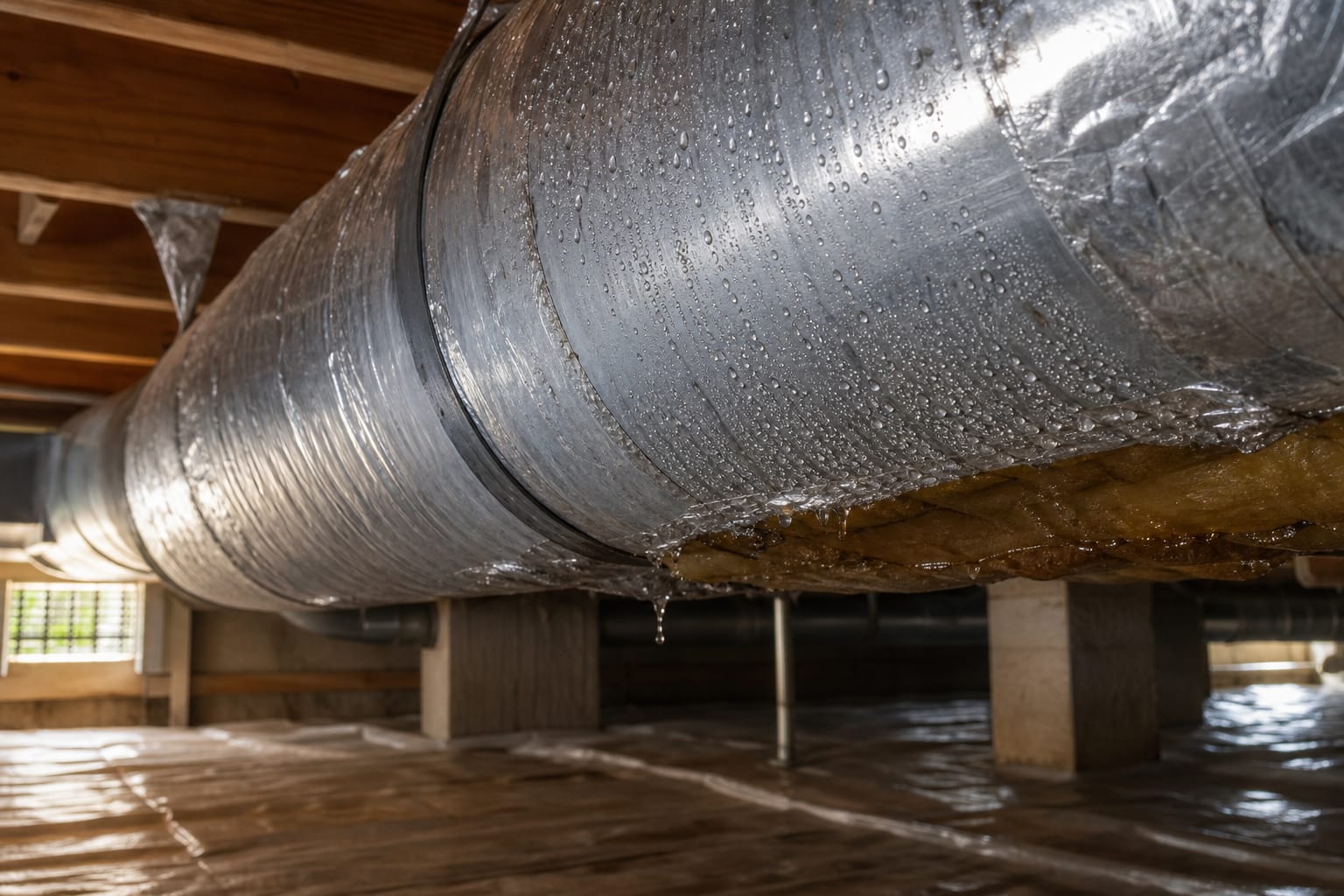
Duct condensation is a surface-temperature and moisture problem. The droplets matter because they can wet insulation and framing even when no pipe is leaking.
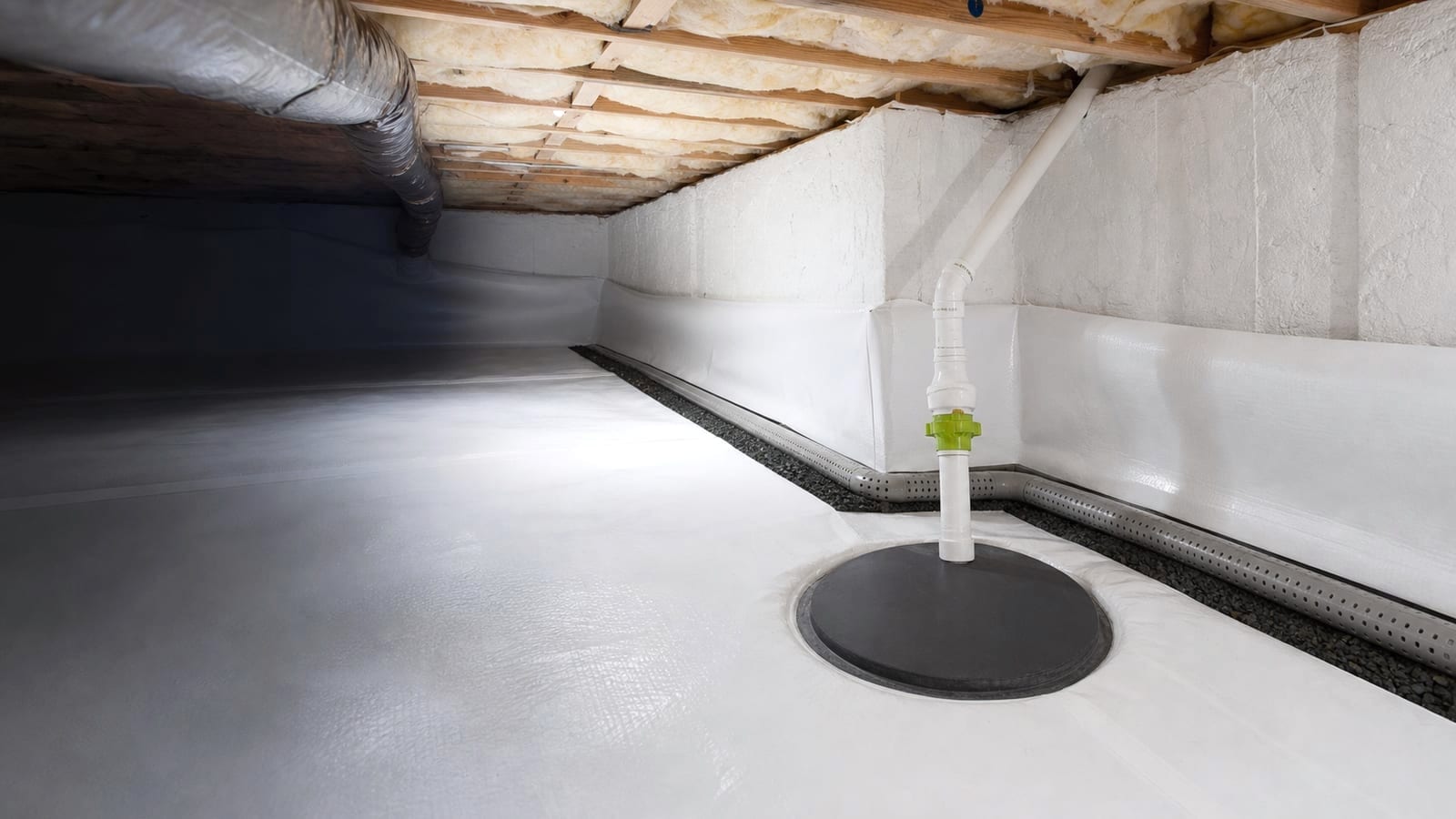
Encapsulation is a system, not a surface that can be forgotten. A short seasonal routine helps identify changes before a small maintenance item becomes a larger moisture problem.
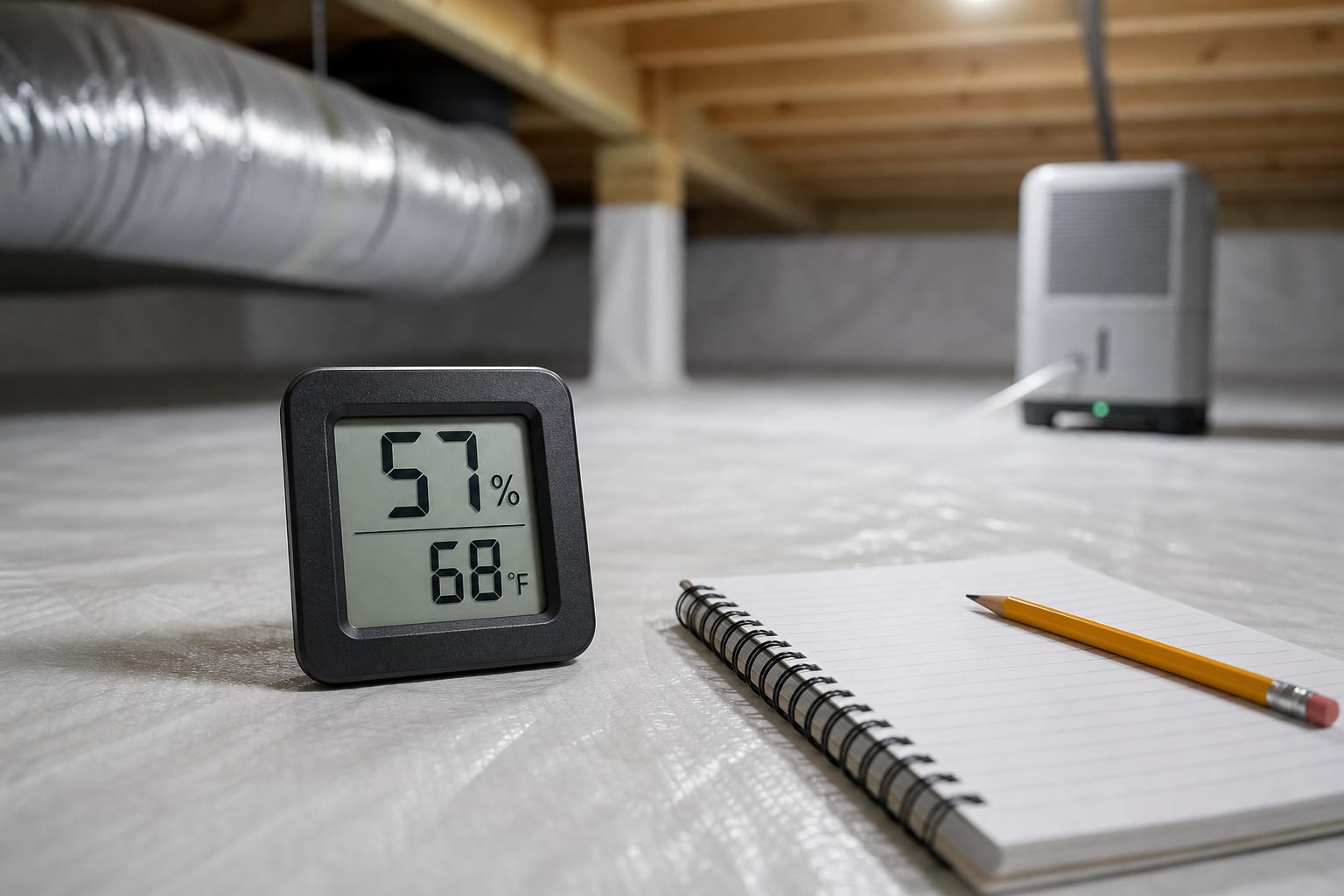
One humidity number is a snapshot. A useful record includes location, time, weather, equipment status, and whether condensation or damp materials are present.
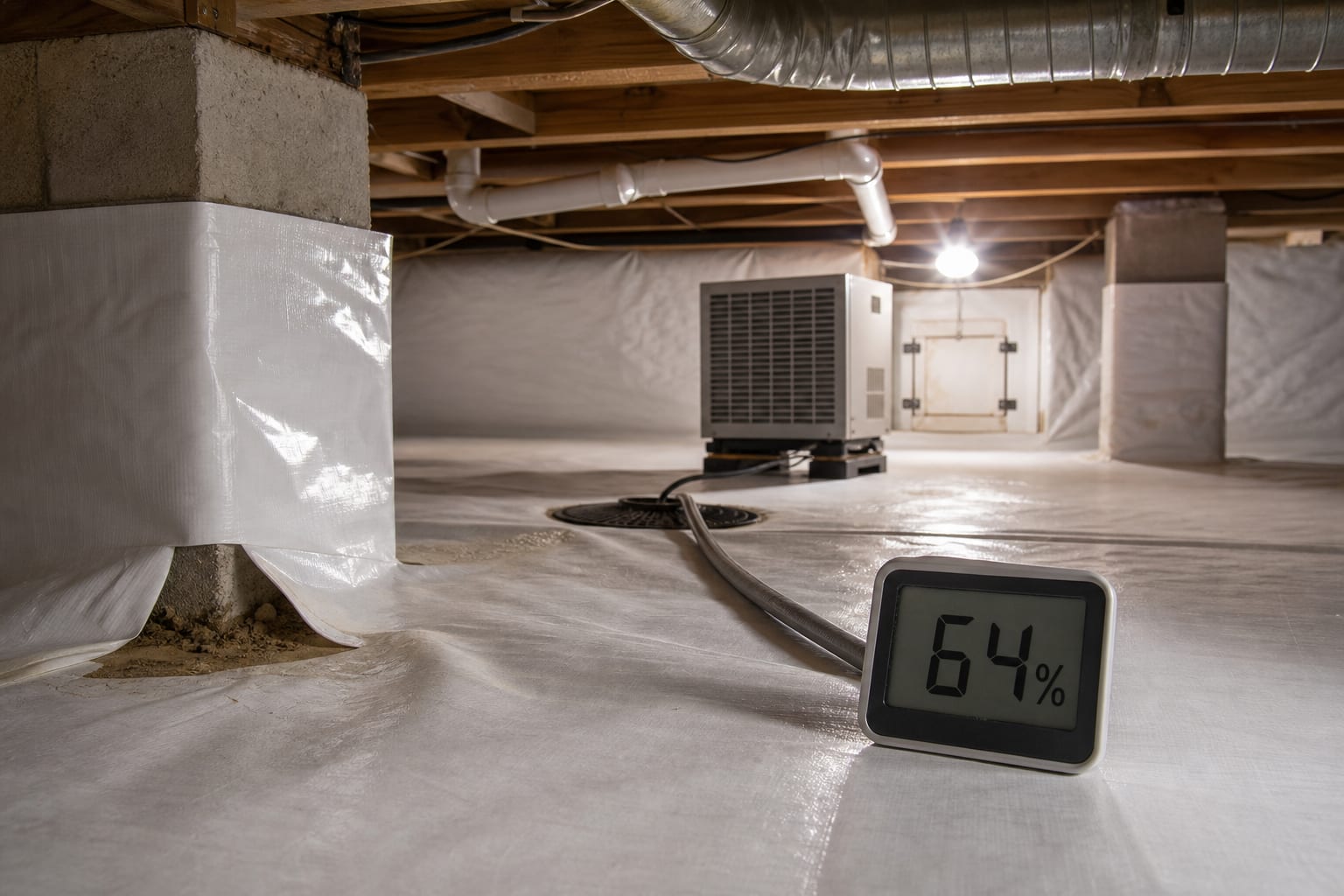
A reading above 60 percent deserves attention, but the number alone does not identify the source. Confirm the measurement, then inspect the system in a consistent order.
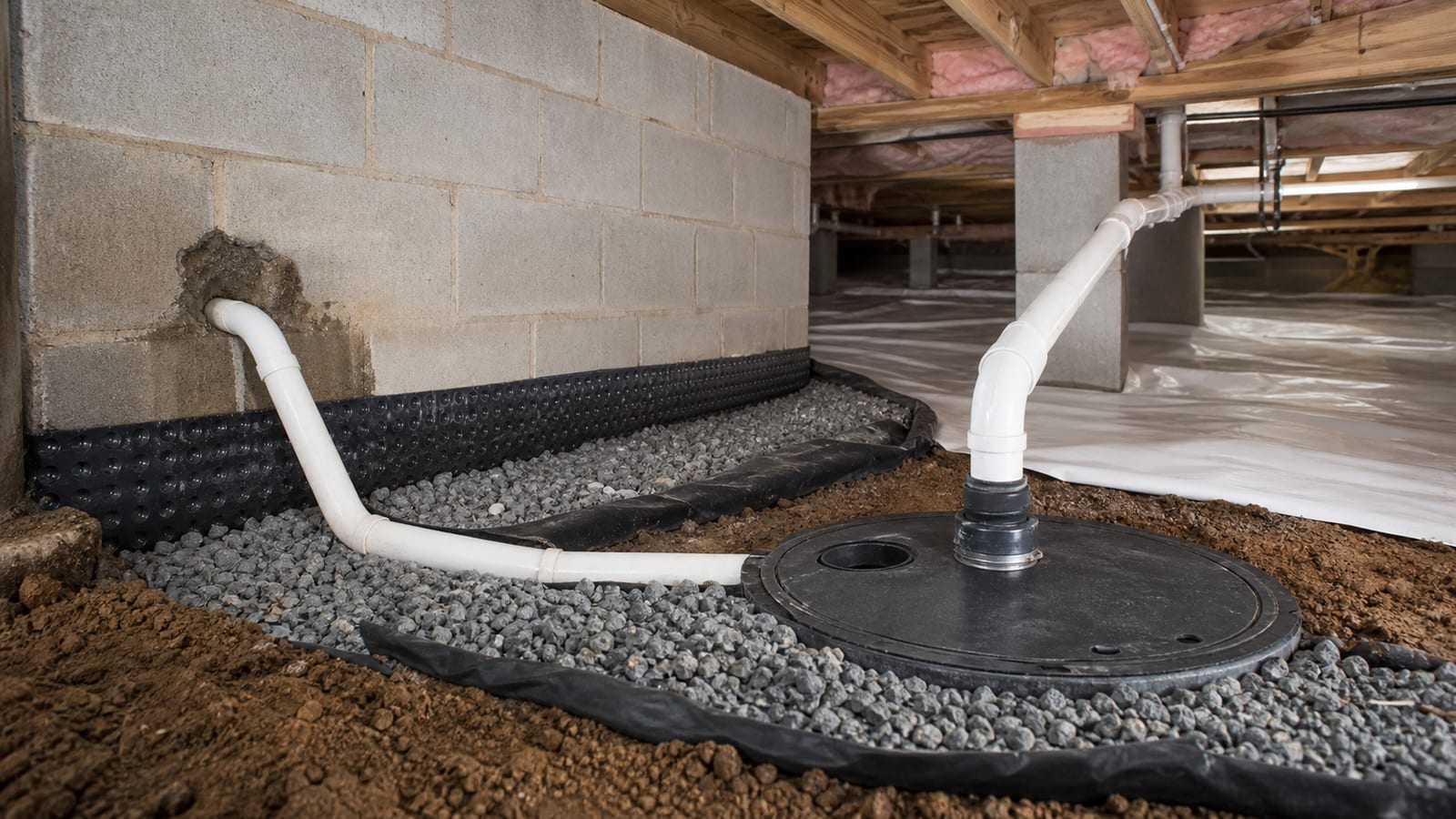
Water that appears only after storms gives the inspection a timing clue. The useful next step is tracing the path from outside conditions to the exact collection point.
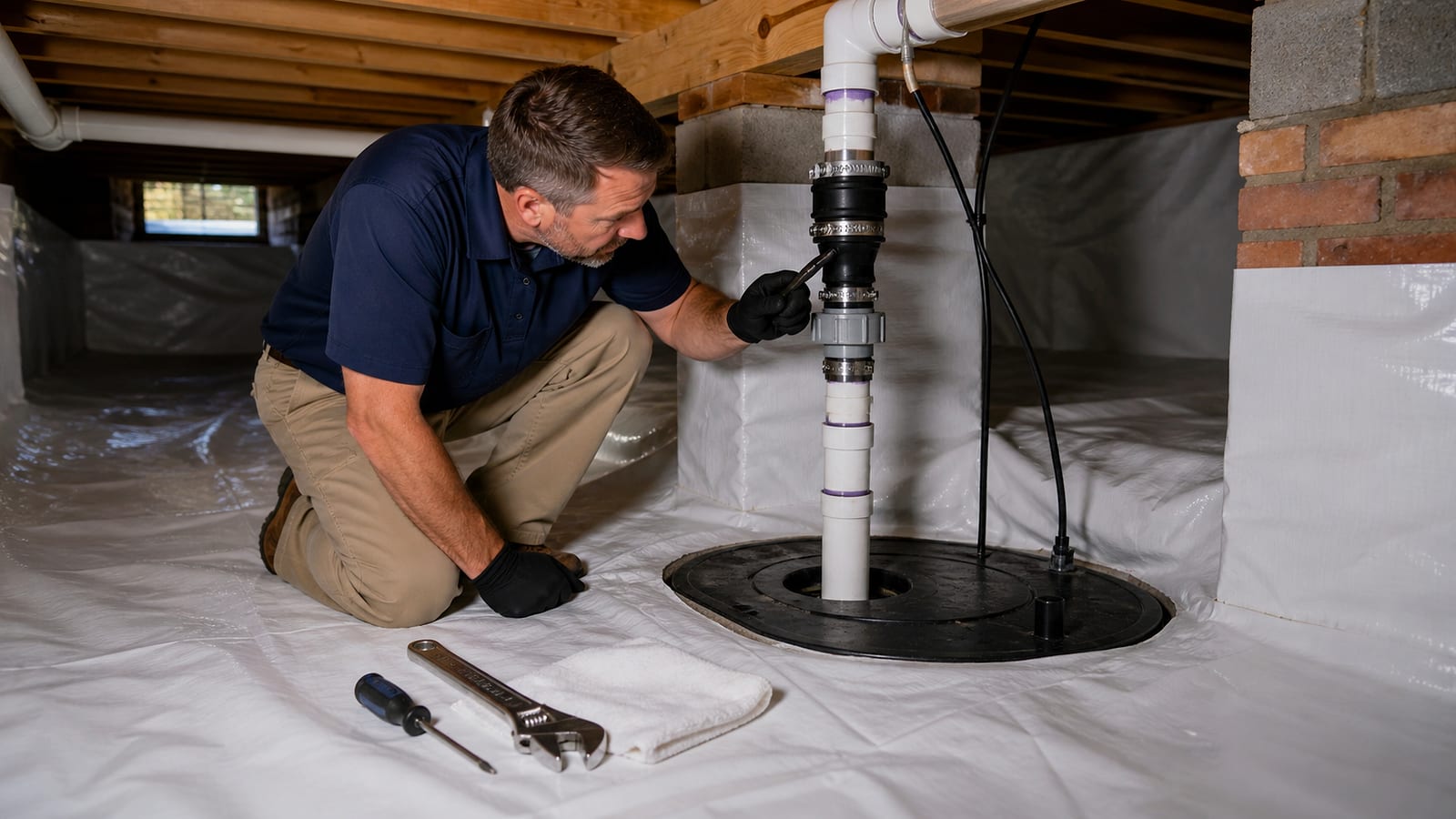
A sump pump depends on power unless a verified backup system is present. The plan should protect people first, document water levels, and avoid unsafe electrical contact.
An alarm is a prompt to verify conditions, not proof of one failed part. Water level, power, float movement, discharge, and storm conditions all belong in the review.
A clean liner is only one part of the story. Buyers should ask what problem was addressed, how moisture is controlled, what equipment remains, and what records transfer.
Good records explain what was observed, what work was performed, what remains in the space, and what the next owner must maintain.
The answer depends on the consequence and whether the condition is active. Monitoring should be a defined plan with a reading, location, date, and trigger for action.
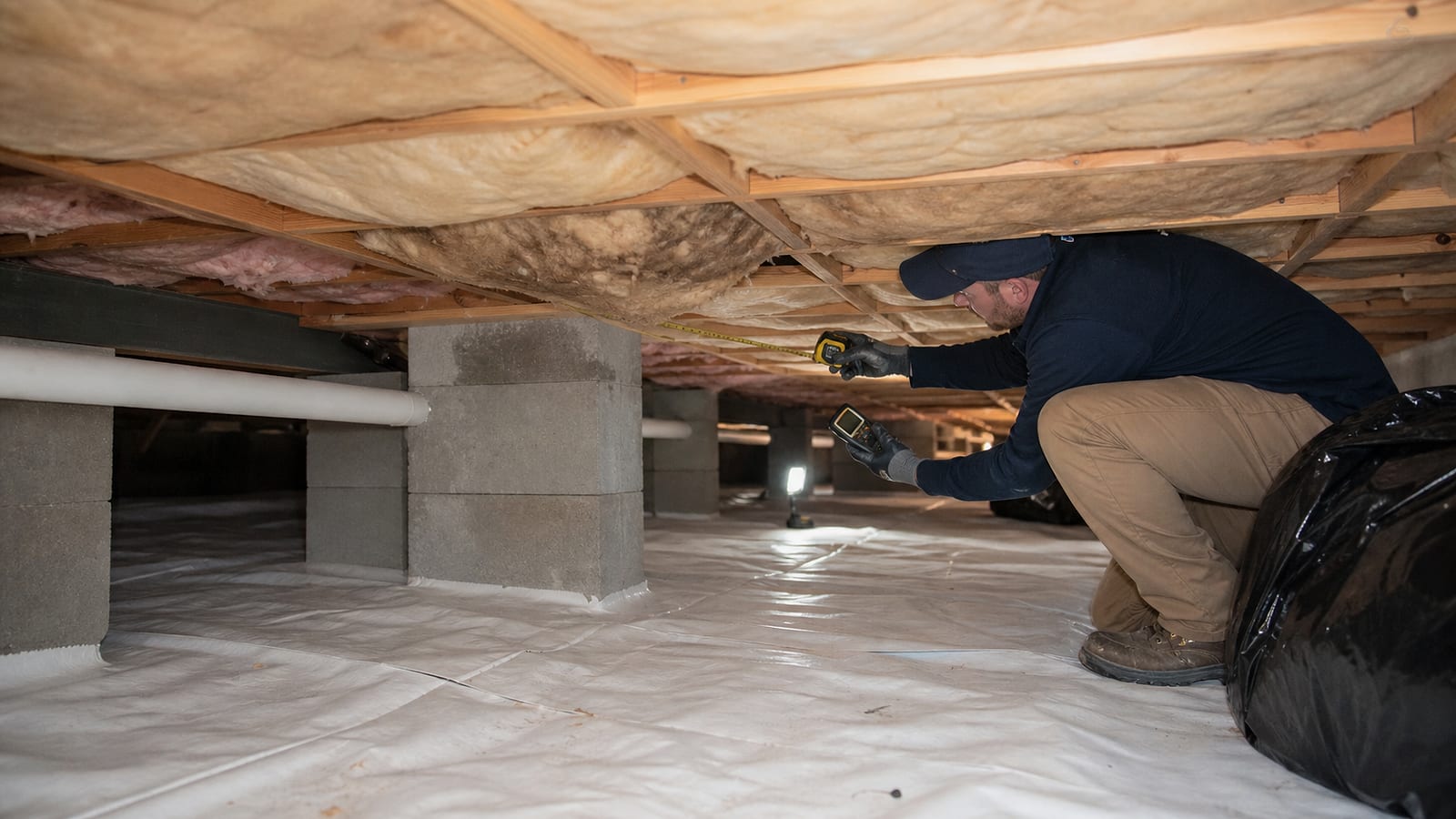
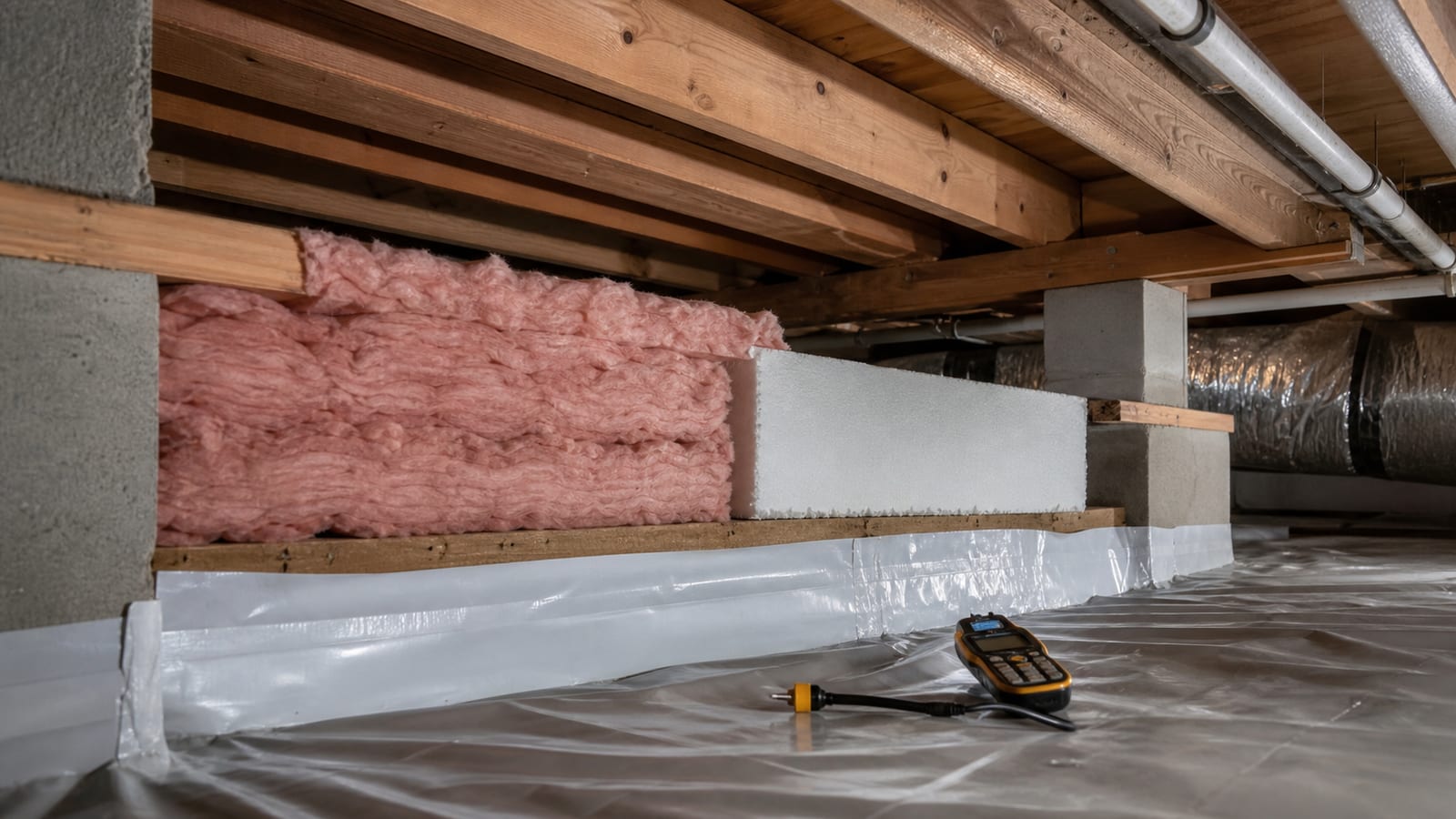
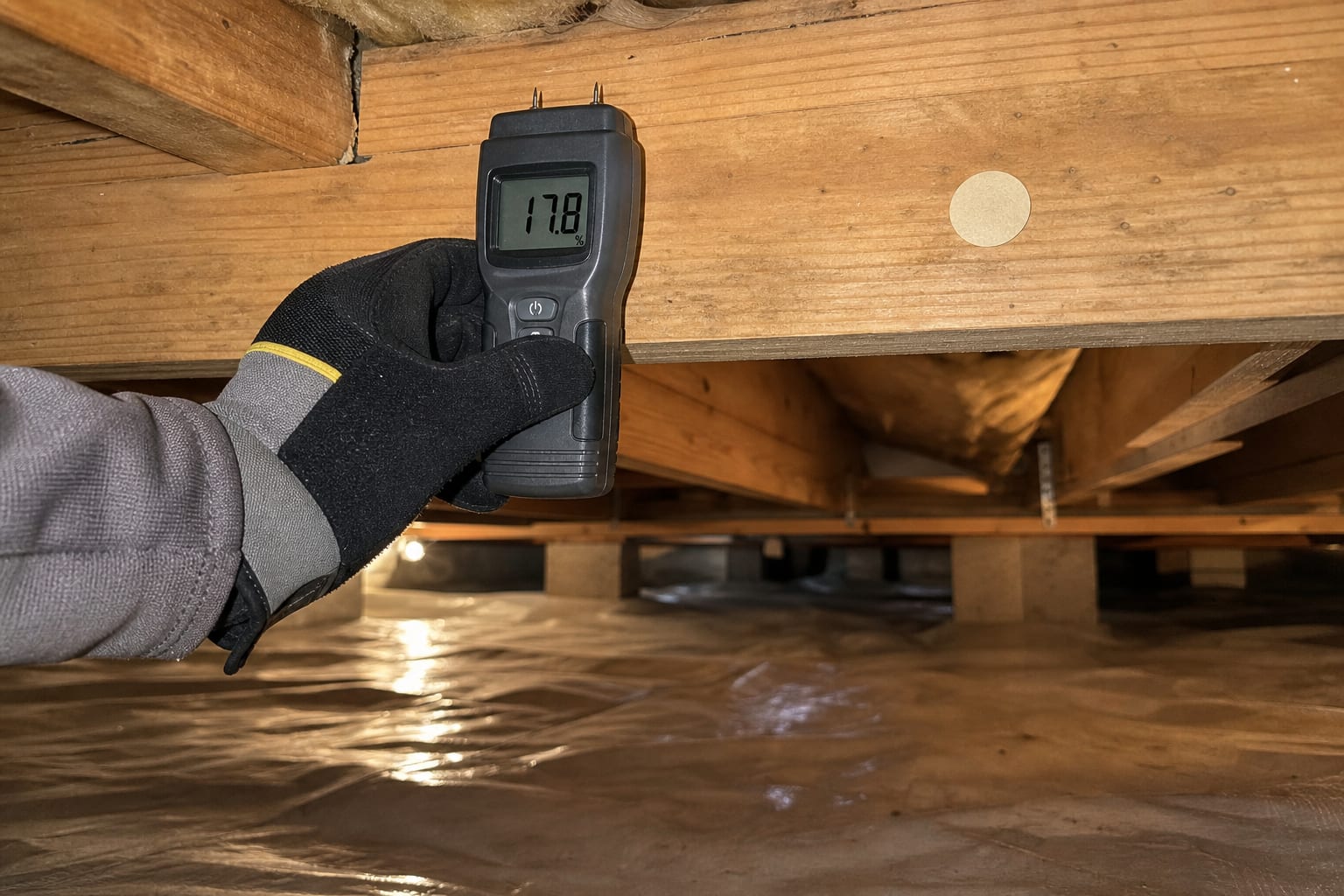
A subfloor reading needs context. The useful comparison includes dry reference areas, measurement method, exact location, and evidence of an active moisture source.
Fallen insulation is a symptom, not a complete diagnosis. Wet material, failed supports, trade access, pests, and repeated air movement can each contribute.
Floor movement can have more than one cause. The repair decision should connect the symptom above to framing, supports, material condition, and moisture evidence below.
Page 1 of 5. Every published article remains available through this chronological archive.
Rain can expose a water path, raise ground moisture, wet materials, or simply push humidity higher. The timing and location of the odor help narrow the next inspection step.
Outdoor dew points can rise before a crawl space warms. When cooling starts, colder ducts and surfaces can expose an air and moisture imbalance that was less obvious in winter.
Duct condensation is a surface-temperature and moisture problem. The droplets matter because they can wet insulation and framing even when no pipe is leaking.
A post-storm check is most useful when it records what changed, where water appeared, and whether equipment or drains are functioning. Safety comes before entry.
Winter does not eliminate crawl space moisture. Cold surfaces can reveal air leaks, wet insulation, plumbing condensation, or a moisture source that needs to be traced.
Clay-rich soil can hold water near a foundation longer than fast-draining soil. That does not identify the repair by itself, but it changes what an inspection should trace.
Useful crawl space research begins with timing and location. Note whether water appears during rain, after rain, during cooling season, near plumbing, or beside one wall. Record humidity with the date, weather, sensor location, and equipment status. Those details are more useful than forcing a symptom into a product category.
If you have an active symptom, begin with the crawl space problem library. If a particular repair or system is already being discussed, use the service library. The articles here help you prepare better questions and maintain a clearer record.
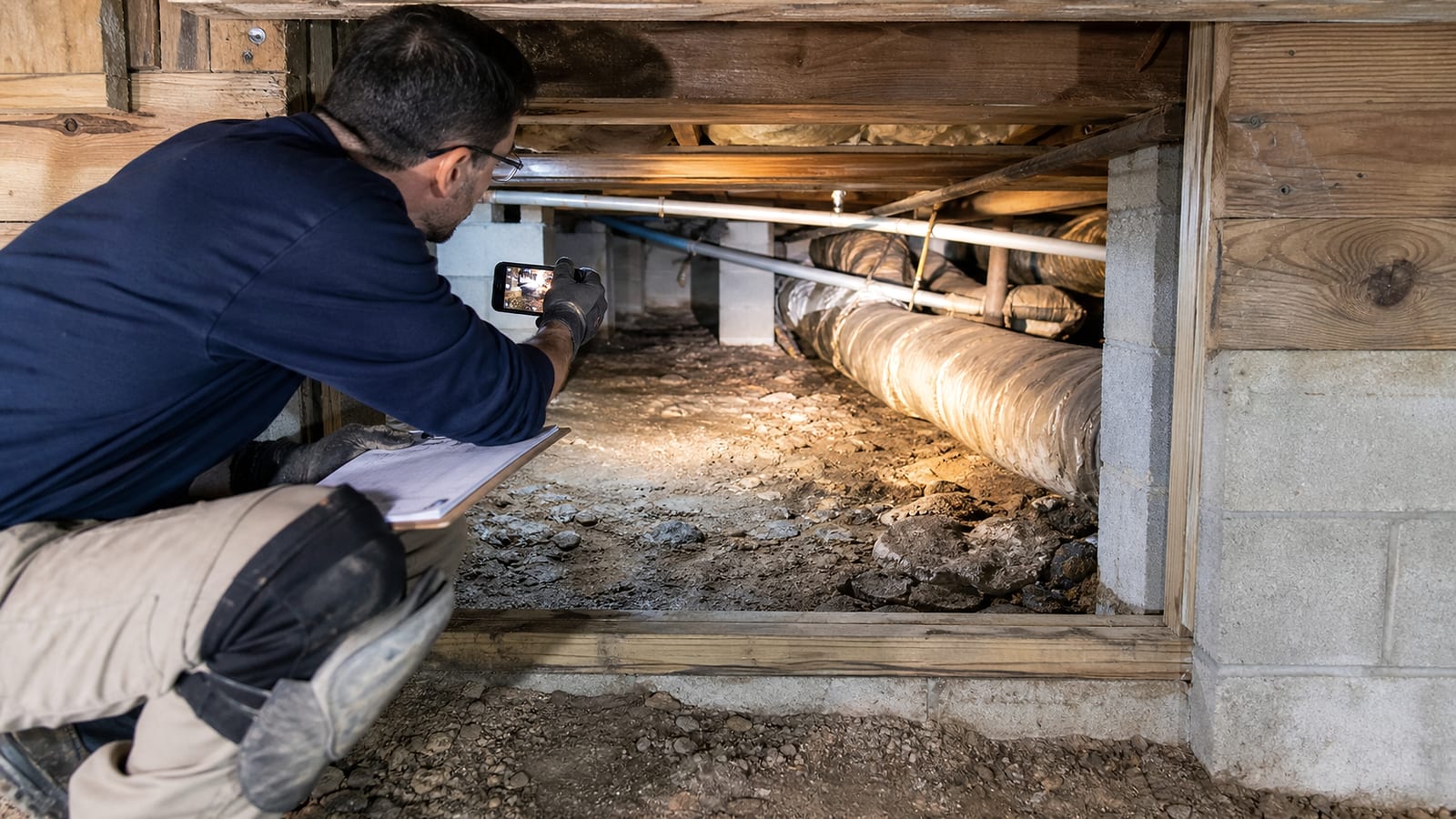
Do not enter a space with standing water near electrical equipment, suspected structural instability, animals, sewage, or another unsafe condition. A photo from the access opening and a professional inspection may be the appropriate next step.
Technical articles point to relevant guidance from sources such as the North Carolina Office of State Fire Marshal, NC State Extension, the North Carolina Department of Agriculture and Consumer Services, the U.S. Environmental Protection Agency, and the U.S. Department of Energy.
Those sources provide general context. Local code officials, licensed trades, pest professionals, engineers, inspectors, and other qualified specialists control the questions within their own scope. An article does not replace their work or determine what a particular property needs.
Carolina Encapsulation Company does not use unverified credentials, warranties, health outcomes, or blanket promises in this library. The goal is a practical answer, an honest boundary, and a direct route to the next piece of evidence.
Book a free inspection so the next step can be based on the conditions beneath your home.