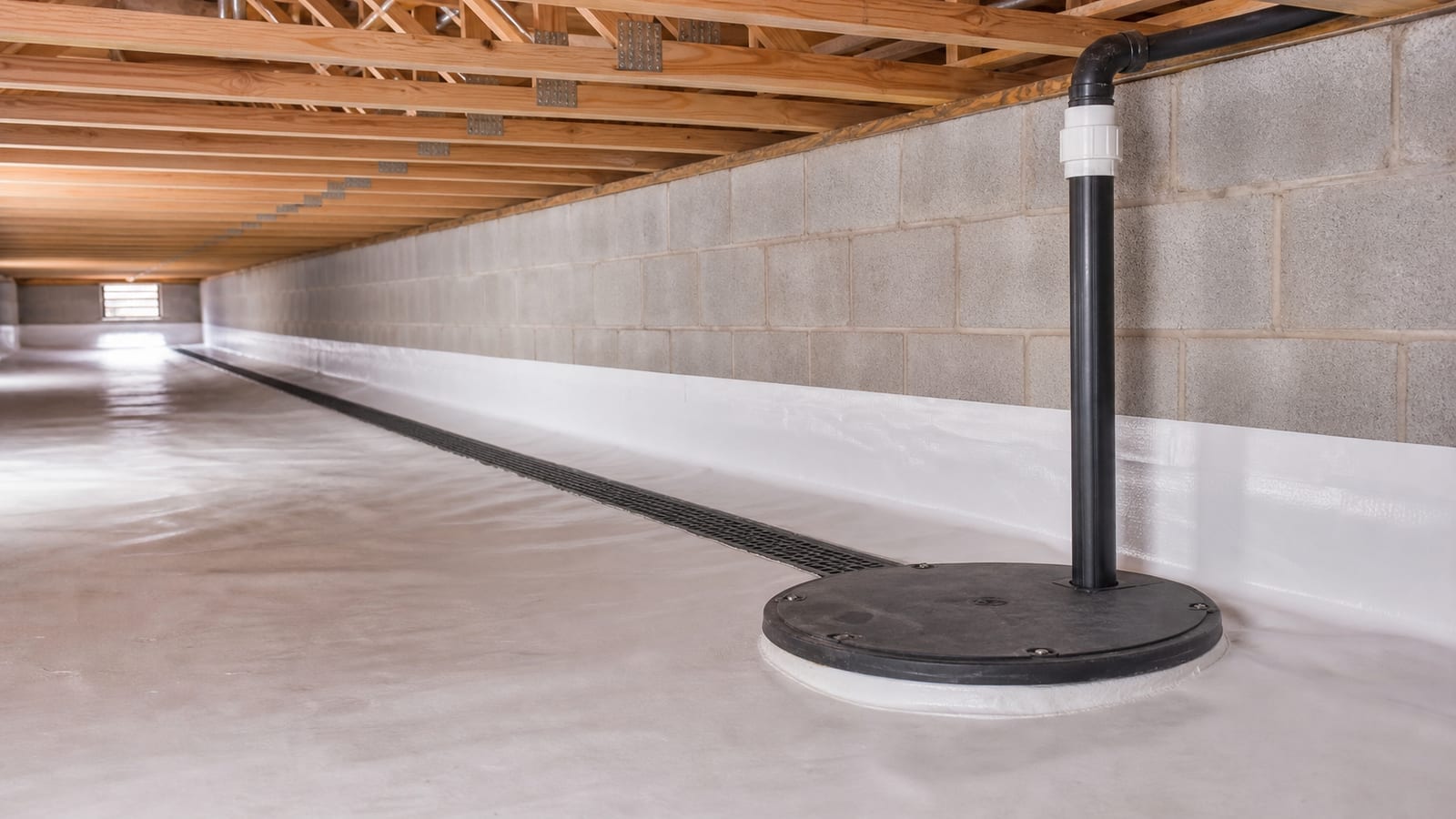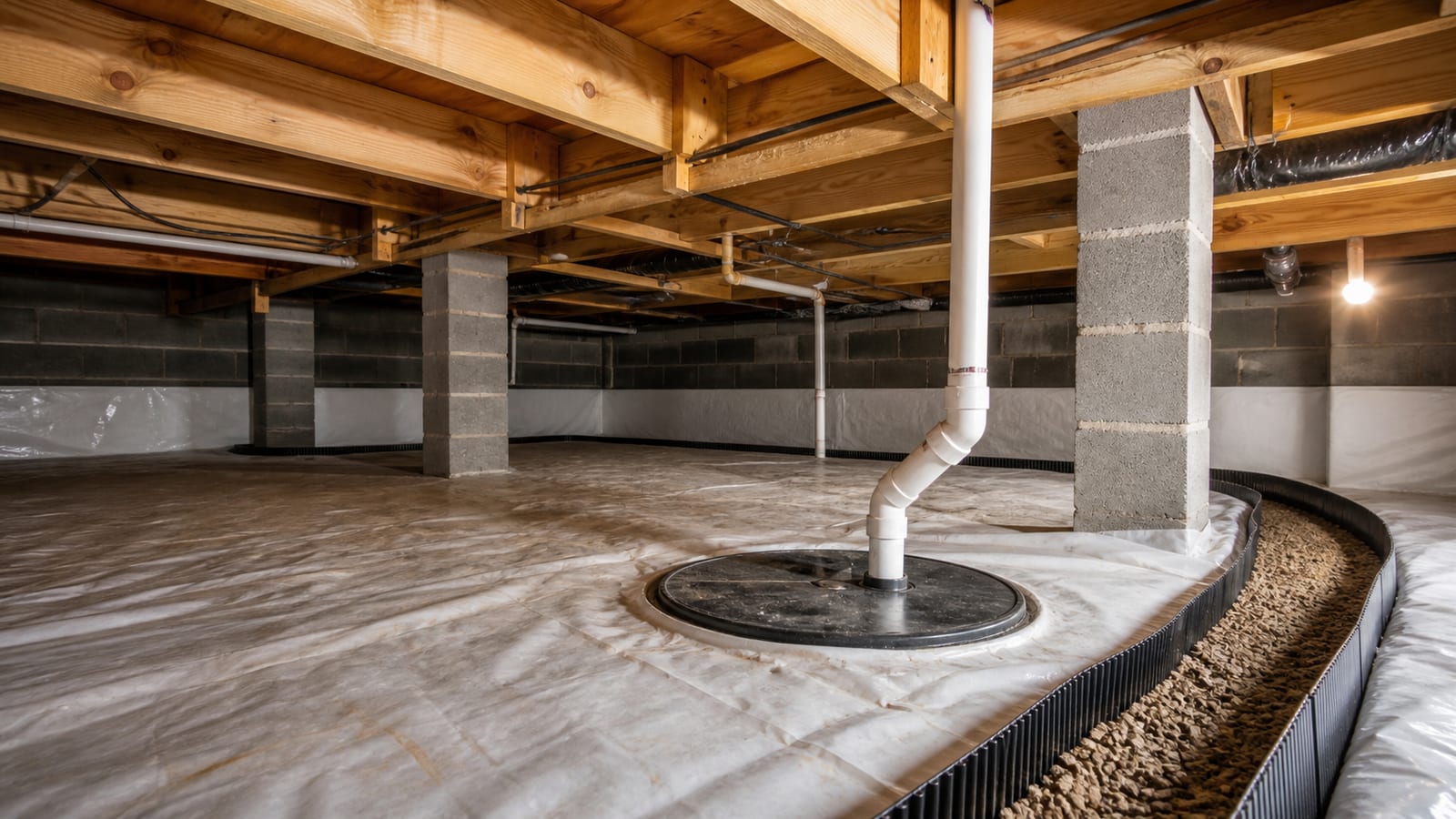
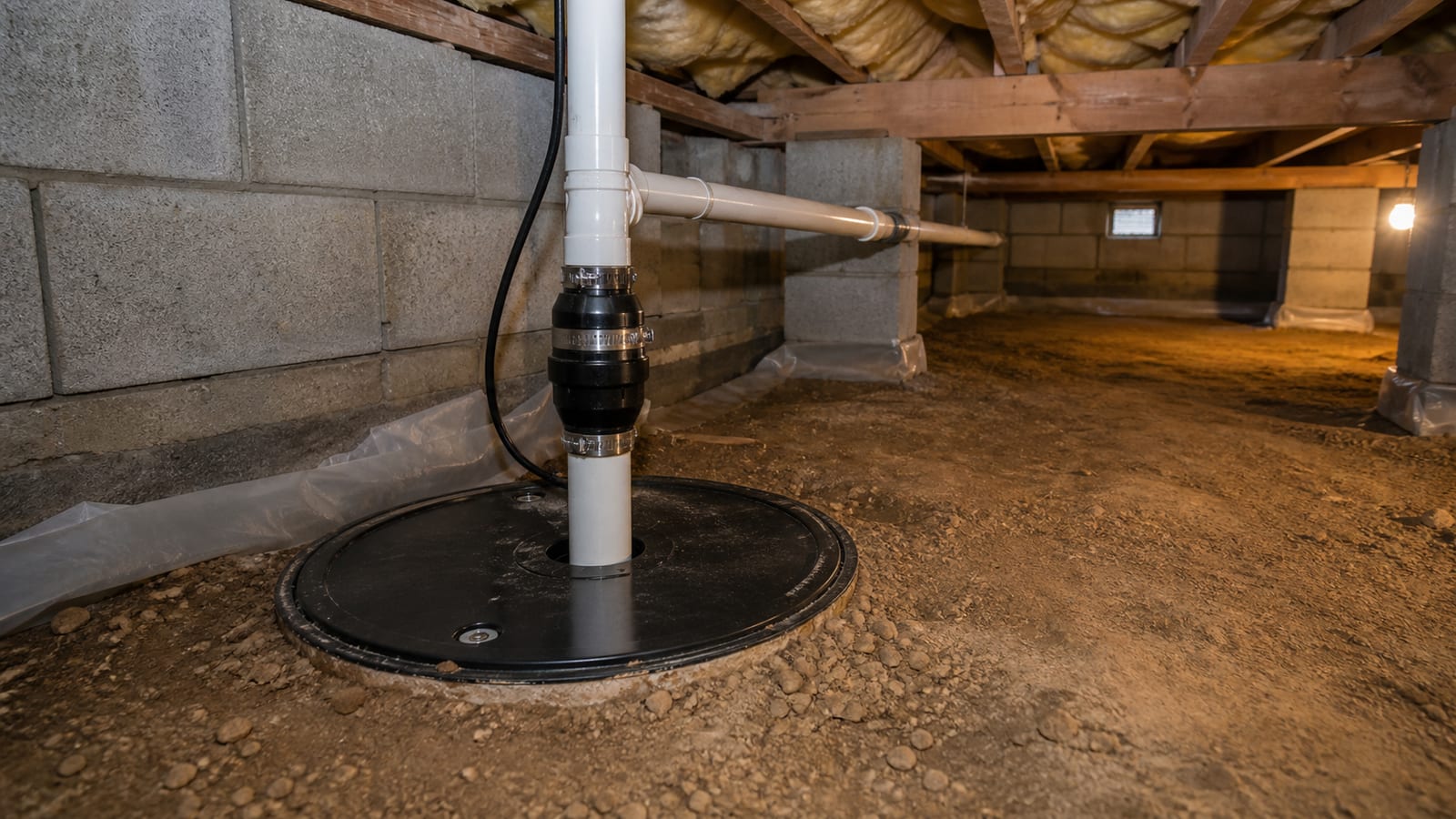
A crawl space sump pump should be part of a planned water-control system. The pump collects water at a low point and sends it away from the building. It cannot stop an outside leak, correct poor grading, or collect water that never reaches its basin.
For sump pump crawl space installation in Fuquay-Varina, NC, start with a contractor who checks the whole water path. That path includes the source, collection point, drainage route, pump basin, discharge line, power supply, service access, and maintenance plan. Each item should appear in the written scope.
This approach matters in the Triangle, where warm, humid weather can make moisture problems harder to manage. The EPA moisture guide stresses moisture control as a key part of limiting mold growth. The NC State Extension checklist also helps owners spot leaks, drainage concerns, and damp materials.
A clear proposal should explain what the installer observed and what the planned system will do. It should also list exclusions. That gives homeowners and property managers a sound way to compare scopes rather than comparing one pump specification.
Can sump pump crawl space installation work in Fuquay-Varina?
Yes. A sump pump can be installed in a crawl space when the basin has a sound location, water can reach it, and the discharge has a safe outlet. The installer must also plan for power, limited headroom, service access, and protection from soil or debris.
The first step is tracing the water. An inspection should check foundation walls, vents, plumbing lines, low soil areas, and any signs of surface runoff. Stains and damp soil can show a path, but the source may change during heavy rain. A pump placed without this check may leave water trapped elsewhere.
Next comes collection. A basin only handles water that reaches it. Some spaces need a planned crawl space drainage system to move water from wet zones to the basin. The scope should show where the drain begins, which way it flows, and how it connects. It should also explain whether soil, liner material, or old drain parts will be moved.
The installer then needs a discharge plan. Ask where the pipe exits, where it releases water, and how that outlet avoids sending water back toward the foundation. The route should account for turns, lift, and exposed sections. A vague note such as discharge outside is not enough.
Finally, check access. The pump, lid, check valve, and pipe joints should remain reachable. If a future liner or crawl space waterproofing system is planned, the work should be sequenced so those parts can still be checked.
Who is the best person to install a crawl space sump pump?
Choose a crawl space water-control contractor who can trace the full route from entry to discharge. The right installer should inspect, measure, explain the scope, identify work by other trades, and leave the pump accessible. Pump placement alone does not show that the whole system will manage water.
A general plumbing repair and a crawl space water problem are not always the same job. The installer needs to understand low points, soil conditions, perimeter collection, liner details, discharge routes, and cramped access. Ask who performed the inspection and who will make field decisions if hidden conditions appear.
A useful written scope should show:
- The observed water source or likely entry points
- The collection route and basin location
- The pump discharge path and outlet
- The planned power connection
- Materials or repairs excluded from the proposal
- Access needed for tests and future service
Responsibility boundaries also matter. The proposal should state whether existing electrical service is suitable or whether a separate electrical provider may be needed. It should identify who moves stored items, removes old equipment, opens a blocked access area, or restores disturbed surfaces. Do not rely on verbal assumptions.
Inspection observations should stay separate from engineering decisions. A water-control contractor may record cracks, movement, damaged supports, or sagging areas. Those observations do not replace structural design or an engineer’s opinion. If structural design questions arise, the owner should seek the proper independent professional before water-control work affects that area.
For a broader contractor comparison, use the questions in How to Choose a Crawl Space Waterproofing Contractor in Fuquay-Varina.
How much does sump pump crawl space installation cost?
Installation cost depends on the measured scope, not the pump alone. Key factors include access, excavation, basin placement, drainage length, discharge distance, available power, debris removal, and liner repairs. A site inspection and written proposal are the soundest ways to compare the actual work required.
A simple equipment quote may leave out much of the job. Basin excavation can vary with soil, rock, standing water, and available working room. A long crawl to the access door adds handling time. Tight clearance can also change how soil and materials move in and out.
Collection is another major scope factor. One low wet area may need a different plan than water spread along several walls. Ask whether the proposal includes a trench, drainage pipe, filter fabric, stone, connections, and restoration of an existing liner. Each item should have a clear purpose.
Discharge details also affect the scope. The installer should measure the rise and travel distance, then plan an outlet that does not drain back toward the building. Ask whether the line needs wall penetration, supports, burial, an exterior termination, or protection at exposed points. The scope should state who handles any surface restoration.
Compare proposals line by line rather than by the final amount alone. Check whether testing, cleanup, removed soil, old pump disposal, electrical work, water removal, and follow-up visits are included or excluded. If standing water must be cleared before work starts, ask whether standing water removal is a separate step. A measured proposal limits surprises and shows what each contractor is pricing.
What size sump pump does a crawl space need?
Pump size should match expected water inflow and the effort needed to reach the discharge outlet. Crawl space area alone is not enough. The installer should account for vertical lift, pipe length, pipe size, turns, check-valve resistance, and the rate at which the basin fills.
A pump moves less water as the required lift and pipe resistance increase. Lift is the vertical distance from the pump to the high point of discharge. Pipe length, elbows, and valves add resistance. That means two similar crawl spaces may need different pump plans.
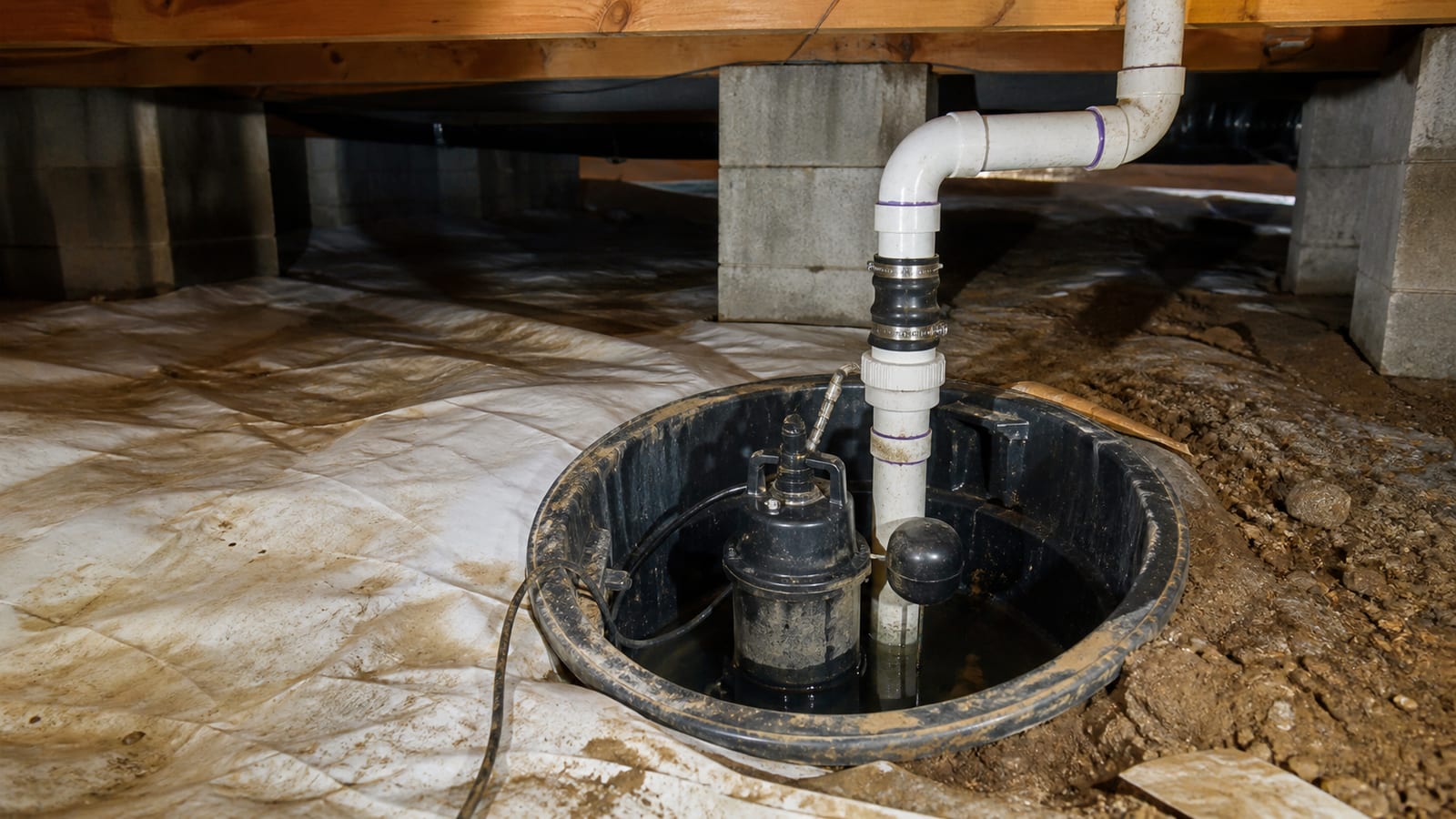
The basin matters too. It must have enough space for the pump and float to work without rubbing the wall or nearby pipe. The inlet should not dump soil directly onto the pump. A secure lid helps keep debris out while leaving a route for pipes and service. Ask how the installer will keep drainage stone or liner material away from moving parts.
Rather than asking only for a motor rating, ask the contractor to record:
- The estimated vertical lift
- The approximate discharge run
- The number of major turns
- The basin dimensions and inlet height
- The expected water load based on site evidence
No visual inspection can promise the exact flow of every future storm. Still, measurements provide a sound basis for selection. The written scope should connect the chosen pump capacity to those field conditions. It should also state whether a high-water alarm, backup plan, or separate power work is included. These items serve different roles and should not be treated as automatic parts of every installation.
How often should a crawl space sump pump run?
There is no single normal schedule. A pump may run often during heavy rain and remain quiet in dry weather. Frequent cycling, nonstop operation, or no response to rising water can signal a collection, float, discharge, power, capacity, or groundwater issue that needs a closer check.
Use the site’s normal pattern as a reference. Record whether operation follows rainfall, plumbing use, or no clear event. Note how long each cycle lasts and whether water flows from the outlet. These simple facts help separate high inflow from a pump or discharge problem.
Short, repeated cycles may occur when the basin is too small, the float has little travel, or discharged water returns through the pipe. A working check valve helps limit backflow after the pump stops. Rapid cycling can also happen if water is being released too close to the foundation and finds its way back.
Continuous operation needs prompt attention. The pump may be keeping up with a strong inflow, or it may be unable to reach the shutoff level. A blocked line, stuck float, poor outlet, or undersized plan could be involved. Do not enter a wet space if electrical conditions appear unsafe. Shut down only if that can be done safely, then call an appropriate service provider.
A pump that never runs is not proof that it failed. The basin may simply be dry. During a service check, the provider can test the float and observe a controlled cycle. The check should also confirm discharge flow, unusual sound, pipe movement, leaks, and clear access around the basin.
How long do crawl space sump pumps last?
A crawl space sump pump has no guaranteed service life. Run frequency, sediment, heat, power conditions, discharge resistance, installation quality, and maintenance all affect wear. Owners should rely on regular checks and operating signs rather than waiting for a general age estimate to decide whether service is needed.
A pump that handles frequent inflow may wear faster than one used only during major storms. Sediment can enter the basin and interfere with the intake or float. A discharge restriction can also make the pump work longer. These conditions may matter more than calendar age.
Keep a basic maintenance record. Note the inspection date, whether the basin was clean, how the float moved, and whether water reached the outlet. Record unusual noise, vibration, odor, corrosion, leaks, or changes in cycle length. Property managers should also note who performed the check and what follow-up was advised.
Access has a direct effect on maintenance. A sealed liner should not bury the lid or block the pipe joints. Stored items should stay clear of the service route. If opening the basin requires cutting finished material each time, future checks may be delayed. Ask for a removable, fitted access detail during installation.
Replacement planning should consider risk as well as condition. A property with frequent water entry has less room for a missed cycle than a dry site. Ask what parts can be tested, what warning signs require service, and what the backup plan covers. A backup may address some power or pump failures, but it does not replace sound collection, discharge, or routine inspection.
Do people put sump pumps in crawl spaces?
Yes. Crawl space sump pumps are used where water collects below the building and needs a controlled exit. They are most useful as one part of a system that gathers water and discharges it safely. They are not a substitute for fixing an active plumbing leak or obvious exterior drainage problem.
A pump may fit sites with a low crawl space, below-grade sections, seepage near foundation walls, or recurring water after storms. The evidence should support the choice. Ask the inspector to show wet soil, stains, mineral deposits, drain paths, or measured low areas. Photos can help property owners compare the findings with the proposed basin location.
Sequencing is important. An active plumbing leak should be repaired before the pump plan is judged. Roof runoff, damaged downspouts, and poor exterior flow may also need attention. Inside the crawl space, collection drainage usually comes before the basin and pump. The discharge route follows, then liner details and final testing.
A complete crawl space sump pump installation scope should answer seven questions:
- Where is the water coming from?
- How will the system collect it?
- How will it reach the basin?
- Where will the pump discharge it?
- What power source will serve the pump?
- Can key parts be reached for service?
- Who will inspect and maintain the system?
This framework applies in Fuquay-Varina and nearby Triangle communities such as Holly Springs, Apex, Angier, and Garner. Local soil and site conditions still vary by property. The proposal should follow evidence from the building, not assumptions based only on the town or neighborhood.
Frequently Asked Questions
Will a sump pump keep my entire crawl space dry?
Not by itself. A pump only removes water that reaches its basin. Keeping the wider space dry may require drainage that carries water from wet areas, repairs to active leaks, better exterior water flow, or liner work. The inspection should show how water will travel from each problem area to the pump.
Where should a crawl space sump pump discharge?
The outlet should release water where it can move away from the foundation without causing erosion, a slip hazard, or flow onto a neighboring property. The right point depends on grade, pipe route, site limits, and local conditions. The written scope should name the planned location and identify excluded exterior work.
Does a crawl space sump pump need backup power?
Backup power may be worth considering where water enters often or power loss is common during storms. It is not a cure for poor drainage or a blocked discharge. Ask what event the proposed backup covers, how long it can operate under expected load, and what testing and maintenance it requires.
Can a pump be added after crawl space encapsulation?
It often can, but access and liner repairs need careful planning. The installer may need to open the liner, excavate a basin, connect drainage, and reseal the work area. Ask how the lid will remain accessible and how new pipe penetrations will be fitted without blocking future pump service.
What should I do if water is already standing in the crawl space?
Keep people out if electrical hazards, deep water, sewage, or unstable materials may be present. Stop an active plumbing source if that can be done safely. A provider should identify the source, plan removal, inspect affected areas, and decide whether drainage and a sump pump are needed after the water is cleared.
How should I compare two sump pump proposals?
Compare the source findings, collection route, basin details, discharge path, power plan, access, testing, cleanup, exclusions, and maintenance steps. Check who handles electrical work, liner repair, removed soil, and exterior restoration. A lower proposal may cover less work, so ask each contractor to clarify missing or general line items.
A useful sump pump proposal should trace the full path of water. It should show the source, collection plan, route to the basin, discharge point, power needs, service access, and maintenance duties. It should also state what is not included.
Carolina Encapsulation Company serves Fuquay-Varina and surrounding Triangle communities. Owner Benji Holiday and the team offer a free inspection to help property owners review crawl space conditions and compare a measured scope. Request an inspection or call 704-207-9348. Service availability must be confirmed by phone.
How this applies in Fuquay-Varina, NC
For homeowners in Fuquay-Varina, NC, use this topic as a way to organize observations before selecting work. Carolina Encapsulation Company serves Fuquay-Varina, NC and surrounding Triangle communities, but the appropriate scope still depends on the water, moisture, materials, access, and equipment found at the property. Compare the crawl space sump pump installation with the How to Choose a Crawl Space Waterproofing Contractor in Fuquay-Varina, NC before choosing a property-specific next step.