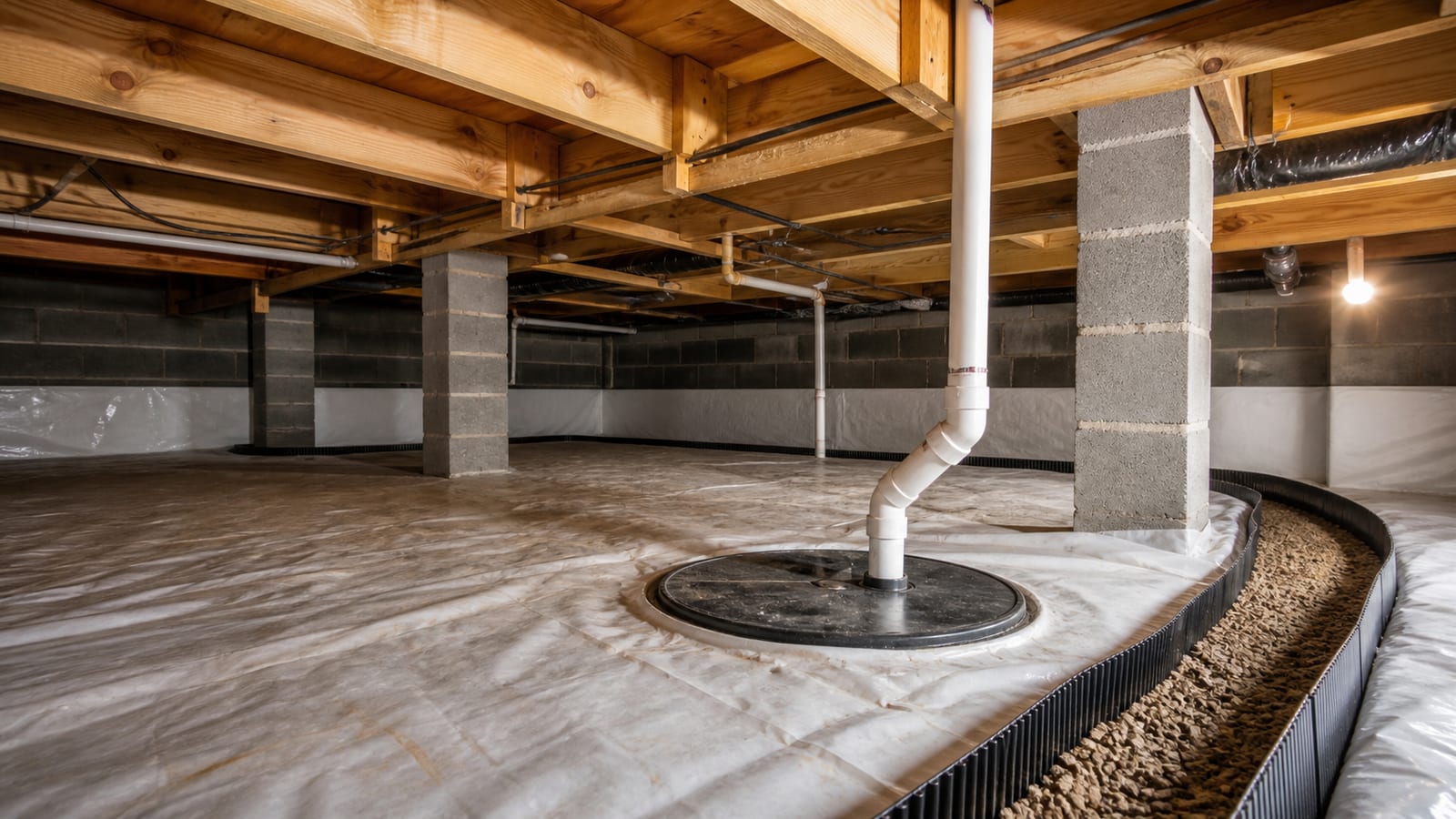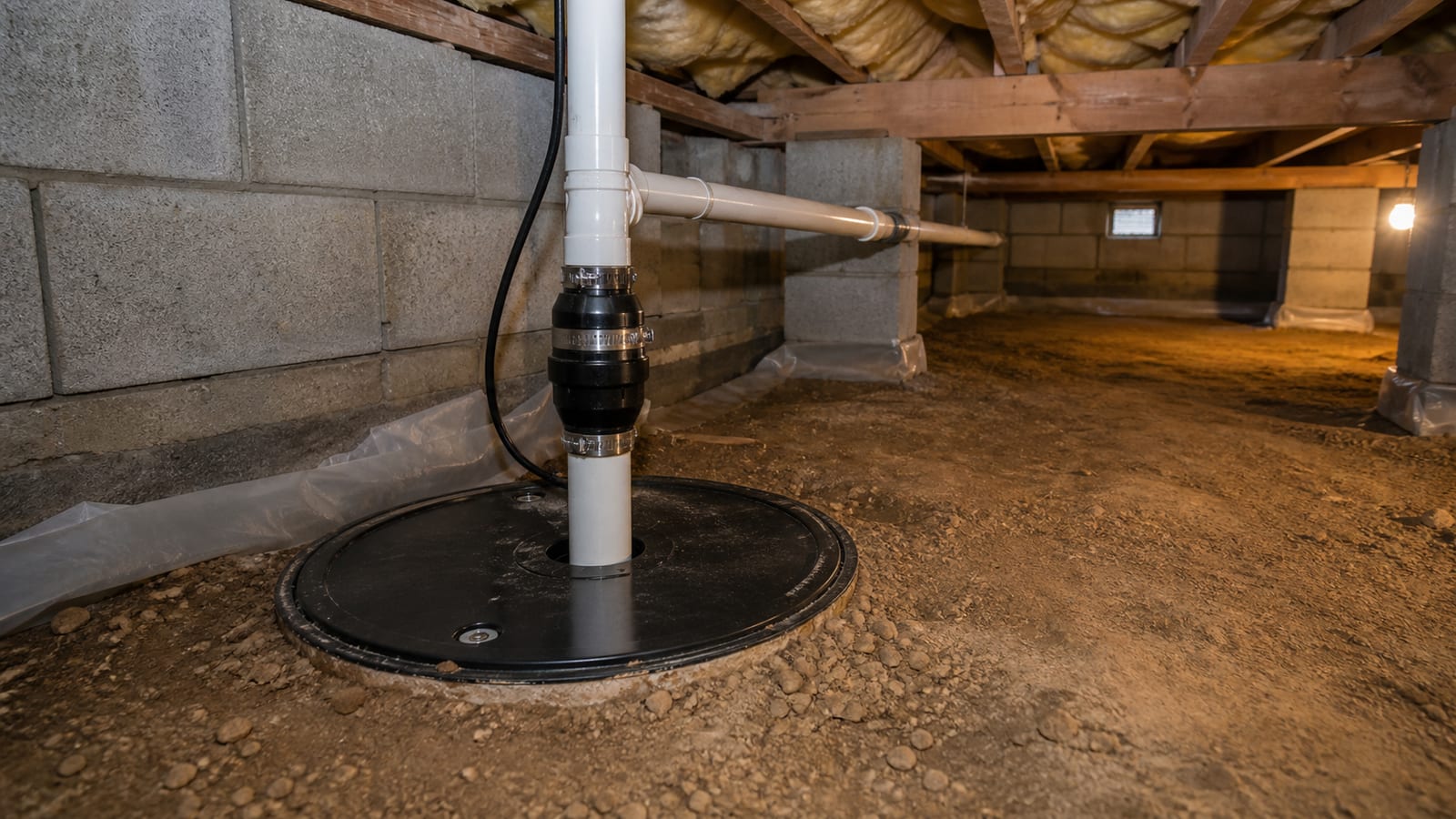
A sump pump can run and still leave a crawl space wet. It may also appear faulty when the real problem is a blocked drain, poor discharge route, lost power, or water entering outside the collection area. That is why sump pump repair in Wake Forest, NC should begin with the whole water path, not just the pump.
A useful inspection traces seven points: source, collection, conveyance, discharge, power, access, and maintenance. This approach shows whether a focused repair is enough or whether the written scope should include drainage, standing-water removal, or a broader moisture-control plan.
Homeowners and property managers should ask for visible evidence. Photos, water marks, pump test results, outlet conditions, and discharge observations help explain the recommendation. The proposal should also state exclusions, work order, access needs, and who handles electrical or other work outside the contractor’s scope. Those details make competing proposals easier to compare.
Is Sump Pump Repair Worth It for a Wake Forest Crawl Space?
Sump pump repair is often worth considering when the pump is serviceable and the fault is limited, such as a stuck switch or blocked discharge. Repair is less useful when the unit is badly worn, unreliable, incorrectly sized, or only one weak point in a failing crawl-space drainage system.
Start by finding where the water enters. Common sources include groundwater, runoff near the foundation, plumbing leaks, and humid air condensing on cool surfaces. A repaired pump cannot correct every source. If water never reaches the basin, the collection system may need attention instead.
Next, ask the inspector to show how water moves through the system. The basin should receive water from the intended area. Drains should remain open, and the discharge line should carry water away without sending it back toward the foundation. A test should also show whether the switch starts and stops the pump correctly.
A repair has more value when the rest of the system is sound and accessible. Ask for the proposal to identify:
- The observed fault and test used
- Parts or sections included in the repair
- Conditions that could require a revised scope
- Responsibility for power, drainage, and discharge work
- The next maintenance check
If moisture enters across several areas, compare the repair with a complete crawl-space waterproofing plan. The right choice should address the water path rather than simply restore motor operation.
Can a Crawl-Space Sump Pump Be Repaired?
Some sump pump problems can be repaired, but the correct fix depends on the failed part and the condition of the full system. A switch, connection, check valve, or accessible blockage may be repairable. Motor damage, severe corrosion, repeated failures, or poor capacity may support replacement instead.
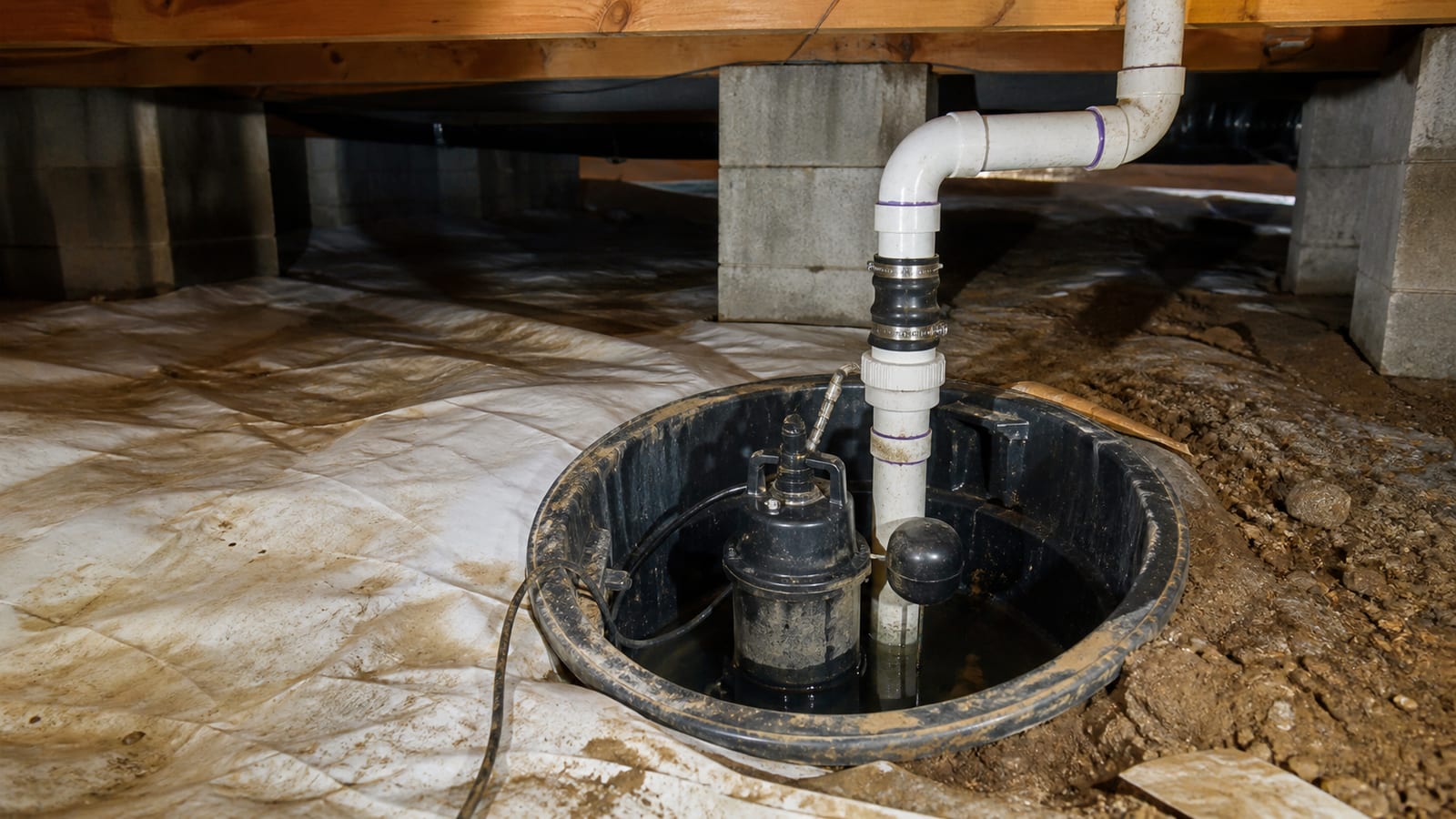
A technician should first reproduce the problem safely. The inspection may include a controlled water test, a check of the float or switch, and a review of the power source. The test should record whether the pump starts, moves water, stops at the expected level, and avoids rapid cycling.
The discharge route needs a separate check. A working pump can struggle against a blocked line, a stuck check valve, or an outlet that is frozen, crushed, or poorly placed. If discharged water flows back toward the crawl space, repairing the pump alone will not solve the recurring load.
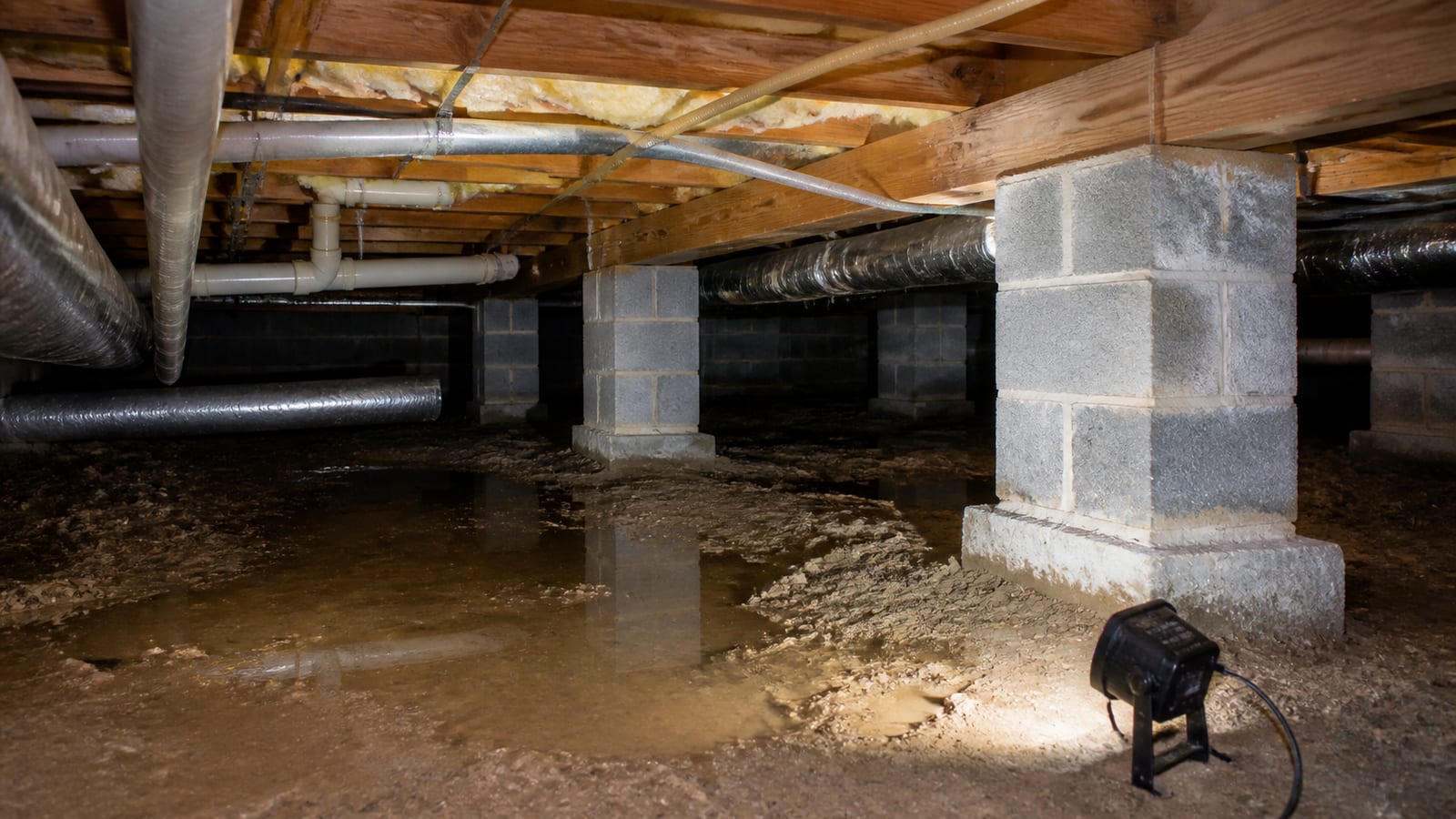
Standing water may also limit access and hide other defects. In that case, water may need to be removed before a detailed inspection. A proposal for standing-water removal should explain what is being removed, how the crew will gain access, and what inspection follows after the area is visible.
Do not assume every service visit includes electrical changes, drain rebuilding, debris disposal, or restoration of disturbed ground. The written scope should name included tasks and exclusions. If another trade is needed, it should be clear who schedules that work and when it must occur.
What Are the Most Common Crawl-Space Sump Pump Problems?
Common problems include lost power, a stuck float, a clogged intake, blocked drains, short cycling, a failed check valve, and an obstructed discharge line. A pump may also be too small for the water load. Sometimes the pump works, but moisture persists because water never reaches the basin.
The fastest way to sort these issues is to trace the system in order. Begin at the source. Note active seepage, stains, damp soil, plumbing leaks, and runoff patterns near the foundation. NC State Extension’s mold and moisture checklist offers practical signs to check around a home.
Then follow the water-control path:
- Collection: Do perimeter drains or channels capture the wet areas?
- Conveyance: Can water reach the basin without silt or debris blocking it?
- Pumping: Does the switch start the pump at a useful water level?
- Discharge: Does the line carry water away without leaking or returning it?
- Power: Is the power source stable, accessible, and suitable for the planned equipment?
Watch for short cycling, which means frequent starts and stops over a brief period. It can point to switch trouble, water flowing back through the line, or a basin that does not fit the incoming load.
Humidity is a separate concern. A sump pump removes collected liquid water, but it does not directly control humid air. If both problems exist, the scope may need drainage and moisture-control measures with clear sequencing.
How Do I Tell If My Sump Pump Needs Replacing?
Replacement becomes more reasonable when the pump fails a controlled test, starts inconsistently, overheats, shows heavy corrosion, makes new mechanical noises, or cannot keep up with normal inflow. Repeated repairs are another warning. The inspector should still check collection, discharge, and power before blaming the pump itself.
Ask the inspector to show the failure rather than relying only on age. Useful evidence includes the water level at startup, discharge flow, shutdown behavior, visible condition, and whether water returns after the pump stops. Photos of the basin, connections, and discharge outlet can support the recommendation.
Capacity also matters. A small pump may operate correctly yet fall behind during heavy inflow. That does not automatically mean a larger unit is the only answer. The basin, drain layout, discharge line, and available power must work together. A restricted pipe can limit a stronger pump, while an undersized basin can cause frequent cycling.
A replacement scope should state whether it includes the pump, switch, check valve, fittings, basin cover, discharge changes, testing, and removal of old materials. It should also identify access limits and any electrical work that is excluded.
If the basin receives little water while other areas remain wet, replacement may not address the cause. A crawl-space drainage system may need repair or extension so water reaches the pump. Inspection observations can show visible conditions, but structural design or engineering decisions should be referred to an appropriate independent professional.
How Much Does It Typically Cost to Replace a Sump Pump?
Replacement cost depends on more than the pump. Access, basin condition, drainage connections, discharge length, power needs, water removal, and site restoration can change the scope. A measured written proposal is more useful than a general price because it shows what work, materials, testing, and exclusions are included.
A simple equipment swap and a full water-control correction are different projects. Before comparing proposals, ask each company to describe the current condition and the planned result. One scope may reuse the basin and discharge line. Another may include a new basin, drainage connections, line routing, or cleanup after standing water.
Key scope factors include:
- Crawl-space height and path to the work area
- Amount of water or debris blocking access
- Condition and location of the basin
- Number and condition of connected drains
- Discharge distance, route, and outlet condition
- Available power and responsibility for electrical changes
- Testing, cleanup, and future maintenance access
The proposal should separate required work from optional upgrades. It should also state what happens if hidden damage appears after water or debris is removed. That prevents a low initial scope from being mistaken for a complete solution.
Do not compare totals without comparing assumptions. Confirm whether the old equipment is removed, disturbed materials are restored, and the final discharge test is included. If you plan to ask an insurer about possible coverage, contact the insurer directly and confirm its requirements before authorizing work.
Can a Crawl-Space Sump Pump Last 20 Years?
A sump pump may continue running for 20 years, but age alone does not prove that it remains dependable. Workload, water quality, cycling frequency, power events, maintenance, and installation conditions all affect service life. An older pump should be tested under load and reviewed as part of the complete drainage path.
An older pump may run during a brief test but fail under sustained inflow. Ask for a controlled test that checks startup, flow, shutdown, and water returning through the discharge line. Visible rust, damaged cords, slow discharge, unusual noise, and intermittent starts should be recorded rather than dismissed as normal age.
Maintenance access affects reliability. The basin cover should be reachable without tearing out major finished work. The switch, check valve, and important connections should also be available for inspection. If the system will be covered by encapsulation materials, the scope should preserve a practical service path.
Maintenance planning should follow the equipment instructions and site conditions. A useful plan records test dates, observed water levels, cleaning needs, discharge condition, and any changes after major rain. Property managers can keep this record with other building service files.
The EPA’s home mold and moisture guidance stresses moisture control as the key response to mold concerns. That makes pump reliability important, but the pump is only one part of moisture control. Leaks, drainage gaps, humid air, and discharge problems still require separate checks.
What Is the Best Month to Replace a Sump Pump?
There is no single best month for replacement. The better time is before a known weak pump faces heavy inflow, or during a drier period when access and testing are practical. In Wake Forest’s warm, humid climate, delaying a confirmed failure for a preferred season can allow moisture problems to continue.
Plan from evidence, not the calendar. If the pump fails testing, trips power, starts inconsistently, or cannot control routine inflow, waiting may increase the chance of standing water. If the pump remains reliable but is aging, a planned replacement can be scheduled around access, other crawl-space work, and contractor availability.
A drier spell may make it easier to inspect stains, drains, and the basin. However, the finished system still needs a controlled water test. Dry soil alone does not prove that the collection and discharge paths work.
Sequencing matters if the project includes several services. Standing water and debris may need removal first. Drain repairs should then direct water to the basin. Pump and discharge work should be tested before vapor barrier or encapsulation details limit access. A crawl-space sump pump installation scope should explain this order.
Before scheduling, confirm current service availability by phone. Ask how weather could affect exterior discharge work and what conditions may change the plan. The final scope should state who provides access, moves stored items, handles excluded electrical work, and returns for any planned maintenance check.
Frequently Asked Questions
What should a Wake Forest sump pump inspection include?
The inspection should trace visible water sources, connected drains, basin condition, pump operation, discharge routing, power, and service access. Ask for a controlled water test and photos of key findings. The inspector should explain which condition caused the recommendation, what remains uncertain, and whether water or debris must be removed before the full system can be checked.
Does replacing a sump pump waterproof the entire crawl space?
No. A sump pump removes water that reaches its basin. It does not stop plumbing leaks, repair every foundation entry point, collect water from disconnected areas, or control humid air by itself. A complete plan may also involve drainage, discharge corrections, ground moisture control, and maintenance access. The scope should show how those parts work together.
What should I do if the crawl space already has standing water?
Avoid entering if electrical or access conditions appear unsafe. Record where water is visible from a safe location, then request an inspection. Water removal may need to occur before drains, the basin, and concealed surfaces can be checked. Ask who handles removal, where the water will go, and what follow-up inspection is included after access improves.
Should a sump pump have backup power?
Backup power may be worth discussing where outages and water entry can happen together. The right choice depends on the expected water load, available space, maintenance needs, and current electrical setup. Ask how the backup will be tested, what it can operate, who handles electrical changes, and which alerts or routine checks are the owner’s responsibility.
How often should a crawl-space sump pump be checked?
Follow the equipment instructions and adjust checks for site conditions. A test before periods of expected heavy rain can reveal a stuck switch, blocked outlet, or lost power. Also check after drainage work or unusual water entry. Keep a short service record with test dates, observations, cleaning, repairs, and discharge changes.
How can property managers compare sump pump proposals?
Use the same checklist for every proposal. Compare the observed cause, pump test, collection area, drainage connections, discharge route, power assumptions, access plan, cleanup, exclusions, and maintenance steps. Ask who coordinates work outside the listed scope. A proposal that clearly defines responsibility boundaries is easier to manage than one that only names equipment.
A reliable repair decision starts with the full water path. Carolina Encapsulation Company serves Fuquay-Varina and surrounding Triangle communities, including Wake Forest. Request a free inspection to review the source, collection, conveyance, discharge, power, access, and maintenance needs. You can also call 704-207-9348 to confirm current availability and discuss a measured written scope.
How this applies in Wake Forest, NC
For homeowners in Wake Forest, NC, use this topic as a way to organize observations before selecting work. Carolina Encapsulation Company serves Wake Forest, NC and surrounding Triangle communities, but the appropriate scope still depends on the water, moisture, materials, access, and equipment found at the property. Compare the sump pump repair maintenance with the How to Choose a Crawl Space Waterproofing Contractor in Fuquay-Varina, NC before choosing a property-specific next step.