
Crawl Space Encapsulation in Fuquay-Varina, NC
A sealed vapor barrier system across the floor, walls, and piers, paired with moisture control, to close the crawl space off from ground moisture and humid air. Serving Fuquay-Varina, NC and surrounding communities.
Prefer to talk? Call 704-207-9348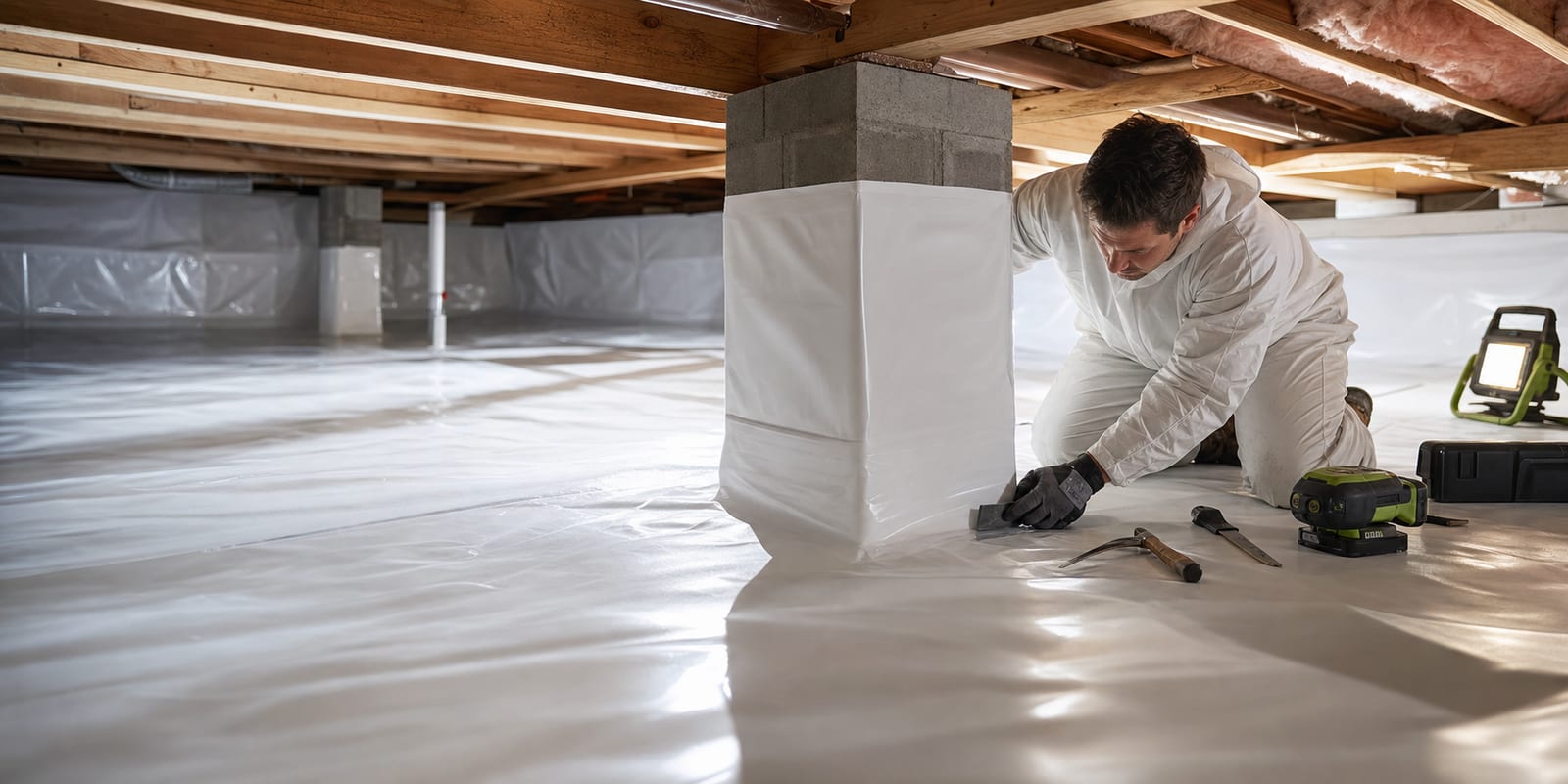
Crawl space encapsulation seals the floor, walls, and piers of your crawl space with a heavy vapor barrier and adds a dedicated dehumidifier. Together they close the space off from ground moisture and humid outdoor air, so it stays dry, clean, and easy to inspect.
Why Fuquay-Varina Crawl Spaces Need Sealing
Fuquay-Varina sits in a warm, humid stretch of North Carolina, and that climate is hard on an open crawl space for much of the year. Vented foundation walls pull damp outdoor air under the home, and bare soil gives off ground moisture around the clock. That moisture soaks into framing, insulation, and the air your home draws upward, which is where musty smells and high indoor humidity start.
Encapsulation ends that cycle by closing the space off and controlling the air inside it. The U.S. Department of Energy describes sealed, unvented crawl spaces as a way to cut summer moisture problems and improve comfort, which is exactly what a home in this climate is up against. If the dampness has already caused problems, our common crawl space problems pages walk through what those signs mean.
Signs Your Crawl Space Needs Attention
A short direct answer first: if you notice musty odors, high indoor humidity, condensation on ducts, standing water after rain, or sagging insulation, the space under your home is likely holding moisture. Any one of these is a good reason to have it inspected.
- Musty or damp smells inside the home
- High indoor humidity that is hard to control
- Condensation or standing water in the crawl space
- Torn, sagging, or missing vapor barrier
- Cool, uneven floors above the crawl space
- Insulation that is drooping or falling down
How the Encapsulation System Works
Encapsulation is a system, not a single product, and each step builds on the last. We inspect and manage water first, then seal the space, then control the humidity that remains. Skipping a step is how sealed crawl spaces still end up damp, so the order matters as much as the materials.
Inspect
We assess moisture, drainage, and the condition of the existing barrier and framing.
Prepare
The space is cleared and any water intrusion is addressed with drainage first.
Seal
A heavy vapor barrier is installed across floor, walls, and piers, sealed at the seams.
Control
A dedicated dehumidifier is set to hold humidity in a stable, controlled range.
What a Full Encapsulation Covers
A complete encapsulation covers every surface that lets moisture in, and that means more than the floor. It reaches the ground, the foundation walls, and the piers, plus the moisture control and drainage that keep it all dry. Related work like a dedicated dehumidifier and a drainage system is scoped to what your space needs.
- Heavy-duty vapor barrier across the floor
- Barrier run up the walls and around piers
- Sealed seams and a sealed perimeter
- Dedicated crawl space dehumidifier
- Water and drainage control as needed
- A final walkthrough of the finished space
What Happens After a Crawl Space Is Sealed
Here is the short version: once the space is sealed and the dehumidifier is running, the crawl space stays dry and the air under your home is controlled instead of humid. You should notice steadier indoor humidity and less of the musty smell that comes from a damp space, and the area becomes clean enough to enter and inspect.
A sealed crawl space is not a set-and-forget system, though. The dehumidifier needs occasional attention, and it is worth checking the barrier after any plumbing or pest work disturbs it. If a problem does show up later, targeted crawl space repair handles it without redoing the whole system. Keeping humidity in range is the goal the EPA points to when it explains that controlling moisture is how you control mold.
Encapsulation for Homes Around Fuquay-Varina
Homes across Fuquay-Varina and the nearby Triangle sit on a range of soils and lots, so no two crawl spaces behave the same way. A house near a low spot deals with more ground water than one on a rise, and older homes often have thin or torn barriers. Because of that, we scope each job from what the inspection shows rather than a one-size template.
As a service-area business, we travel to homes throughout Fuquay-Varina and the surrounding communities. If you want to keep humidity in check between visits, NC State Extension publishes a helpful mold and moisture checklist homeowners can follow.
Crawl Space Encapsulation FAQ
What is crawl space encapsulation, in plain terms?
It is a full seal for the space under your home. We line the floor, walls, and support piers with a heavy vapor barrier, seal the seams, and add a dedicated dehumidifier. That combination shuts out ground moisture and humid outdoor air so the crawl space stays dry and clean.
How long does a crawl space encapsulation take?
Most crawl spaces are finished in a focused window that depends on the size of the space and its starting condition. A dry, open space goes faster than one that needs standing water cleared or drainage added first. We give you a clear timeline after the free inspection so there are no surprises.
Do you handle standing water and drainage first?
Yes. Sealing a wet crawl space without managing the water traps the problem inside. When we find standing water or active seepage, we address the source with drainage and a sump before the barrier goes in, so the finished space actually stays dry.
Will I be able to use the crawl space afterward?
A sealed crawl space is cleaner, brighter, and far easier to enter than a bare, damp one. That makes future access simple, whether a plumber needs to reach a line or you want to check the space yourself. The barrier is built to hold up to that kind of foot traffic.
Does a sealed crawl space still need a dehumidifier running?
In a humid climate like ours, yes. Sealing keeps most moisture out, and the dehumidifier handles what remains so humidity stays in a stable range. NC State Extension recommends keeping crawl space humidity below about 60 percent, and the dehumidifier is what holds that line year-round.
Is a permit required for crawl space encapsulation in North Carolina?
It depends on the scope of the work, not a single rule. NC OSFM has published an interpretation noting that closed-crawl-space work can require a permit in certain situations, such as when it affects HVAC or electrical systems. It is a resource worth reviewing, and we can talk through what your project involves.
Related Services
Serving Fuquay-Varina & the Surrounding Area
Carolina Encapsulation Company is a service-area business based around Fuquay-Varina, NC. We travel to homes and buildings across the nearby Triangle communities, so call to confirm we cover your address.
Get a Free Crawl Space Inspection
Serving Fuquay-Varina, NC and the surrounding area.