
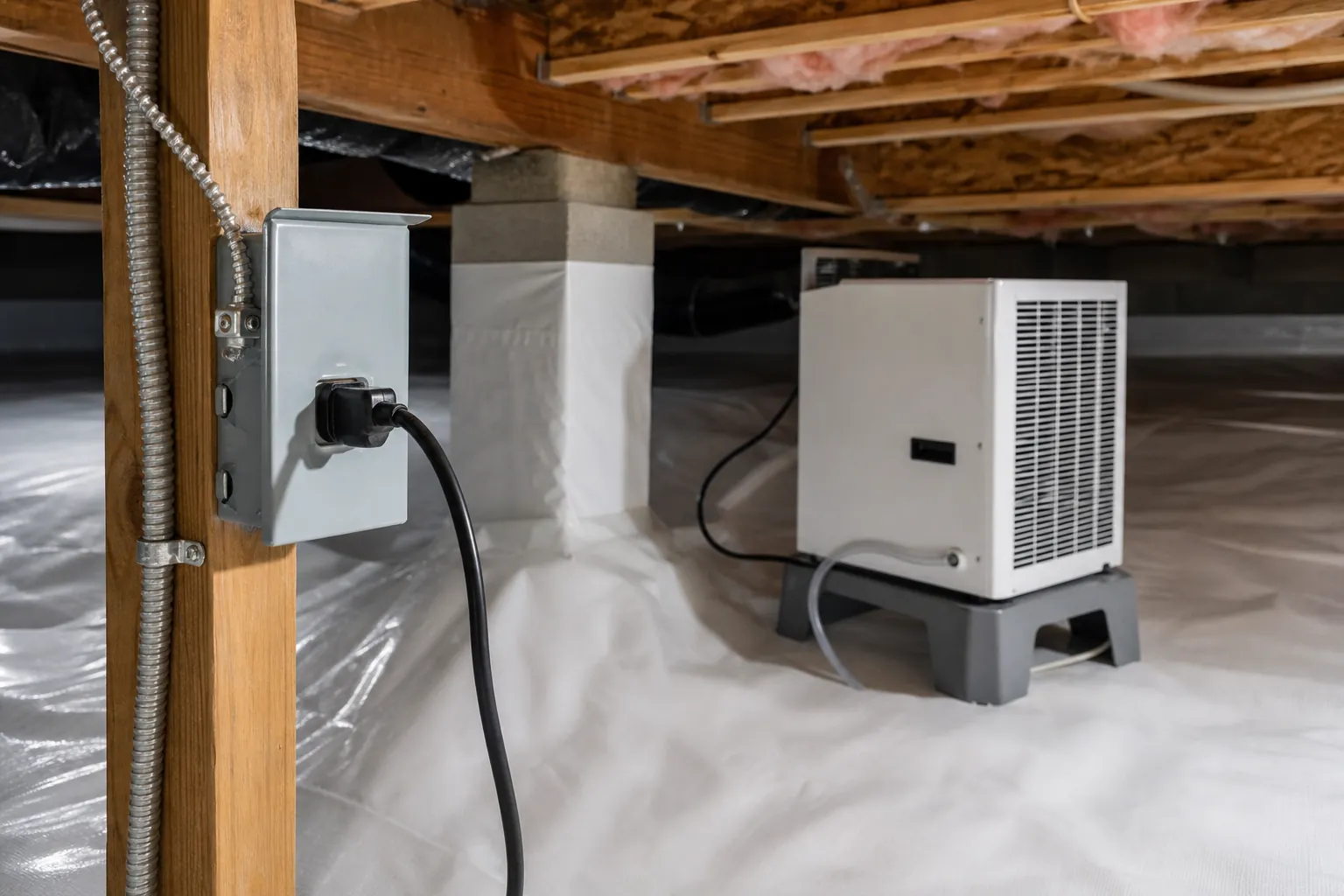
A crawl space dehumidifier can help control moisture beneath a North Carolina home, but its installation involves more than placing equipment near an outlet. The power supply needs to match the unit, suit the crawl space environment, and comply with the electrical rules that apply locally.
Understanding crawl space dehumidifier electrical requirements helps homeowners ask better questions before installation. It also reduces the chance of nuisance trips, unsafe extension cords, and moisture-control equipment that stops running without anyone noticing.
Carolina Encapsulation Company recommends treating electrical planning as part of the overall crawl space project. The dehumidifier, drainage system, vapor barrier, and access layout should work together, with electrical work handled by an appropriately licensed electrical contractor.
Start With The Dehumidifier’s Electrical Specifications
There is no single electrical setup that fits every crawl space dehumidifier. Residential units often use a standard 115- or 120-volt supply, but larger equipment may have different requirements. Always use the actual model’s nameplate and installation manual rather than assumptions based on its size.
The documentation should identify voltage, frequency, rated current, plug configuration, and any required branch-circuit specifications. Some manufacturers explicitly require a dedicated circuit. Others describe acceptable circuit capacity without making that same requirement.
A dehumidifier contains a compressor and fan. Its electrical demand can change during operation, particularly when the compressor starts. The running amperage alone does not establish whether an existing circuit is suitable.
- Confirm the exact model number before requesting an electrical estimate.
- Give the electrician the installation manual and nameplate information.
- Check whether the manufacturer requires a dedicated circuit or specifies overcurrent protection.
- Identify any condensate pump or accessory that also needs electrical power.
- Verify that the proposed receptacle matches the equipment’s factory-installed plug.
Do not replace a plug, alter a power cord, or use an adapter simply to make the unit fit an available outlet. If the equipment and supply do not match, the installation plan needs professional review.
Does A Crawl Space Dehumidifier Need A Dedicated Circuit?
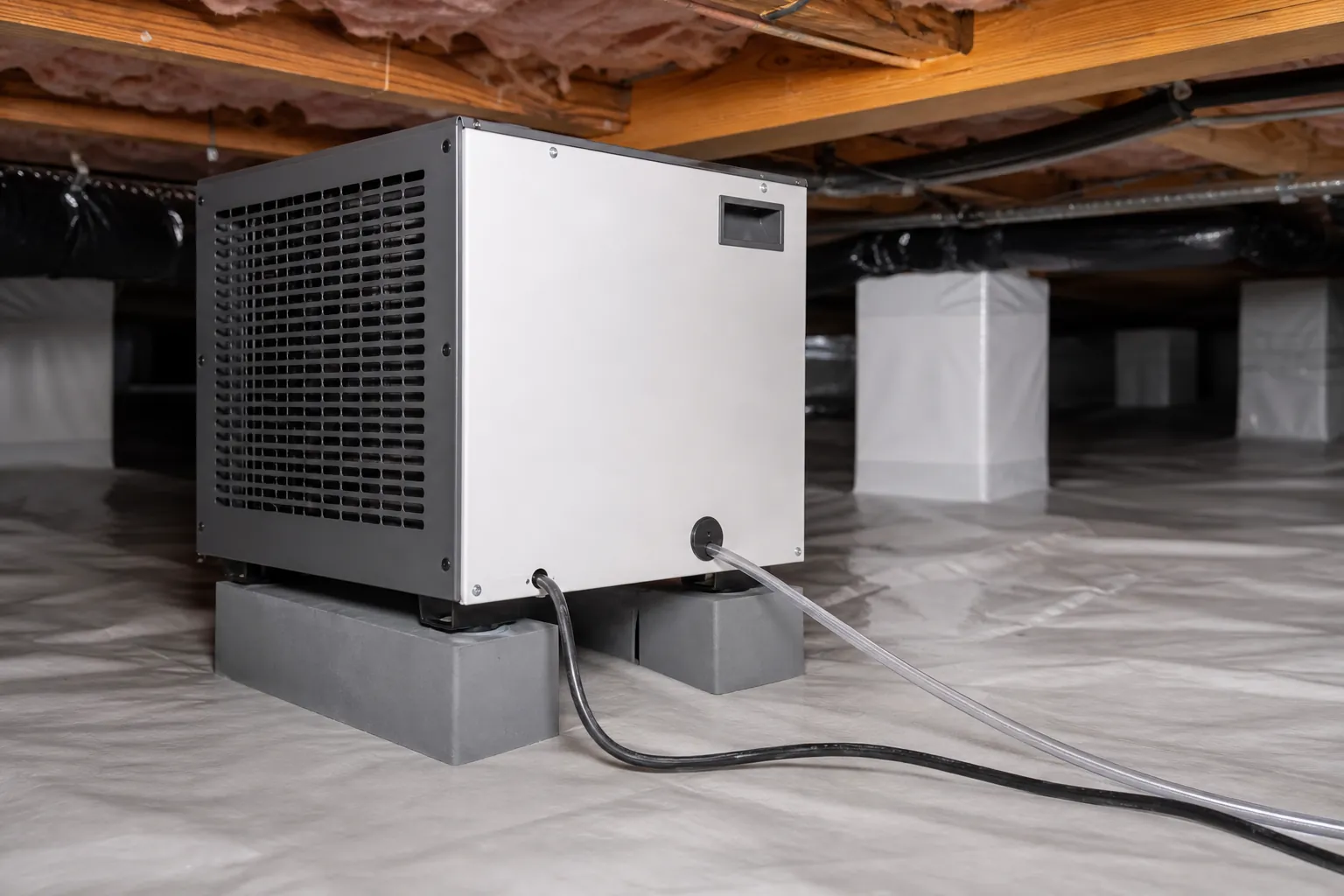
A dedicated circuit supplies the dehumidifier without unrelated household loads sharing that branch circuit. It can be required by the manufacturer, and it is often a practical choice for equipment expected to run automatically throughout humid periods.
However, it would be inaccurate to say that every crawl space dehumidifier universally requires its own circuit. The answer depends on the equipment instructions, calculated load, existing circuit arrangement, and applicable electrical requirements.
Shared circuits deserve careful evaluation. An outlet beneath the house may also serve garage receptacles, outdoor equipment, lighting, or another load. What appears to be a convenient power source may have limited capacity or an inconvenient upstream protection device.
For example, a dehumidifier sharing power with intermittently used tools could lose power when another load starts. A circuit that seems adequate during a brief installation test may behave differently during normal household use.
The electrician should evaluate circuit capacity and conductor sizing together. A breaker’s rating does not prove that the wiring or installation is appropriate. Installing a larger breaker to stop trips can create a serious hazard if the circuit is not designed for it.
Ask for a clear explanation of whether a dedicated circuit is required, recommended, or unnecessary for your specific unit. That distinction makes estimates easier to compare and helps avoid vague claims about what the electrical code always demands.
GFCI Protection And North Carolina Code Considerations
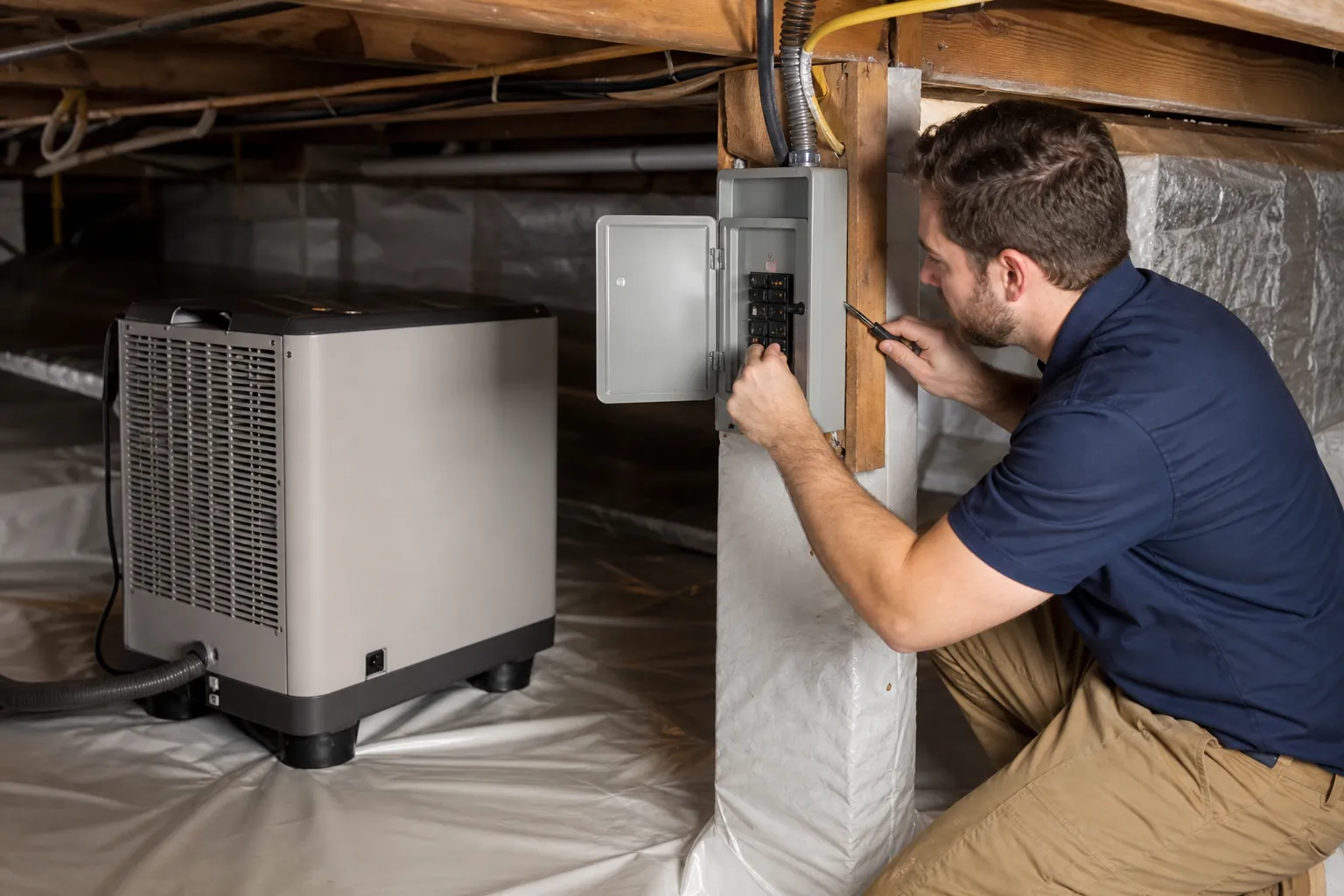
Ground-fault circuit-interrupter protection is an important consideration beneath a home. A GFCI is designed to reduce shock risk by interrupting power when it detects an imbalance that can indicate current flowing through an unintended path.
Under commonly applicable electrical-code provisions, receptacles in crawl spaces at or below grade require GFCI protection. The licensed electrician should confirm the North Carolina code edition, amendments, and local requirements that govern your installation.
Do not assume a dehumidifier is exempt because it is fixed in place, runs automatically, or has a compressor. Equipment instructions and applicable code requirements need to be satisfied together. An operational problem is not a reason to remove required protection.
GFCI protection may be provided through an appropriate receptacle or circuit breaker, depending on the installation. The location of any reset control matters because protective devices must meet applicable accessibility requirements.
An upstream GFCI in a garage or another room can be easy to overlook. If it trips, the crawl space dehumidifier may stop while the homeowner sees no obvious change inside the house. Clear labeling makes troubleshooting more straightforward.
- Ask where the GFCI protection will be located and how it will be reset.
- Have the circuit and any upstream protective device clearly identified.
- Follow the protective device manufacturer’s instructions for testing.
- Request diagnosis of repeated trips instead of bypassing the protection.
Depending on the circuit and installation, additional requirements such as AFCI protection may also need review. A local electrical professional can determine which provisions apply rather than relying on a generic internet checklist.
Choose A Safe Receptacle Location
Outlet placement affects safety, service access, and long-term reliability. The receptacle should be positioned so the factory power cord reaches comfortably without stretching, crossing a walking route, or resting where it could be damaged.
A crawl space should not be treated as a dry indoor room simply because it has been encapsulated. Plumbing leaks, drainage failures, and seasonal water intrusion can still occur. Electrical components must be selected for the conditions at their installed location.
The electrician should determine whether the location is dry, damp, or wet and use appropriate boxes, fittings, receptacles, and covers. The classification depends on actual conditions, not just whether a vapor barrier is present.
Place electrical connections away from likely splash areas, drainage discharge points, and locations where water could collect. Mounting height and positioning should account for foreseeable water exposure without suggesting that a high outlet makes flooding safe.
Access also matters. A receptacle hidden behind equipment may complicate service. A plug or permitted disconnecting arrangement should be reachable as required, and the dehumidifier should not obstruct electrical equipment that needs working clearance.
Plan the location before the final vapor barrier detailing is completed. This helps coordinate supports, equipment placement, and any penetrations so the encapsulation system can be properly sealed afterward.
Avoid Extension Cords And Improvised Power Supplies
An extension cord may look like the quickest way to power a new dehumidifier, but it is not a substitute for a properly installed permanent supply. Many equipment manufacturers prohibit extension-cord use, and flexible cords cannot replace permanent wiring.
Long or undersized cords can contribute to voltage drop and heating. Connections near the ground can also be exposed to moisture or physical damage. Power strips introduce additional connections and are generally a poor solution for crawl space equipment.
Do not route a household extension cord through the crawl space door, plug the unit into a lighting adapter, or conceal a cord beneath the vapor barrier. These arrangements can create hazards while making inspection and maintenance harder.
The better approach is to install an appropriate receptacle within reach of the equipment’s original cord. If the unit needs to move later, have the electrical arrangement reviewed rather than extending it with temporary accessories.
If temporary power is needed during construction, its suitability should be evaluated separately. A temporary setup used by contractors does not establish that the same arrangement is acceptable for unattended, ongoing dehumidifier operation.
Account For Drainage Pumps And Equipment Layout
The electrical plan should include the full moisture-control system, not just the dehumidifier. If gravity drainage is impractical, a condensate pump may need its own nearby power connection and suitable protection.
A condensate pump and a groundwater sump pump perform different jobs. One moves water collected by the dehumidifier, while the other may handle water entering a drainage system. Their power requirements should not be treated as interchangeable.
Some dehumidifiers can interface with compatible pump safety switches or alarms. The correct arrangement depends on the equipment and may help stop operation or provide notice when condensate cannot drain. Do not improvise control wiring.
- Decide whether condensate will drain by gravity or require a pump before finalizing outlet placement.
- Include the pump’s electrical specifications when evaluating circuit loads.
- Keep drain lines and electrical cords arranged to reduce accidental damage.
- Provide access for cleaning the pump and checking its discharge line.
- Confirm whether a manufacturer-approved overflow safety arrangement is available.
The unit itself also needs manufacturer-specified airflow and service clearances. A convenient outlet location should not force the dehumidifier into a tight corner that restricts airflow or prevents filter changes.
Coordinate equipment supports and drainage routing with the encapsulation layout. Stable placement helps protect the vapor barrier and allows the drain to function as designed.
Permits, Inspections, And Contractor Coordination
Installing a new circuit or modifying wiring can require an electrical permit and inspection. Requirements depend on the scope of work and the local authority having jurisdiction. Confirm them before work begins, not after equipment is operating.
Electrical work should be performed by a properly licensed electrical contractor as applicable in North Carolina. Crawl space moisture-control expertise does not, by itself, establish authorization to install branch-circuit wiring.
A coordinated project identifies who selects the dehumidifier, who installs the electrical supply, and who verifies that the finished arrangement matches the equipment instructions. This prevents important tasks from falling between contractors.
Ask whether electrical work is included in the proposal or priced separately. A dehumidifier installation estimate may cover equipment placement and drainage while excluding a new circuit, panel work, permits, or correction of existing wiring.
Older homes may need additional investigation. The panel could have limited capacity, existing wiring may be damaged, or an available outlet may not have a verified equipment-grounding path. Those conditions should be addressed rather than hidden behind a new receptacle.
For a clean handoff, retain the equipment manual, electrical invoice, permit information when applicable, and circuit identification. These records can help future service technicians understand the installation.
Common Power Problems And What They Can Mean
If a crawl space dehumidifier stops running, first distinguish between normal operation and a power problem. A unit may pause because the target humidity has been reached, because it is in a defrost cycle, or because a safety control has activated.
Check the display or status indicator and consult the manual. If the receptacle has lost power or a protective device has tripped, avoid repeatedly resetting it without understanding the cause.
A tripped breaker can indicate an overloaded circuit, a fault, or an equipment issue. A tripped GFCI may indicate leakage current, moisture exposure, damaged wiring, or a problem inside connected equipment. Diagnosis may require both electrical and dehumidifier service expertise.
- If a plug or receptacle feels unusually hot, stop using the equipment and arrange inspection.
- If you notice a burning smell, visible damage, or buzzing at an electrical connection, do not continue operating the unit.
- If protection trips repeatedly, have the cause evaluated instead of changing breaker size or removing GFCI protection.
- If the unit has power but does not remove moisture, check the manufacturer’s troubleshooting guidance and request equipment service.
Do not enter a flooded crawl space to unplug equipment or inspect wiring. Standing water and energized components can create a serious shock hazard. Keep clear and seek professional help, with power isolated from a safe location by someone qualified.
A Homeowner Checklist Before Installation
A brief planning conversation can prevent expensive changes after installation. Focus on the specific equipment, the condition of the crawl space, and the scope of each contractor’s work.
- Obtain the selected dehumidifier’s electrical requirements in writing.
- Confirm whether the existing circuit is suitable or a new circuit is needed.
- Identify the required GFCI protection and its accessible reset location.
- Agree on receptacle placement before equipment and drainage lines are finalized.
- Determine whether a condensate pump adds another electrical load.
- Confirm who handles permits, inspections, and any panel modifications.
- Ask how you will know if the dehumidifier loses power or stops operating.
- Keep manuals and service information somewhere accessible outside the crawl space.
After installation, review operation and maintenance with the installer. Learn how to read the humidity setting, recognize fault indicators, and maintain the filter. A separate humidity monitor can help reveal performance changes, although it does not replace electrical protection or equipment service.
Plan Reliable Moisture Control For Your North Carolina Home
Electrical planning is one part of effective crawl space moisture management. A properly powered dehumidifier cannot compensate for unresolved bulk water, disconnected drainage, or major air leaks. The crawl space should be evaluated as a complete system.
The best arrangement matches the manufacturer’s instructions, applicable North Carolina electrical requirements, and the actual conditions beneath your home. It provides dependable power without sacrificing protective devices, service access, or safe wiring practices.
If you are planning encapsulation or replacing a crawl space dehumidifier, Carolina Encapsulation Company can discuss the moisture-control layout and help identify electrical needs that should be reviewed by a licensed electrician. Call 704-207-9348 to talk through your North Carolina crawl space project.
Call 704-207-9348 to talk through next steps.