
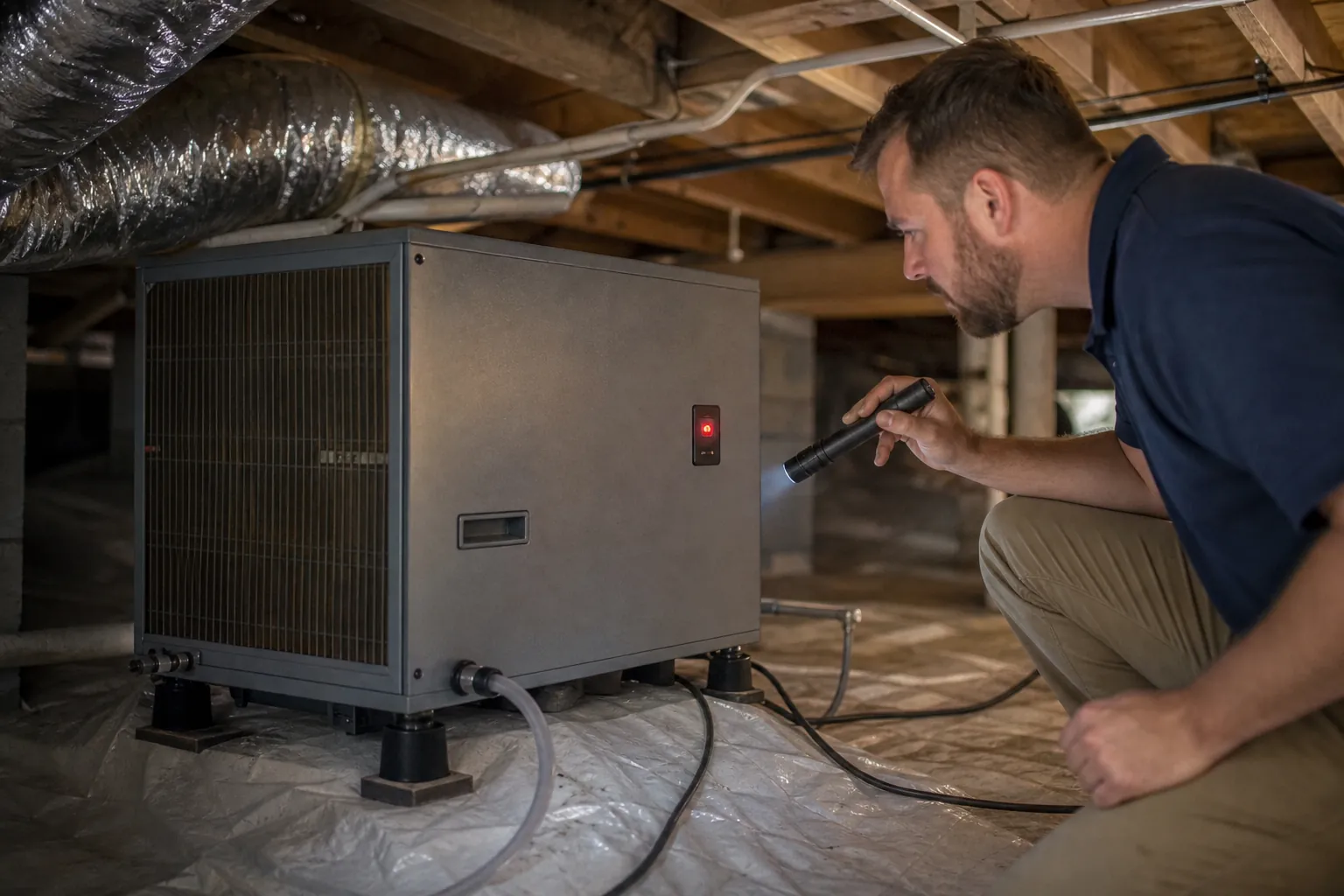
A flashing code on your crawl space dehumidifier can be unsettling, especially when North Carolina humidity is already high. The message may point to something straightforward, such as a drainage problem, or it may indicate a sensor or electrical fault that requires professional diagnosis.
The important first step is not guessing what the letters mean. Crawl space dehumidifier error codes vary by manufacturer, model, and sometimes controller version. A code listed for one unit may mean something entirely different on another.
This guide explains how to identify the correct code information, make safe observations, and decide when service is needed. It also covers why a properly functioning dehumidifier can still struggle if the surrounding crawl space has unresolved moisture problems.
Start With The Exact Model And The Actual Message
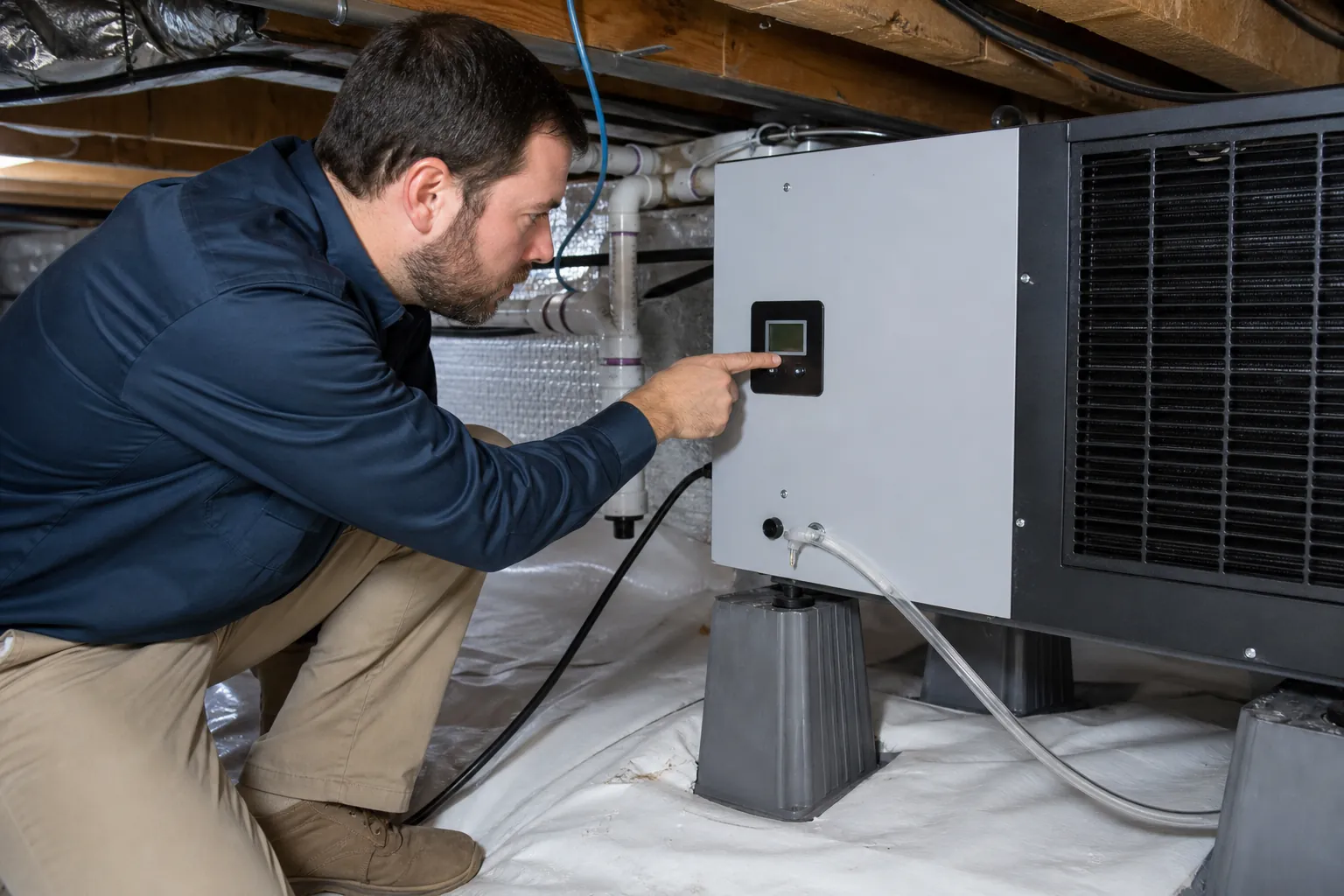
Before looking up a code, photograph the display and the unit's identification label. Record the manufacturer, model number, and serial number. If the message appears on a remote controller, photograph that controller as well.
Write down the complete message, including letters, numbers, symbols, and blinking lights. A humidity reading is not necessarily an error. Neither is a defrost indicator, a full-reservoir warning, or a reminder to inspect the filter.
Use the owner's manual for that exact model or the manufacturer's official support resources. Search results and discussion forums can offer clues, but they should not replace model-specific instructions.
- Note whether the unit is running, stopped, cycling frequently, or operating without removing noticeable moisture.
- Record when the message first appeared and whether it followed a storm, power interruption, cleaning, or service visit.
- Check whether the message is constant or appears only during certain operating conditions.
- Save the manual's troubleshooting page so a technician can compare the displayed message with the correct guidance.
A generic online list that labels every E1 message as a humidity sensor failure is not reliable. Letter-and-number codes are useful only when paired with the manufacturer's definition for your equipment.
Common Fault Categories And What They Can Mean
Although the codes themselves are not universal, many crawl space dehumidifiers monitor similar components. Understanding the general fault category helps you describe the problem without attempting repairs that could damage the unit.
Humidity Or Temperature Sensor Problems
A sensor-related code may indicate that a reading is outside the expected range, that the sensor circuit is interrupted, or that the controller cannot interpret the signal. The exact meaning depends on the model.
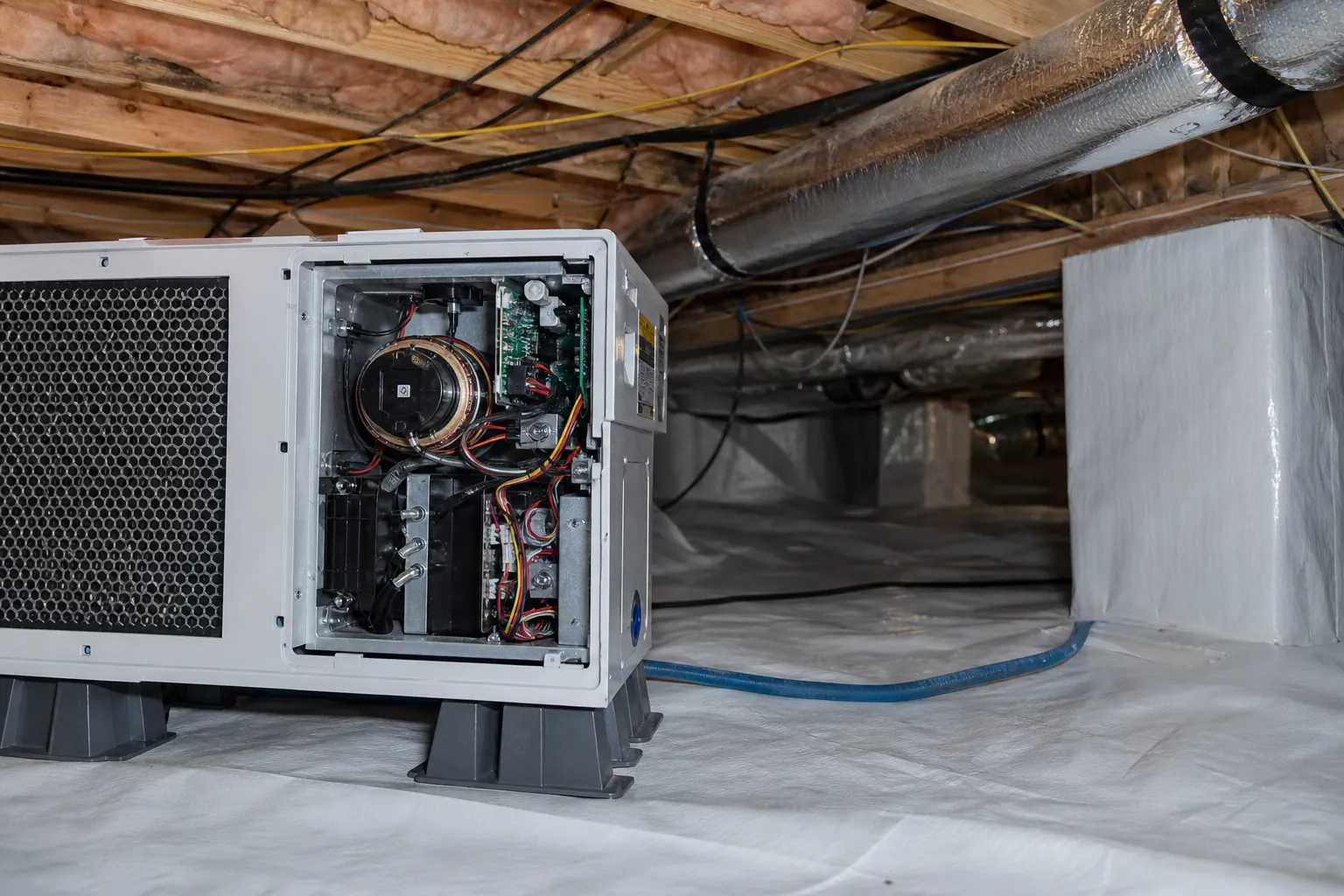
Possible causes include a failed sensor, damaged wiring, a loose internal connection, or environmental conditions outside the equipment's operating limits. Do not open electrical compartments to investigate. A technician can compare sensor readings with actual conditions and follow the manufacturer's testing procedure.
Drainage Or Condensate Pump Problems
Dehumidifiers remove water from the air, and that water needs a dependable discharge path. Some models monitor a pump, reservoir, or overflow safety device. Others may stop through an external safety switch without showing a dedicated drain code.
A warning could relate to a kinked hose, blocked discharge line, pump failure, or elevated water level. Look for visible water near the equipment, but do not assume the drain is the only source. Plumbing leaks and groundwater intrusion can produce similar puddles.
Defrost And Coil Temperature Messages
Some units use a defrost cycle to manage frost on the evaporator coil. A defrost light may describe normal operation rather than a fault. Persistent icing, however, deserves attention.
Restricted airflow, unsuitable ambient temperature, sensor trouble, or refrigeration-system issues can contribute to icing. The owner's manual should explain the unit's operating temperature range and which defrost messages require service.
Controller Or Communication Faults
A communication warning may involve a remote control, connected sensor, cable, or control board. A display that looks unusual after a power interruption may also require model-specific troubleshooting.
Do not repeatedly disconnect cables or power-cycle the unit in hopes of clearing the message. Record the warning first, then follow the approved procedure. Repeated resets can erase useful clues without fixing the underlying problem.
Safe Checks You Can Make Before Scheduling Service
Only enter a crawl space if access and conditions are safe. Standing water, damaged wiring, strong unexplained odors, unstable footing, or animal activity are reasons to stay out. Never touch a unit, plug, or electrical connection while standing in water.
If access is safe, focus on external observations rather than internal repairs. You can often gather useful information without removing a panel or handling wiring.
- Confirm that the displayed humidity target matches the setting you intended, using the manual to distinguish the target from the measured humidity.
- Look for stored items or insulation blocking the intake and discharge openings, and maintain the clearances specified by the manufacturer.
- Inspect the accessible drain hose for obvious kinks, crushing, disconnections, or water backing up around the unit.
- Check the filter according to the manual, and clean or replace it only with the approved method and filter type.
- Look for visible ice, unusual vibration, or water beneath the equipment without reaching into moving parts.
- Observe the power cord and receptacle from a safe position, and stop if either appears damaged, discolored, wet, or overheated.
Disconnect power before filter maintenance if the manual requires it. Some filters are washable; others are not. Running without the proper filter or installing an overly restrictive substitute can create additional airflow problems.
If a breaker has tripped, do not keep resetting it. Repeated trips can indicate an electrical or equipment fault. An electrician or qualified service professional should determine the cause.
Should You Reset A Crawl Space Dehumidifier?
A reset can be appropriate when the owner's manual specifically recommends one. It is not a universal repair, and the required procedure may differ between models.
Photograph the code and record the conditions before resetting. Follow the manufacturer's shutdown and restart instructions, including any waiting period. Compressor protection delays can make a functioning unit appear inactive immediately after power returns.
Once restarted, watch for the original message and note whether the equipment resumes normal operation. A cleared display does not prove that the problem is resolved. A partially blocked drain or intermittent sensor fault may trigger another warning later.
- Use a reset only when conditions are safe and the manufacturer's instructions allow it.
- Stop troubleshooting if the same fault returns or the unit develops a new warning.
- Do not bypass an overflow switch, sensor, or other safety device to keep the equipment running.
- Arrange service if the unit starts but produces unusual noise, develops ice, or fails to control humidity.
Repeatedly restarting a malfunctioning dehumidifier can delay a needed repair while moisture continues to accumulate. Documenting the pattern is more helpful than trying to force the machine to stay on.
When An Error Code Needs Prompt Professional Attention
Some symptoms should end homeowner troubleshooting immediately. Smoke, sparking, a burning smell, or signs of overheating require urgent attention. Stay clear of the equipment and disconnect power only if you can do so safely. Call emergency services if there is fire or immediate danger.
Other problems may not be emergencies, but they still justify a timely service visit. These include recurring codes, persistent icing, repeated breaker trips, pump overflow, unusual compressor noises, and water reaching electrical components.
Internal sensor replacement, control-board testing, refrigeration diagnosis, and electrical repairs are not appropriate trial-and-error projects. Opening the unit may introduce hazards and can affect warranty coverage.
Ask whether the person servicing the equipment is qualified for the specific work involved. Refrigerant-system repairs and certain electrical tasks may require specialized credentials. An encapsulation assessment and an appliance repair can be related but separate services.
If the unit is under warranty, contact the manufacturer or installing contractor before authorizing parts replacement. Keep the purchase date, installation record, serial number, and photographs available.
Why North Carolina Crawl Spaces Can Expose Weak Points
North Carolina's warm, humid weather can create a substantial moisture load beneath a home. Conditions vary between coastal communities, the Piedmont, and mountain areas, so equipment settings and performance should reflect the actual crawl space rather than a statewide assumption.
When humid outdoor air reaches cooler crawl space surfaces, condensation can develop. Rainwater, plumbing leaks, exposed soil, and poorly managed roof runoff can add moisture through separate pathways.
A dehumidifier is designed to remove moisture from air. It is not a substitute for correcting standing water or an active leak. Even a large unit may struggle if water continues entering the space.
- Ground moisture can enter where the vapor barrier is missing, damaged, or poorly sealed.
- Exterior drainage problems can direct roof runoff or surface water toward the foundation.
- Plumbing leaks can maintain high humidity even when the crawl space is otherwise well sealed.
- Openings and incomplete encapsulation can allow humid air to enter faster than expected.
- Poor equipment placement can limit air circulation and leave distant areas damp.
A fault appearing after heavy rain may be related to drainage, electrical moisture exposure, or increased operating demand. Timing is useful evidence, but it does not identify the cause by itself. The equipment and the surrounding space both need evaluation.
No Error Code, But The Crawl Space Is Still Humid
A dehumidifier can operate without displaying a fault and still fail to achieve the desired humidity. Error monitoring does not detect every installation, sizing, or building-moisture problem.
Start by verifying the reading with a separate, reasonably accurate hygrometer. Place it away from the discharge air and compare conditions over time. Two instruments may differ slightly, so look for a persistent pattern rather than one isolated reading.
A common moisture-control goal is to keep relative humidity below 60 percent, with many systems operating around 45 to 55 percent. The appropriate target depends on conditions and professional recommendations. Relative humidity alone does not tell you whether framing is dry.
If humidity stays high, possible explanations include an undersized unit, restricted airflow, an inaccurate sensor, poor air distribution, or ongoing moisture entry. Rated water-removal capacity also depends on test conditions, so advertised capacity is not a guarantee of performance in every crawl space.
Long run times during humid weather do not automatically indicate failure. More useful questions are whether humidity is trending downward, drainage is functioning, the space is receiving adequate circulation, and the equipment is operating within its specified limits.
A crawl space assessment may include wood moisture measurements, vapor barrier inspection, drainage review, and checks for condensation on ducts or other surfaces. Those observations help separate an appliance problem from a whole-space moisture problem.
What To Prepare For A Service Visit
A little preparation can make diagnosis more efficient. You do not need to identify the failed part. Clear records help a professional reproduce the problem and avoid unnecessary guessing.
- Provide the exact manufacturer, model, serial number, and a clear photograph of the displayed code.
- Describe when the warning occurs, how often it returns, and whether it followed a storm or power outage.
- Share the humidity setting and recent readings from the controller and any separate hygrometer.
- Explain any filter maintenance, drain inspection, or reset you have already performed.
- Provide installation and warranty records, along with information about previous repairs.
- Mention water intrusion, musty odors, plumbing leaks, or recent changes to the crawl space.
Keep the access opening clear if you can do so safely. Tell the service provider about standing water, tight access, exposed wiring, or other hazards before the visit.
Also ask what the proposed visit covers. Diagnosing the dehumidifier, assessing encapsulation, correcting drainage, and repairing electrical equipment may require different steps or different professionals.
Reduce Repeat Warnings With Routine Maintenance
Preventive maintenance cannot eliminate every fault, but it can reduce avoidable airflow and drainage problems. Use the manufacturer's schedule rather than assuming all crawl space units need identical care.
Inspect the filter and accessible drainage components at the recommended intervals. Keep intake and discharge areas clear, and check that hoses remain supported and protected from damage.
For gravity drainage, the line needs the configuration and fall specified for the installation. For pumped drainage, check the discharge route and pump requirements. A hose that looks acceptable near the unit can still be obstructed farther along.
Periodically review humidity readings and look for changes after heavy rain. Inspect accessible vapor barrier areas for damage without disturbing sealed seams. Address plumbing leaks and exterior water-management issues promptly.
Keep a simple maintenance log with dates, readings, filter work, and any warnings. A recurring code becomes easier to investigate when its history is documented.
Get Help With The Code And The Moisture Behind It
The best response to crawl space dehumidifier error codes combines accurate model-specific information with a practical look at the surrounding environment. A warning should not be ignored, but it also should not lead to replacing equipment before the cause is understood.
If your North Carolina crawl space has recurring warnings, persistent humidity, or drainage concerns, call Carolina Encapsulation Company at 704-207-9348 to discuss an assessment. Have the model number and code photograph ready, and explain any visible water or safety concerns.
Understanding whether the issue comes from the appliance, its installation, or ongoing moisture entry is the first step toward dependable crawl space moisture control.
Call 704-207-9348 to talk through next steps.