Short answer
Standing water that appears only after heavy rain should be traced in order from the roof and surrounding ground to the foundation, wall entry points, interior low areas, drains, and possible groundwater. The storm timing is useful evidence, but it does not identify one source by itself. Photograph the water at known times, mark where it begins, observe exterior runoff safely, and have the whole path evaluated before selecting drainage or sealing work.
Why storm-only water is a valuable clue
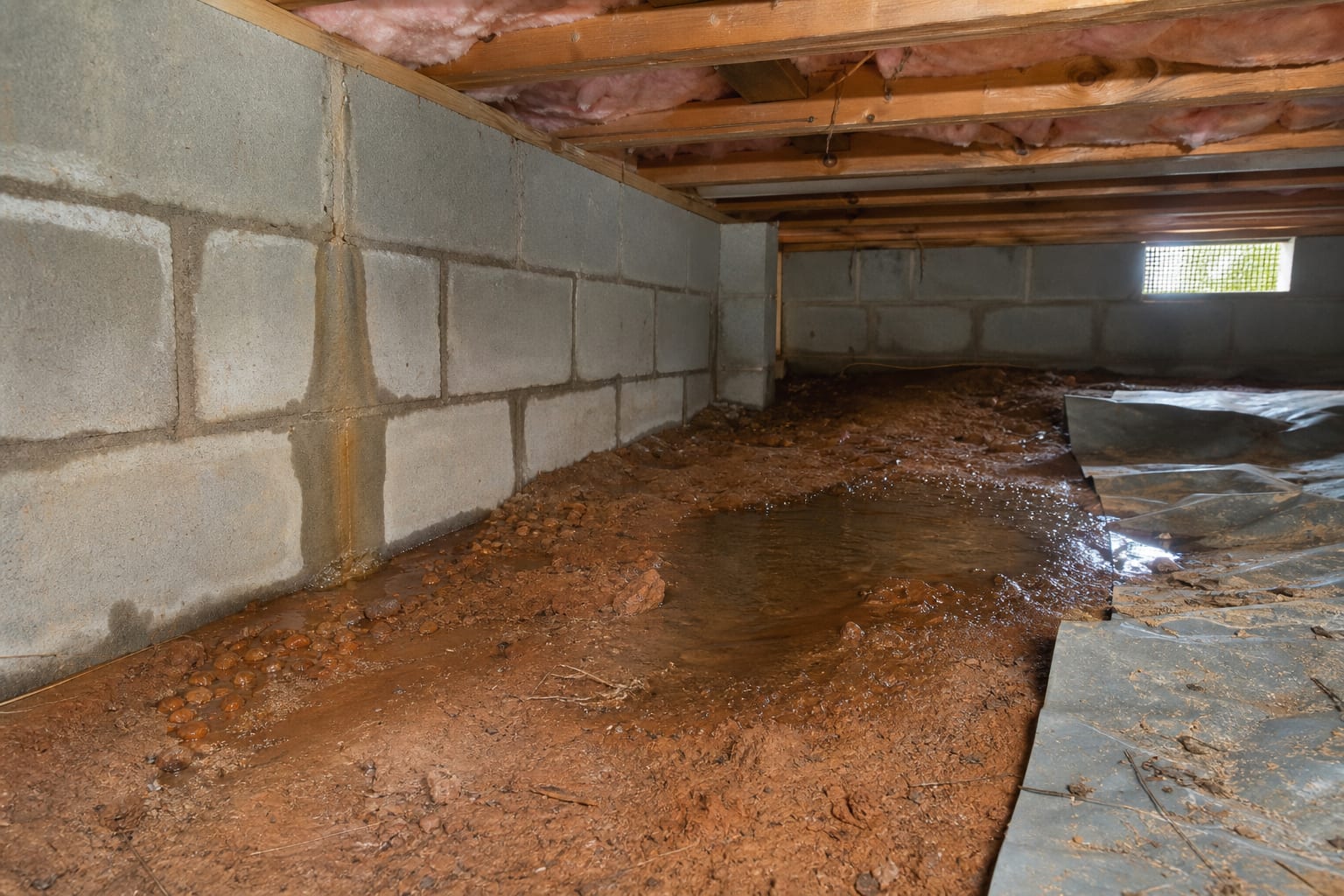
Water visible after an intense or prolonged rain establishes a relationship worth testing. It may be roof runoff concentrated near the foundation, surface water moving across the lot, saturated soil pressing water through a wall opening, groundwater rising into a low area, or a drainage system that cannot receive or discharge the storm load.
The timing does not prove which mechanism is active. A plumbing leak can become more noticeable during a storm because someone happens to be home using fixtures. Condensation can occur during humid weather that accompanies rain. A blocked sump discharge may send pumped water back toward the foundation. The diagnosis still begins with where the water originates and how it travels.
The standing water problem page explains the broad concern. A storm-specific investigation goes narrower by comparing conditions before, during, and after rainfall.
Put safety ahead of the diagnosis
Do not enter a crawl space with standing water when wiring, receptacles, extension cords, pumps, dehumidifiers, HVAC equipment, or other electrical components are near the wet area. Do not crawl through water that may contain sewage, chemicals, pests, or unknown contaminants. Stay out if the access is flooded, soil has washed away around supports, masonry has shifted, or framing appears unstable.
Safe exterior observation also has limits. Do not inspect during lightning, enter a flooded ditch, lift a grate in moving water, climb a ladder in rain, or walk across soil that is eroding. Use photos from safe locations and return after the immediate weather hazard passes.
Build a simple rain-and-water record
Memory compresses events. A dated record makes patterns clearer and helps an inspector compare storms.
For each event, note:
- When rain began and whether it was brief, steady, or intense
- The first time water was observed
- The exact location and approximate shape of the wet area
- Whether water was flowing, dripping, seeping, or already pooled
- The highest safe reference point reached, such as a pier edge or marked stake
- When the water began receding
- Whether a sump pump ran or an alarm sounded
- Whether gutters overflowed or downspouts separated
- Which plumbing fixtures or appliances were used
- Whether the same area remained dry during lighter rain
Photograph the same exterior and interior locations from the same angles. A ruler placed near a safe dry edge can provide scale. Never place a hand, tool, or powered device into the water to obtain a measurement.
A practical crawl space diagnosis order
The sequence starts with the largest and easiest-to-observe water sources. It then moves toward concealed or equipment-dependent pathways.
1. Follow roof water from the eaves
Every roof plane directs a large area of rainfall toward edges, valleys, gutters, and downspouts. A gutter does not need to be missing to create a problem. It can overflow because it is clogged, pitched poorly, undersized for a concentrated valley, pulled away from the fascia, or overwhelmed at one outlet.
Observe:
- Water spilling over a specific gutter section
- Staining or erosion below the eave
- Loose seams or end caps
- A downspout elbow that has separated
- A short extension ending beside the foundation
- An underground connection that backs up
- Discharge from an upper roof onto a lower roof without controlled collection
The point is to locate concentrated water. Cleaning or changing a gutter should not be treated as the complete answer until the outlet and downstream path are also understood.
2. Trace every downspout to its real outlet
A downspout that disappears underground may connect to an open outlet, a dry well, a storm system, a crushed pipe, or nothing functional. During safe conditions, check whether water appears at the expected termination. Look for backup at the adapter, soil settling over the route, and erosion where the outlet emerges.
Water should not be discharged in a way that sends it back toward the same foundation. The foundation drainage service page covers the larger relationship among roof runoff, grade, and foundation water.
3. Read the grade beside the wall
Look across the ground surface rather than only at the first foot beside the foundation. Soil may settle under a deck, behind a shrub bed, near a utility trench, or along a walkway. Landscape edging can form a small dam. A driveway or patio may direct water toward one corner. Mulch can hide the actual grade.
Useful evidence includes:
- A depression holding water beside the wall
- A swale aimed toward the house rather than around it
- Fresh channels, exposed roots, or displaced mulch
- Splash marks on siding or masonry
- Soil bridging an intended clearance area
- A hard surface that drains to a foundation corner
- Recent grading, landscaping, or utility work
Do not add soil against siding, vents, or untreated wood merely to create a visible slope. Material clearances, pest inspection access, drainage details, and wall construction must remain part of the plan.
4. Compare exterior wet areas with interior entry points
Inside the crawl space, note where water first appears relative to downspouts, corners, porches, additions, penetrations, foundation steps, and changes in grade outside. A wet block wall, mineral deposit, mud line, or clean streak through dust may show a path.
Common observation points include:
- Mortar joints and wall cracks
- Pipe, conduit, and duct penetrations
- The joint between wall and soil
- Access-door thresholds
- Foundation vents or previously sealed vents
- Gaps where additions meet older construction
- Interior piers near a surface low point
A crack is not automatically the sole source. Water can travel behind a wall surface or along a footing and emerge at the easiest opening.
5. Identify the interior low points
Water collects at the lowest reachable area, which may be far from where it entered. Map the floor shape, liner folds, soil depressions, drain inlets, and sump basin. A puddle beside a pier may be the endpoint of a shallow channel that begins at another wall.
If the crawl space is encapsulated, look for soft or billowed areas beneath the liner. Do not cut the material. Water under the liner needs a controlled investigation so the sealed system is not damaged.
6. Review the drainage path
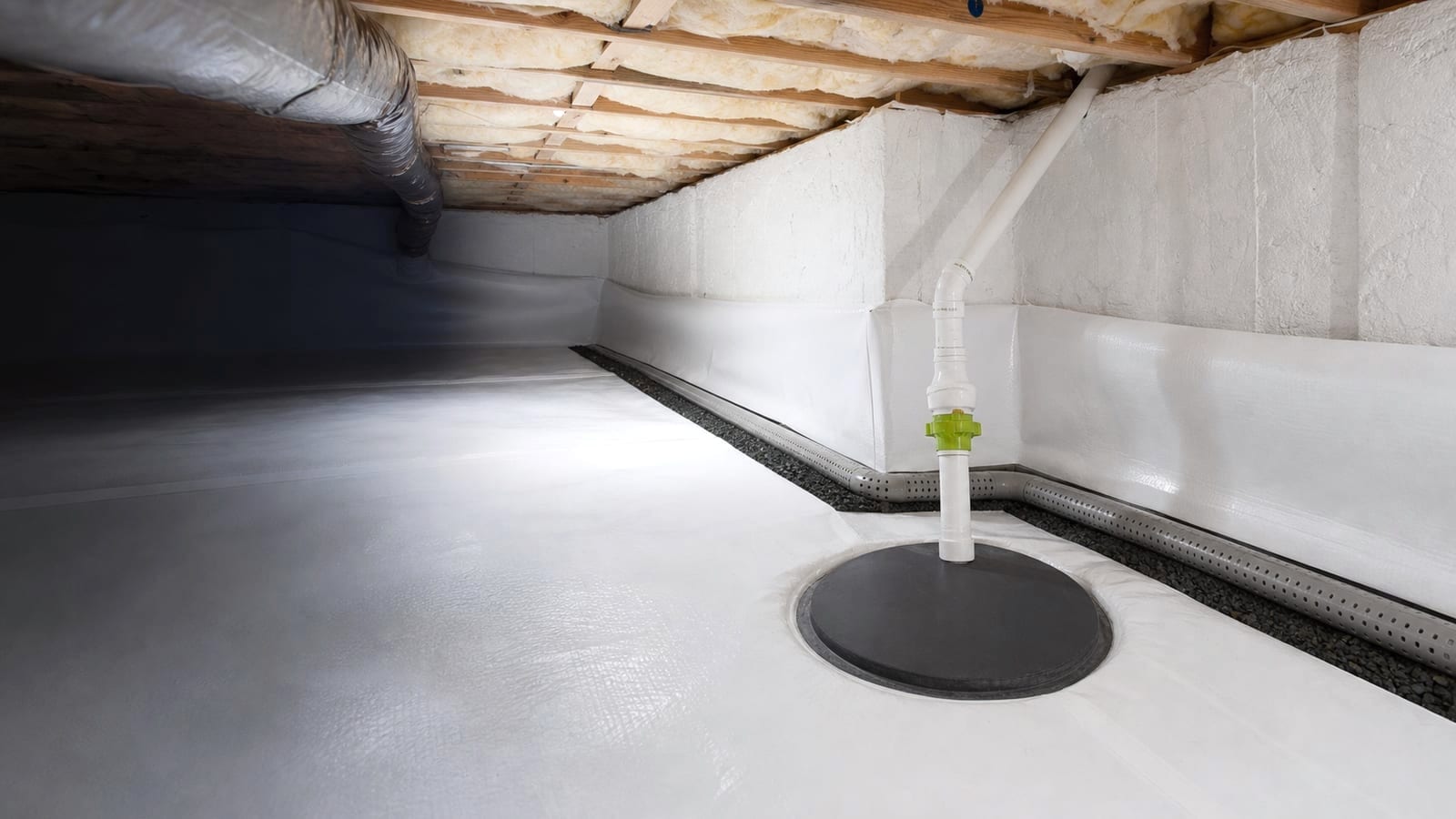
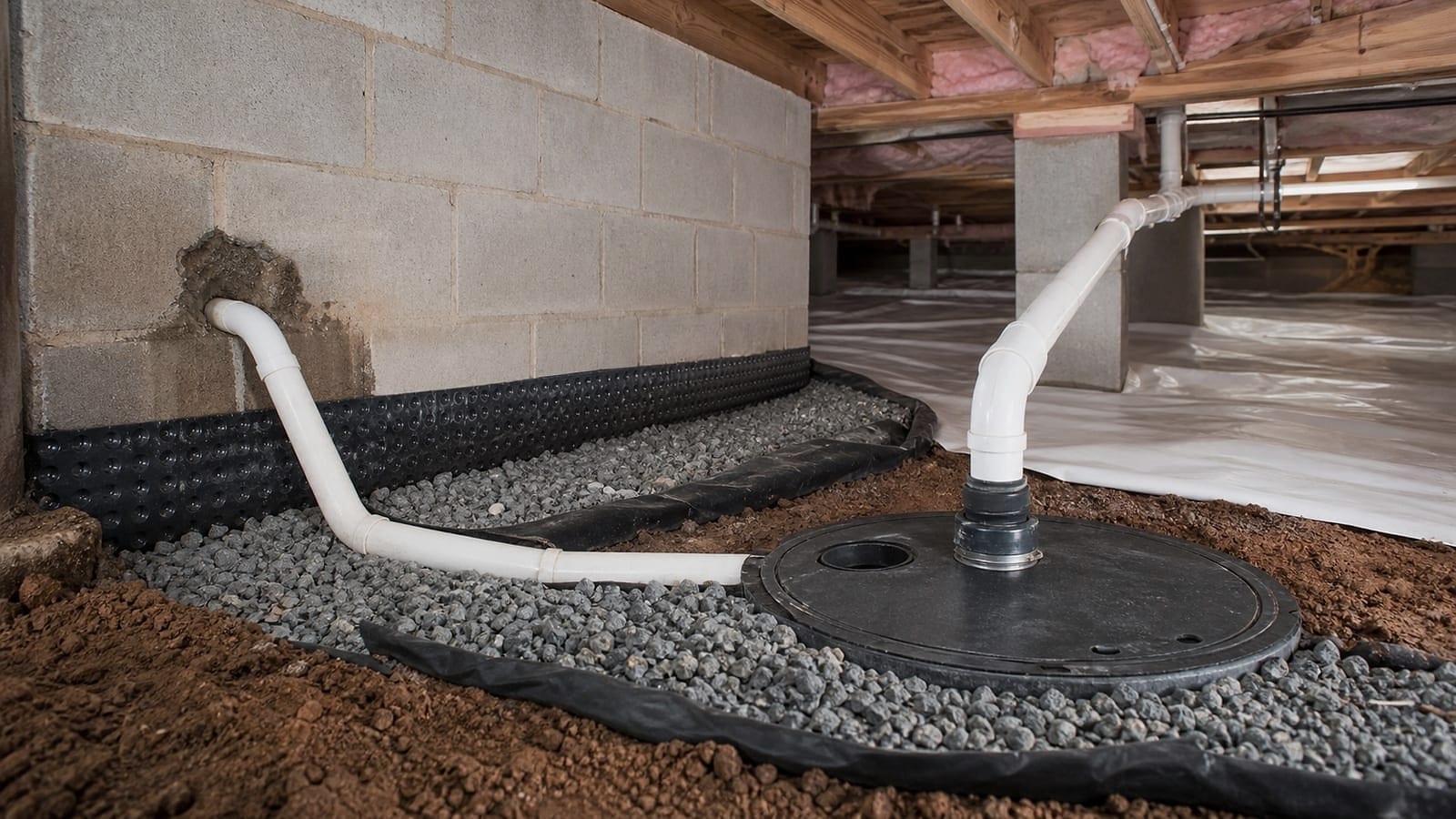
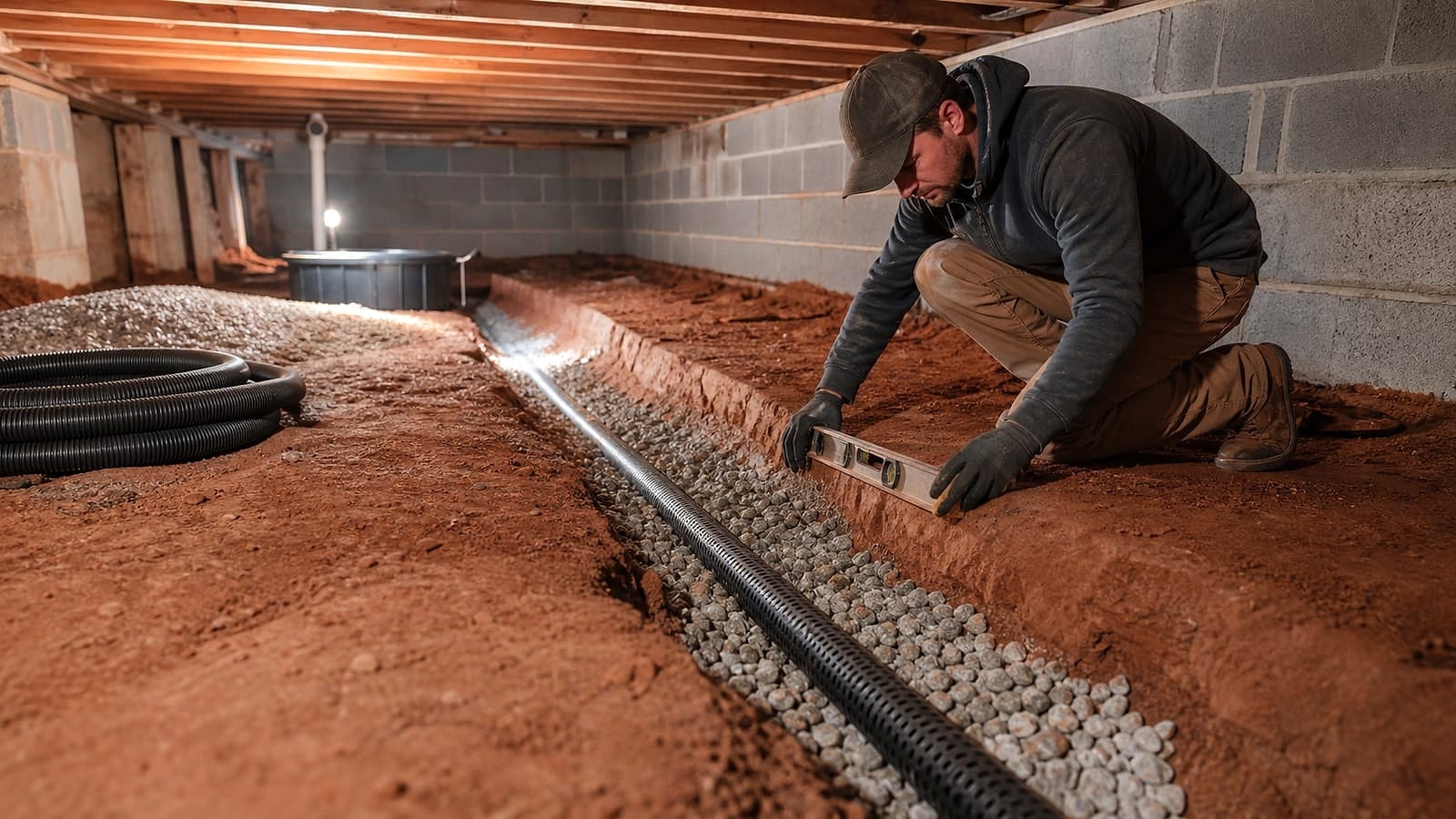
An interior crawl space drainage system should have a known collection route and outlet. Determine whether water is expected to move by gravity, into a sump basin, or through another designed connection.
Check visible components for:
- Sediment blocking an inlet
- A collapsed or disconnected section
- A liner edge covering an opening
- Soil movement into the collection path
- A basin receiving water but not lowering
- A discharge line that is frozen, kinked, blocked, or returning water
- An outlet submerged during the same storm
Interior drainage can manage water that reaches the foundation. It should not prevent inspection of a roof or grade condition that keeps sending avoidable water toward the wall.
7. Check sump pump response
If a sump is present, record whether the water level rises, whether the float activates, how long the pump runs, and where discharge emerges. Do not reach into the basin, handle plugs while wet, or force the float.
A pump can fail to run because of power, controls, a blocked inlet, a stuck float, or equipment condition. It can also run normally and still be unable to keep up with the incoming rate. The sump pump maintenance page is the right internal destination when equipment behavior is part of the evidence.
8. Consider groundwater and saturated-soil behavior
When surrounding soil becomes saturated, water can rise through low soil areas or enter at the wall-floor junction even when no surface stream is visible. A rising pattern across multiple low points may differ from one concentrated wall leak. Nearby drainage, topography, and the timing of recession can help a professional evaluate the possibility.
Groundwater should not be declared from appearance alone. A high water table, perched water above a less permeable soil layer, and surface runoff trapped beside the foundation can produce similar visible results.
9. Rule out plumbing and condensation
Rain correlation is strong evidence only if other sources are checked. Look upward from the puddle. A drainpipe joint, exterior faucet line, HVAC condensate line, or cold duct may add water.
A plumbing pattern may repeat when a fixture is used, regardless of weather. Condensation tends to form on cold surfaces in humid air and may leave droplets or a narrow wet line below. The article topic is rain, but the correct diagnosis must remain open to waterproofing and source control rather than forcing every wet area into one category.
Why the first dry day can be misleading
Some entry paths stop quickly after rain. Others release water slowly from saturated soil. A sump may remove the visible pool before anyone opens the access. A liner can appear dry on top while holding water below. Conversely, damp masonry may remain dark long after liquid flow ends.
Inspecting only during dry weather can miss the active path. Inspecting only during the storm can be unsafe. A practical approach uses safe exterior observations during rainfall, interior photos soon after conditions allow, and a follow-up after the water recedes.
Match the response to the verified path
Different findings point toward different work:
- Gutter overflow calls for roof-drainage correction and outlet review.
- Concentrated downspout discharge calls for a complete route away from the wall.
- Negative grade or a surface channel calls for site-specific grading or drainage evaluation.
- Wall seepage may require exterior and interior water-control measures.
- Water rising at low points may require collection and pumping.
- A failed sump component calls for service, but the incoming water source still matters.
- A plumbing leak calls for plumbing repair before moisture cleanup.
- Condensation calls for humidity, air, temperature, and insulation review.
More than one pathway can be active. Correcting a downspout may reduce the load without resolving groundwater. Installing a pump may remove collected water without correcting a disconnected roof drain. A durable plan explains what each component is intended to do.
Limitations and when to schedule an inspection
A homeowner can document weather, roof runoff, grade, visible entry points, water location, pump status, and recession time. Confirming subsurface drainage, pump capacity, groundwater behavior, concealed plumbing, or structural effects requires deeper inspection and sometimes another qualified trade.
Schedule an inspection after the first unexplained standing-water event, when water returns in the same place, when it reaches insulation or framing, or when an existing drain or pump does not control it. Seek prompt professional help and avoid entry when water is near electrical equipment, contaminated water is possible, soil has eroded around supports, or structural movement is visible.
Bring the rain record, photos, drainage documents, and any equipment manuals. If the source remains uncertain, schedule a crawl space inspection rather than selecting a product from the puddle alone.
Frequently asked questions
Why is my crawl space dry during light rain but wet after a heavy storm?
An intense or long event can overwhelm a gutter, saturate soil, raise groundwater, submerge an outlet, or exceed a drain or pump’s rate. The threshold is useful evidence, but the actual route still must be traced.
Does water by one wall mean it entered through that wall?
Not necessarily. Water can travel along soil, a footing, a liner fold, or a shallow channel before collecting. Compare the puddle with higher wet marks, exterior runoff, and the floor’s low points.
Will a sump pump fix all storm water in a crawl space?
A sump pump removes water delivered to its basin. It does not repair gutters, redirect exterior runoff, seal plumbing leaks, or guarantee that every low point drains to the basin. It belongs within a source and collection plan.
Should I cut an encapsulation liner to release trapped water?
No. Cutting can damage the sealed system and expose the space to water or soil vapor. Document the area and have the entry path, drainage, and liner repair evaluated together.
How soon after rain should a crawl space be checked?
Observe exterior runoff only when weather conditions are safe. Interior timing depends on electrical, water, access, and structural hazards. Photos soon after safe access is possible can preserve evidence, followed by another check as water recedes.
Sources and further reading
- U.S. Environmental Protection Agency: A Brief Guide to Mold, Moisture and Your Home
- U.S. Environmental Protection Agency: Mold Course Chapter 2, including crawl spaces and groundwater
- North Carolina State Extension: Moisture Control and Prevention, Gutter Management
- North Carolina State Extension: Preventative Home Maintenance
- NOAA National Hurricane Center: Heavy Rainfall and Inland Flooding Hazards
How this applies in Apex, NC
In Apex, NC, document water timing, roof runoff, grade, the entry point, the low point, and the discharge route before naming a drainage solution. A wet area can be where water collects rather than where it entered, so the location of each observation matters. Compare the standing water in crawl space with the Crawl Space Drainage Systems: From Water Entry to Discharge in Garner, NC before choosing a property-specific next step.