
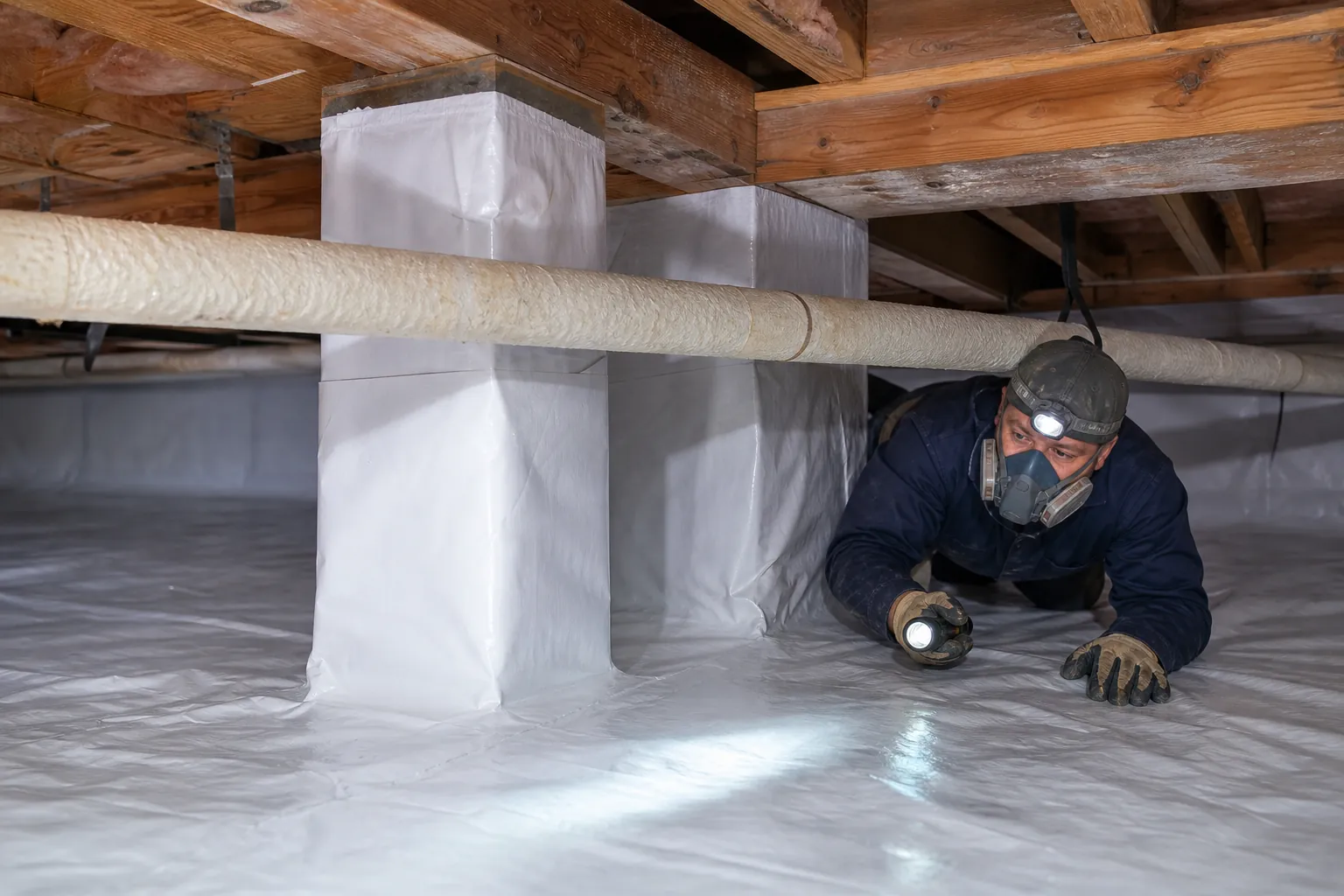
Older North Carolina homes sometimes have insulated pipes running beneath the floor. When that insulation may contain asbestos, a moisture-control project needs more planning than a standard crawl space upgrade. The goal is to address dampness without disturbing material that could release hazardous fibers.
Crawl space encapsulation around asbestos pipes is not a do-it-yourself workaround for asbestos. It is a coordinated project in which the condition of the pipe insulation, the proposed work area, and any required asbestos response are considered before crews install a vapor barrier or change the space.
For homeowners, the most useful first step is understanding who handles each part of the project. Carolina Encapsulation Company can discuss your crawl space moisture-control goals. Suspected asbestos should be evaluated by an appropriately qualified asbestos professional before work that could disturb it proceeds.
Why Older Pipe Insulation Changes The Project
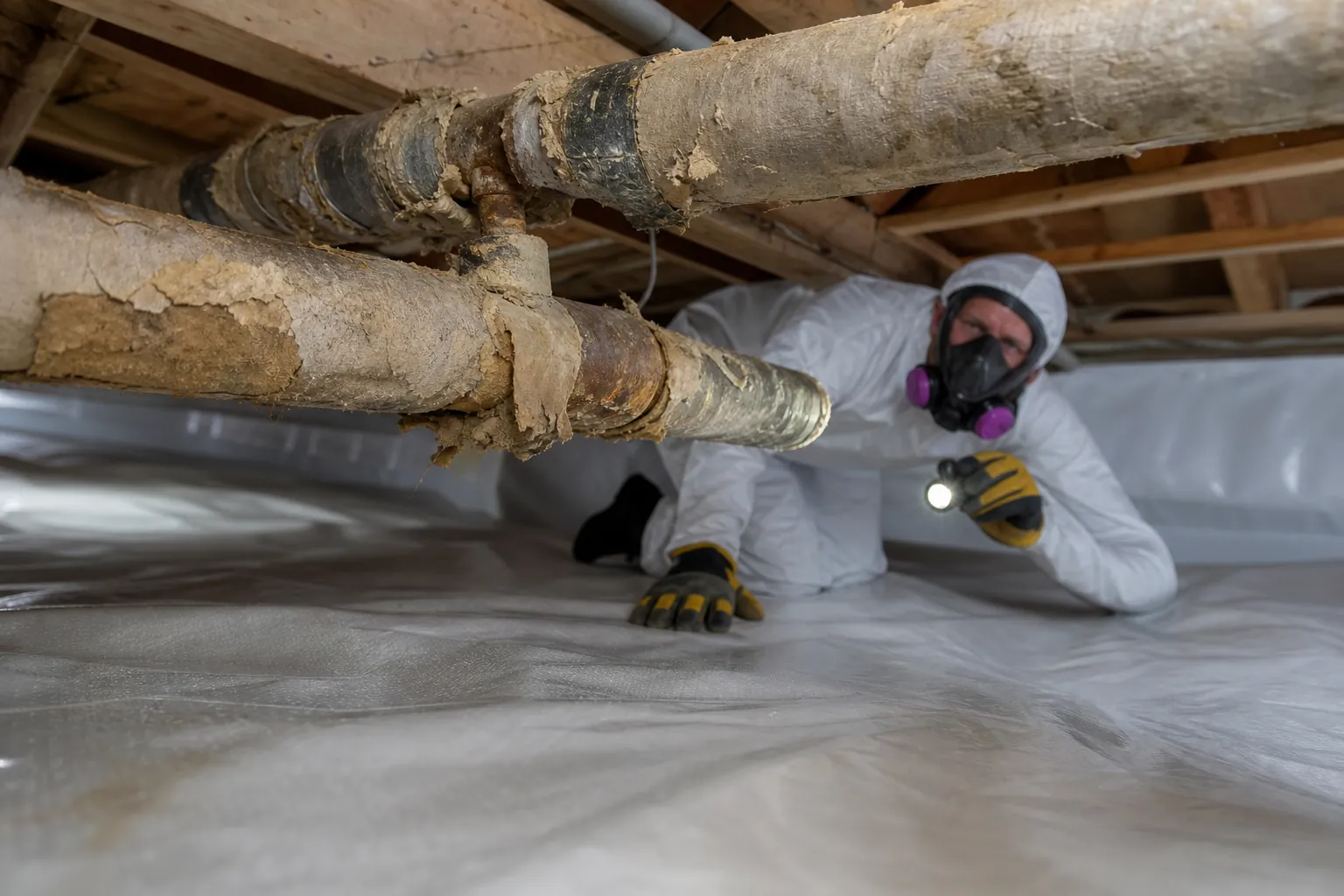
Asbestos was used in some older thermal insulation products because it resisted heat and provided durable insulation. In a crawl space, suspect material may appear as wrapped pipe insulation, molded coverings around elbows, or insulation with an outer fabric or paper jacket.
Appearance alone cannot confirm asbestos. Similar-looking products may have different compositions, and a home's construction date does not provide a definitive answer. Renovations can also introduce materials from different periods into the same space.
The concern is disturbance. Cutting, scraping, crushing, tearing, or otherwise damaging asbestos-containing insulation can release fibers into the air. Insulation that is deteriorated or easily crumbled can present a different risk from material that remains intact and protected.
Encapsulation work often involves moving through tight areas, carrying rolls of liner, fastening materials, and installing drainage or mechanical equipment. Even when nobody intends to touch a pipe, ordinary construction activity can create accidental contact. That makes early identification and a realistic access plan essential.
Do not enter the crawl space specifically to inspect, touch, or photograph questionable insulation at close range. If you already have photographs taken without disturbing anything, share them with the professionals planning the project.
Crawl Space Encapsulation And Asbestos Encapsulation Are Different
The word encapsulation can cause confusion because it describes two separate types of work. Crawl space encapsulation generally means installing a continuous ground vapor barrier, sealing appropriate surfaces and openings, and managing humidity through a coordinated moisture-control design.
Asbestos encapsulation means treating asbestos-containing material with a specialized system intended to bind fibers or protect the material. Whether that approach is suitable depends on the material's condition, location, accessibility, and expected future disturbance. It is an asbestos-management decision, not a routine vapor-barrier detail.
A crawl space liner does not make asbestos insulation safe merely because it covers nearby soil or extends up a wall. Wrapping suspect pipe insulation in ordinary plastic is not a substitute for professional assessment or an approved asbestos response.
- A ground vapor barrier limits moisture moving from exposed soil into the crawl space.
- A dehumidifier helps control airborne moisture when it is properly selected, installed, and maintained.
- An asbestos-management plan addresses the condition and potential disturbance of asbestos-containing material.
- A coordinated installation plan keeps moisture-control work from interfering with any required asbestos protections.
Keeping these roles separate helps homeowners compare proposals accurately. A bid for crawl space encapsulation should not be interpreted as including asbestos testing, treatment, or removal unless those services are explicitly identified and assigned to qualified providers.
What To Do When You Find Suspected Asbestos Pipes
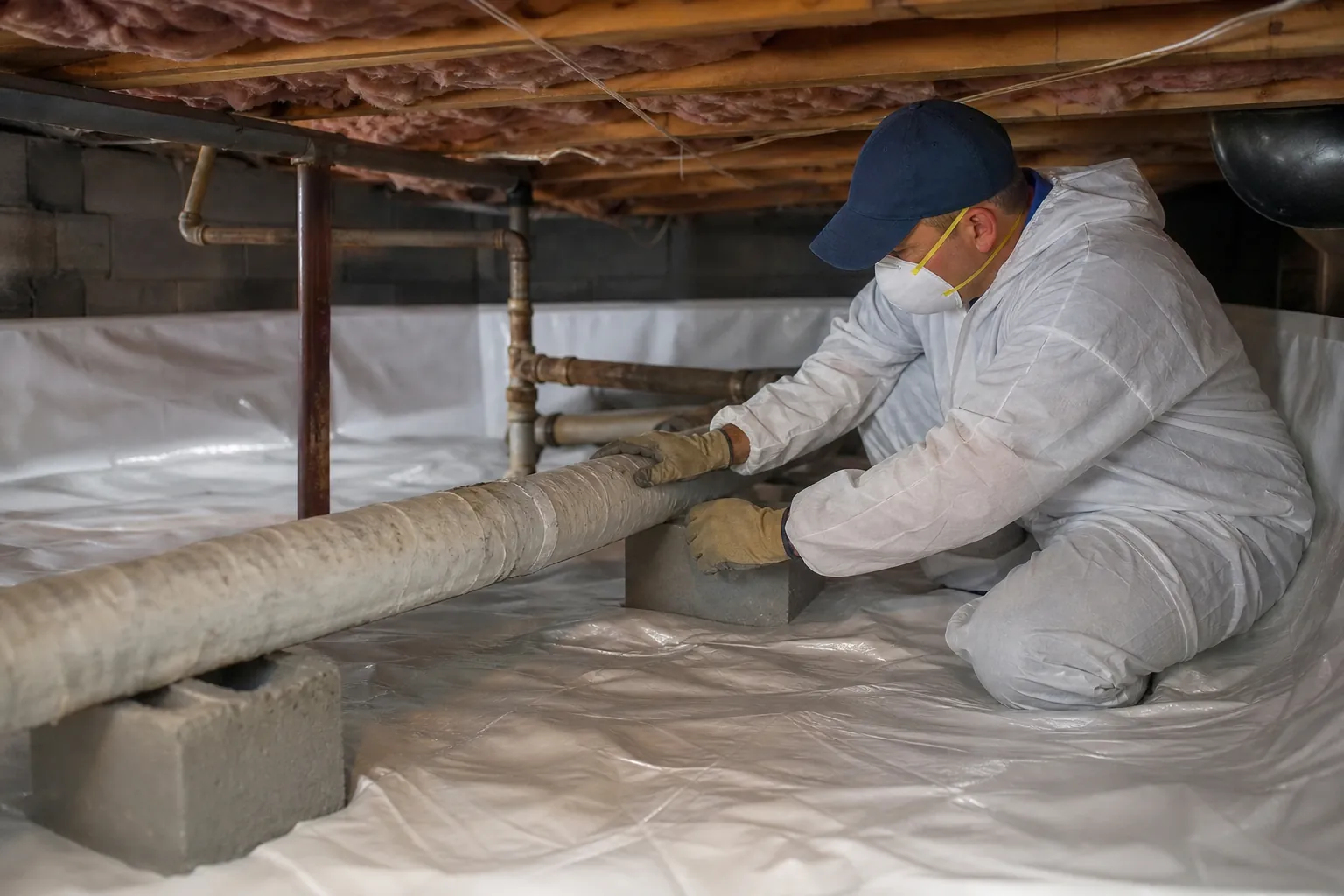
If you notice unfamiliar pipe insulation, stop planning work in its immediate area until the concern is evaluated. Do not peel back the outer jacket, take a sample yourself, or test whether the insulation crumbles. Sampling can itself disturb the material.
In many homes, the suspected asbestos is in the insulation surrounding a pipe rather than in the pipe itself. A qualified professional can help determine what material is present and whether laboratory analysis is appropriate. Any sampling should follow suitable asbestos procedures.
Visible debris beneath insulated pipes deserves particular caution. It may be unrelated dirt, but it could also include fallen insulation. Do not sweep it, use a household vacuum on it, or move it out of the way for a liner installation.
- Keep household members and unnecessary workers out of the affected crawl space while the concern is unresolved.
- Tell prospective contractors about the suspected material before they enter or price intrusive work.
- Provide existing inspection reports, renovation records, or asbestos test results if you have them.
- Ask an asbestos professional to assess the insulation and any associated debris before construction proceeds nearby.
- Leave cleanup and material handling to qualified professionals when asbestos contamination is suspected.
If a contractor discovers questionable insulation during installation, the appropriate response is to stop affected work and reassess. Continuing around it without a documented plan can turn a manageable scheduling issue into a more complicated safety problem.
Build A Coordinated Plan Before Installation
The safest sequence begins with information, not materials. The crawl space contractor needs to understand moisture conditions and installation access. The asbestos professional needs to understand what the planned construction could disturb. Both perspectives matter.
Share the proposed scope with the asbestos professional. Include liner placement, wall attachment locations, drainage excavation, plumbing repairs, insulation work, electrical connections, and dehumidifier installation. A seemingly minor task can change the assessment if it requires working directly beside vulnerable pipe insulation.
Depending on the findings, the asbestos professional may recommend leaving intact material undisturbed with appropriate management, repairing or treating it, enclosing it, or removing it. None of those options is automatically right for every crawl space.
If asbestos-related work is needed, confirm the applicable North Carolina requirements before scheduling. Licensing, accreditation, notification, disposal, and other obligations can vary with the material, project, and property type. The North Carolina Health Hazards Control Unit is a useful starting point for current state guidance.
- The written scope should identify which contractor is responsible for asbestos assessment and any required asbestos work.
- The schedule should place necessary asbestos work before moisture-control activities that would disturb the affected area.
- The plan should establish access routes and work boundaries that protect material being left in place.
- The agreement should explain how unexpected suspect material or debris will be handled.
- Any required completion documentation should be available before the affected installation area is released for further work.
A homeowner should not have to guess when the crawl space is ready. Ask the responsible asbestos professional what completion checks or clearance procedures apply to the particular project, and obtain the relevant records.
Address North Carolina Moisture Problems At Their Source
Once the asbestos concern is appropriately resolved or managed, the encapsulation design should address why the crawl space is damp. North Carolina's humid weather can contribute to moisture problems, but outdoor humidity is only one part of the picture.
Rainwater may enter because of poor grading, short downspouts, foundation openings, or drainage limitations. Plumbing leaks can keep soil and framing wet even when outdoor conditions are dry. Condensation can develop on cool surfaces when humid air enters the space.
A vapor barrier is useful, but it does not repair a leaking pipe or redirect water flowing through a foundation. Covering the ground before investigating active water entry can conceal problems and leave the completed system underperforming.
- Check whether gutters and downspouts direct roof runoff away from the foundation.
- Evaluate recurring standing water before deciding whether interior drainage or a sump system is needed.
- Have plumbing leaks repaired through a work plan that accounts for nearby suspect insulation.
- Assess damp framing, damaged insulation, and other conditions that may require separate repair.
- Plan humidity control around the crawl space's size, configuration, and actual moisture load.
Soil moisture and rain exposure vary across North Carolina. A mountain property with a sloped lot may need a different drainage strategy from a Piedmont home on clay-heavy soil or a coastal property exposed to persistently humid conditions. The design should follow site findings rather than a universal package.
How The Liner And Equipment Should Fit Around Pipes
After the work area is approved for installation, the liner layout should avoid unnecessary contact with pipe insulation. The crew needs enough room to place materials, seal seams, and reach attachment points without squeezing against protected pipes.
There is no universal safe clearance that homeowners should apply themselves. Working distances and protective measures should follow the asbestos professional's recommendations and the actual site conditions. Low overhead clearance or tightly packed utilities may make an otherwise simple installation impractical until earlier work is completed.
Where a vapor barrier meets approved penetrations or structural details, the contractor should use compatible sealing methods appropriate to the system. Sealing a moisture barrier around a permitted detail is different from attaching it to suspect insulation or using the insulation as a fastening surface.
Equipment placement also deserves attention. A dehumidifier needs service access, a reliable condensate route, and an installation consistent with its manufacturer instructions. A sump pump requires future maintenance access. Neither should be positioned where routine service encourages contact with asbestos-containing material left in place.
The completed crawl space should remain inspectable. Important utility connections, access points, and any designated asbestos-management areas should not disappear behind a liner in a way that creates confusion for future plumbers, electricians, or home inspectors.
Questions To Ask Before Accepting A Proposal
A clear proposal helps separate moisture-control services from specialist asbestos work. It also reveals whether the contractor has thought through the practical challenges of your crawl space instead of simply quoting a liner installation.
- Ask how the contractor will respond if suspected asbestos is discovered after work begins.
- Ask whether the price includes only crawl space work or any separately arranged asbestos services.
- Ask who will evaluate suspect insulation and verify any required asbestos credentials.
- Ask how workers will access installation areas without disturbing material that remains in place.
- Ask which water-entry problems must be corrected before the vapor barrier is installed.
- Ask where the dehumidifier, drains, and service paths will be located.
- Ask what inspection records, maintenance instructions, and warranty exclusions you will receive.
Be cautious about assurances that plastic sheeting will simply cover the issue. Also be cautious if a proposal calls for scraping insulation away to create room without first identifying the material and establishing an appropriate asbestos work plan.
A responsible contractor should be willing to pause, clarify responsibilities, and adjust the scope when a hazardous-material concern changes the job. That is a sign of sound planning, not an unnecessary complication.
What Affects Cost And Scheduling?
Pricing for crawl space encapsulation around asbestos pipes depends on more than square footage. Restricted access, standing water, liner detailing, damaged materials, and equipment requirements all influence the moisture-control portion of the project.
Asbestos evaluation and any required asbestos work are separate cost considerations. Laboratory testing, professional assessment, treatment or removal, regulated waste handling, and applicable completion procedures may affect the total budget. Not every property needs every service.
Scheduling can also involve multiple stages. An assessment may need to occur before a final installation scope is possible. If plumbing repairs or asbestos abatement are required, those tasks may need to be completed before the encapsulation crew returns.
Request an itemized proposal that distinguishes confirmed work from allowances or unresolved conditions. Ask how changes will be authorized if previously hidden problems are found. A low initial estimate is not especially useful if it assumes away the most important site constraints.
Maintain The Crawl Space Without Disturbing Protected Materials
After installation, moisture control still requires attention. Follow the contractor's maintenance instructions for the dehumidifier, drainage system, sump equipment, and access door. Periodic inspections can help identify leaks, damaged seams, or unusual humidity before they become larger problems.
If asbestos-containing insulation remains under a professional management plan, preserve that documentation with your home records. Future service providers should know where it is located and what restrictions apply before entering the crawl space.
Do not use the area for storage if stored items could damage the liner, block equipment, or contact protected insulation. Homeowners should not attempt repairs to asbestos-containing material if its condition changes.
New debris, damaged pipe insulation, or evidence that a worker disturbed a managed area warrants professional review. Likewise, persistent moisture after encapsulation calls for troubleshooting rather than assuming the system needs a larger dehumidifier.
Plan Your Next Step With Carolina Encapsulation Company
A successful project starts by separating two priorities: managing suspected asbestos appropriately and designing effective crawl space moisture control. Addressing them in the right order protects the installation process and makes the finished space easier to maintain.
If you are considering crawl space encapsulation around asbestos pipes in North Carolina, call Carolina Encapsulation Company at 704-207-9348 to discuss your moisture concerns and project planning. Mention suspected pipe insulation when you call so that the concern can be considered before work is arranged.
Have any existing inspection reports or asbestos documentation available. With clear responsibilities, qualified asbestos guidance where needed, and a site-specific moisture plan, you can make an informed decision without rushing work around uncertain materials.
Call 704-207-9348 to talk through next steps.