
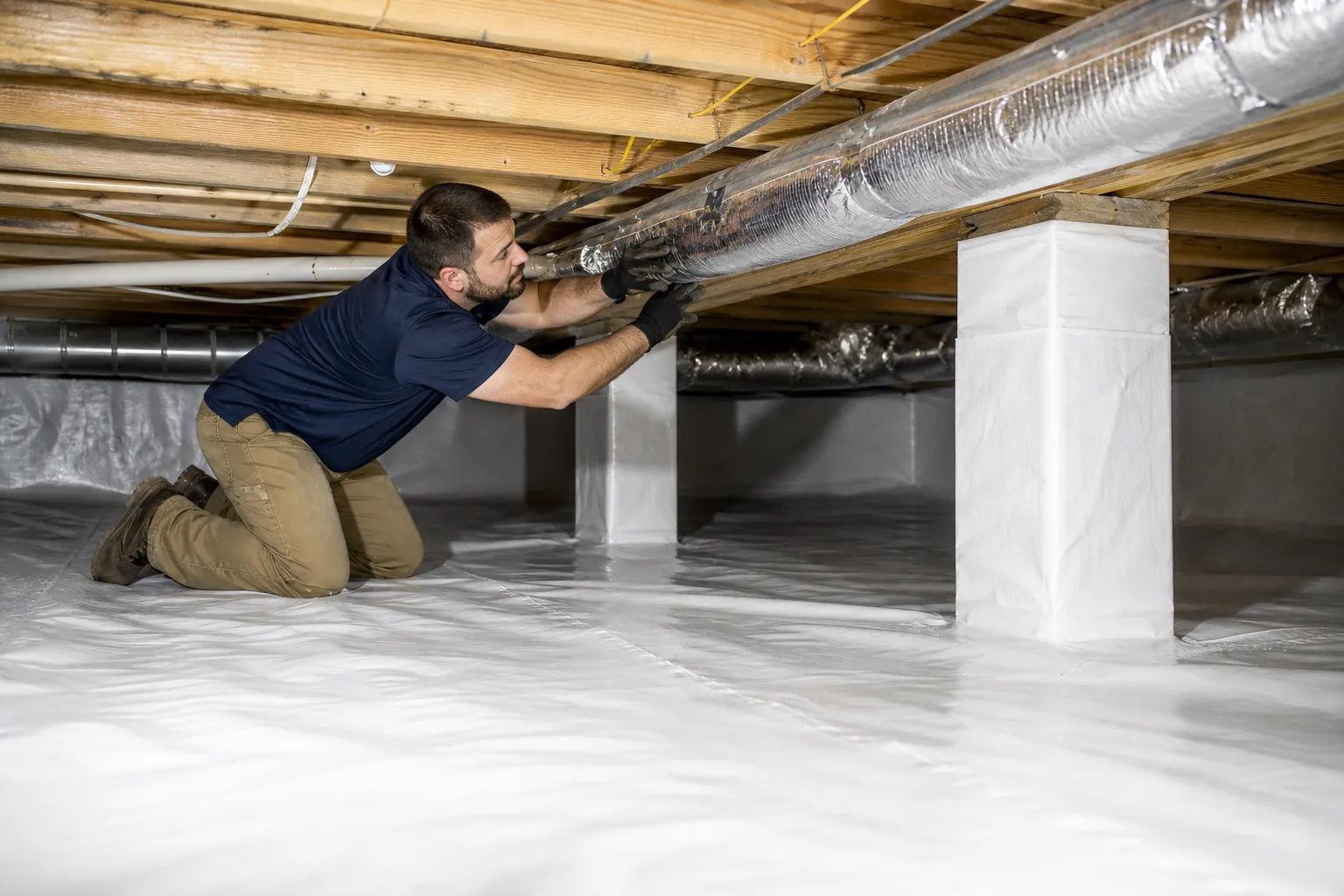
A damp crawl space is not always obvious from the rooms above it. You may first notice a musty smell, floors that feel unusually cool, or insulation hanging beneath the house. Those clues deserve attention, but they do not tell you where the moisture originates. Effective crawl space moisture control starts by separating water intrusion, ground moisture, and humid outdoor air.
In Raleigh, hot, humid summers and moisture-retaining red clay soils can make that investigation especially important. Vented crawl spaces are common, and opening a vent does not necessarily dry the space when outdoor air already contains substantial moisture. Carolina Encapsulation Company helps homeowners understand the conditions beneath their homes and consider practical ways to manage them.
Why Raleigh Crawl Spaces Can Stay Damp
A crawl space sits between the ground and your living space. Unless that ground is properly covered and the space is managed, moisture can evaporate from exposed soil throughout the year. Even when the soil looks dry on the surface, moisture below it may continue moving upward.
Rainwater creates another challenge. Red clay soils found in parts of the Triangle tend to hold water and drain slowly. Depending on the lot, grading, and foundation, runoff can collect near the house or move into the crawl space. Soil type alone does not establish the cause, but it helps explain why dampness may persist after a storm.
Summer air adds a different moisture source. Warm outdoor air entering through foundation vents can contact cooler framing, ductwork, or pipes. If those surfaces are below the air's dew point, condensation can form. More ventilation can therefore introduce more moisture rather than solve the problem.
Plumbing leaks and HVAC condensate problems also belong on the checklist. A small, continuous leak can keep one section wet while the rest appears normal. A successful plan addresses the actual sources instead of treating every damp crawl space as the same problem.
Warning Signs Worth Investigating
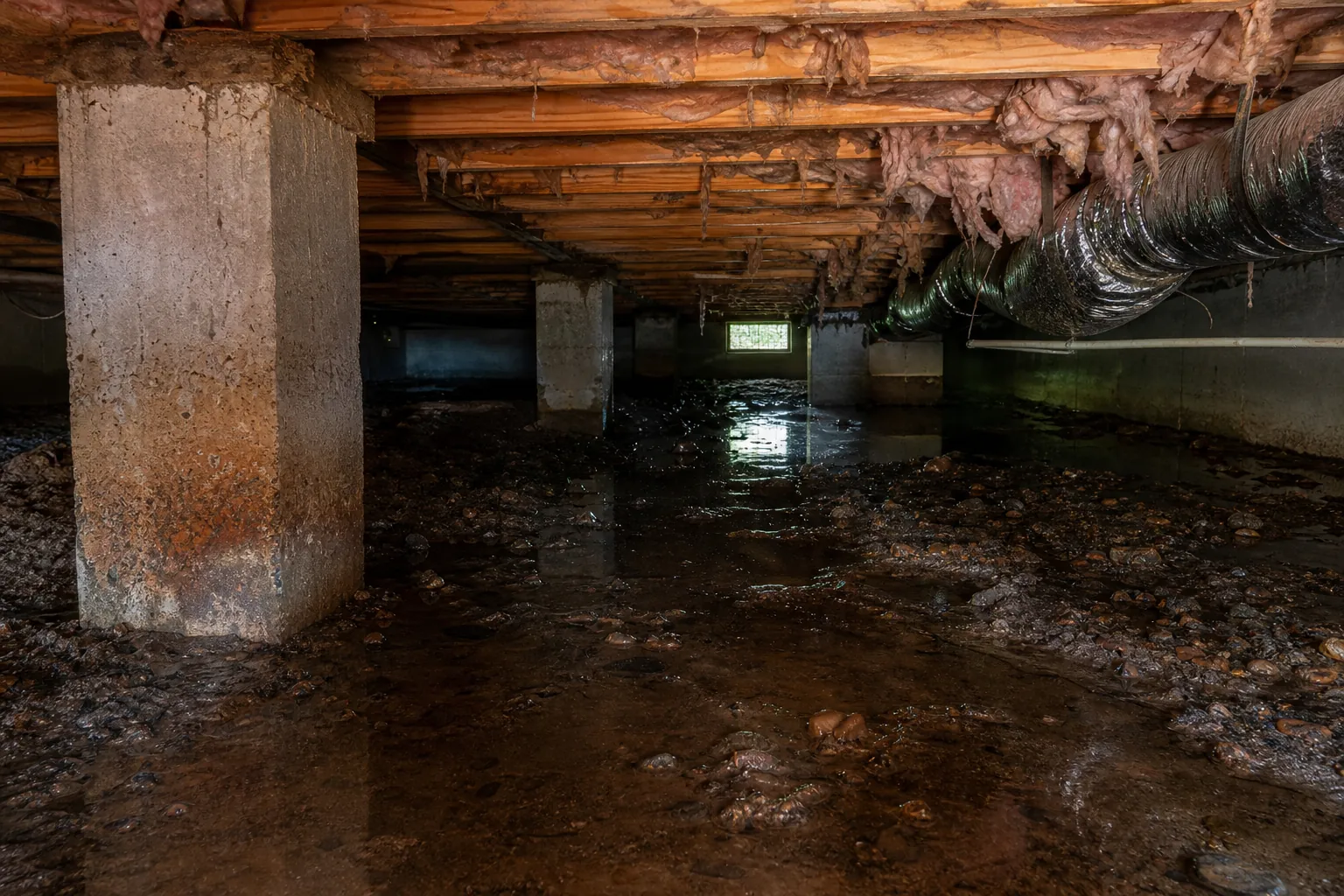
Some crawl space moisture problems leave visible evidence. Others develop quietly until odors or floor changes become noticeable upstairs. An inspection is useful when symptoms recur, particularly after rain or during humid weather.
- Musty odors may indicate persistent dampness, especially when they become stronger near floor registers or access openings.
- Water droplets on ducts, pipes, or framing can signal condensation, although a nearby leak should also be ruled out.
- Wet soil, puddles, or sediment trails can reveal where water enters or travels after rainfall.
- Sagging or damp insulation may point to moisture exposure and can reduce the insulation's effectiveness.
- Discolored wood or visible growth warrants evaluation rather than an assumption about its type or severity.
- Soft wood, unusual floor movement, or damaged supports should be assessed for structural concerns.
These signs are not interchangeable. Condensation on a duct does not automatically mean groundwater is entering, and a musty smell does not identify a particular organism. Documenting where symptoms occur helps narrow the investigation.
Avoid entering a crawl space with standing water, exposed electrical wiring, unstable supports, or suspected sewage contamination. Those conditions require appropriate professional attention before routine moisture work can proceed.
Start With An Inspection, Not A Product
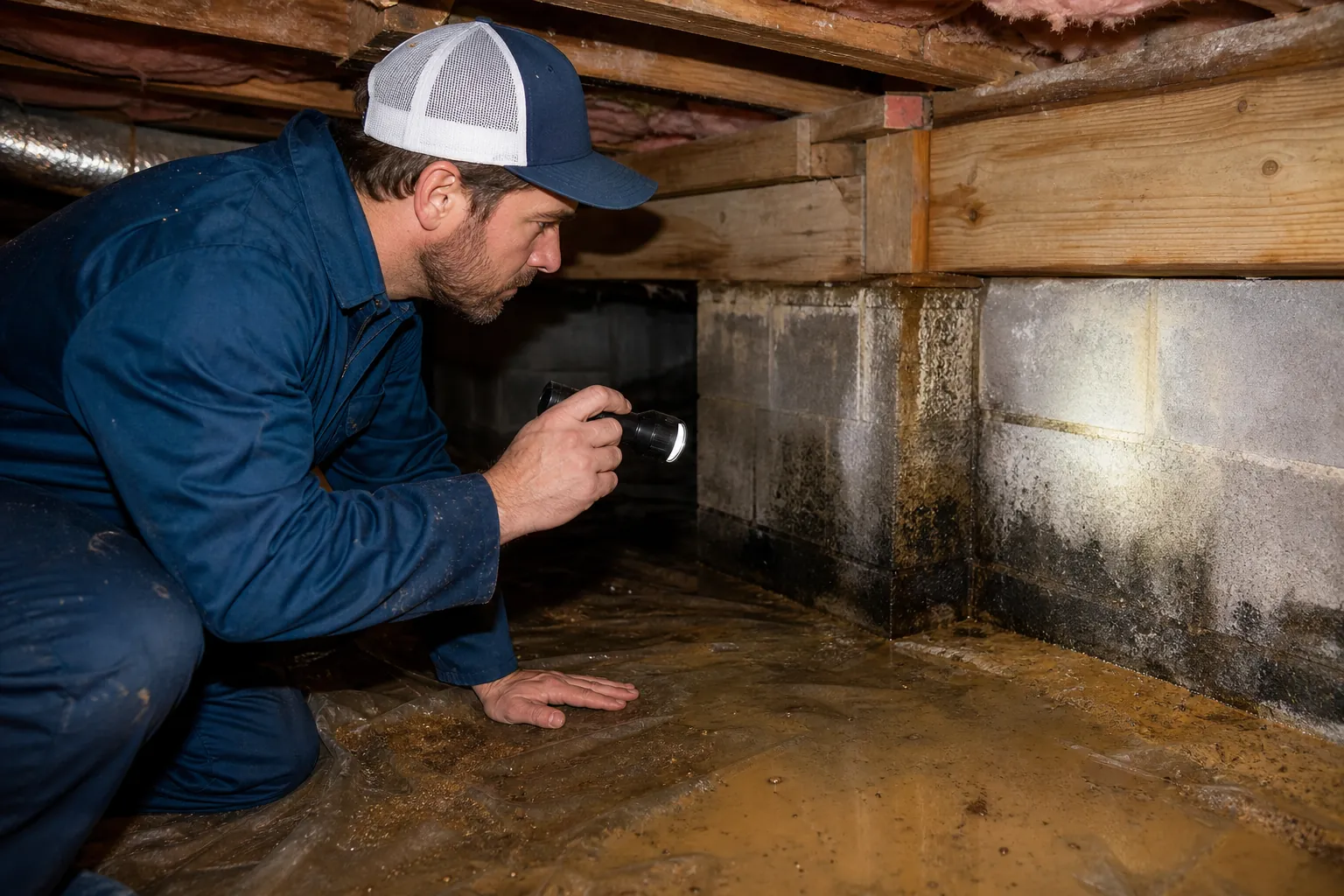
The first question is not which liner or dehumidifier to buy. It is what is making the crawl space wet. A useful assessment considers the exterior of the house, conditions under the floor, and how those conditions change with weather.
Outside, look at roof drainage, downspout discharge locations, and whether the ground directs runoff toward the foundation. Inside, check for plumbing leaks, disconnected condensate lines, exposed soil, damaged ground coverings, and areas where water collects.
Humidity measurements provide additional context. Relative humidity changes with temperature, so a single reading taken on a cool morning may not represent an entire summer. Temperature and humidity logging can show whether conditions remain elevated for extended periods.
Wood moisture readings can help identify areas of concern, but they must be interpreted with the material, instrument, and conditions in mind. Readings taken at several locations are more informative than one measurement beside the access door.
Ask for an explanation that connects the observations to the proposed work. If water enters after storms, the plan should address that water. If humid air and exposed soil are the primary drivers, air sealing, ground coverage, and humidity management may take priority.
Control Bulk Water Before Sealing The Space
Encapsulation should not be used to conceal an unresolved drainage problem. Water that collects beneath a liner still needs somewhere to go, and repeated flooding can compromise the installation. Bulk water control generally comes before final sealing.
Some improvements begin above ground. Keeping gutters clear, repairing disconnected downspouts, and directing roof runoff away from the foundation can reduce water loading around the house. Discharge locations should not send water back toward the crawl space or create problems elsewhere on the property.
Grading may also matter, but it requires care. Adding soil against siding or covering foundation openings can create new problems. Where significant changes are needed, the work should account for foundation clearances, utilities, and the way water moves across the lot.
If water enters despite appropriate exterior measures, an interior drainage system may be needed. Depending on the conditions, that can involve collection piping and a sump basin with a pump. The discharge route must be suitable for the property and applicable requirements.
- Ask where collected water will discharge and how the route prevents it from returning to the foundation.
- Ask how the pump will be accessed for cleaning, testing, and eventual replacement.
- Discuss whether a high-water alarm or backup option makes sense for the home's risk and occupancy pattern.
- Confirm how drainage components will work with the planned liner and future maintenance access.
Not every Raleigh crawl space needs a sump pump. A recommendation should follow observed conditions and likely water pathways, not a standard package applied to every home.
What Crawl Space Encapsulation Actually Does
Encapsulation creates a more controlled environment beneath the home. A durable ground liner limits moisture evaporation from the soil, while sealed seams and properly detailed edges help maintain a continuous barrier. Depending on the design, foundation walls, vents, and access openings may also be addressed.
The quality of the details matters. A liner loosely draped over dirt is not equivalent to a carefully sealed system. Piers, plumbing penetrations, irregular walls, and equipment supports all require attention so moisture and air do not simply bypass the main covered area.
Preparation is equally important. Standing water, sharp debris, wet insulation, and existing damage should be evaluated before installation. Covering a problem makes it harder to inspect later and does not correct the cause.
Material thickness is one consideration, but it is not the only one. Reinforcement, seam treatment, fastening methods, and expected foot traffic influence durability. A crawl space that houses serviceable equipment needs a liner and layout that accommodate maintenance visits.
Termite inspection access must also be considered. North Carolina homeowners should coordinate encapsulation details with applicable requirements and their pest-control provider. Covering every visible foundation surface without considering inspection needs can complicate future monitoring.
Encapsulation is not a substitute for structural repair, plumbing repair, or appropriate treatment of existing contamination. Those needs should be identified and coordinated as part of the project rather than left beneath a new liner.
Manage Humidity After The Space Is Sealed
Sealing the ground and reducing outdoor air leakage can substantially change crawl space conditions, but humidity still needs a deliberate management strategy. Moisture may remain in building materials, enter through imperfect seals, or arise from occasional leaks.
A crawl space dehumidifier is one possible approach. It should be selected for the space and operating conditions, not simply by choosing the largest advertised capacity. Layout, access, drainage, and air movement influence how well the equipment serves the entire area.
The condensate drain deserves particular attention. Water removed from the air must leave reliably through an appropriate drain arrangement or collection system. A blocked line or failed condensate pump can create the very wet condition the equipment is intended to prevent.
Many moisture-control plans aim for relative humidity below about 60 percent, with a more specific operating target chosen for the home. The right goal should account for conditions and equipment guidance. Persistently elevated readings should prompt investigation rather than repeated adjustments to the control dial.
A conditioned crawl space may use a different code-compliant strategy. Do not assume that closing vents or adding supply air is sufficient by itself. Insulation, air pathways, combustion safety, and local requirements need to be considered together.
After installation, allow time for damp materials to dry and track conditions. A system should demonstrate improvement through observations and measurements, not only through a cleaner appearance.
How To Compare Moisture-Control Proposals
Two estimates can use the word encapsulation while describing very different work. Comparing the scope line by line helps you understand whether both proposals address the same problems and include the same responsibilities.
- The proposal should identify the observed moisture sources and explain how each recommended component addresses them.
- The liner specifications should describe the material, seam treatment, wall attachment, and detailing around obstacles.
- Drainage work should state what is included, where water discharges, and whether pump accessories are part of the price.
- Humidity-control equipment should include its location, drainage arrangement, electrical needs, and service access.
- Insulation removal, debris removal, repairs, and any separate remediation should be clearly included or excluded.
- Warranty terms should explain coverage, maintenance obligations, exclusions, and the process for requesting service.
Ask how the contractor will protect access to plumbing cleanouts, HVAC equipment, and other components. A neat-looking installation is less useful if routine repairs require cutting through the moisture barrier.
Pricing varies with crawl space size, clearance, condition, and water-management needs. A low-clearance space with active water intrusion usually requires a different scope than an accessible space with mostly seasonal humidity. A site-specific assessment is more useful than a broad price promise.
For Carolina Encapsulation Company, the conversation can begin with your observations: when odors appear, where water collects, and whether conditions change after heavy rain. Photos taken safely from the access opening may help explain the concern.
Keep The System Working With Routine Checks
Crawl space moisture control is an ongoing responsibility, even after a well-planned installation. The equipment and barriers should be checked periodically, especially after severe weather, plumbing work, or visits by other trades.
A remote humidity sensor can make monitoring easier without frequent entry. Place it away from the dehumidifier's immediate discharge and use readings as a trend rather than treating every brief fluctuation as a failure. An unexplained upward trend deserves a closer look.
- Inspect accessible liner areas for tears, separated seams, or displaced edges after service work beneath the house.
- Clean or replace dehumidifier filters according to the manufacturer's instructions.
- Check that condensate drainage remains open and that water is leaving through the intended route.
- Test sump equipment and alarms according to the manufacturer's guidance and the installation plan.
- Keep gutters and downspouts functional so exterior runoff does not undermine the crawl space work.
- Maintain required pest inspections and keep designated inspection areas accessible.
If an odor returns, do not assume the encapsulation has failed. A new plumbing leak, drainage obstruction, or equipment issue may be responsible. Identifying the change early can prevent a small problem from becoming prolonged moisture exposure.
Common Questions From Raleigh Homeowners
Will closing crawl space vents solve the problem?
Not by itself. Closing vents without addressing soil moisture, water intrusion, and humidity management can leave moisture trapped inside. Vent changes should be part of a complete plan that also accounts for applicable code requirements and any combustion appliances.
Can a dehumidifier replace encapsulation?
A dehumidifier removes moisture from the air, but it does not stop groundwater entry or evaporation from exposed soil. In some spaces it can help temporarily, yet ongoing moisture sources may make it work harder than necessary. Source control and equipment should complement each other.
Does every damp crawl space need mold treatment?
No single symptom answers that question. Visible growth, contamination, and damaged materials should be evaluated separately from humidity control. Lowering moisture helps discourage future growth, but it does not automatically clean affected surfaces or establish whether materials need removal.
When should the work be scheduled?
Active leaks and standing water deserve prompt attention. For seasonal humidity concerns, an assessment before or during Raleigh's humid months can help establish the problem. There is no need to wait for summer if dampness, odors, or damage are already present.
Take A Practical First Step Toward A Drier Crawl Space
A lasting solution connects the source of moisture to the right combination of repairs, drainage, ground sealing, and humidity control. It should also preserve access for inspection and maintenance. The goal is a crawl space you can monitor and manage, not simply one that looks finished.
If your Raleigh home has recurring crawl space dampness, contact Carolina Encapsulation Company at 704-207-9348 to discuss your concerns and assessment options. Understanding what is happening beneath the house is the first step toward choosing work that fits it.
Call 704-207-9348 to talk through next steps.