Short answer
A crawl space can smell mustier after heavy rain because the storm changes one or more moisture conditions beneath the house. Rain may enter as liquid water, soak the soil beside the foundation, raise moisture evaporation from exposed ground, overwhelm a low point or drain, or push humid outdoor air across cooler crawl space surfaces. Damp wood, paper-faced insulation, settled dust, soil, and old organic debris can release stronger odors as their moisture content rises.
Timing is useful evidence, not a repair decision. An odor that begins while rain is falling points toward a different set of observations than an odor that appears a day later. A smell strongest at one wall, drain, plumbing area, or HVAC penetration provides a better starting point than “musty.”
Do not use odor alone to conclude that mold is present or absent. Start by recording the weather, finding where the smell is strongest, looking for water paths from outside, and checking accessible materials without disturbing suspected growth. The broader musty crawl space odor overview explains the problem category. A rain-specific inspection should then separate bulk water, ground vapor, condensation, plumbing, and drainage before any corrective work is selected.
Why a storm can change the smell so quickly
Heavy rain affects the boundary around a crawl space. Roof water reaches gutters and downspouts. Surface water follows the grade. Soil near the foundation absorbs water until it drains, evaporates, or moves toward a lower point. Air temperature and dew point change as the storm arrives. Each of those changes can influence conditions beneath a house.
The odor may become noticeable for several reasons:
- Water has entered through a foundation opening, wall joint, utility penetration, access door, or low masonry area.
- Wet soil is releasing more water vapor into a vented or incompletely covered crawl space.
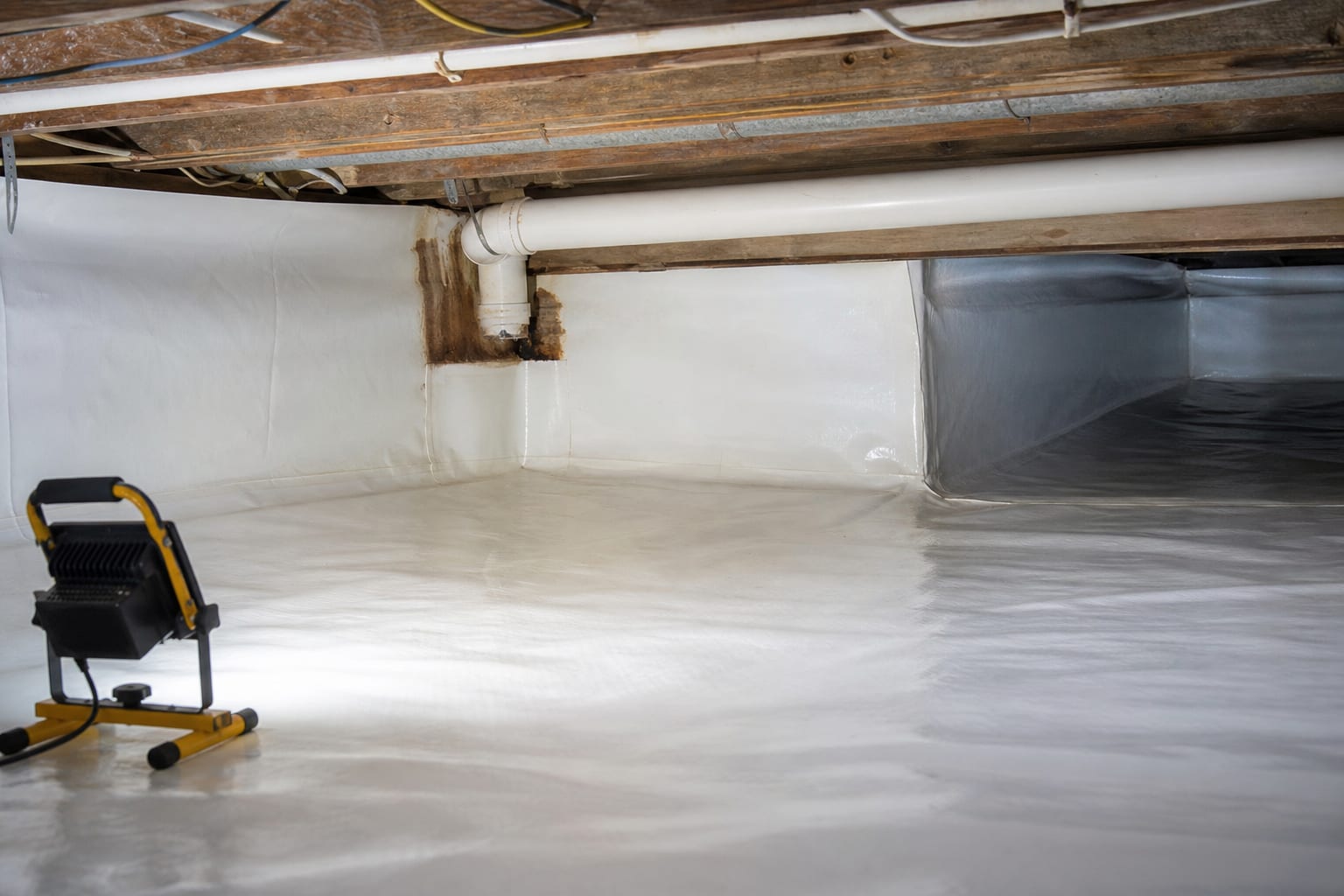
- A vapor barrier has shifted, torn, or left exposed seams where damp soil can affect the space.
- Cool ductwork, pipes, masonry, or framing has reached a surface temperature where humid air can condense.
- A drain, sump basin, condensate line, or discharge route is not moving water as expected.
- Previously damp insulation, wood, cardboard, leaves, or other debris has taken on more moisture and is producing a stronger earthy odor.
- Air movement has changed, carrying crawl space odor through floor penetrations, duct leaks, chases, or an open access.
Multiple moisture routes can operate at once, so a source-first review is essential.
Use timing to narrow the inspection
Odor that starts during the rain
A smell that strengthens while rain is actively falling makes direct water movement worth checking first. Observe whether gutters are overflowing, downspouts are disconnected, the access door is receiving runoff, or water is collecting against the foundation. From a safe location, look for a wet trail on a wall or a growing low spot beneath the house.
Do not enter when water may be near electrical wiring, equipment, outlets, or extension cords. Do not crawl through moving water or an unstable entrance. Photographs from the opening may be safer and more useful than immediate entry.
Odor that appears several hours later
A delay can fit with water traveling through soil, moisture evaporating from damp ground, absorbent materials becoming wetter, or indoor air beginning to carry odor upward. Note whether the odor changes as the HVAC system cycles. That pattern does not prove the ducts are responsible, but it can identify when air movement makes the condition more noticeable.
Odor that lasts for days
If the smell remains after the weather clears, ask what is still wet. Wood and insulation dry more slowly than a concrete walkway. Water may remain beneath a loose liner, inside an insulation layer, in a low soil pocket, or around a clogged drain. Persistent odor is a reason to inspect materials and drainage, not simply wait for outdoor air to feel drier.
Odor after nearly every substantial storm
A repeatable pattern is valuable evidence. Record the rainfall timing, the location where moisture first appears, and how long the odor lasts. Recurrence can point toward an exterior water route, a drainage limitation, or a crawl space moisture-control gap that activates under similar conditions. The standing-water problem page gives a fuller framework for water that appears below the home.
Begin outside, where much of the rainwater starts
An exterior walkaround should happen only when lightning, wind, falling limbs, and floodwater are no longer hazards. Work from the roof edge down toward the soil.
Roof runoff
Look for gutters that overflowed, seams that leaked, and downspouts that discharged beside the wall. A stain or washed mulch path can show where water traveled even after the rain stops. Confirm that extensions remain connected and that their discharge does not immediately turn back toward the foundation.
Pooling, erosion, or water emerging near an outlet can reveal a hidden restriction. Document it without opening an underground line during wet conditions.
Grade and low points
Walk the accessible perimeter and compare sides of the house. Look for:
- soil or mulch sloping toward the foundation;
- settlement beside a porch, addition, stoop, or utility trench;
- low areas beneath dripping roof edges;
- splash marks on masonry;
- saturated planting beds touching foundation openings;
- water crossing the crawl space access threshold;
- newly eroded channels or displaced downspout extensions.
Red clay and compacted soils can stay wet after the surface looks calm. Soil type alone does not dictate a repair, but it can affect how long water remains near the house. If exterior runoff appears to be part of the pattern, review the site’s foundation drainage improvement options as a planning resource.
Openings and penetrations
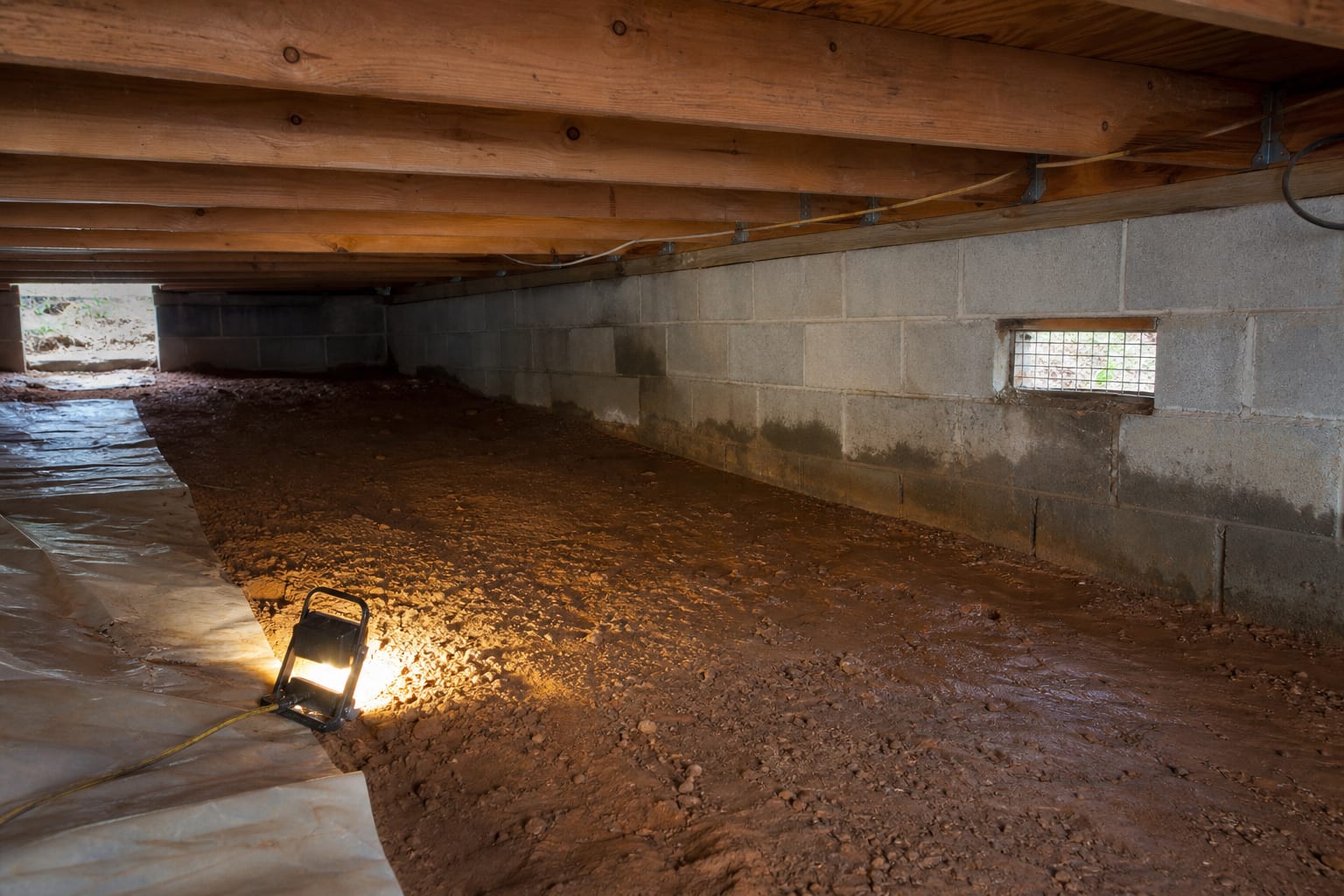
Foundation vents, access doors, pipe penetrations, and masonry joints can admit wind-driven rain or runoff when they are low, damaged, or poorly directed. Photograph the exact opening and the surrounding grade. Avoid sealing an opening as a quick experiment before the crawl space’s ventilation, combustion, moisture, and code conditions are understood.
Inside observations that separate odor from water source
If entry is safe and the space is accessible, follow a consistent path. Wear appropriate protective clothing, avoid disturbing unknown materials, and leave immediately if you encounter exposed electrical hazards, sewage, unstable framing, animals, or conditions that make breathing difficult.
Find the strongest location
Start at the access and pause. Note whether the odor is uniform or stronger:
- near one foundation wall;
- below a bathroom, kitchen, laundry, or mechanical area;
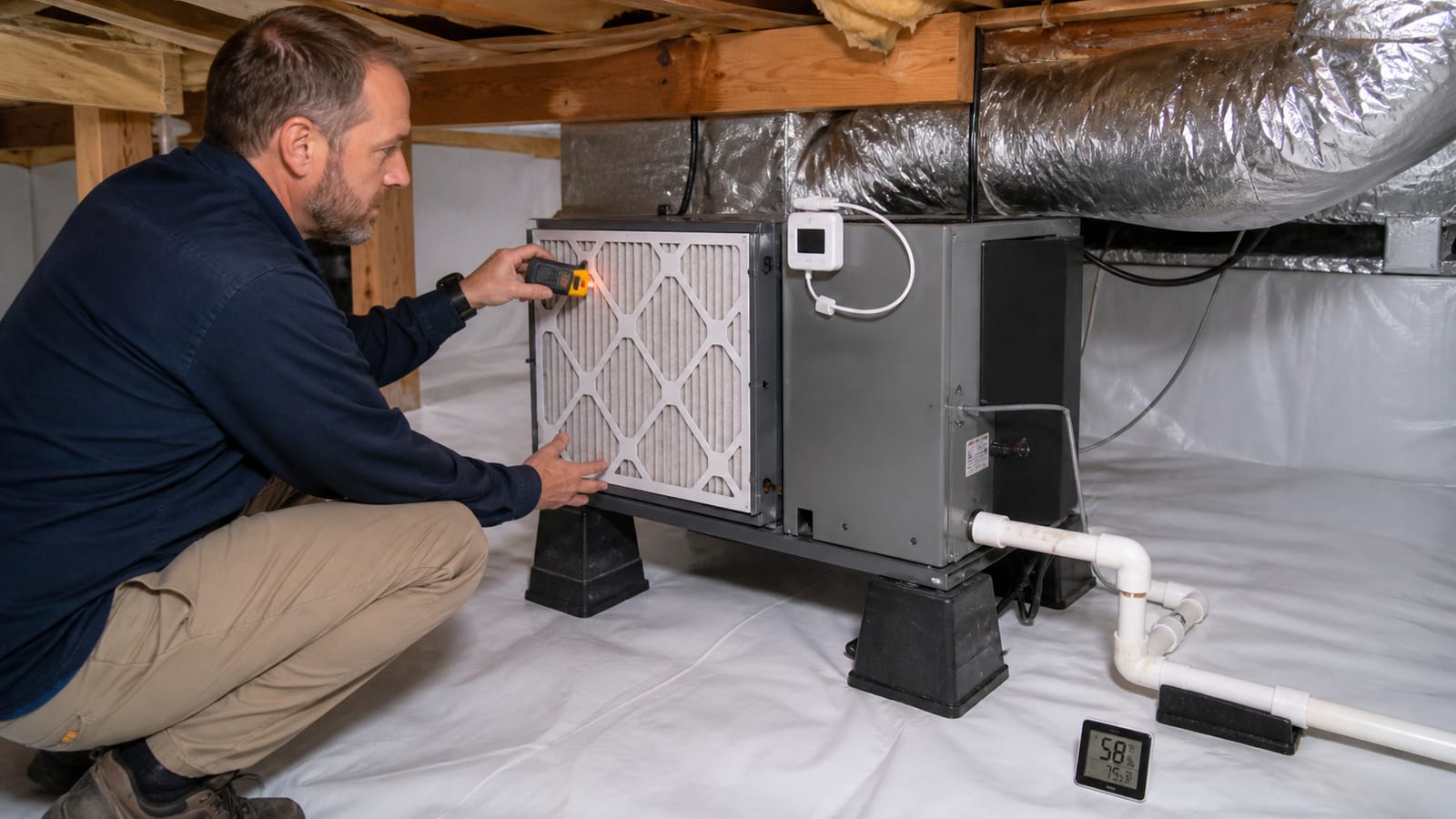
- around a drain, sump basin, or dehumidifier;
- near ductwork or plumbing;
- beneath wet insulation;
- at a pile of wood, paper, leaves, or construction debris;
- where the ground liner is loose, stained, or lifted.
Look high, middle, and low
Water clues occur at different elevations. At the top, inspect visible subfloor and framing for dark wet areas, active drips, or insulation that has changed shape. In the middle, look at ducts, pipes, piers, and walls for beads of water, streaks, or a distinct wet boundary. At ground level, check liner seams, exposed soil, low points, drains, and the perimeter.
This three-level scan helps avoid assuming that every puddle rose from the soil. A plumbing drip or duct condensation can collect at the same low spot as rain-related seepage.
Distinguish a stain from active moisture
Old marks can remain long after a source changes. Photograph the area and, if appropriate equipment is available, record a moisture reading with the date and location. Do not rely on color alone. Fresh droplets, a spreading edge, soft material, or a repeatable change during rain is more useful than an isolated dark patch.
For a broader sequence of observations, use the crawl space inspection checklist.
Four moisture routes that can produce a similar smell
Bulk water
Bulk water is visible liquid moving or collecting. It may enter at a wall, cross the access, rise at a low point, leak from plumbing, or discharge from equipment. Trace the apparent path backward. The lowest puddle is where water stopped, not necessarily where it began.
Ground vapor
Even without a puddle, moisture evaporates from damp soil. Exposed ground, incomplete coverage, open seams, and loose edges can increase the area communicating with the crawl space. A crawl space moisture-control assessment should consider ground vapor together with exterior water and air movement.
Condensation
Condensation forms when a surface is cold enough relative to the moisture in the surrounding air. Cold ducts, pipes, or masonry may collect water during humid weather. Droplets distributed along a cool surface look different from a single leak point. Condensation should still be traced, because it can wet nearby insulation and wood.
Plumbing or equipment discharge
A storm can be coincidental. Supply, drain, condensate, and equipment leaks can occur at any time. Compare the wet area with plumbing and mechanical locations above it. Avoid operating or disassembling powered equipment in a wet crawl space.
Materials can retain odor after visible water is gone
Odor can persist because porous materials dry slowly. Fiberglass insulation can hold dust and moisture. Paper-faced products, wood scraps, cardboard, leaves, and old storage material can become odor reservoirs. Soil beneath a loose liner may remain wet even when the top surface looks clean.
Do not coat, spray, or deodorize materials before the moisture path is understood. Fragrance can temporarily mask the location clue. Surface cleaning cannot correct continuing water entry, elevated humidity, or wet material hidden behind insulation.
Visible suspected fungal growth also calls for restraint. The EPA advises addressing the moisture source as the essential first step in mold control. Avoid aggressive brushing or demolition that can spread debris. The site’s mold and fungal cleaning service page explains how cleaning fits after source control, without treating appearance or odor as a laboratory identification.
Build a useful rain-event record
A short record can turn a vague recurring complaint into an inspectable pattern. Include:
- Date and approximate start and end of the rain.
- Whether wind drove rain toward a particular side.
- When the odor became noticeable and where.
- Exterior pooling, overflow, erosion, or disconnected drainage.
- The first visible interior wet location.
- Whether water was dripping, flowing, beading, or standing.
- HVAC, dehumidifier, drain, and sump status, observed without unsafe handling.
- Humidity readings with sensor location and time, if available.
- Photographs taken from consistent positions.
- How long odor and visible moisture remained after the storm.
Avoid comparing humidity numbers from different sensors or locations as if they were interchangeable. A reading is most useful when paired with conditions and placement.
What not to conclude from smell alone
A musty odor does not tell you the species of any biological growth, the extent of hidden damage, or the correct water-control design. It also does not prove that the crawl space is the only odor source. Wet wall cavities, plumbing areas, floor coverings, HVAC components, and stored materials elsewhere can produce similar descriptions.
Likewise, the absence of odor does not prove the space is dry. Some water paths produce little smell, especially early in an event. Physical inspection and documented moisture evidence matter more than odor intensity.
Limitations and when to arrange an inspection
Arrange a closer crawl space inspection when:
- the odor returns with multiple rain events;
- standing water, flowing water, or wet insulation is present;
- wood remains visibly wet after weather clears;
- a liner is lifted by water or has widespread staining;
- drainage or dehumidification equipment is not operating as expected;
- the smell is entering living areas or changing with HVAC operation;
- suspected fungal growth covers more than a small isolated area;
- access, electrical, structural, animal, sewage, or air-quality conditions make entry unsafe;
- the water path cannot be traced from safe observations.
An inspection should identify evidence and system relationships before recommending a repair. Exterior runoff, ground coverage, air exchange, equipment, drains, plumbing, and affected materials all belong in the same review.
Frequently asked questions
Why does the odor seem stronger inside the house after rain?
Rain can increase moisture and odor beneath the floor, while HVAC operation, plumbing penetrations, chases, and other air paths can carry that odor upward. Record where it appears indoors and whether it changes when fans or HVAC equipment run. The pattern helps an inspection, but it does not prove that one duct or opening is the source.
Can a musty smell after rain come from soil without standing water?
Yes. Damp exposed soil can release water vapor and earthy odor without forming a visible puddle. Check ground coverage, seams, perimeter edges, and humidity together with exterior drainage. Do not assume a dry-looking liner means the soil below it is dry.
Should I open crawl space vents to dry the area after a storm?
Opening vents can introduce humid outdoor air, and the result depends on weather, crawl space design, equipment, and building conditions. Treat ventilation changes as a system decision rather than an emergency drying shortcut. Use safe drying and inspection methods appropriate to the specific space.
Will a dehumidifier remove the odor?
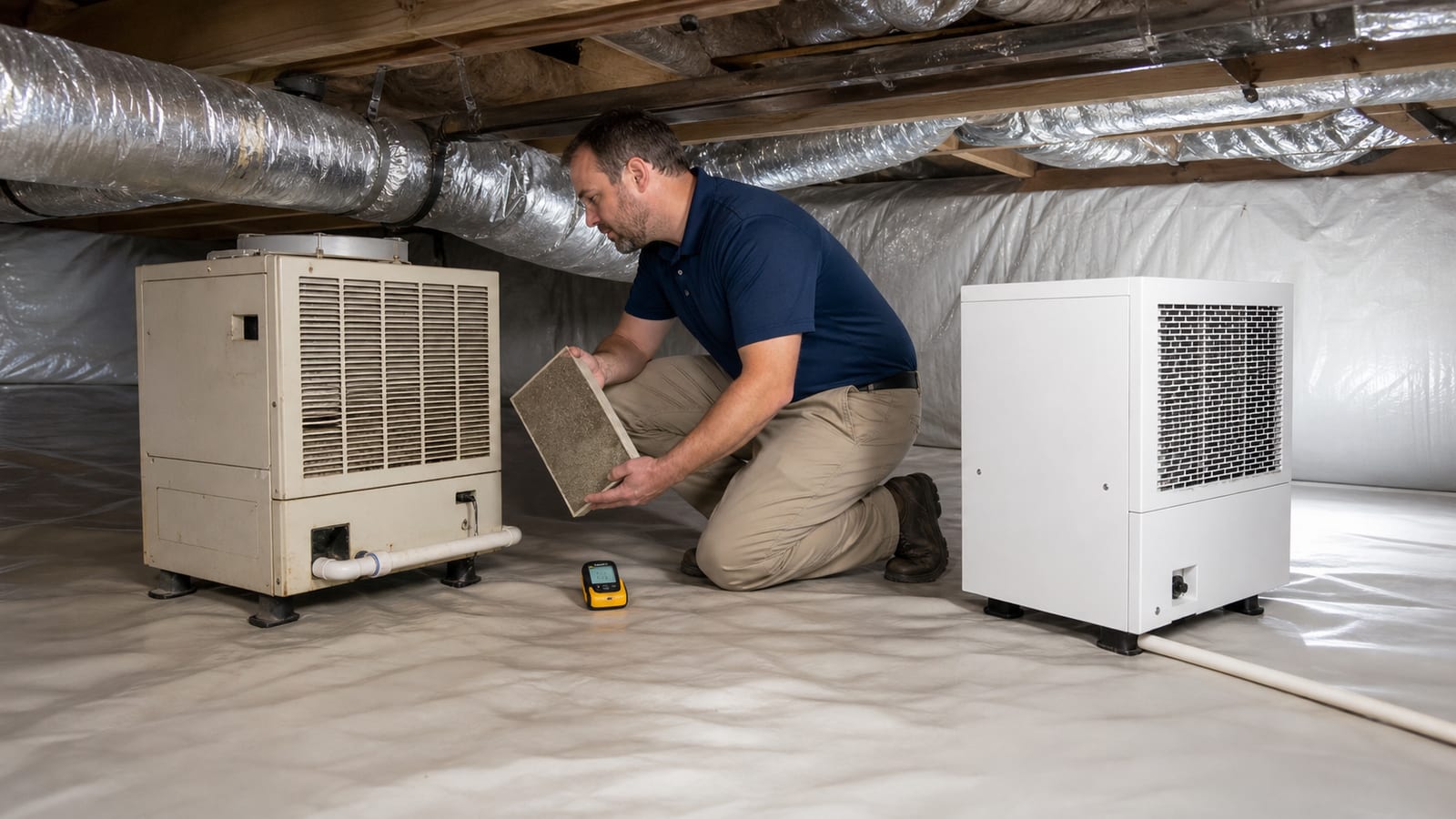
A dehumidifier can help manage airborne moisture when it is correctly selected, drained, and operated, but it does not stop active water entry or remove wet debris. If the source is a leak, drainage path, soaked insulation, or open ground, that condition must also be addressed.
How soon after heavy rain should the crawl space be checked?
Check exterior drainage once weather hazards have passed. Interior entry should wait until the space is safe from electrical, structural, sewage, animal, and flood hazards. Early photographs can document active paths, while a follow-up after weather clears can show which materials and low points remain wet.
Sources and further reading
- NC State Extension: Mold and Moisture Checklist
- U.S. EPA: A Brief Guide to Mold, Moisture and Your Home
- U.S. EPA: Mold Course, Chapter 2, Moisture Basics
- U.S. Department of Energy: Unvented, Conditioned Crawlspaces
How this applies in Angier, NC
For homeowners in Angier, NC, this question is most useful when the record includes the recent weather, the first place the condition appeared, and whether cooling equipment was operating. The Triangle is warm and humid for much of the year, but that regional context does not identify the moisture source at one property. Compare the musty odors with the How to Read a Crawl Space Hygrometer Without Chasing Every Number in Apex, NC before choosing a property-specific next step.