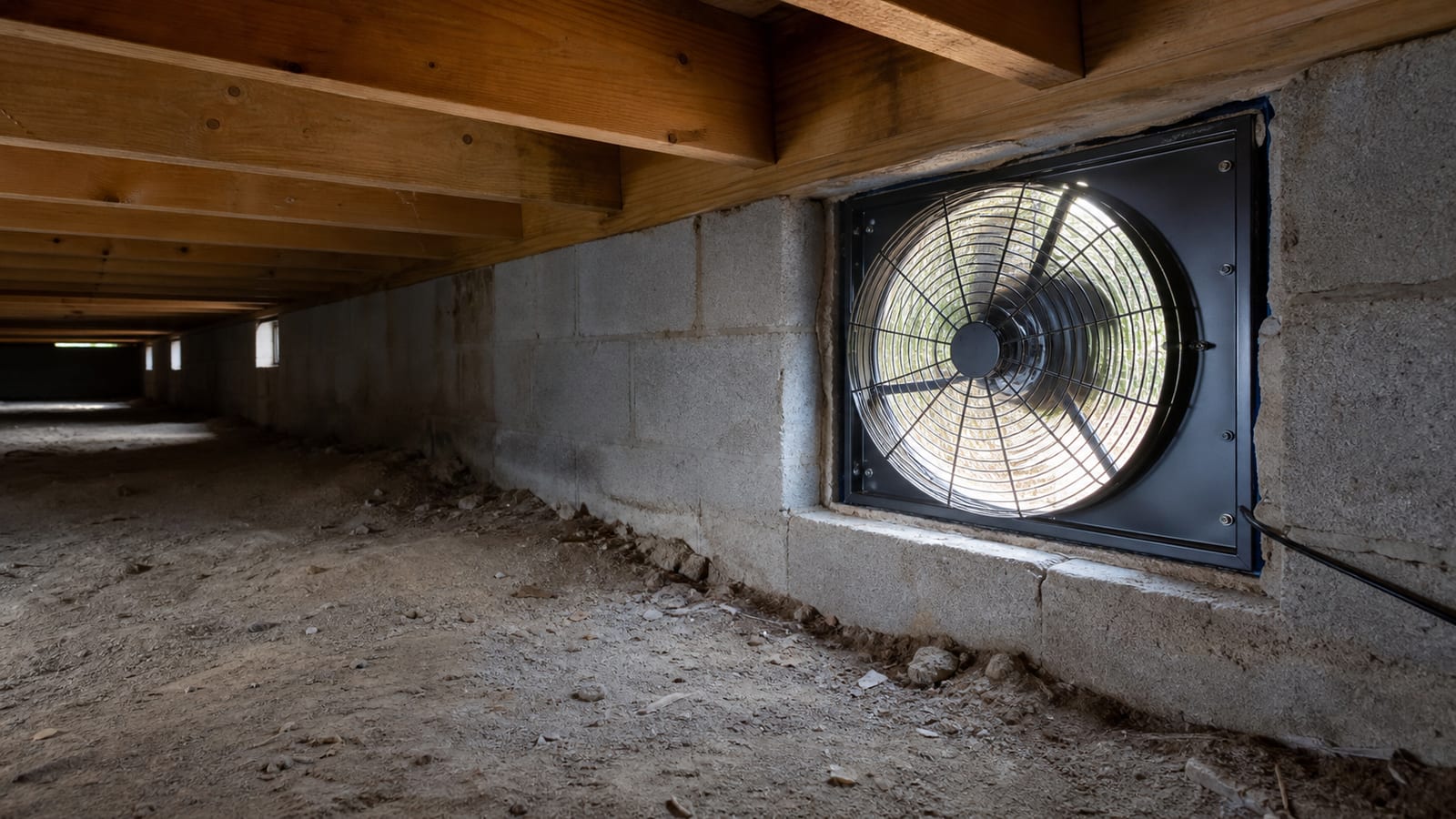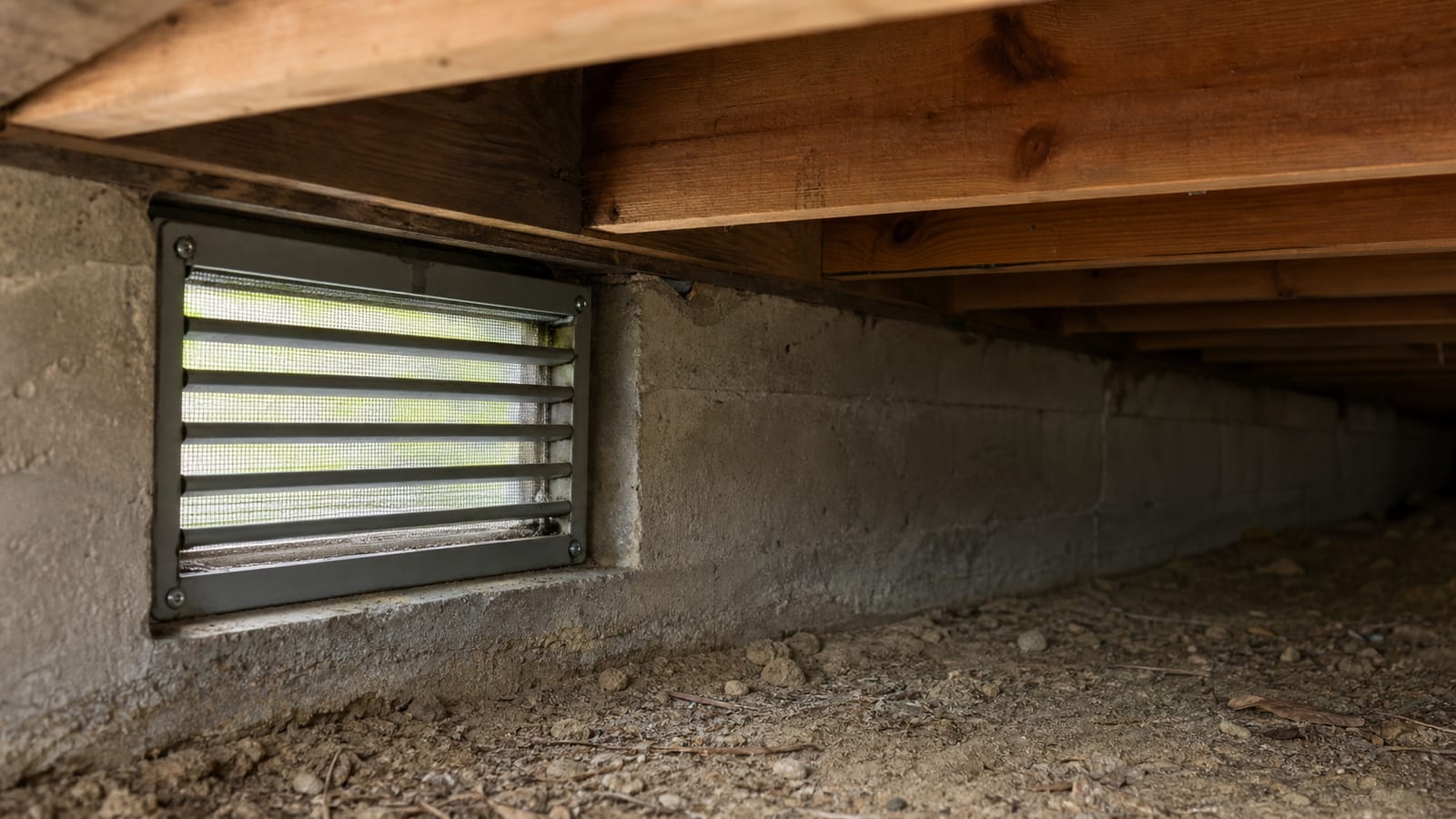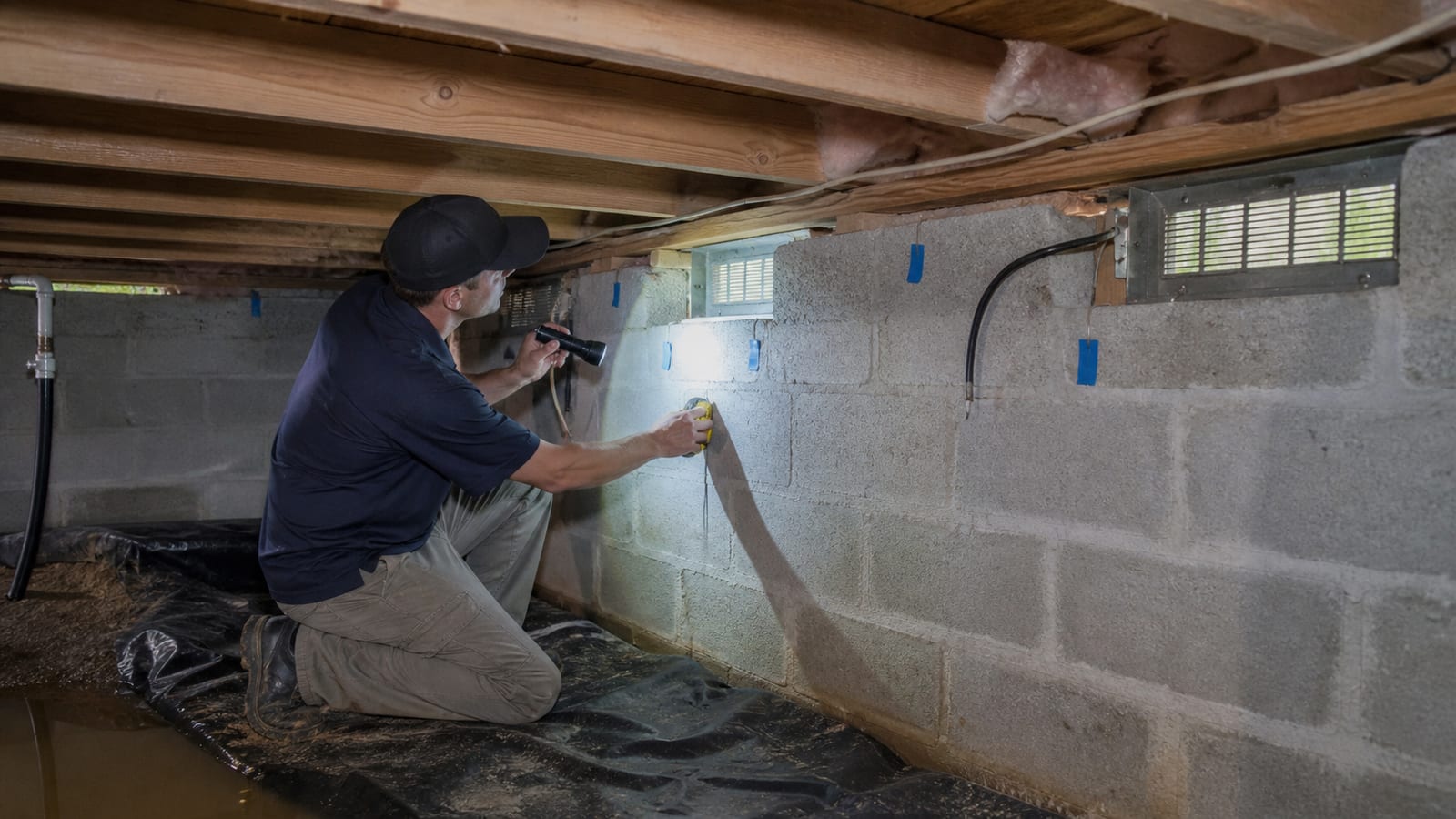
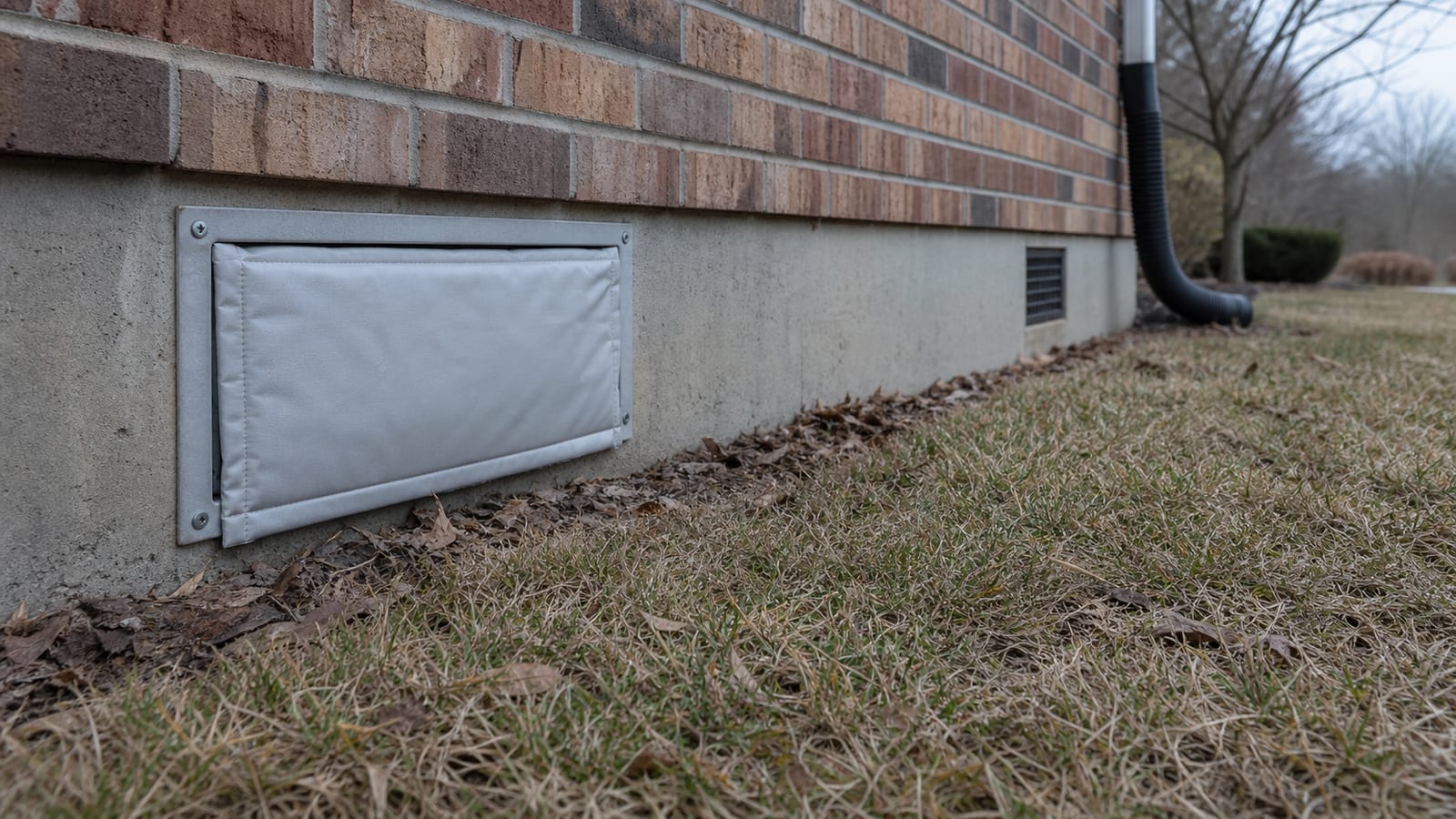
You should not cover crawl space vents for winter based on the calendar alone. Covers reduce airflow and drafts, but they also change how moisture leaves or enters the space. The decision should follow the crawl space’s intended vented or closed design, its water and vapor conditions, and a plan for monitoring after any change.
Cold floors often drive the question, yet vents are only one part of the floor system. Missing insulation, air leakage, damp insulation, duct conditions, and room usage can also affect comfort. Blocking openings may reduce a draft while leaving the source of moisture or heat loss untouched.
Should crawl space vents be covered during a North Carolina winter?
Crawl space vents should be covered in winter only when the closure fits a deliberate, complete crawl-space design. A temporary panel may reduce cold airflow, but it can also restrict drying or create a mixed system. Inspect moisture sources, ground coverage, insulation, combustion conditions, and the planned drying method before closing openings.
North Carolina winters can move between cold, dry periods and mild, wet weather. A temperature-only rule misses that variation. Outdoor relative humidity may appear high on a cool day even when the actual water-vapor content is modest. On a warmer rainy day, the air can carry more moisture.
The crawl space also has thermal lag. Framing, masonry, ducts, and soil do not change temperature instantly. A warm, humid weather shift can send damp air toward surfaces that remain cool. Conversely, a cold dry period can increase floor drafts and lower crawl-space temperature.
Instead of setting one date for every home, document:
- the intended vented or closed design;
- outdoor weather and recent rain;
- crawl-space temperature and relative humidity;
- floor and insulation condition;
- plumbing and duct condensation;
- exposed soil or liner gaps;
- access-door and utility-penetration leakage;
- any dehumidifier, drain, or sump equipment;
- combustion appliances or pathways that require qualified review.
The pattern across those items is more useful than the month printed on the calendar.
Can covering vents make floors warmer?
Covering vents can reduce one source of cold outdoor airflow, so floors may feel less drafty in some homes. It does not add insulation, repair gaps around penetrations, dry wet insulation, or correct duct leakage. Floor comfort should be evaluated across the entire thermal and air boundary rather than attributed to vents alone.
Cold floors can come from several overlapping conditions:
- outdoor air entering foundation vents;
- leakage at the rim, access, plumbing, and wiring;
- missing, compressed, or fallen insulation;
- insulation installed in a way that does not match the crawl-space design;
- damp insulation losing performance;
- uninsulated or leaky ducts;
- rooms over additions or isolated crawl zones;
- flooring type and interior thermostat settings.
If a winter cover reduces the symptom, that result is evidence of an airflow path, not proof that seasonal covering is the final solution. Inspect what happens to humidity and materials after the change. A drier, more stable result is different from a warmer floor paired with rising moisture.
The cold floors and energy loss problem page outlines the other conditions worth reviewing. The ventilation decision should support the floor system without creating a new moisture problem below it.
What are the top 6 checks before adding winter vent covers?
Six checks should come before winter vent covers: water entry, soil vapor, current design, insulation, air paths, and monitoring. These checks separate a small draft-control measure from a complete plan. They also reveal conditions that a cover could hide, including low vent wells, damp framing, torn screens, or condensation.
-
Check exterior water at every opening. Look for low grade, ponding, downspout discharge, splash marks, leaves, and sediment. A solid cover can conceal water collecting against the wall. Correct the water path instead of trapping it behind a panel.
-
Inspect ground-vapor coverage. Exposed soil and open liner seams can add moisture throughout winter. Cold weather does not guarantee dry soil. Check edges, piers, penetrations, tears, and signs of water beneath the material.
-
Identify the intended design. A deliberately vented crawl space and a closed crawl space use different moisture strategies. Seasonal covers can create an in-between state. Confirm how remaining moisture will be managed while openings are restricted.
-
Review insulation and framing. Look for fallen, compressed, missing, or wet insulation. Note staining, condensation, and visible wood changes. Do not push damp insulation back into place and hide the reason it fell.
-
Map other air paths. Check the access, utility penetrations, rim areas, duct openings, and gaps into the home. Covering vents while leaving larger leaks can produce little comfort improvement and unpredictable pressure changes.
-
Set a monitoring plan. Record baseline temperature and humidity from stable sensor locations. Recheck after weather changes, not just on the first cold day. Inspect materials and water paths because one favorable sensor cannot prove the whole space is dry.
What could go wrong after vents are covered?
After vents are covered, humidity can rise, condensation can shift, odors can concentrate, and hidden water can remain. Covers may also loosen, trap runoff, block required airflow, or conflict with combustion and mechanical conditions. Recheck the crawl space after changes instead of assuming that a warmer floor confirms a successful moisture strategy.
Warning signs after installation include:
- sustained humidity above the previous baseline;
- condensation on ducts, pipes, or fasteners;
- damp or sagging insulation;
- new odor in the crawl space or home;
- water marks around cover edges;
- pests using gaps behind a panel;
- a dehumidifier running longer than before;
- a sensor showing different trends across crawl-space zones;
- visible moisture after warm rainy weather;
- doors or floors changing in a way that suggests broader moisture movement.
If a problem appears, preserve the evidence. Note the date, weather, cover positions, sensor readings, HVAC status, and visible conditions. Do not open and close vents repeatedly during the same test period. Constant changes make it difficult to understand which condition affected the result.
The winter crawl-space condensation and cold-floors article provides more detail on how cold surfaces and moisture can interact. A winter issue can involve both temperature and water vapor, so treating only one side can be incomplete.
How does a closed crawl space handle winter differently?
A closed crawl space handles winter by limiting uncontrolled outdoor exchange and managing ground vapor, water, air leakage, and remaining humidity as a coordinated system. It does not depend on seasonal opening and closing of foundation vents. The boundary, drying method, drainage, and monitoring must remain functional throughout changing weather.
Closing a crawl space generally involves more than inserting panels. The plan may include:
- a continuous ground-vapor layer;
- sealed seams and penetrations;
- perimeter and pier details;
- durable vent closures;
- an appropriate access detail;
- bulk-water management;
- a defined drying or conditioning method;
- monitoring and maintenance access.
The U.S. Department of Energy’s unvented conditioned crawl-space overview explains the building-science basis for managing moisture and air as a system. It should not be read as permission to close vents without evaluating the house.
North Carolina permit and code questions can depend on scope. Existing combustion equipment, duct systems, drainage, termite visibility, and structural conditions may add requirements or specialist review. A permanent closure should be planned, not treated as a longer-lasting version of a seasonal plug.
The crawl space ventilation pillar compares vented and closed strategies and explains how fans, covers, and seals perform different jobs.
How does Carolina Encapsulation Company assess winter vent concerns?
Carolina Encapsulation Company can assess winter vent concerns by tracing the draft, moisture, and insulation conditions before recommending a cover or closure. During a free inspection, the company can document openings, exterior drainage, liner coverage, floor insulation, visible framing, ducts, pipes, and existing equipment across the crawl space.
The process avoids a fabricated job story and uses an honest trade observation instead: a cold vent can be easy to see, while an open plumbing penetration or fallen insulation several feet away may be the larger path. The inspection therefore follows the boundary rather than stopping at the first visible opening.
A complete recommendation should distinguish:
- a damaged screen or louver;
- a removable seasonal cover;
- a permanent air-sealed closure;
- insulation repair;
- broader air sealing;
- drainage correction;
- ground-vapor control;
- drying and monitoring.
There are practical limits. A crawl-space inspection does not replace an energy audit, combustion-safety evaluation, structural engineering, concealed plumbing diagnosis, or code official’s determination. When those questions affect the closure, the appropriate professional should address them before the work proceeds.
How should winter vent changes be monitored?
Monitor winter vent changes by recording a baseline, leaving sensors in consistent locations, and checking trends through cold, mild, dry, and rainy periods. Inspect condensation, insulation, framing, equipment, and exterior water along with air readings. A single lower humidity value or warmer afternoon does not establish stable performance.
A useful log contains:
- Date, time, and weather.
- Recent rainfall or snow.
- Vent and cover positions.
- Crawl-space temperature and relative humidity.
- Outdoor conditions if available.
- HVAC and dehumidifier operation.
- Sensor locations.
- Visible condensation or water.
- Insulation and liner changes.
- Odor, floor comfort, or room differences.
Review the space after the first major weather change and after any power outage that affects equipment. If the system has multiple zones, one sensor near the access may miss a damp remote corner. Avoid resting sensors on masonry, ducts, or the liner because surface temperature can distort the local reading.
If readings rise, check water and equipment before moving the sensors or changing all covers. If covers are temporary, follow the documented plan for removal rather than reopening on an arbitrary warm day.
Frequently asked questions about winter crawl space vent covers
These answers address timing, materials, cold floors, and humidity after seasonal vent changes. They do not replace a project-specific review of moisture, combustion, mechanical systems, or applicable requirements.
What month should crawl space vents be covered?
There is no reliable month that applies to every North Carolina home. Weather, outdoor moisture, crawl-space temperature, and the intended design matter more than a fixed date. Inspect and record baseline conditions before covering vents. If the space is designed as closed, its vent closures should not operate as a seasonal calendar adjustment.
Can I use foam board as a winter vent cover?
Foam board may reduce airflow when cut and secured appropriately, but a friction-fit piece is not automatically durable, weather-resistant, pest-resistant, or airtight. It may hide frame damage or water. Material use should match the intended temporary or permanent function and follow applicable safety and building requirements.
Will covering vents prevent frozen pipes?
Covering vents may reduce cold airflow near some pipes, but it does not guarantee freeze protection. Pipe location, insulation, air leakage, heating conditions, and severe weather still matter. Do not rely on a vent cover as the only freeze strategy. Follow plumbing guidance and address vulnerable pipes and openings directly.
Should covers come off during a warm winter week?
Not simply because the temperature rises. A warm rainy period may bring more outdoor moisture, and opening vents can change the crawl-space conditions quickly. Keep the space in its intended design, review outdoor dew point and crawl-space trends, and avoid repeated changes that make the system difficult to evaluate.
Why is the crawl space still cold after covering vents?
Other air leaks, missing insulation, damp materials, duct conditions, isolated crawl zones, or the thermal mass of soil and masonry may keep the space cool. Inspect the complete floor and air boundary. A cover only changes one opening and may not affect the dominant heat-loss path in the home.
Can winter vent covers cause mold growth?
Covers do not create growth by themselves, but an incomplete change can allow moisture to accumulate or wet materials to remain. Growth requires moisture control, not simply open or closed vents. Monitor humidity and inspect materials. If visible growth is present, correct the moisture source before focusing on the cover.
Winter vent covers should be a documented design choice, not a seasonal reflex. If your crawl space has cold floors, damaged openings, damp insulation, or changing humidity, call Carolina Encapsulation Company at 704-207-9348 or request a free inspection to review both comfort and moisture before altering the vents.
How this applies in Cary, NC
For homeowners in Cary, NC, use this topic as a way to organize observations before selecting work. Carolina Encapsulation Company serves Cary, NC and surrounding Triangle communities, but the appropriate scope still depends on the water, moisture, materials, access, and equipment found at the property. Compare the crawl space vent sealing air sealing with the Crawl Space Ventilation in North Carolina: Vents, Fans, and Moisture in Clayton, NC before choosing a property-specific next step.