Crawl space vent covers can block debris, pests, drafts, or weather depending on their design, but they do not all create an air seal. A cover should match the crawl space’s intended vented or closed design. Before installing one, inspect drainage, the vent frame, ground moisture, air pathways, and the method used to manage humidity.
The high search volume around vent covers hides an important distinction: homeowners may mean a screen, louver, removable winter panel, decorative face, flood vent, or permanent closure. Those products do different jobs. Treating them as interchangeable can leave gaps, trap water, or create a mixed system that is difficult to monitor.
What types of crawl space vent covers are available?
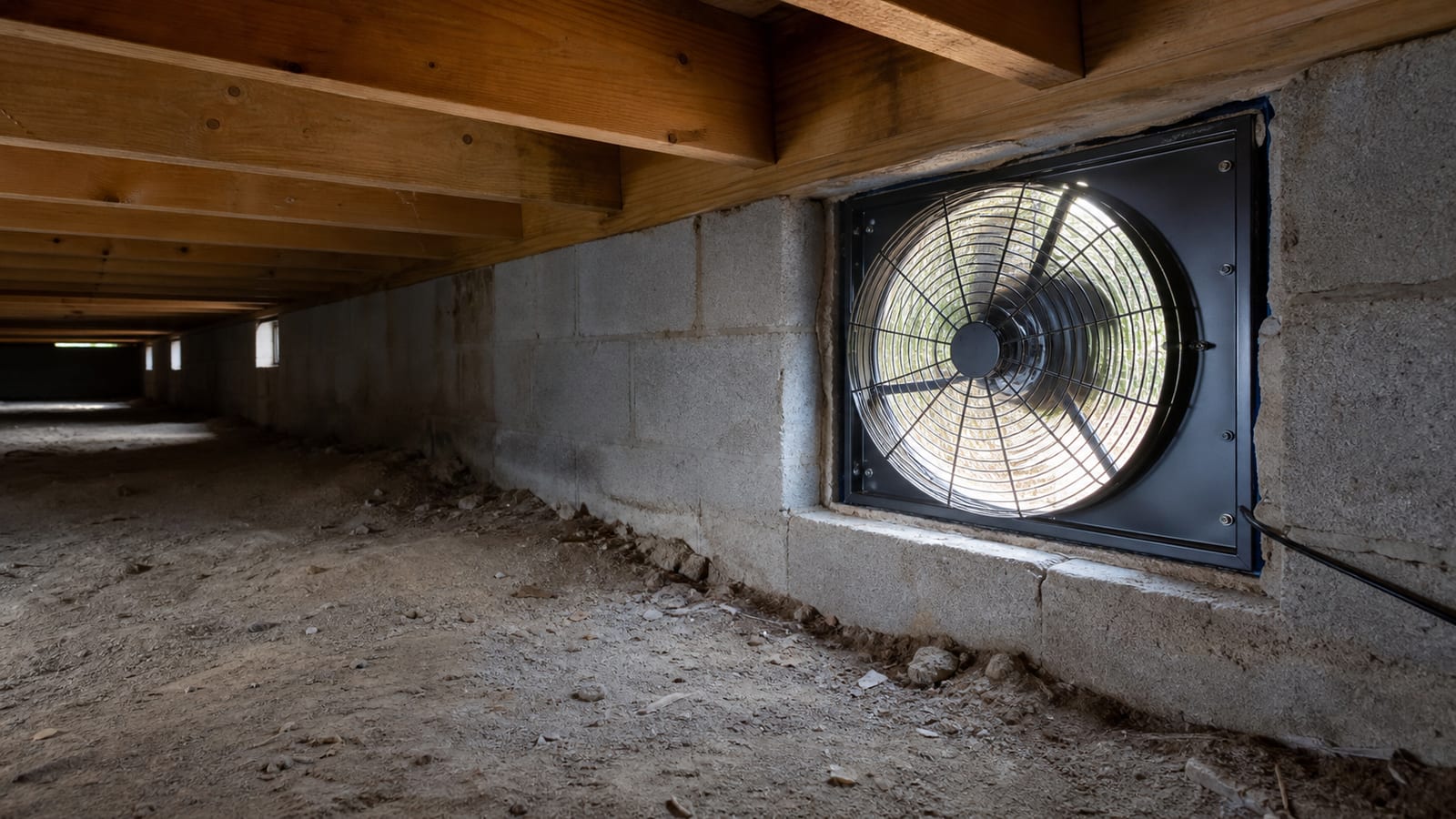
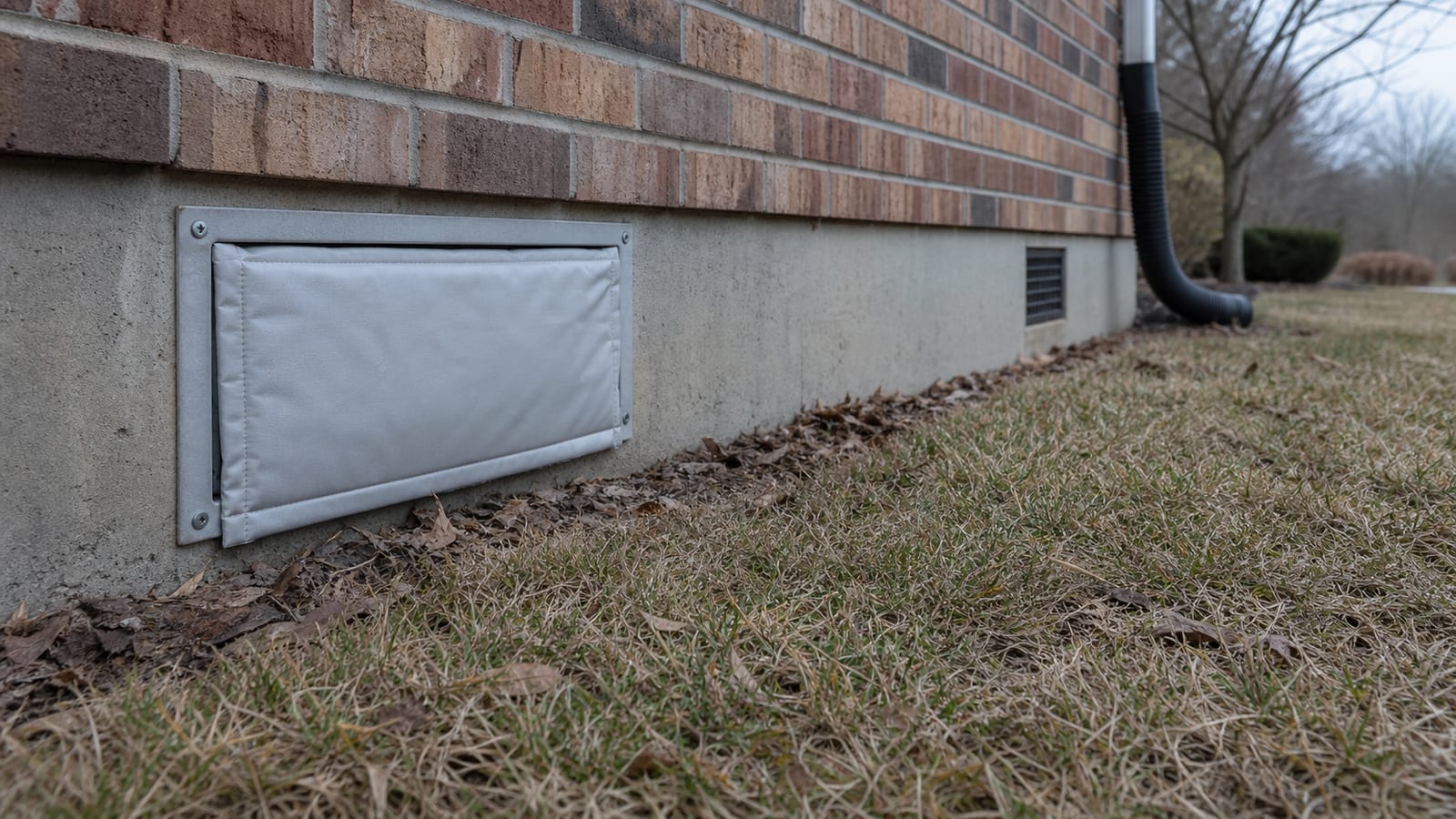
Crawl space vent covers include screens, fixed louvers, operable vents, removable panels, exterior caps, and permanent closures. Their functions range from pest screening to airflow control. Product shape alone does not establish whether an opening is weather-resistant, airtight, code-appropriate, or suitable for the crawl space’s moisture-control design.
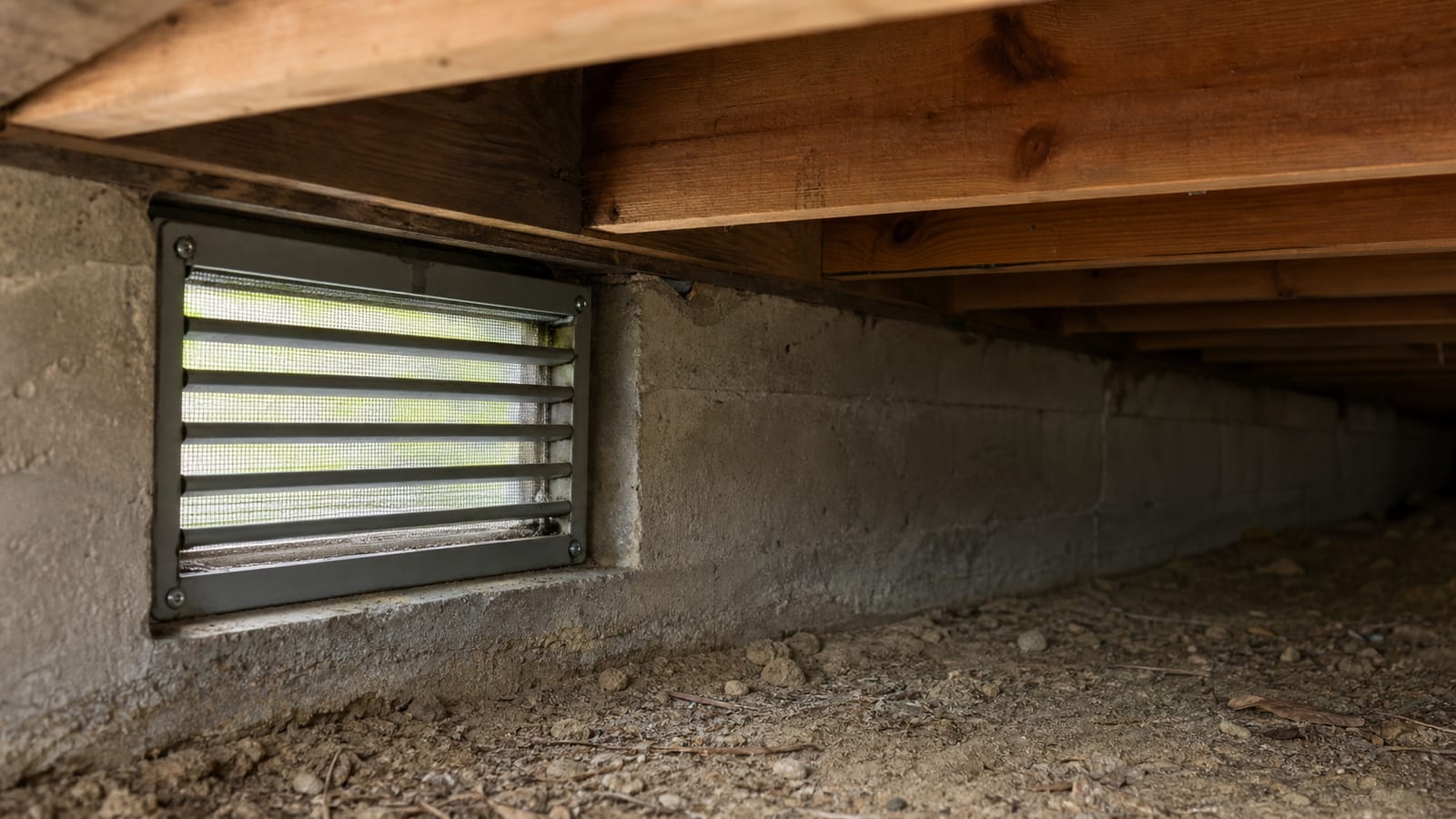
Screens limit the size of pests and debris that can pass through an opening. Damaged mesh, loose frames, and gaps at masonry edges reduce that function. Fine mesh can also collect lint, vegetation, or mud, which reduces open area and makes inspection important.
Fixed louvers help deflect some direct weather while leaving an airflow path. Their performance depends on orientation, exterior exposure, free area, and blockage. A louver near low grade can still admit splash or runoff.
Operable vents open and close manually or through a temperature-responsive mechanism. Movement does not prove the vent is appropriate for changing moisture conditions. Temperature and moisture are related, but a vent that reacts only to temperature cannot evaluate outdoor dew point, rain entry, wet soil, or interior equipment.
Removable panels or caps are often used to reduce seasonal drafts. A panel may fit over a face without sealing the perimeter. It can also conceal a damaged screen, low opening, or water mark that still needs attention.
Permanent closures are intended to become part of a closed crawl-space boundary. They need durable connections to the surrounding wall and coordination with the liner, access, drying strategy, inspection visibility, and applicable requirements.
Can a vent cover stop crawl space moisture?
A vent cover can reduce one moisture pathway if humid outdoor air or rain enters through that opening. It cannot stop soil vapor, wall seepage, plumbing leaks, condensation, groundwater, or discharge returning toward the foundation. Moisture control requires identifying which paths are active and addressing them in a sensible sequence.
Start with liquid water. A vent cover mounted above a poorly drained well may hide the opening while water still collects against the foundation. A solid exterior cap can redirect some splash, but it will not correct roof runoff, a disconnected downspout, settled soil, or a buried drain that backs up.
Next, check ground vapor. Exposed soil can add moisture even if every vent looks dry. A torn or incomplete liner may leave substantial soil open around piers, utilities, or perimeter edges. Covers do not perform that job.
Then consider air movement. Outdoor air can enter through vents, access doors, wall gaps, and utility penetrations. Air also moves between the crawl space and the home. Covering the most visible openings while leaving other pathways can create unpredictable pressure and moisture patterns.
The crawl space ventilation pillar explains how vents fit with drainage, ground coverage, air sealing, drying, and monitoring. Covers work best when their exact role is defined inside that larger plan.
How do you choose a cover for a vented or closed design?
Choose a cover by first deciding whether the opening must remain functional for ventilation or become part of a closed air boundary. For a vented design, preserve the required airflow path while managing pests and weather. For a closed design, use a durable closure coordinated with every other moisture-control layer.
For a vented crawl space, evaluate:
- the actual open area after screens and louvers;
- cross-flow obstructions inside the space;
- vegetation, mulch, or stored material outside;
- splash and runoff at the opening;
- damaged frames or mortar;
- pest-resistant screening condition;
- seasonal humidity and condensation evidence.
For a closed crawl space, evaluate:
- perimeter adhesion or mechanical attachment;
- compatibility with masonry and wall details;
- gaps behind trim or old frames;
- access to inspect and maintain nearby materials;
- the connection to wall or ground liners;
- intentional drying and monitoring;
- combustion and mechanical-system considerations;
- permit or code questions for the planned scope.
The U.S. Department of Energy’s unvented crawl-space resource describes unvented construction as a coordinated moisture and air-control approach. It does not support simply covering openings while ignoring soil, drainage, or drying.
What are the top 6 limits of crawl space vent covers?
Vent covers have six common limits: they do not drain water, cover soil, repair frames, guarantee airtightness, provide a drying strategy, or verify compliance. Understanding those limits helps keep a small component from being sold or installed as a complete moisture solution. Each limit points to a separate inspection question.
-
They do not manage exterior drainage. A cover may shed direct splash, but roof water, grading, ponding, and low wells remain. Inspect where water travels before and after rain. Water held against a solid panel can find gaps around the frame or masonry.
-
They do not control exposed-soil vapor. Soil can release moisture without visible standing water. Ground coverage, seams, penetrations, and perimeter details need their own evaluation. A row of dry-looking covers says nothing about conditions beneath the crawl space.
-
They do not repair damaged openings. Cracked mortar, rusted frames, missing blocks, pest damage, and settlement can leave pathways around a new face-mounted cover. The substrate must be sound enough for the selected function.
-
They are not automatically airtight. Foam friction-fit blocks, magnetic panels, plastic caps, and decorative plates vary in fit. Corners, fasteners, textured masonry, and old frames can leak. If airtightness matters, inspect the complete perimeter and its durability.
-
They do not remove moisture. Closing airflow changes the moisture balance but does not actively dry wet framing or air. A closed design needs an appropriate method to handle remaining moisture and a way to monitor performance.
-
They do not settle design or permit questions. A product package cannot determine the requirements for a specific house and scope. Closed-crawl-space work can involve building, mechanical, combustion, pest-inspection, and permit considerations that should be reviewed before installation.
How should you inspect a vent before covering it?
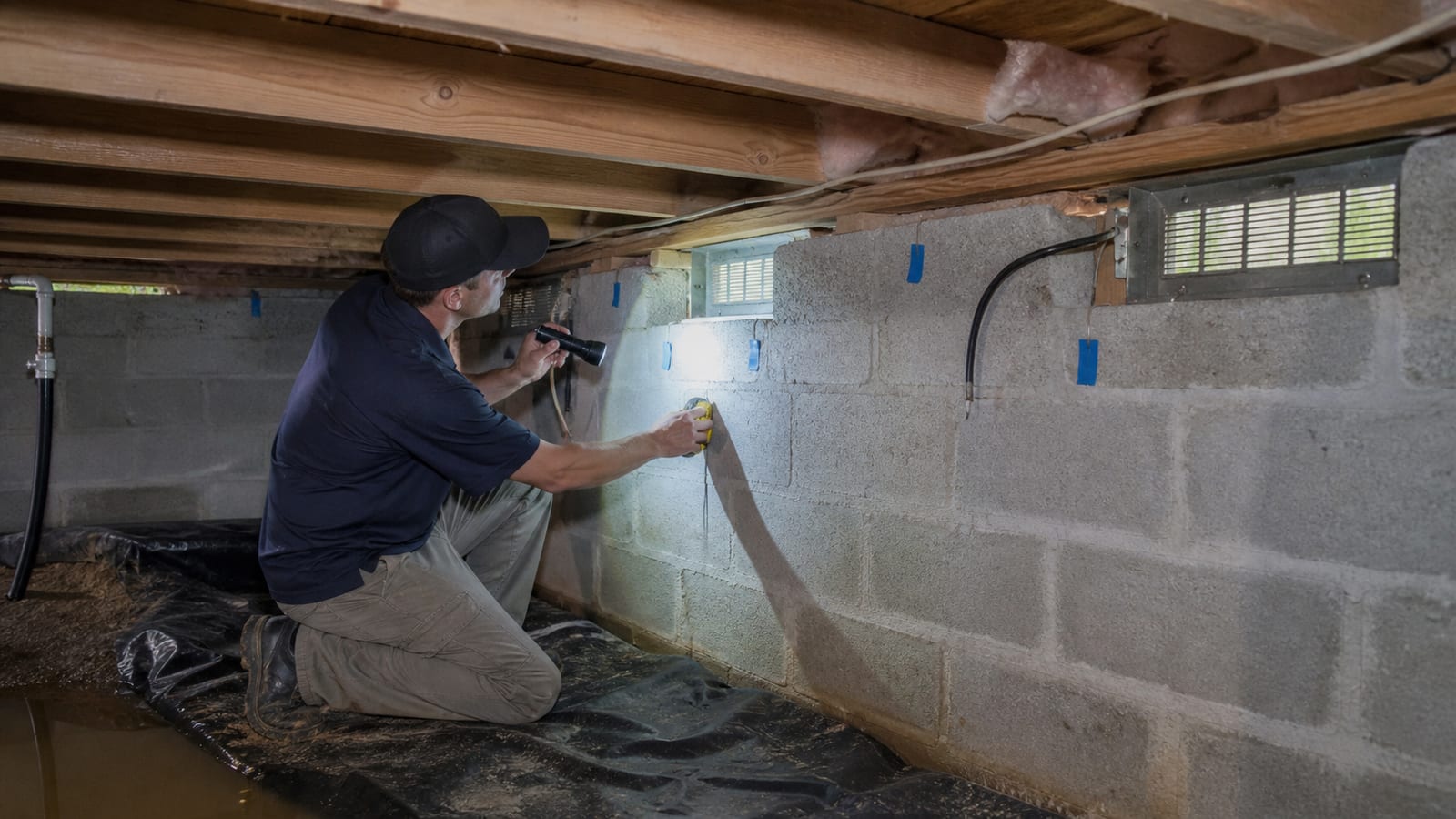
Inspect a vent from outside and from a safe crawl-space access before covering it. Record grade, runoff, well condition, frame damage, screens, stains, pests, interior obstructions, condensation, and nearby wiring or pipes. Preserve the evidence so the cover does not hide a water path or maintenance problem.
Use this order:
- Photograph the opening and surrounding wall.
- Check soil and mulch height relative to the vent.
- Look for downspout discharge, roof valleys, splash marks, and ponding.
- Inspect the well for sediment, leaves, cracks, and a drainage route.
- Check the frame, mortar, screen, and fasteners.
- From a safe location, inspect interior stains and wet materials.
- Note nearby pipes, ducts, wires, insulation, and liner edges.
- Record crawl-space temperature and humidity without moving the sensor.
- Identify whether the space is meant to stay vented or become closed.
- Confirm the cover can be inspected, maintained, and removed if required.
Do not seal over active insects, nesting material, wet insulation, or unexplained stains. A clean cosmetic finish is not useful if it removes access to evidence that should guide the repair.
How does Carolina Encapsulation Company approach vent covers?
Carolina Encapsulation Company approaches vent covers by defining the opening’s job before choosing a material or attachment. During a free inspection, the company can review water entry, frame condition, pest openings, ground coverage, existing drying equipment, and the intended crawl-space design. The scope follows the observed conditions rather than a product-first assumption.
This process includes an honest limitation: not every vent should be permanently closed. A house that remains intentionally vented needs functional openings. A house moving to a closed system needs more than covers. Water against the wall may require exterior drainage work before any closure. Structural damage, concealed plumbing, electrical hazards, or code interpretation may require another qualified party.
The crawl space vent sealing and air sealing service is relevant when openings are being incorporated into a closed boundary. The pest-entry and damaged-vapor-barrier page is useful when the visible concern is torn screening, animal access, or damaged liner rather than ventilation alone.
No fabricated job story is needed to explain the practical lesson: the edge of the cover matters as much as its face, and the conditions behind it matter more than its appearance.
When should a cover be repaired or removed?
A vent cover should be repaired or removed when it is loose, cracked, corroded, blocked, holding water, concealing damage, or inconsistent with the intended crawl-space design. Any change should preserve the ability to inspect moisture paths and should not convert a vented space into a mixed or incomplete closed system.
Warning signs include:
- daylight around a supposed air seal;
- staining or efflorescence at the edges;
- standing water in the well;
- warped panels or failed adhesive;
- insects, nesting, or damaged mesh;
- soil or mulch touching the cover;
- interior condensation near the opening;
- unexplained humidity changes after installation;
- a closed vent paired with exposed soil and no drying plan;
- an open vent in a space otherwise treated as closed.
If a cover is trapping leaves or mud, clean it without damaging the screen or wall. If water collects, correct the drainage path rather than drilling an improvised hole through a closure. If the cover must be removed for inspection, document its orientation, fasteners, and seal before disturbing it.
Frequently asked questions about crawl space vent covers
These questions clarify fit, materials, seasonal use, pest screening, and the difference between a cover and a permanent closure. The correct choice still depends on the house’s intended crawl-space design and the moisture paths found during inspection.
Are foam crawl space vent blocks permanent?
Foam blocks may reduce airflow when they fit tightly, but their durability and air-sealing performance depend on the material, masonry texture, exposure, and installation. They can shrink, shift, or leave edge gaps. Treat them as a component with inspection needs, not automatic proof of a complete permanent closed-crawl-space boundary.
Do vent covers keep mice and insects out?
A sound cover or screen can reduce access through that opening, but pests can use gaps at access doors, utility penetrations, masonry joints, and damaged liner edges. Very fine screening can also clog and reduce airflow in a vented design. Inspect the entire perimeter and choose screening that matches the intended function.
Can I put a solid cover over a damaged vent frame?
Covering a damaged frame can hide loose mortar, corrosion, pest entry, or water paths without repairing them. Inspect and stabilize the opening first. The mounting surface must support the cover’s purpose, especially if it is expected to resist weather or form part of an air boundary.
Should vent covers be removed in spring?
Seasonal removal should follow the crawl space’s defined design, not a calendar alone. Outdoor humidity can be high in spring and summer, so reopening vents may increase moisture load. If covers are part of a closed system, removing them defeats the boundary. Review conditions and monitoring before making a seasonal change.
Can a decorative vent cover reduce airflow?
Yes. The visible opening size may overstate the free area after louvers, mesh, frames, and accumulated debris are considered. In a vented design, reduced free area can change airflow. Keep the opening clean, inspect both sides, and confirm the cover was selected for function rather than appearance alone.
Will a vent cover stop rain from entering?
It may reduce wind-driven rain or splash, but it cannot correct a low opening, flooded well, poor grade, or runoff concentrated at the foundation. Look for water marks on both sides and inspect during or after safe wet-weather conditions. Drainage correction may be necessary before replacing the cover.
A vent cover is useful only when its job is specific and the surrounding moisture system supports it. If an opening is damaged, wet, pest-accessible, or part of a mixed vented and sealed crawl space, call Carolina Encapsulation Company at 704-207-9348 or request a free inspection before hiding the evidence.
How this applies in Sanford, NC
For homeowners in Sanford, NC, use this topic as a way to organize observations before selecting work. Carolina Encapsulation Company serves Sanford, NC and surrounding Triangle communities, but the appropriate scope still depends on the water, moisture, materials, access, and equipment found at the property. Compare the crawl space vent sealing air sealing with the Crawl Space Ventilation in North Carolina: Vents, Fans, and Moisture in Clayton, NC before choosing a property-specific next step.