
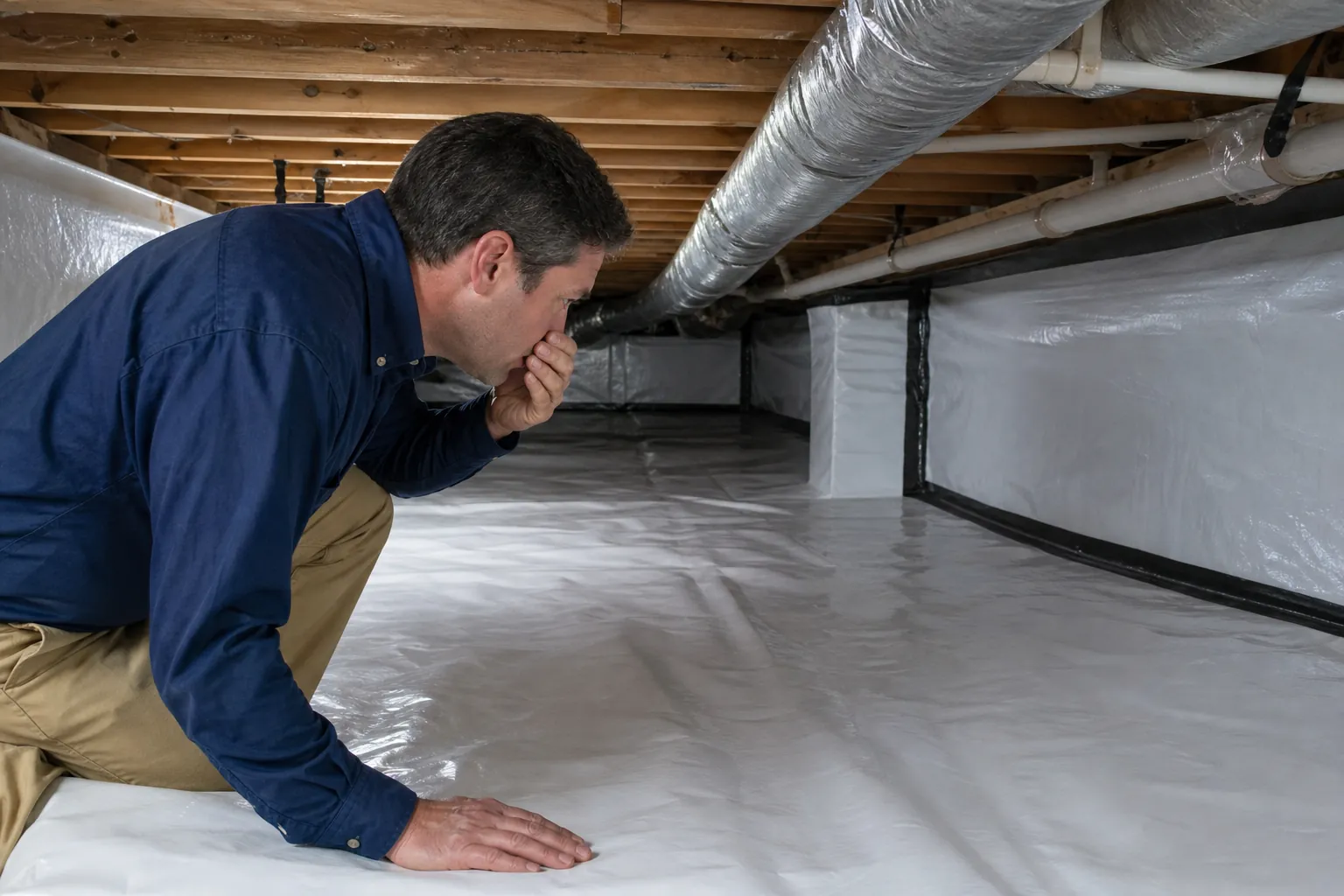
A newly encapsulated crawl space should help control ground moisture, but an unfamiliar glue-like odor can make homeowners wonder whether something went wrong. The smell may stay near the access door, appear in a first-floor closet, or become noticeable when the heating and cooling system runs.
A crawl space encapsulation adhesive smell does not automatically mean the installation is defective. Some installation products release odors while they cure. However, a strong, persistent, worsening, or irritating smell deserves attention rather than a blanket reassurance that it will disappear.
For North Carolina homeowners, the useful questions are straightforward: What products were installed? Where is the odor coming from? Is it moving into the living space? And are the crawl space conditions compatible with the products' curing requirements?
This guide explains how to investigate those questions, which responses are reasonable, and when to ask for professional help.
What can cause a glue-like smell after encapsulation?
Encapsulation involves more than placing a liner over the soil. Depending on the installation, crews may use seam tape, wall adhesives, sealants, spray foam, or other products to connect materials and close air leaks. Each product has its own application instructions and curing characteristics.
Adhesives and sealants can release volatile compounds during application and curing. Some products have a noticeable solvent-like odor; others smell faintly sweet, rubbery, or similar to plastic. The liner itself can also have a manufacturing odor, so the smell is not necessarily coming from glue.
Odor descriptions are useful clues, but they cannot identify a chemical or establish whether exposure is safe. A strong smell does not provide a reliable measure of concentration, and a weak smell does not prove that indoor air quality is acceptable.
The installation history is usually more helpful than guessing from the odor alone. Ask the contractor for the exact product names, where each was used, and the relevant manufacturer instructions. Request safety data sheets when chemical exposure or handling precautions are a concern.
- A smell concentrated at liner seams may point toward seam tape or a nearby sealant, although inspection is still needed.
- An odor strongest near wall attachment points may be associated with the adhesive used to secure the liner.
- A smell around sealed penetrations may come from foam or another air-sealing product.
- A broad plastic-like smell throughout the crawl space may involve the liner rather than a single adhesive location.
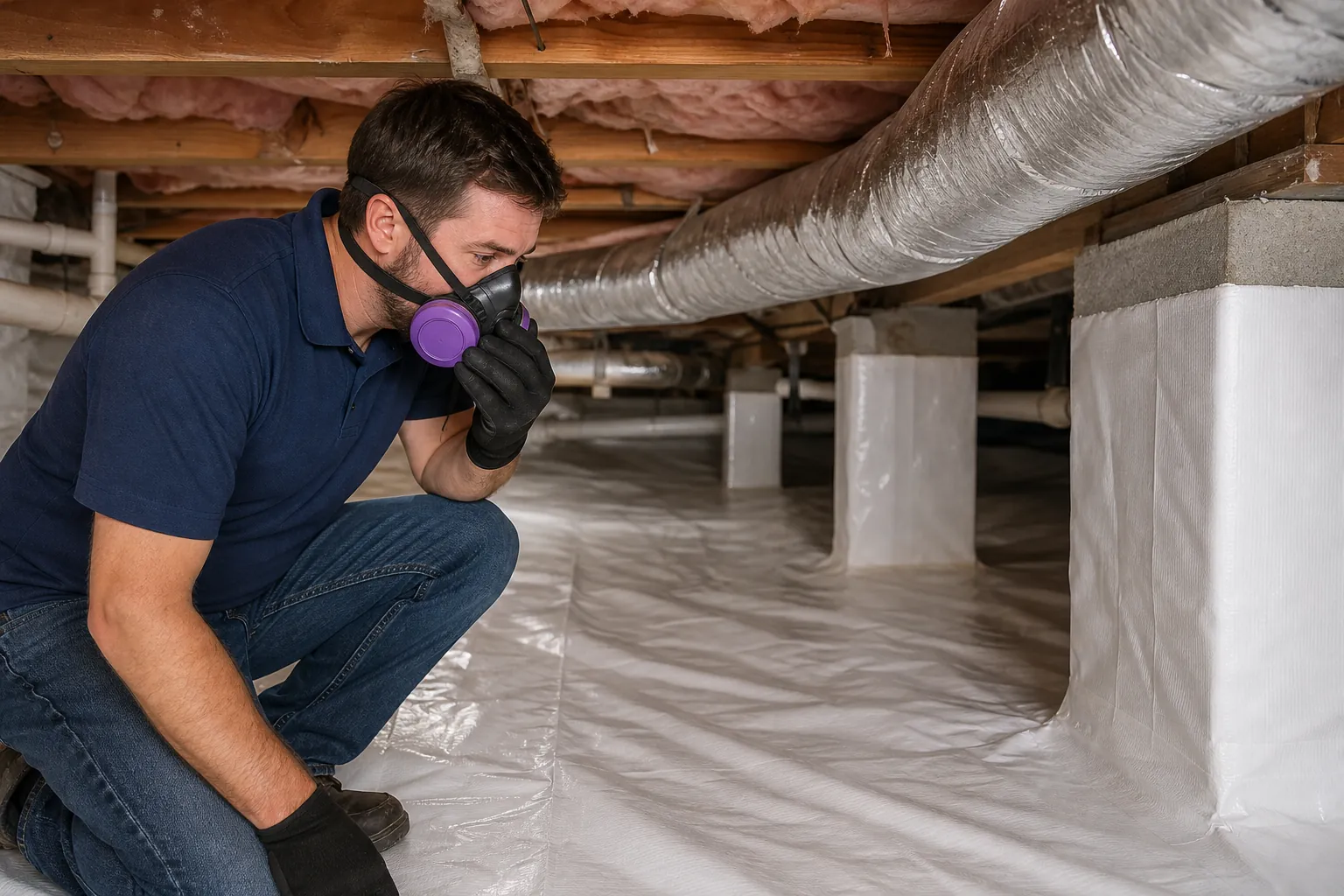
How long should an adhesive odor last?
There is no dependable universal timeline. Odor duration depends on the specific product, the amount applied, substrate conditions, temperature, humidity, and air exchange. Different materials can become dry to the touch, reach full cure, and lose their noticeable odor at different times.
Instead of accepting a generic estimate, compare actual conditions with the manufacturer's published requirements. A product intended for a certain temperature range or a dry surface may behave differently when applied to cold masonry or damp material.
The trend matters, too. An odor that steadily weakens is different from one that remains equally strong, returns repeatedly, or spreads into additional rooms. Keep a simple record of when the smell appears, where it is strongest, and whether HVAC operation or weather changes affect it.
North Carolina weather can complicate the picture. Humid summer air, cool winter surfaces, and damp conditions after heavy rain may influence product performance or airflow. Those factors can help explain an issue, but they do not excuse using a product outside its installation requirements.
If the contractor says the smell is normal, ask what that statement is based on. A useful answer names the product, explains the expected curing behavior, and establishes a follow-up point if the odor does not improve.
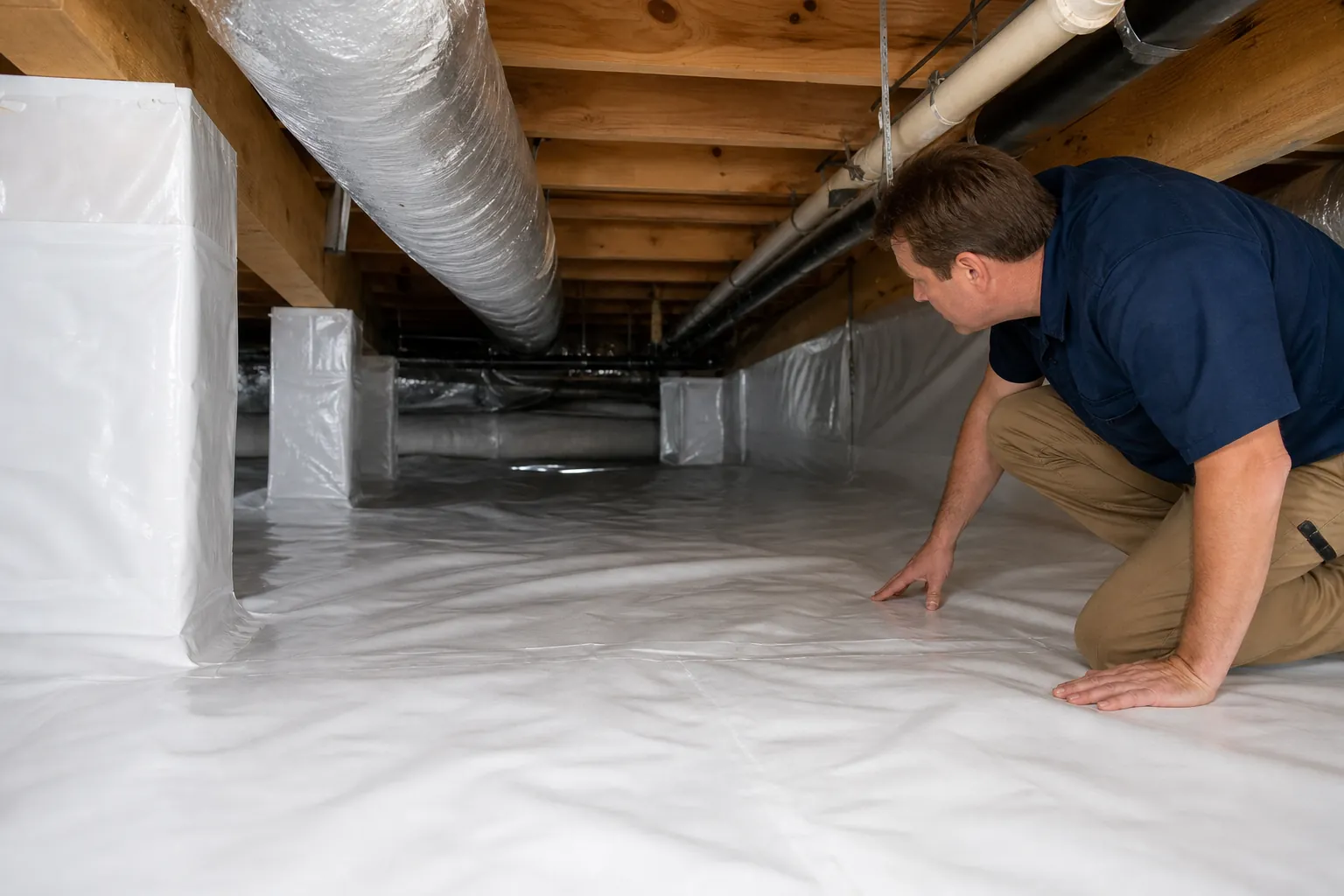
When should you treat the smell as an urgent concern?
A mild odor confined to the crawl space is different from a strong chemical smell throughout occupied rooms. Pay attention to the location, intensity, and any symptoms rather than relying only on how recently the work was completed.
If anyone experiences eye or throat irritation, headache, dizziness, nausea, or breathing discomfort, move away from the affected area and seek medical guidance as appropriate. These symptoms can have many causes, so do not assume the encapsulation materials are responsible without investigation.
For severe symptoms, breathing difficulty, or an immediate safety concern, leave the area and contact emergency services. If you suspect natural gas, propane, or another fuel leak, follow your utility's emergency instructions from a safe location. Do not investigate a suspected gas leak yourself.
A smell resembling rotten eggs should not automatically be labeled an adhesive issue. Likewise, an odor that seems burned or electrical requires a different response from ordinary product curing.
- Contact the installer promptly if the smell enters bedrooms or frequently occupied living areas.
- Request an inspection if the odor becomes stronger rather than gradually weaker.
- Ask for product-specific guidance if the smell remains beyond the manufacturer's expected curing or odor-dissipation period.
- Avoid entering the crawl space if there is a strong unexplained odor, standing water, damaged wiring, or another apparent hazard.
Why crawl space odors can reach the first floor
The crawl space and the home above it are not completely separate air zones. Air can travel through plumbing openings, wiring penetrations, gaps around floor framing, and poorly sealed access points.
Pressure differences also matter. Exhaust fans, clothes dryers, HVAC operation, and outdoor conditions can change how air moves through the building. Under some conditions, crawl space air may be drawn into the living space.
Duct leakage is another possible pathway. A return-side leak in or near the crawl space may pull surrounding air into the HVAC system. Supply leaks can alter crawl space pressure and interfere with intended conditioning. An HVAC professional can evaluate these issues.
Odor upstairs does not necessarily mean that the liner is failing. It may indicate an odor source below combined with an air pathway into the home. Correcting only one part of that situation may leave the homeowner dissatisfied.
An investigation should therefore consider both the installation products and the building's airflow. Knowing whether the smell is strongest near a floor register, plumbing chase, or access hatch can help guide that inspection.
A practical checklist for investigating the source
Start with information gathering rather than opening seams or removing materials. Altering the system can damage the moisture barrier, complicate warranty questions, and make the original cause harder to identify.
Record the timing and location
Write down the installation date and the first time you noticed the smell. Note whether it appeared immediately, after a rainstorm, or only after the HVAC system began running. Describe the odor in ordinary language without trying to name a chemical.
Also record which rooms are affected and whether the smell is noticeable with the crawl space access closed. Photos of accessible installation areas can help the contractor understand the layout, but do not enter an unsafe space to obtain them.
Get a complete product list
Ask for the liner, seam tape, adhesive, sealant, and foam product names. If other treatments were applied, include those as well. A product used for cleaning or pest work may be relevant even if it was not part of the encapsulation contract.
The contractor should compare application conditions and material compatibility with manufacturer guidance. That includes surface preparation, coverage, curing conditions, and whether the product is suitable for its intended location.
Check moisture control and equipment
Ask whether the dehumidifier is operating correctly, whether its drain is functioning, and whether there are signs of bulk water intrusion. A humidity reading can help assess moisture control, but it cannot measure adhesive vapors or establish air safety.
Have the installer review the crawl space's intended drying or conditioning approach. If ducts are present, consider an HVAC inspection when the odor closely follows heating or cooling cycles.
Agree on a documented next step
A clear plan should identify who will inspect, what they will review, and when they will follow up. If the source remains uncertain, the next step may involve the product manufacturer or an independent indoor air quality professional.
What helps reduce odor without compromising encapsulation?
The right solution depends on the source. There is no single treatment that safely resolves every adhesive odor. A recently applied, properly selected product may need manufacturer-approved curing conditions, while an incompatible or incorrectly installed material may require correction.
Discuss temporary ventilation with the installer rather than opening crawl space vents indefinitely. Encapsulation is designed as a coordinated moisture-control system. Unplanned ventilation can introduce humid North Carolina air and create condensation on cooler surfaces.
Any fan arrangement also needs careful consideration. Exhausting crawl space air can change building pressures, potentially draw in unwanted air, or affect combustion appliances. Equipment placement and discharge location should be evaluated by a qualified professional.
A dehumidifier helps manage moisture, but it is not designed to remove all chemical vapors. Running it continuously is not a substitute for identifying an odor source. Standard particle filters likewise do not reliably capture gases.
Some air-cleaning equipment uses gas-phase media, such as activated carbon. Performance depends on the target compounds, media quantity, airflow, and replacement schedule. Such equipment may be supplemental, but it should not replace source investigation.
- Follow the product manufacturer's curing and ventilation guidance rather than improvising a remedy.
- Correct water entry or drainage problems when they are interfering with crawl space conditions.
- Have confirmed air leakage pathways repaired without blocking required equipment clearances or inspection access.
- Ask the installer to evaluate suspect materials before anyone removes or covers them.
Common fixes that can make the problem worse
Strong fragrances may make the space smell different without reducing exposure. They can also make it harder to tell whether the original odor is improving. Avoid spraying deodorizer over the liner or applying unapproved coatings to conceal the smell.
Ozone generators are not an appropriate DIY response in an occupied home. Ozone can irritate the respiratory system, and reactions with indoor chemicals may create additional pollutants. Addressing the source is preferable to attempting to chemically mask it.
Do not wipe unknown adhesives with solvents or mix household cleaning products in the crawl space. These actions can add fumes, damage materials, or create hazardous reactions.
Pulling back liner sections is another risky shortcut. An opened seam can expose damp soil and undermine moisture control while leaving the actual odor source untouched. If removal is necessary, it should include a plan for restoring the barrier correctly.
Finally, avoid treating online anecdotes as product instructions. Two crawl spaces can smell similar while containing different materials, installation conditions, and airflow patterns.
Could the smell be something other than adhesive?
Yes. The timing of an installation can make every new odor seem connected to the work, but other sources may be present. Damp wood, plumbing leaks, animal activity, pest treatments, stored chemicals, and HVAC problems can all warrant investigation.
A musty smell suggests a different line of inquiry from a solvent-like smell, but descriptions alone are not diagnostic. An inspection may reveal residual debris, an ongoing moisture problem, or a leaking drain unrelated to the adhesive.
Ground-related odors can also be difficult to interpret. Encapsulation can change how air circulates and make an existing issue noticeable in a different location. The goal is to identify the source, not simply assign blame to the newest material.
If the installer cannot locate the cause, an independent professional can help define the next investigation step. Targeted air sampling may be useful in some cases, but testing should answer a specific question and include qualified interpretation.
How to prevent odor surprises before installation
Before signing an encapsulation agreement, ask which materials the contractor plans to use and how they are selected for crawl space conditions. Product compatibility and proper installation matter more than a general promise that everything is odor-free.
If someone in the household has asthma, chemical sensitivities, or another relevant health concern, discuss that early with the contractor and the person's healthcare professional. This allows time to consider product information and temporary occupancy precautions where appropriate.
Ask how moisture, surface temperature, and substrate condition will be checked before adhesives are applied. Also clarify how the completed system will handle drying, dehumidification, or conditioned air, as applicable to its design.
- Request the planned product names before installation so you can review relevant instructions.
- Ask what odors may occur and what conditions would trigger a return visit.
- Confirm who to contact if an odor reaches the living area after the crew leaves.
- Keep installation records and product information with your home's maintenance documents.
Get a clear plan for your North Carolina crawl space
An adhesive smell is best handled with a calm, product-specific investigation. Identify what was installed, track whether the odor is improving, check moisture conditions, and examine how air may be reaching the home.
Carolina Encapsulation Company can discuss your crawl space concerns and the appropriate next steps for an inspection. Whether you are planning an encapsulation project or have questions about an existing system in North Carolina, call 704-207-9348.
Have your installation date, product details, and odor notes available if possible. Those details help turn a vague concern into a focused conversation about the source and a practical path forward.
Call 704-207-9348 to talk through next steps.